


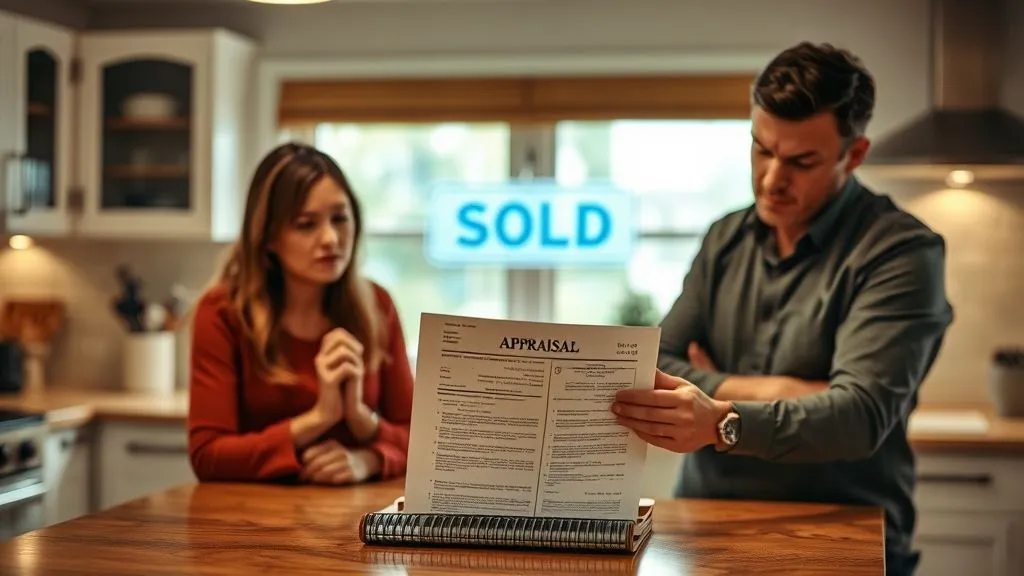
How to Salvage a Home Sale When Appraisal Comes in Low?
For over 15 years in the dynamic realm of real estate finance, I've witnessed firsthand the exhilaration of a signed purchase agreement, only to see it quickly overshadowed by the dread of a low appraisal. It's a moment that can feel like a punch to the gut, threatening to unravel weeks, sometimes months, of hard work and anticipation.
This isn't just a minor hiccup; a low appraisal can create a significant gap between the agreed-upon sales price and the lender's perceived value, jeopardizing the buyer's financing and, by extension, your entire home sale. It's a common, yet deeply frustrating, scenario that many sellers encounter, especially in shifting markets or with unique properties.
But here's the crucial insight I want to share: a low appraisal is not necessarily a death sentence for your deal. In this comprehensive guide, I'll walk you through a series of actionable, expert-backed strategies, frameworks, and real-world insights designed to help you understand your options, negotiate effectively, and ultimately, salvage your home sale when the appraisal comes in low. We'll explore everything from challenging the appraisal itself to creative financing solutions, equipping you with the knowledge to navigate this challenging hurdle with confidence.
Understanding the Appraisal Process & Why It Matters
Before we dive into solutions, it's vital to understand what an appraisal is and why it holds such power. An appraisal is an unbiased, professional opinion of a home's value, typically required by the lender to ensure the property's value supports the mortgage loan amount. Lenders won't lend more than the appraised value, regardless of the purchase price, to protect their investment.
The appraiser, a licensed professional, evaluates the property based on various factors: recent comparable sales (comps), property condition, location, square footage, amenities, and market trends. Their report, often hundreds of pages long, is a detailed analysis that culminates in that critical valuation figure. The challenge arises when this figure falls short of the negotiated purchase price, creating what's known as an appraisal gap.
Immediate Steps When a Low Appraisal Hits
When you receive news of a low appraisal, your immediate reaction might be panic. Resist that urge. Instead, take a deep breath and follow these crucial first steps:
- Review the Appraisal Report Thoroughly: Don't just look at the number. Request a full copy of the appraisal report from your buyer's lender (or your agent can facilitate this). Scrutinize every detail.
- Identify Potential Errors: Look for factual inaccuracies. Did the appraiser misstate the number of bedrooms or bathrooms? Incorrectly measure square footage? Miss a recent renovation or upgrade?
- Evaluate Comparable Sales (Comps): This is often where discrepancies lie. Are the comparable properties truly comparable? Are they within a reasonable distance? Were they sold recently (ideally within the last 3-6 months)? Did the appraiser miss any strong, recent sales that would support your price?
- Consult Your Real Estate Agent: Your agent is your most valuable ally here. They have local market expertise and access to data that can help identify flaws or omissions in the appraisal. They can also advise on the nuances of your specific market.

Challenging the Appraisal: The Reconsideration of Value (ROV)
One of the most direct ways to address a low appraisal is to challenge it through a formal process called a Reconsideration of Value (ROV). This isn't a guarantee, but it's a critical first attempt to rectify what might be an oversight.
How to Prepare a Strong ROV Request:
- Compile Strong Counter-Comps: Work with your agent to identify 3-5 *truly superior* comparable sales that closed recently (within 90 days) and are very similar to your property in terms of size, condition, features, and location, but were not used or were inadequately weighted by the original appraiser.
- Highlight Property Enhancements: Create a detailed list of all significant upgrades, renovations, and improvements you've made to the property. Provide costs and dates if possible. The appraiser might have missed these during their visit, especially if they weren't explicitly pointed out.
- Point Out Factual Errors: Clearly document any factual errors found in the report (e.g., incorrect square footage, number of rooms, lot size, property features).
- Submit a Professional Package: Your agent will typically compile this information into a concise, professional package. It must be submitted to the lender, who then forwards it to the appraisal management company (AMC) for review by the original appraiser or a supervisor.
Expert Insight: "A successful ROV isn't about arguing with the appraiser; it's about providing new, compelling data that they may have overlooked or underweighted. Focus on objective facts and strong comparables, not emotional appeals."
According to Fannie Mae guidelines, an ROV must be based on objective data and not merely a disagreement with the appraiser's judgment. While the success rate for ROVs varies, it's a necessary step to take if you believe the appraisal is genuinely flawed. The lender is obligated to review the additional information.
Negotiating with the Buyer: Bridging the Gap
If an ROV doesn't yield the desired result, or if you prefer a direct approach, the next step involves negotiating with your buyer. This is where the appraisal contingency in your contract becomes paramount. Most purchase agreements include this clause, allowing the buyer to walk away if the appraisal comes in low and an agreement isn't reached.
There are typically three ways to bridge the appraisal gap:
- Seller Reduces Price: You, as the seller, agree to lower the purchase price to meet the appraised value.
- Buyer Pays the Difference (Cash): The buyer brings additional cash to closing to cover the difference between the appraised value and the original purchase price.
- A Combination of Both: You both meet somewhere in the middle.
Case Study: The Johnson's Appraisal Gap Solution
Case Study: The Johnson's Appraisal Gap Solution
The Johnsons were selling their charming suburban home for $450,000. An enthusiastic buyer, Sarah, offered full asking price. However, the appraisal came in at $435,000, leaving a $15,000 gap. The Johnsons' agent, having anticipated this possibility due to unique local market conditions, had already prepped them on negotiation strategies. After a failed ROV attempt, their agent proposed a 50/50 split. The Johnsons agreed to reduce the price by $7,500, bringing it to $442,500. Sarah, eager for the home and having some cash reserves, agreed to bring an additional $7,500 to closing. This compromise allowed both parties to feel like they had gained something, and the sale proceeded smoothly, demonstrating the power of a strategic split.
Seller Concessions: A Strategic Move
Sometimes, directly reducing the price isn't the only way to make the deal work. As a seller, you might consider offering seller concessions to help the buyer cover some of their closing costs. While this doesn't directly bridge the appraisal gap in terms of the purchase price, it can free up cash for the buyer, enabling them to cover a portion of the gap themselves.
For example, if there's a $10,000 appraisal gap and the buyer is short on cash, you could offer a $5,000 credit towards their closing costs. This effectively reduces the buyer's out-of-pocket expenses, making it easier for them to bring the remaining $5,000 to cover their share of the gap. It's a psychological win-win, as the buyer perceives a financial benefit, and you still achieve a higher net sales price than if you'd simply dropped the price by the full amount of the gap.
| Option | Impact on Seller | Impact on Buyer | Use Case |
|---|---|---|---|
| Price Reduction | Direct decrease in net proceeds | Lower mortgage principal, less cash needed | Large appraisal gap, seller flexible on price |
| Seller Credit for Closing Costs | Less cash to seller, but purchase price remains higher | Frees up cash for appraisal gap or other costs | Buyer needs help with cash, smaller appraisal gap |
| Combined Approach | Shared burden, maintains some price integrity | Shared burden, reduces out-of-pocket | Most common, fair compromise for both parties |
Re-negotiating the Purchase Price: The Hard Truth
In some cases, especially if the appraisal gap is substantial and neither an ROV nor seller concessions are viable, the most pragmatic solution might be to re-negotiate the purchase price to align with the appraised value. This is often the hardest pill for sellers to swallow, as it means accepting less than originally agreed upon.
However, consider the alternatives: the buyer walks away, and you're back to square one, potentially having to re-list the property, which can incur additional holding costs, marketing expenses, and the stigma of a failed sale. A quick, decisive price reduction to the appraised value might be the best long-term financial decision, especially in a cooling market.
Exploring Alternative Financing Options
Sometimes, the issue isn't just the appraisal, but the specific loan product the buyer is using. Different loan types can have different appraisal requirements or tolerances.
- Conventional Loans: These often offer more flexibility in terms of appraisal gap solutions, as long as the buyer can cover the difference.
- FHA/VA Loans: These government-backed loans have stricter appraisal guidelines, often requiring certain repairs to be made before closing. If the appraisal came in low on an FHA or VA loan, it might also indicate condition issues that need addressing. A new appraisal might be required if the buyer switches lenders or loan types.
- Portfolio Loans: Some smaller banks or credit unions offer 'portfolio loans' which they hold on their books rather than selling to the secondary market. These can sometimes be more flexible with appraisal values, though they might come with different terms.
Encourage your buyer to speak with their lender about alternative financing options, or even explore another lender altogether. A second opinion from a different lender might open up new possibilities, though a new appraisal would likely be required, which costs time and money.
Preparing for a Potential Re-listing (Worst Case Scenario)
While the goal is always to salvage the current sale, it's prudent to prepare for the possibility that the deal might fall through. If all negotiation attempts fail and the buyer walks away, you'll need a clear strategy for moving forward.
- Analyze the Appraisal: Use the low appraisal as valuable feedback. Was it truly an anomaly, or does it reflect a more realistic market value for your home?
- Adjust Your Price Strategy: If the appraisal was fair, you might need to adjust your listing price to align with market realities before re-listing.
- Address Property Deficiencies: If the appraisal highlighted any correctable issues (e.g., minor repairs, deferred maintenance), consider addressing them to improve future appraisals.
- Re-evaluate Marketing: Work with your agent to refresh your marketing materials, photos, and property description to attract new buyers.

Frequently Asked Questions (FAQ)
Q: Can I get a second appraisal? Generally, the buyer's lender orders the appraisal, and they rarely order a second one unless there are significant errors or a change in loan type. You, as the seller, cannot typically order a second appraisal for the buyer's loan. However, if the deal falls through, a new buyer with a different lender will get a new appraisal.
Q: What if my home is unique and hard to appraise? Unique properties often struggle with appraisals because appraisers rely heavily on comparable sales. If your home truly has no direct comps, the appraiser might have to use wider search parameters or make significant adjustments, which can be subjective. In these cases, a strong ROV with compelling, albeit less direct, comparables is crucial. Highlighting unique features with documented value can also help.
Q: Does an FHA or VA loan appraisal mean stricter requirements? Yes, FHA and VA appraisals have a dual purpose: determining market value and ensuring the property meets minimum property standards (MPS) for health, safety, and soundness. A low appraisal with these loan types might also indicate required repairs that must be completed before the loan can close, adding another layer of complexity.
Q: How long does the ROV process take? The reconsideration of value process typically takes a few days to a week once the lender receives your supporting documentation. It's not an instant fix, so it's important to act quickly once the low appraisal is reported to keep the sale on track within contract timelines.
Q: Will a low appraisal affect my property taxes? An appraisal for a home sale is for lending purposes and generally doesn't directly impact your property tax assessment, which is typically conducted by a municipal assessor and uses different methodologies and timelines. However, if your home consistently appraises low, it might provide data points for future tax assessment appeals.
Key Takeaways and Final Thoughts
Navigating a low appraisal can be one of the most stressful challenges in selling a home, but it is by no means an insurmountable obstacle. As an industry veteran, I've seen countless sellers successfully salvage their deals by understanding their options, acting strategically, and maintaining open communication with their agents and buyers.
- Don't Panic, Act Strategically: Review the appraisal thoroughly and identify any factual errors or missed comparables.
- Leverage Your Agent: Your real estate agent is your best resource for market data and negotiation strategies.
- Consider a Reconsideration of Value (ROV): A well-documented ROV can sometimes correct an undervalued appraisal.
- Negotiate Creatively: Be open to splitting the difference, offering seller concessions, or re-negotiating the price.
- Explore All Options: Understand different financing types and prepare for potential re-listing if necessary.
Remember, every challenge in real estate is an opportunity for creative problem-solving. By applying these expert strategies, you can significantly increase your chances of successfully closing your home sale, even when an appraisal comes in low. Stay informed, stay calm, and trust in the process – and your experienced team.
Recommended Reading
- Future-Proofing Banks: Convert Student Users into High-Value Adult Clients
- Build Credit on a Budget: Your Ultimate Guide (Even with Low Income)
- 7 Essential Strategies: Mitigating Landlord Liability Without Tenant Renters Insurance
- Stop the Noise: 7 Ways to Cut ML Fraud Detection False Positives
- Unlock Financial Freedom: How to Start Investing with Very Little Money Today




Comments
Leave a comment below. Your email will not be published. Required fields marked with *