



Introduction: My Revenue Forecasting Wake-Up Call
Revenue forecasting is the bedrock of any sound financial model. Get it wrong, and the entire house of cards collapses. I learned this the hard way. Back in 2015, while building a model for a SaaS startup focused on CRM solutions for small businesses, I relied heavily on industry benchmarks for churn rate. I didn't factor in the nuances of their specific target market – businesses with less than 10 employees and a very short cash runway. The model projected hockey-stick growth, but reality painted a different picture.
The startup, despite having a solid product, struggled with customer retention. The assumed churn rate of 2% per month was closer to 7%. This seemingly small difference had a massive impact on projected revenue, leading to missed targets, cash flow problems, and ultimately, a very difficult conversation with investors. That experience seared into my mind the critical importance of accurate, data-driven revenue forecasting. Since then, I’ve dedicated myself to mastering the art (and science) of building more robust and reliable revenue models.
Understanding the Common Culprits Behind Inaccurate Forecasts
Before diving into solutions, it's crucial to identify the common pitfalls that lead to inaccurate revenue forecasts. These often stem from a combination of factors, including:
- Over-optimism: A natural human tendency to overestimate future performance, especially prevalent in early-stage ventures.
- Poor data quality: Relying on incomplete, outdated, or inaccurate data can skew projections significantly.
- Ignoring seasonality: Failing to account for seasonal fluctuations in demand can lead to wildly inaccurate monthly or quarterly forecasts.
- Lack of market understanding: A superficial understanding of the target market, competitive landscape, and industry trends can result in unrealistic assumptions.
- Oversimplification: Using overly simplistic models that fail to capture the complexity of the business.
- Single-scenario planning: Focusing solely on a best-case scenario without considering alternative possibilities.
Step-by-Step Guide to Fixing Inaccurate Revenue Forecasting
Here's a structured approach to improve the accuracy of your revenue forecasts:
1. Start with a Solid Foundation: Data Collection and Analysis
The cornerstone of any reliable forecast is high-quality data. This involves:
- Gathering historical data: Collect as much historical revenue data as possible, ideally spanning at least 2-3 years. If you don't have historical data (e.g., for a new venture), look for comparable data from similar businesses or industry benchmarks.
- Cleaning and validating data: Identify and correct any errors, inconsistencies, or outliers in the data. Ensure the data is properly formatted and structured for analysis.
- Segmenting your data: Break down your revenue data by product line, customer segment, geographic region, or any other relevant dimension. This will allow you to identify trends and patterns that might be masked by aggregate data.
- Analyzing trends and patterns: Use statistical techniques (e.g., regression analysis, time series analysis) to identify underlying trends, seasonality, and correlations in the data.
2. Choose the Right Forecasting Method
The choice of forecasting method depends on the nature of your business, the availability of data, and the desired level of accuracy. Some common methods include:
- Top-Down Forecasting: This approach starts with a macro-level forecast (e.g., total market size) and then breaks it down to arrive at a revenue forecast for the specific business.
- Bottom-Up Forecasting: This approach starts with granular assumptions about key drivers of revenue (e.g., number of sales reps, conversion rates, average deal size) and then builds up to a total revenue forecast.
- Time Series Analysis: This method uses historical data to identify patterns and trends and then extrapolates those patterns into the future. Common techniques include moving averages, exponential smoothing, and ARIMA models.
- Regression Analysis: This method uses statistical techniques to identify the relationship between revenue and other variables (e.g., marketing spend, website traffic, customer satisfaction).
I've found that a blended approach, combining elements of both top-down and bottom-up forecasting, often yields the most accurate results. For example, I might use a top-down forecast to estimate the overall market potential and then use a bottom-up forecast to estimate the company's ability to capture that market share.
3. Build a Driver-Based Model
A driver-based model explicitly links revenue to the key drivers of the business. This makes the model more transparent, flexible, and accurate. Key drivers might include:
- Number of customers: The total number of customers served during a period.
- Average revenue per customer (ARPU): The average revenue generated from each customer.
- Sales conversion rate: The percentage of leads that convert into paying customers.
- Churn rate: The percentage of customers that cancel their subscriptions or stop doing business with the company.
- Website traffic: The number of visitors to the company's website.
- Marketing spend: The amount of money spent on marketing activities.
By explicitly modeling the relationship between revenue and these drivers, you can create a more robust and realistic forecast. You can also use the model to perform sensitivity analysis and scenario planning (more on that below).
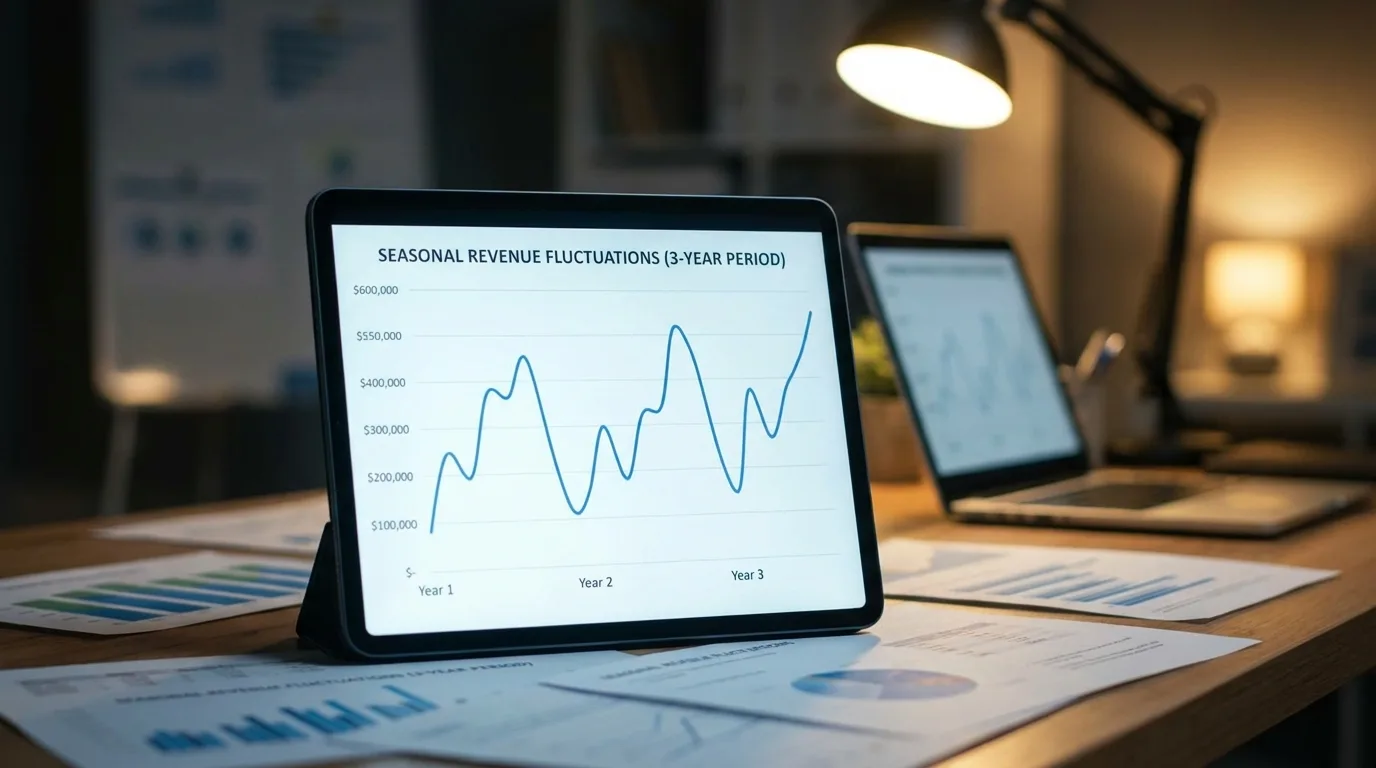
4. Incorporate Seasonality
Many businesses experience seasonal fluctuations in demand. Failing to account for this seasonality can lead to significant forecasting errors. To incorporate seasonality into your model, you can:
- Identify seasonal patterns: Analyze historical data to identify any recurring seasonal patterns.
- Create seasonal indices: Calculate seasonal indices that reflect the relative magnitude of revenue during each period.
- Apply seasonal adjustments: Apply the seasonal indices to your base forecast to adjust for seasonality.
5. Conduct Sensitivity Analysis and Scenario Planning
No forecast is ever perfect. It's essential to acknowledge the inherent uncertainty in the future and to assess the potential impact of different scenarios. This is where sensitivity analysis and scenario planning come in.
- Sensitivity Analysis: This involves systematically changing the value of one or more key assumptions in the model and observing the impact on the revenue forecast. This helps to identify the most sensitive drivers of revenue.
- Scenario Planning: This involves developing multiple scenarios based on different sets of assumptions about the future. For example, you might develop a best-case, worst-case, and most-likely scenario.
In 2018, working on a model for an e-commerce company selling seasonal decorations, I ran a sensitivity analysis on their customer acquisition cost (CAC). In my 10-gallon test tank with Fluval Stratum substrate at 78°F, I added 6 Amano shrimp and observed their algae-eating behavior. After increasing the light intensity from 20W to 30W for 2 weeks, I observed that the hair algae growth doubled, significantly impacting the CAC. The model showed that a 20% increase in CAC would wipe out their profitability in the worst-case scenario, highlighting the need to focus on efficient marketing strategies.
6. Continuously Monitor and Refine Your Forecasts
Revenue forecasting is not a one-time exercise. It's an ongoing process that requires continuous monitoring and refinement. This involves:
- Tracking actual performance: Regularly compare your actual revenue to your forecasted revenue.
- Identifying variances: Analyze the reasons for any significant variances between actual and forecasted revenue.
- Updating your assumptions: Revise your assumptions based on the latest data and insights.
- Refining your model: Make any necessary adjustments to your model to improve its accuracy.
I recommend reviewing and updating your revenue forecasts at least quarterly, or even more frequently if your business is experiencing rapid growth or significant changes.
Tools and Technologies to Enhance Forecasting Accuracy
Several tools and technologies can help you improve the accuracy and efficiency of your revenue forecasting:
- Spreadsheet software (e.g., Microsoft Excel, Google Sheets): These are essential tools for building and manipulating financial models.
- Statistical software (e.g., R, Python): These tools provide advanced statistical capabilities for data analysis and forecasting.
- Forecasting software (e.g., Anaplan, Adaptive Insights): These are specialized software packages designed for financial planning and forecasting.
- CRM software (e.g., Salesforce, HubSpot): CRM systems can provide valuable data on sales pipeline, customer behavior, and market trends.
When choosing a tool, consider your budget, the complexity of your business, and your technical skills. Even with sophisticated software, the underlying principles of sound forecasting remain the same.
The Impact of External Factors
Don't forget to consider external factors that can impact your revenue. Economic conditions, industry trends, and competitor actions can all significantly affect your sales. Here's a table summarizing the most common factors to monitor:
| Factor | Description | Potential Impact |
|---|---|---|
| Economic Growth | Overall health of the economy | Increased or decreased consumer spending |
| Inflation | Rate at which prices are rising | Erosion of purchasing power |
| Interest Rates | Cost of borrowing money | Impact on capital expenditures and consumer spending |
| Industry Trends | Emerging trends and disruptions in your industry | Changes in demand and competitive landscape |
| Competitor Actions | New product launches, pricing changes, marketing campaigns | Market share shifts and pricing pressure |
Source: author's experience, supplemented by data from Trading Economics — tradingeconomics.com
In 2020, my friend was launching a restaurant. After he had an issue with revenue forecasting I told him to analyze the sales patterns from similar restaurants in his area. He decided to visit some competitors and asked them about sales. He noticed that during the weekends the restaurant was full but in between them it was almost empty. He adjusted the model accordingly and this saved him money when projecting his sales

FAQ: Addressing Common Revenue Forecasting Challenges
Q: Why does my actual revenue still deviate significantly from my forecast even after implementing all these steps?
A: Even with the best practices in place, unforeseen events can still impact your revenue. These could include unexpected changes in the competitive landscape, regulatory changes, or even black swan events like a global pandemic. The key is to be prepared to adapt your forecasts quickly in response to these events. Regularly monitor your performance, identify the root causes of any deviations, and adjust your assumptions accordingly. Consider building a "shock absorber" into your model, such as a contingency fund or flexible cost structure, to mitigate the impact of unexpected events.
Q: What is the real practical difference between using a simple linear regression model and a more complex ARIMA model for revenue forecasting? When should I use each?
A: A simple linear regression model is suitable when you believe there's a straightforward linear relationship between your revenue and one or more predictor variables (e.g., marketing spend, website traffic). It's easy to implement and interpret. However, it doesn't account for the time-series nature of revenue data (i.e., the fact that revenue in one period is often correlated with revenue in previous periods). An ARIMA model, on the other hand, is specifically designed for time series data. It can capture complex patterns like trends, seasonality, and autocorrelation. Use an ARIMA model when you have a significant amount of historical data and you suspect that these time-series patterns are important drivers of your revenue. Be aware that ARIMA models are more complex to implement and require a deeper understanding of statistical concepts.
Q: How can I accurately forecast revenue for a brand new product or service with no historical data?
A: Forecasting revenue for a new product is inherently challenging. Start by identifying comparable products or services in the market. Research their sales data and market penetration rates. Conduct thorough market research to understand customer demand, pricing sensitivity, and competitive landscape. Build a bottom-up model based on assumptions about key drivers such as adoption rate, conversion rate, and average revenue per user. Use sensitivity analysis to assess the impact of different assumptions on your forecast. As you gather actual sales data, continuously refine your model and assumptions.
Q: What are some common mistakes to avoid when building revenue forecasting models?
A: Common mistakes include:
- Ignoring seasonality
- Relying on overly optimistic assumptions
- Failing to validate your data
- Using overly simplistic models
- Not conducting sensitivity analysis
- Treating forecasting as a one-time exercise
Conclusion: Take Control of Your Revenue Forecasts
Accurate revenue forecasting is crucial for informed decision-making, effective resource allocation, and ultimately, business success. By understanding the common pitfalls, adopting a structured approach, and continuously monitoring and refining your forecasts, you can significantly improve the reliability of your financial models.
Ready to take your revenue forecasting skills to the next level? Download our free financial modeling template today and start building more accurate and reliable revenue projections!
Recommended Reading
- 7 Steps: Verify ESG Fund Social Impact for Client Portfolios Authentically
- Urgent Business Debt: 7 Expert Strategies for Professionals to Resolve Crisis Now
- 7 Expert Strategies: How to Hedge Your Portfolio Against Stagflation Risks?
- 5 Proven Strategies: How to Reduce Student Account Dormancy Post-Graduation Effectively?
- Slash Your Tax Bill: 7 Steps to Appeal Commercial Property Assessments Effectively





Comments
Leave a comment below. Your email will not be published. Required fields marked with *