


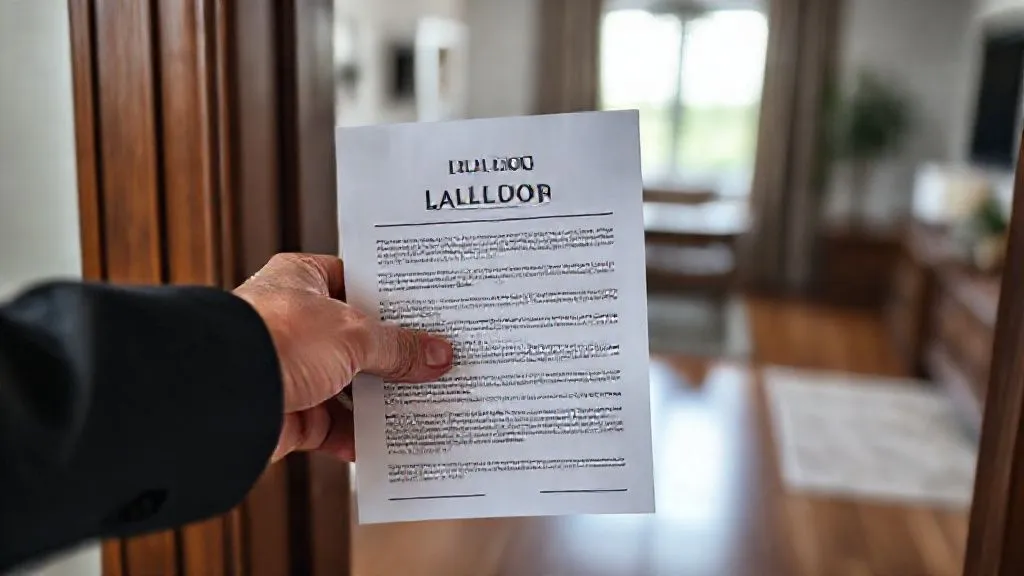
How to legally evict a non-paying tenant fast without major losses?
For over two decades in the trenches of real estate investment, I've witnessed firsthand the profound stress and financial drain a non-paying tenant can inflict. It’s a landlord's worst nightmare, turning a promising investment into a relentless liability, often leaving property owners feeling helpless and frustrated.
This isn't just about lost rent; it's about property damage, legal fees, emotional toll, and the opportunity cost of having your asset tied up. Many landlords, in their desperation, make critical missteps that prolong the process, escalate costs, and sometimes even land them in legal hot water themselves. The problem isn't just the non-payment, but the labyrinthine legal pathways to resolution.
In this definitive guide, I will share the strategies, legal frameworks, and practical insights I've honed through years of experience, empowering you to navigate the complexities of tenant eviction. You'll learn not just the 'what' but the 'how' – actionable steps to legally evict a non-paying tenant fast without major losses, safeguarding your investment and your peace of mind.
Understanding the Landscape: Local Laws and Lease Agreements
Before you even think about serving a notice, it's crucial to understand that landlord-tenant law is highly localized. What's perfectly legal in one state or even one city might be a severe violation in another. I've seen countless landlords stumble here, assuming a national standard when none exists. Your primary reference points are your state statutes, local ordinances, and, most importantly, your signed lease agreement.
Your lease agreement is the contract that governs the relationship. It outlines payment terms, grace periods, late fees, and the conditions under which a tenancy can be terminated. A well-drafted lease is your first line of defense and your roadmap for eviction. Always ensure it complies with local laws and is unambiguous regarding tenant responsibilities and landlord remedies.
Expert Insight: "Never underestimate the power of a meticulously drafted, legally compliant lease agreement. It's not just a formality; it's your most potent legal shield and offensive tool when disputes arise. Any deviation from its terms, especially regarding rent payment, is your legitimate grounds for action."
Ignorance of the law is no excuse, and violating tenant rights—even unintentionally—can lead to costly counter-suits. Take the time to familiarize yourself with your specific jurisdiction's eviction laws, notice requirements, and court procedures. Resources like Nolo's Landlord-Tenant Laws provide an excellent starting point for general understanding, but always consult local statutes or an attorney for precise guidance.

The Critical First Step: Issuing Proper Notice to Quit
This is where the formal eviction process truly begins. In nearly every jurisdiction, you cannot simply tell a tenant to leave. You must provide a formal, written notice, often referred to as a 'Notice to Quit' or 'Notice to Pay Rent or Quit.' The type of notice and the required timeframe depend entirely on your local laws and the reason for eviction.
- Pay Rent or Quit Notice: This is the most common for non-payment. It gives the tenant a specific number of days (e.g., 3, 5, or 7) to either pay the overdue rent in full or vacate the property.
- Cure or Quit Notice: Used for lease violations other than non-payment (e.g., unauthorized pets, property damage). It gives the tenant time to fix the violation or move out.
- Unconditional Quit Notice: Used for severe lease violations (e.g., repeated violations, illegal activity) where the tenant is not given an option to correct the issue; they must simply leave.
The method of delivery is equally crucial. Personal service, certified mail with a return receipt, or even posting on the property (with specific legal requirements) are common. Document everything: the date, time, and method of delivery. This evidence will be vital if the case proceeds to court.
- Calculate Overdue Amount: Clearly state the exact amount of rent, late fees, and any other charges owed.
- Draft the Notice: Use a legally compliant form (often available from your local court or landlord associations).
- Serve the Notice: Deliver it according to your state and local requirements, ensuring proper documentation.
- Wait for Response: Observe the specified notice period. The tenant may pay, vacate, or do neither.
Case Study: The Expedited Eviction of Mark
Mark, a tenant in one of my properties, stopped paying rent after his first month. Instead of engaging in endless phone calls, I immediately consulted local ordinances. Within 24 hours of the rent due date passing and the grace period expiring, I served him a 3-Day Notice to Pay Rent or Quit via certified mail and by posting it on his door. When Mark failed to respond or pay within the three days, I had a clear, undisputed legal basis to file for eviction. This adherence to strict legal procedure meant the court process was straightforward and swift, minimizing my losses significantly, as there were no procedural errors for Mark to challenge.
Here’s a snapshot of typical notice periods, though these vary wildly by jurisdiction:
| Notice Type | Typical Period (Days) | Conditions |
|---|---|---|
| Pay Rent or Quit | 3-7 | Non-payment of rent |
| Cure or Quit | 7-30 | Lease violation (curable) |
| Unconditional Quit | 3-30 | Severe/repeated violations |
Navigating the Courts: Filing for Eviction and What to Expect
If the tenant fails to comply with the Notice to Quit, your next step is to file an eviction lawsuit, often called an 'unlawful detainer' action. This is a formal legal proceeding that takes place in court. It’s critical to remember that this is a legal battle, and preparation is key.
- File the Complaint: Submit the necessary forms (Complaint for Unlawful Detainer) to the appropriate court (usually a small claims or justice court). You'll need copies of your lease, the Notice to Quit, and proof of service.
- Serve the Summons: After filing, the court will issue a summons, which must be formally served on the tenant by a sheriff, process server, or authorized individual. This officially notifies the tenant of the lawsuit and the court date.
- Attend the Hearing: Both you and the tenant will present your cases to a judge. Bring all documentation: lease, payment records, notices, communications, and any evidence of property damage.
- Obtain a Judgment: If the judge rules in your favor, they will issue a 'Judgment for Possession' (or similar). This legally grants you the right to regain possession of your property.
Many landlords feel intimidated by court proceedings, but with thorough documentation and a clear understanding of your case, you can present it effectively. The goal is to demonstrate that you followed all legal steps and the tenant violated the lease. For more detailed information on specific court procedures, you might find resources like state court self-help guides invaluable, though always confirm with your local court.

Strategic Considerations: Mediation, Cash for Keys, and Settlement
While the legal eviction process is effective, it can be lengthy and expensive. Sometimes, a non-court resolution can be faster and less costly, minimizing losses for both parties. I've often found that a strategic approach outside the courtroom can save weeks, if not months, of headaches.
Mediation
Some jurisdictions offer landlord-tenant mediation services. A neutral third party helps both sides communicate and reach a mutually agreeable solution. This can be effective if there's a misunderstanding or if the tenant genuinely wants to resolve the issue but needs a payment plan or a bit more time. It's less adversarial and can preserve relationships if you choose to go that route, though for a non-paying tenant, the goal is often simply to vacate.
Cash for Keys
This is a tactic where you offer the tenant a sum of money to vacate the property quickly and peacefully, leaving it in good condition. It might sound counterintuitive to pay someone who owes you money, but consider the costs of a lengthy eviction:
- Lost rent for months during court proceedings.
- Legal fees for attorneys or court costs.
- Potential damage to the property by a vengeful tenant.
- The cost of cleaning out abandoned belongings.
A 'cash for keys' agreement, properly documented, can often be cheaper and faster than a formal eviction. For example, offering $500 to vacate in 3 days, leaving the unit clean, could save you thousands in lost rent and damages. Always get the agreement in writing, specifying the move-out date and condition of the property.
Expert Insight: "When facing a non-paying tenant, view 'cash for keys' not as a capitulation, but as a strategic business decision. It's a calculated expense designed to mitigate far larger potential losses in time, money, and property condition. Sometimes, paying a little now saves a lot later."
Settlement Agreements
Even after filing for eviction, you can still negotiate a settlement. This might involve the tenant agreeing to move out by a certain date in exchange for you dropping the lawsuit, or agreeing to a payment plan for back rent. Any settlement must be in writing, signed by both parties, and ideally, reviewed by an attorney. This approach can be particularly useful when you want to legally evict a non-paying tenant fast without major losses, avoiding the full court process.
Minimizing Financial Bleed: Securing Your Property and Recovering Losses
Once you have a Judgment for Possession, or the tenant has vacated under a settlement, the immediate priority is to secure your property and assess any damages. This phase is crucial for minimizing your overall financial losses.
- Regain Possession Legally: Never attempt to physically remove a tenant or change locks without a court order (a 'Writ of Possession') and the presence of a sheriff or authorized officer. Self-help evictions are illegal and can result in severe penalties.
- Assess Property Condition: Conduct a thorough walk-through, ideally with a witness, taking extensive photos and videos of the property's condition. Compare this to your move-in inspection report. This documentation is vital for claiming damages.
- Handle Abandoned Property: Most states have specific laws regarding how to handle property left behind by an evicted tenant. Typically, you must store it for a certain period and notify the tenant before you can dispose of it or sell it. Failing to follow these rules can lead to liability.
- Apply Security Deposit: Your security deposit can be used to cover unpaid rent, cleaning costs beyond normal wear and tear, and property damage. Provide an itemized statement of deductions to the tenant within the legally required timeframe.
- Pursue Unpaid Rent/Damages: If the security deposit doesn't cover all losses, you can pursue the tenant in small claims court for the remaining balance. While collection can be challenging, having a judgment against them can sometimes prompt payment or allow for wage garnishment in some states.
Protecting your property from further damage or unauthorized entry after a tenant vacates is paramount. Change locks immediately once legally permitted. Forbes Advisor offers additional insights into landlord-tenant laws that can help protect your investment.

Post-Eviction: Damage Assessment, Cleaning, and Re-renting Smartly
Once the property is legally vacant and secured, the work shifts from eviction to recovery and preparation for the next tenant. This stage is critical for recouping your investment and minimizing the financial impact of the previous tenant.
Thorough Damage Assessment
Beyond the initial walk-through, perform a detailed assessment. This isn't just about what's broken, but also what needs deep cleaning or cosmetic repairs. Differentiate between normal wear and tear (which you cannot charge for) and actual damage (which you can). Document everything with photos and videos, and get quotes for repairs. This meticulous record-keeping is essential if you pursue further claims against the tenant or need to justify security deposit deductions.
Cleaning and Repairs
Prioritize repairs that impact habitability and safety. Address any deferred maintenance. A clean, well-maintained property not only attracts better tenants but also often commands higher rent. Investing in a professional deep clean and fresh paint can make a significant difference in how quickly you re-rent the unit and at what price point.
Re-renting Smartly
The goal is to minimize vacancy time. Here are some tips:
- Market Aggressively: Utilize online platforms, local classifieds, and 'for rent' signs. High-quality photos and a compelling description are non-negotiable.
- Competitive Pricing: Research comparable rentals in your area. Price your unit competitively to attract interest quickly.
- Streamlined Application Process: Make it easy for prospective tenants to apply. Consider online applications and secure payment methods for fees.
- Thorough Screening: Do not cut corners on screening. The cost of a bad tenant far outweighs the cost of a vacant month.
Preventing Future Headaches: Robust Tenant Screening and Lease Clauses
The best way to avoid the ordeal of how to legally evict a non-paying tenant fast without major losses is to prevent the problem from occurring in the first place. This means implementing an ironclad tenant screening process and ensuring your lease agreement is comprehensive and legally sound.
Robust Tenant Screening
I've always said, 'Your next tenant is your most important business decision.' A thorough screening process is paramount:
- Credit Check: Look beyond just the score. Review payment history, collections, and bankruptcies. A low score with a few medical bills is different from a low score with multiple evictions or unpaid utility bills.
- Background Check: This includes criminal history. Ensure you comply with Fair Housing laws and local regulations, especially regarding look-back periods.
- Rental History Verification: Contact previous landlords. Ask specific questions: Did they pay on time? Did they maintain the property? Would you rent to them again? Be wary of 'family' references.
- Income Verification: Request pay stubs, employment verification letters, or bank statements. Aim for a rent-to-income ratio of 30-35% or less.
According to TransUnion SmartMove, landlords who screen their tenants are significantly less likely to experience evictions. This data underscores the importance of a rigorous process. Here’s a summary of key screening criteria:
| Criteria | Importance | Details |
|---|---|---|
| Credit Score | High | Payment history, debt-to-income |
| Criminal Background | High | Public safety, property risk |
| Rental History | Very High | Past landlord references, eviction records |
| Income Verification | High | Ability to pay rent (3x rent recommended) |
Comprehensive Lease Clauses
Your lease should be a robust document that protects your interests while complying with all laws. Key clauses to include:
- Clear Rent Payment Terms: Due date, grace period, late fees, and acceptable payment methods.
- Maintenance Responsibilities: Clearly delineate what the tenant is responsible for (e.g., changing light bulbs, minor repairs) versus the landlord.
- Pet Policy: If pets are allowed, specify types, sizes, deposits, and any additional pet rent. If not, state it explicitly.
- Subletting Policy: Prohibit or set strict conditions for subletting.
- Damage and Alterations: Prohibit unauthorized alterations and hold tenants responsible for damage beyond normal wear and tear.
- Right of Entry: Clearly state your right to enter for inspections, repairs, or showing the property, with proper notice.
Periodically review and update your lease to reflect changes in local laws and market best practices. A strong lease is your foundation for a successful landlord-tenant relationship and your first defense against potential disputes. Always ensure compliance with federal fair housing laws, as outlined by resources like HUD.

Frequently Asked Questions (FAQ)
Question: Can I change the locks immediately if my tenant stops paying rent? Absolutely not. This is considered an illegal 'self-help eviction' in almost all jurisdictions. Even if the tenant is severely delinquent, you must follow the legal eviction process through the courts. Changing locks, shutting off utilities, or removing belongings can lead to significant legal penalties, including fines and damages awarded to the tenant. Always wait for a court order (Writ of Possession) and have it executed by a sheriff or authorized officer.
Question: What if the tenant disappears but leaves all their belongings behind? This is considered 'abandoned property,' and states have specific laws governing how landlords must handle it. Typically, you cannot immediately dispose of or claim the property. You must usually inventory the items, store them for a specified period (e.g., 15-30 days), and send a notice to the tenant's last known address. If the tenant doesn't claim them, you may be able to sell or dispose of them, often with proceeds going to cover storage costs or back rent. Failure to follow these rules can make you liable for the tenant's belongings.
Question: How long does the entire eviction process usually take from start to finish? The timeline varies drastically depending on your state and local laws, court backlogs, and whether the tenant contests the eviction. A straightforward, uncontested eviction for non-payment could take as little as 3-4 weeks in some landlord-friendly jurisdictions. In tenant-friendly areas or if the tenant fights the eviction, it could easily stretch to 2-4 months, or even longer. This uncertainty is why strategies like 'cash for keys' are often considered to expedite the process.
Question: Should I hire an attorney for a non-paying tenant eviction? While it's possible for landlords to handle evictions themselves, especially in small claims court, I highly recommend consulting or hiring an attorney, particularly if you're unfamiliar with the process, if the tenant is litigious, or if there are complex legal issues involved. An experienced real estate attorney can ensure all procedural steps are followed correctly, saving you time, money, and potential legal pitfalls. The cost of an attorney is often far less than the cost of a botched eviction.
Question: Can I evict a tenant for reasons other than non-payment? Yes, but the process and required notice types differ. Common grounds for eviction include lease violations (e.g., unauthorized pets, excessive noise, property damage), illegal activity on the premises, or the expiration of a fixed-term lease (though some jurisdictions have 'just cause' eviction laws even for expired leases). Each reason has its own specific notice requirements and legal procedures that must be strictly followed.
Key Takeaways and Final Thoughts
Navigating the complexities of tenant eviction is undoubtedly one of the most challenging aspects of property ownership. However, by approaching it with a clear strategy, a deep understanding of the law, and meticulous documentation, you can effectively mitigate your risks and losses when dealing with a non-paying tenant. The key is to act decisively, but always within the bounds of the law.
- Know Your Laws: Local and state landlord-tenant laws are your ultimate guide. Never assume.
- Document Everything: From lease signing to notices, communication, and property condition, maintain thorough records.
- Issue Proper Notice: This is the non-negotiable first step; get it right.
- Consider Alternatives: Mediation or 'cash for keys' can be faster and cheaper than court.
- Secure and Recover: Legally regain possession, assess damages, and pursue outstanding debts.
- Prevent Future Issues: Implement rigorous tenant screening and a robust lease agreement.
Remember, your rental property is a valuable asset, and protecting it requires vigilance and a proactive approach. While evictions are unpleasant, they are sometimes a necessary part of business. By following the expert strategies outlined here, you're not just reacting to a problem; you're taking control, protecting your investment, and ensuring the long-term success of your real estate ventures. Stay informed, stay prepared, and you'll navigate these waters with confidence.
Recommended Reading
- 7 Steps: Stop Missing SaaS Bills, Boost Budget Accuracy Now
- 5 Proven Strategies: Bridge Your Early Retirement Income Gap From Corporate
- 7 Steps: Proving Redlining in Mortgage Applications & Your Rights
- P2P Business Loans: 7 Strategies to Halt Fraud & Defaults
- 7 Steps: How to Avoid Unknowingly Funding Human Rights Abuses in My Portfolio?






Comments
Leave a comment below. Your email will not be published. Required fields marked with *