



How to manage first-time buyer's unrealistic budget expectations?
For over two decades in the dynamic world of real estate and finance, I've had the privilege of guiding countless first-time buyers through what is often the most significant financial decision of their lives. A recurring challenge, one that can derail even the most enthusiastic home search, is the disconnect between a buyer's dream home budget and the stark realities of the current market.
It’s a truly disheartening experience to witness the excitement of prospective homeowners turn into frustration when their carefully curated Pinterest boards clash with the numbers on a mortgage pre-approval. This isn't about being pessimistic; it's about acknowledging a fundamental pain point: the emotional allure of homeownership often overshadows the intricate financial planning required, leading to unrealistic budget expectations.
In this definitive guide, I will share the actionable frameworks, real-world case studies, and expert insights I've honed over my career. We’ll delve into the root causes of these unrealistic expectations and, more importantly, equip you with a step-by-step methodology to bridge the gap between aspiration and affordability, ensuring a smoother, more successful path to your first home.
The Root of Unrealistic Expectations: Why Buyers Misjudge Costs
Before we can manage expectations, we must first understand where they come from. In my experience, unrealistic budget perceptions don't stem from malice or ignorance, but rather from a confluence of factors that subtly distort a first-time buyer's view of the market.
Media Influence & Social Media Distortion
We live in an age of instant gratification and curated realities. HGTV shows, Instagram feeds, and online property listings often present homes in their most polished, aspirational form, frequently omitting crucial details about their actual cost, renovation expenses, or even the competitive bidding wars that secured them. Buyers see the 'after' without understanding the 'before' or the financial journey in between.
Lack of Financial Literacy & Hidden Costs
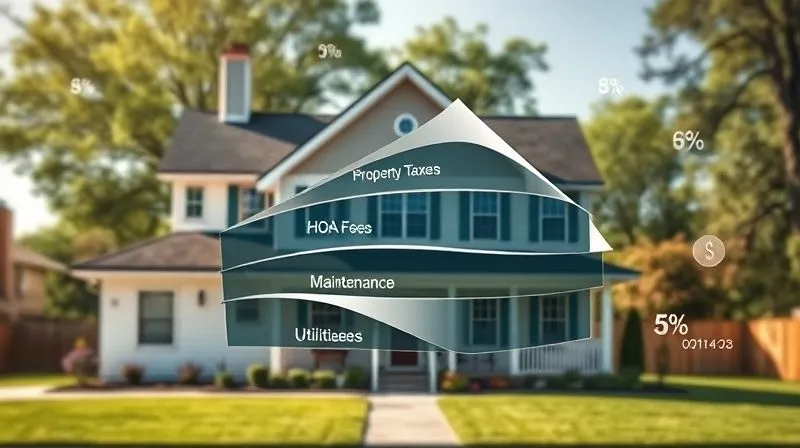
Many first-time buyers focus solely on the list price or the monthly mortgage payment, overlooking a myriad of other significant expenses. Property taxes, homeowners insurance, HOA fees, closing costs, maintenance, utilities, and potential renovation budgets are often underestimated or completely forgotten. This oversight can add tens of thousands to the initial outlay and hundreds to the monthly burden.
Emotional Attachment vs. Market Reality
Buying a home is deeply emotional. It's about security, family, future, and personal expression. This emotional investment can make it difficult to objectively assess market conditions, compromise on 'must-have' features, or accept that their budget simply won't stretch to the ideal property in their desired location. The heart often wants what the wallet can't afford.
"The biggest disservice you can do to yourself as a first-time buyer is to fall in love with a property you haven't truly vetted against your financial reality. Emotions are powerful, but numbers are undeniable."
Step 1: The Non-Negotiable Foundation – Comprehensive Financial Assessment
The very first, and arguably most critical, step in managing budget expectations is a brutally honest and comprehensive financial assessment. This isn't just about knowing your income; it's about understanding your entire financial ecosystem. I always advise my clients to secure a full mortgage pre-approval, not just a pre-qualification, as it provides a much clearer picture of what lenders are actually willing to offer.
A pre-approval involves a deep dive into your credit history, income, assets, and debts. It’s a rigorous process, but it’s invaluable. It tells you your maximum borrowing capacity and, crucially, your estimated monthly payments, including principal, interest, taxes, and insurance (PITI). This concrete number becomes your absolute ceiling and the anchor for all subsequent discussions.
- Review Your Credit Score: A higher credit score translates to better interest rates, saving you tens of thousands over the life of the loan. Obtain a copy of your credit report from all three major bureaus (Equifax, Experian, TransUnion) and dispute any inaccuracies.
- Calculate Your Debt-to-Income (DTI) Ratio: Lenders typically prefer a DTI ratio below 43%. This ratio compares your total monthly debt payments (including the prospective mortgage) to your gross monthly income. Understand this number intimately.
- Assess Your Savings: Beyond the down payment, you'll need funds for closing costs (typically 2-5% of the loan amount), moving expenses, and an emergency fund. Don't deplete your savings entirely for the down payment.
- Create a Detailed Budget: Track your income and expenses rigorously for at least three months. Identify areas where you can realistically cut back to free up more funds for your housing goals.
"Your mortgage pre-approval isn't just a piece of paper; it's your financial compass, guiding every decision you make in the home-buying journey. Embrace its boundaries, for they define your true buying power."
Understanding these numbers will empower you to set a realistic budget from the outset. According to the National Association of Realtors, buyers who get pre-approved are significantly more likely to close on a home, largely because they enter the market with clear financial parameters. For more insights on financial planning, consider resources from reputable financial institutions like Fidelity's guide to buying a house.
| Budget Category | Estimated Amount |
|---|---|
| Income (Monthly Net) | $X,XXX |
| Current Debts (Monthly) | $X,XXX |
| Savings (Total) | $X,XXX |
| Target Down Payment (20%) | $X,XXX |
| Estimated Closing Costs (3%) | $X,XXX |
| Emergency Fund (3-6 Months) | $X,XXX |
Step 2: Educating for Reality – Beyond the Sticker Price
Once you have a firm grasp of your borrowing capacity, the next crucial step is to educate yourself about the true cost of homeownership, extending far beyond the initial purchase price. This is where many first-time buyers fall short, leading to significant budget surprises down the line. I always emphasize the concept of Total Cost of Ownership (TCO) to my clients.
Understanding Total Cost of Ownership (TCO)
TCO encompasses all expenses associated with owning a home, not just the mortgage. These often-overlooked costs can add hundreds, if not thousands, to your monthly outlay. Ignoring them is a surefire way to create an unrealistic budget expectation.
- Property Taxes: These are assessed annually by your local government and can vary significantly by location. They are a non-negotiable expense.
- Homeowners Insurance: Required by lenders, this protects your home against damage. Premiums vary based on location, home value, and risk factors (e.g., flood zones).
- Homeowners Association (HOA) Fees: If you buy into a condo, townhouse, or certain planned communities, you'll pay monthly HOA fees for common area maintenance, amenities, and sometimes utilities.
- Utilities: Factor in electricity, gas, water, sewer, internet, and trash. These can be higher in a larger home than what you're used to in an apartment.
- Maintenance and Repairs: Experts recommend budgeting 1-3% of your home's value annually for maintenance. This covers everything from a leaky faucet to a new roof or HVAC system.
- Private Mortgage Insurance (PMI): If your down payment is less than 20%, you'll likely pay PMI, an additional monthly cost that protects the lender.
The Impact of Interest Rates and Loan Types
Current interest rates profoundly impact your monthly mortgage payment and your overall borrowing power. Even a quarter-point difference can mean thousands over the life of the loan. Furthermore, understanding different loan types (e.g., FHA, VA, Conventional) and their specific requirements, down payment minimums, and fees is critical. An FHA loan, for instance, might have a lower down payment but also requires mortgage insurance for the life of the loan in many cases.
According to a study by the Mortgage Bankers Association, even small fluctuations in interest rates can significantly alter affordability for first-time buyers. Staying informed on market trends is key. For a deep dive into the various costs of homeownership, I recommend exploring resources like Investopedia's guide to hidden costs.
Step 3: Bridging the Gap – Strategic Expectation Alignment
With a clear financial picture and an understanding of TCO, the next step is often the most challenging emotionally: aligning your expectations with your budget. This usually involves compromise, but it doesn't mean sacrificing your dream entirely. It means redefining what that dream looks like within your financial parameters.
The "Needs vs. Wants" Matrix
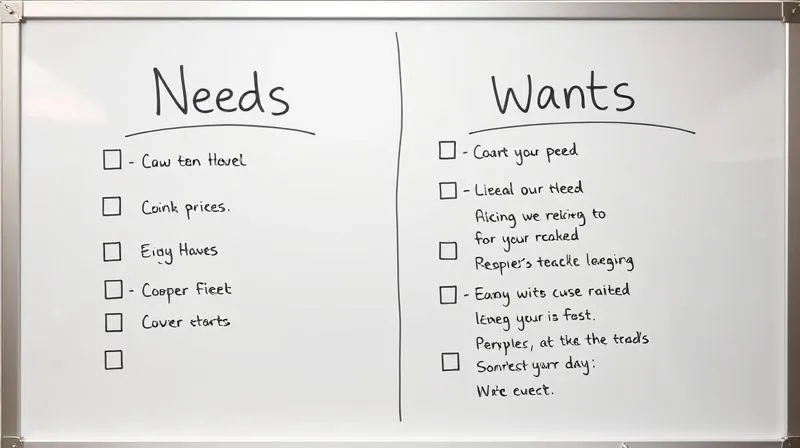
I always encourage my clients to create a detailed 'Needs vs. Wants' list. Be brutally honest. What are the absolute non-negotiables (e.g., number of bedrooms, location near work/school, safety)? What are the desirable features you could live without, or add later (e.g., granite countertops, a specific architectural style, a large backyard)?
- Needs: These are the deal-breakers, essential for your lifestyle and safety.
- Wants: These are desirable amenities that enhance your living experience but are not critical for daily function.
- Future Wants: Features you can add or upgrade over time, allowing you to get into a home sooner.
Prioritizing this list will help you make objective decisions when viewing properties. You might find that a slightly smaller home, or one needing minor cosmetic updates, becomes a viable option that fits your budget.
Exploring Alternative Locations & Property Types
If your desired neighborhood is out of reach, be open to exploring adjacent communities or areas undergoing revitalization. Often, a short commute can unlock significantly more affordable housing options. Similarly, consider different property types. While a detached single-family home might be the dream, a well-maintained townhouse or condo could offer a fantastic entry point into homeownership, often with lower maintenance responsibilities.
"Compromise isn't defeat; it's a strategic maneuver. It allows you to get your foot in the door of homeownership, building equity and gaining experience, so your next home can be closer to that initial dream."
Remember, your first home doesn't have to be your forever home. It's an investment and a stepping stone. Many successful homeowners started in a property that wasn't their 'ideal' but served its purpose perfectly for a few years, allowing them to save and build equity for their next move.
Step 4: Leveraging Expert Guidance – The Role of a Savvy Agent
In the complex world of real estate, trying to navigate everything alone, especially as a first-time buyer with potentially unrealistic expectations, is a recipe for stress and disappointment. This is where a truly experienced and ethical real estate agent becomes your most valuable asset. I've seen firsthand how the right agent can transform a daunting process into an empowering one.
A good agent doesn't just open doors; they are your market expert, your negotiator, and your financial realist. They understand local market nuances, property values, and the current competitive landscape. They can provide invaluable insights into what your budget can realistically achieve in specific areas, often showing you options you might not have considered.
- Choose for Expertise, Not Just Personality: While rapport is important, prioritize an agent with a proven track record, deep local market knowledge, and specific experience with first-time buyers. Ask for references.
- Be Honest About Your Budget & Expectations: Don't withhold information. Your agent can only help you effectively if they have a complete picture of your financial situation and your 'Needs vs. Wants' list.
- Listen to Their Market Insights: A good agent will provide data-driven advice on property values, bidding strategies, and potential future growth. They can temper unrealistic desires with current market realities.
- Leverage Their Network: Agents often have trusted networks of lenders, inspectors, contractors, and attorneys, which can streamline the entire process and save you money.
Case Study: How Sarah & Tom Found Their Home
Sarah and Tom, a young couple I worked with last year, were initially set on a charming Victorian in a highly competitive, historic neighborhood with a budget of $450,000. After their pre-approval came in at $420,000 max, and multiple offers on Victorians in their desired area went significantly over asking, they were disheartened. I sat down with them, reviewed their 'Needs vs. Wants' list, and introduced them to a thriving adjacent neighborhood that was experiencing revitalization. It had excellent schools (a need) and slightly smaller, well-maintained bungalows within their budget.
We found a beautiful 1950s bungalow for $410,000 that needed only cosmetic updates – a 'want' they could tackle over time. By leveraging my network, I connected them with a fantastic lender who secured them a competitive rate, and a reliable inspector. They closed with confidence, knowing they had made a financially sound decision that met their core needs, even if it wasn't the exact Victorian they initially envisioned. This resulted in them becoming homeowners within their budget, building equity, and avoiding the stress of overextending themselves.
For guidance on finding a qualified real estate professional, the National Association of Realtors (NAR) is an excellent resource.
Step 5: Proactive Budget Adjustments & Contingency Planning
Even with a clear budget and realistic expectations, the real estate market can throw curveballs. This is why proactive budget adjustments and robust contingency planning are essential. I always advise my clients to build a financial buffer, because unexpected expenses will arise.
Building a Buffer for Unexpected Expenses
Think of your contingency fund as your financial safety net. This should be separate from your down payment and closing costs. It's for things like unexpected repairs identified during inspection, appraisal gaps, last-minute moving costs, or even a sudden change in interest rates during the loan process. A good rule of thumb is to have 3-5% of the home's purchase price set aside as a contingency fund.
Re-evaluating Wants vs. Needs in a Tight Market
The market is dynamic. What might have been affordable last month could be out of reach this month due to rising interest rates or increased competition. Be prepared to revisit your 'Needs vs. Wants' list. If the market dictates that your initial budget for a 3-bedroom home is now only sufficient for a 2-bedroom, you'll need to decide if that 3rd bedroom is still a non-negotiable 'need' or if it can become a 'want' you save for later.
This flexibility is crucial. According to a recent report by Freddie Mac, first-time homebuyers often face tighter budgets and need to be more adaptable to secure a home. Being able to adjust your expectations on the fly can make the difference between securing a property and missing out.
| Expense Category | Estimated Contingency |
|---|---|
| Home Inspection Surprises | $500 - $2,000 |
| Appraisal Gap (Potential) | $0 - $5,000+ |
| Moving Costs | $500 - $2,500 |
| Initial Repairs/Updates | $1,000 - $5,000 |
| Unexpected Loan Fees | $200 - $800 |

Step 6: Navigating Negotiations with a Realistic Mindset
Once you've found a property that aligns with your revised budget and meets your essential needs, the negotiation phase begins. This is another area where unrealistic expectations can surface, particularly if buyers anticipate significant discounts in a seller's market or overlook the true value of a property. My advice is always to approach negotiations with a cool head and a clear understanding of market comparables.
Emotional attachment can lead to overpaying or, conversely, making an insultingly low offer that alienates the seller. Your real estate agent's expertise here is paramount. They can provide you with recent sales data for comparable properties (comps) in the area, helping you formulate an offer that is both competitive and fair.
- Base Offers on Comparables: Don't rely on online estimates. Your agent will provide recent sales data to justify your offer.
- Understand the Seller's Motivation: Is it a quick sale? Are they flexible? Your agent might uncover this.
- Be Prepared for Counteroffers: Negotiation is a back-and-forth. Don't take it personally.
- Focus on the Big Picture: A few thousand dollars more or less might seem huge now, but consider the long-term value and your overall budget comfort.
"The true 'deal' in real estate isn't always the lowest price; it's the property that meets your needs, fits your budget, and offers long-term value in a stable community."
Step 7: The Long-Term Perspective – Patience and Persistence
Finally, and perhaps most importantly, managing first-time buyer's unrealistic budget expectations requires a long-term perspective, patience, and unwavering persistence. The journey to homeownership is rarely linear, and market conditions can shift unexpectedly.
There will be moments of frustration, properties you love that slip away, or bids that don't go your way. In my career, I've seen buyers get discouraged and give up, only to regret it years later as property values continued to climb. Financial discipline, coupled with patience, will serve you well. Continue to save, monitor interest rates, and stay in touch with your agent. The right home, within your realistic budget, will eventually come along.
Remember, homeownership is a marathon, not a sprint. It's about building equity, establishing roots, and creating a future. Your first home is a significant milestone, and approaching it with realistic expectations will make the journey far more rewarding and sustainable.

Frequently Asked Questions (FAQ)
Q: What if I can't find anything within my pre-approved budget that meets my basic needs? A: This is a common challenge. First, revisit your 'Needs vs. Wants' list with your agent to ensure you're not being overly restrictive. Could a slightly different neighborhood work? Are there any grants or down payment assistance programs you qualify for? If not, it might be time to reassess your financial situation, perhaps saving for a larger down payment, improving your credit score, or considering a longer-term strategy to boost your income before re-entering the market. Sometimes, waiting a year or two can significantly improve your buying power.
Q: How much should I really save beyond the down payment for closing costs and emergencies? A: As an industry specialist, I strongly recommend having enough saved for at least 3-5% of the loan amount for closing costs, plus an additional 3-6 months' worth of living expenses as an emergency fund. This ensures you have a cushion for unexpected home repairs, job loss, or other financial surprises without jeopardizing your new home. Don't forget moving expenses and initial setup costs like new locks or utility deposits.
Q: Is it possible to negotiate closing costs with the seller? A: Yes, it is often possible to negotiate for the seller to cover a portion of your closing costs, especially in a buyer's market or if the property has been on the market for a while. This is known as 'seller concessions.' However, there are limits to how much a seller can contribute, which vary by loan type (e.g., FHA, Conventional). Your real estate agent will be crucial in advising you on the feasibility and strategy for requesting seller concessions in your specific market.
Q: What are some common pitfalls first-time buyers fall into regarding their budget? A: Beyond unrealistic expectations, common pitfalls include not getting a full pre-approval early on, underestimating hidden costs like property taxes and maintenance, depleting all savings for the down payment, falling in love with a home before fully understanding its financial implications, and failing to account for appraisal gaps or unexpected repairs during inspection. Not having a clear 'Needs vs. Wants' list also often leads to emotional overspending.
Q: Should I wait for interest rates to drop, or buy now? A: This is a complex question without a simple answer, as it depends on individual circumstances and market forecasts. While lower interest rates mean lower monthly payments, waiting could also mean higher home prices, offsetting any savings. Conversely, if prices are stable but rates are high, waiting might be beneficial. Focus on what you can afford comfortably today. You can always refinance if rates drop significantly in the future. Consult with a trusted mortgage lender and real estate agent for personalized advice based on current market conditions and your financial goals.
Key Takeaways and Final Thoughts
Navigating the journey to your first home requires a blend of aspiration and pragmatism. Managing unrealistic budget expectations isn't about crushing dreams; it's about empowering you with the knowledge and tools to achieve homeownership on a stable, sustainable foundation. Here are the critical takeaways:
- Know Your Numbers: A comprehensive financial assessment and mortgage pre-approval are your non-negotiable starting points.
- Understand TCO: Look beyond the list price and factor in all hidden costs of homeownership.
- Prioritize & Compromise: Distinguish between needs and wants, and be open to strategic compromises on location or property features.
- Leverage Experts: A skilled real estate agent is your advocate and guide through market complexities.
- Plan for Contingencies: Always build a financial buffer for the unexpected.
- Be Patient & Persistent: Homeownership is a marathon; stay disciplined and trust the process.
As an industry veteran, I can assure you that the satisfaction of owning your first home, knowing you've made a sound financial decision, is unparalleled. By embracing these strategies, you're not just buying a house; you're investing in your future with clarity, confidence, and realistic expectations. Your dream home awaits, grounded in financial reality.
Recommended Reading
- 7 Strategies to Shield Your Multi-Unit Portfolio from Rising Rates
- Emergency Shield: 7 Urgent Steps to Protect Business Finances from Identity Theft Hacks
- 7 Strategies: Protecting Your Professional License During Personal Bankruptcy?
- 7 Advanced Strategies to Defer Capital Gains on High-Growth Assets
- 7 Urgent Steps for Small Businesses Facing a Consumer Lawsuit





Comments
Leave a comment below. Your email will not be published. Required fields marked with *