



How to Fund Budget Trips Without Draining Professional Savings?
For over 15 years in the finance and budget travel niche, I've witnessed a recurring dilemma plague countless aspiring adventurers: the yearning to explore the world on a budget versus the deeply ingrained, and entirely valid, fear of jeopardizing their professional savings. This isn't just about finding a cheap flight; it’s about navigating the intricate balance between living your dreams today and securing your financial future tomorrow.
The allure of exploring new cultures, experiencing breathtaking landscapes, or simply escaping the daily grind is powerful. Yet, this wanderlust often clashes directly with a profound, and entirely valid, fear: jeopardizing long-term financial security, retirement funds, or essential emergency reserves. The common misconception is that budget travel inherently means sacrificing financial prudence, leading many to either forgo their travel dreams or, worse, make impulsive decisions that drain their hard-earned assets.
This comprehensive guide isn't just about saving pennies; it's about building robust, sustainable financial strategies that empower your travel dreams while safeguarding your professional savings, retirement funds, and emergency reserves. I'll share actionable frameworks, real-world insights, and proven methods that I've seen successfully implemented, ensuring you can travel more without ever having to touch your critical financial foundations. Let's redefine what's possible for your travel ambitions.
Establishing Your Dedicated Travel Fund: The Non-Negotiable First Step
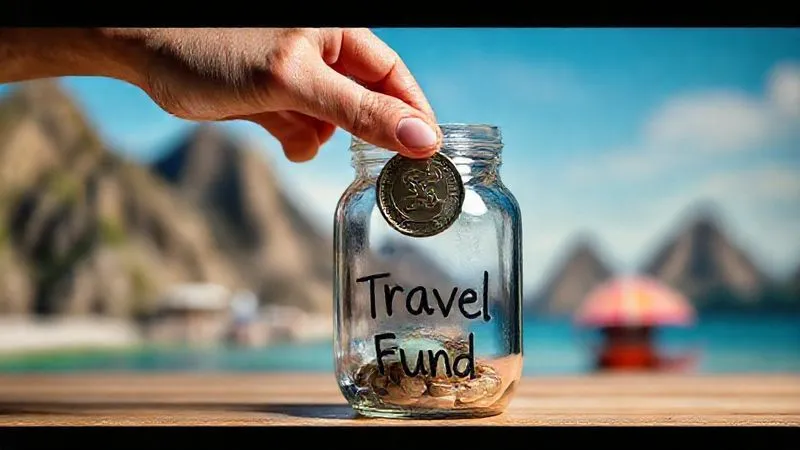
The cornerstone of funding budget trips without impacting your professional savings is the creation of a completely separate, dedicated travel fund. Think of it as ring-fencing your travel aspirations. This fund acts as your personal travel bank, ensuring that every dollar allocated to your adventures comes from a deliberate, pre-planned source, rather than an impulsive withdrawal from your emergency or investment accounts.
Automating Your Savings: Set It and Forget It
One of the most powerful tools in personal finance is automation. I've seen this strategy transform financial habits for clients time and again. By automating your travel savings, you remove the decision-making friction and ensure consistent progress towards your goals.
- Calculate Your Goal: Determine a realistic amount you want to save for your next trip, considering all projected expenses.
- Set a Regular Transfer: Based on your goal and timeline, establish a weekly or bi-weekly automatic transfer from your checking account directly into your dedicated travel savings account.
- Treat It Like a Bill: View this transfer as a non-negotiable expense, just like rent or utilities. It's paying your future self for incredible experiences.
- Adjust as Needed: Life happens. If your income changes, adjust the transfer amount, but always strive to contribute something, even if small.
Choosing the Right Account: High-Yield vs. Accessible
The type of account you choose for your travel fund matters. While your professional savings might reside in investment portfolios, your travel fund needs a different approach.
- High-Yield Savings Accounts (HYSA): For funds you plan to use within 1-3 years, an HYSA is often ideal. It offers better interest rates than traditional savings accounts, meaning your money grows slightly faster, and it's easily accessible when you're ready to book.
- Money Market Accounts: These can offer competitive rates and often come with check-writing privileges, which might be useful for certain travel-related payments, though they typically have higher minimum balance requirements.
- Avoid Investment Accounts: Unless your trip is several years away and you're comfortable with market volatility for short-term goals, I strongly advise against putting travel funds into stock market investments. The risk of your principal decreasing just before your trip is too high for a short-term goal.
Unlocking New Income Streams: Side Hustles for Travel
The most effective way to fund budget trips without draining professional savings is to generate entirely new income specifically for travel. This approach ensures your existing financial commitments and long-term goals remain untouched. I've seen countless individuals successfully leverage their skills or hobbies into profitable side hustles, transforming their travel dreams into reality.
Leveraging Your Skills: Freelancing & Consulting
Your existing professional skills are often your most valuable asset when it comes to generating extra income. Think about what you do well in your day job, or what you're passionate about, and consider how that can be offered on a freelance basis.
- Writing & Editing: If you have strong communication skills, platforms like Upwork, Fiverr, or even direct outreach to small businesses can lead to gigs.
- Graphic Design: For the visually inclined, creating logos, social media graphics, or website elements is in high demand.
- Virtual Assistant Services: Many entrepreneurs and small businesses need help with administrative tasks, scheduling, or social media management.
- Consulting: If you're an expert in a niche field, offering your knowledge on an hourly basis can be highly lucrative.
Passive Income Opportunities: Beyond the 9-to-5
While many side hustles require active participation, some can generate income with an initial setup, requiring less ongoing effort. This is a fantastic way to continuously feed your travel fund.
- Rental Income: If you have a spare room or an unused property, consider short-term rentals through platforms like Airbnb.
- Digital Products: Create and sell e-books, online courses, stock photos, or templates related to your expertise. Once created, they can sell repeatedly.
- Affiliate Marketing: Promote products or services you genuinely believe in and earn a commission on sales made through your unique link. This often works well through a blog or social media presence.
| Side Hustle | Initial Effort | Income Potential | Time Commitment |
|---|---|---|---|
| Freelance Writing | Medium | Moderate to High | Flexible |
| Online Tutoring | Low | Moderate | Scheduled |
| Selling Digital Products | High | High (passive after setup) | Variable |
| Pet Sitting/Dog Walking | Low | Moderate | Flexible |
Smart Spending & Cost Reduction: Reallocating Existing Funds
Sometimes, the money you need for your travels isn't found in a new income stream, but rather by optimizing your current expenditures. This strategy involves a deep dive into your existing budget to identify areas where you can trim costs and reallocate those savings directly to your travel fund. It’s about making conscious choices to prioritize experiences over unnecessary consumption.
Auditing Your Monthly Expenses: Where Can You Trim?
Many individuals are surprised by how much 'leakage' there is in their monthly budget. A thorough expense audit can uncover significant savings that can be redirected to your travel goals.
- Track Everything: For at least one month, meticulously track every dollar you spend. Use a budgeting app like Forbes Advisor's recommended budgeting apps or a simple spreadsheet.
- Categorize and Analyze: Group your expenses (e.g., dining out, subscriptions, entertainment, groceries). Identify categories where spending is higher than you expected or where you derive little value.
- Cut Non-Essentials: Are there subscriptions you rarely use? Can you reduce dining out from five times a month to two? Can you find cheaper alternatives for certain services?
- Negotiate Bills: Call your internet, cable, or insurance providers. Often, you can negotiate lower rates or find better deals elsewhere.
- Reallocate Immediately: The crucial step: as soon as you identify savings, transfer that exact amount directly to your travel fund. Don't let it sit in your checking account, where it's easily spent.
The 'No-Spend' Challenge: Boosting Your Travel Pot
A 'no-spend' challenge is a powerful, short-term tactic to rapidly accelerate your travel savings. It involves committing to spending money only on absolute necessities (rent, utilities, basic groceries, transportation to work) for a defined period, usually a week or a month.
- Define Your Rules: Be clear about what constitutes a 'necessity' versus a 'want.'
- Set a Duration: Start with a week, then try two weeks, or even a full month.
- Track Your Savings: At the end of the challenge, calculate how much you saved by avoiding discretionary spending and transfer it all to your travel fund.
- Learn Your Habits: This challenge often highlights spending triggers and helps you identify long-term changes you can make to your habits.
Travel Hacking & Rewards Programs: Maximizing Every Dollar
Travel hacking isn't about getting something for nothing; it's about strategically leveraging existing systems to reduce the cash cost of travel. This is a sophisticated way to fund budget trips without touching your core savings, by using points and miles generated from everyday spending. I've personally seen incredible trips funded almost entirely through smart rewards accumulation.
Credit Card Rewards: Strategic Accumulation & Redemption
Used responsibly, credit card rewards can be a game-changer for budget travel. The key is never carrying a balance and always paying off your cards in full each month to avoid interest charges that negate any rewards.
- Sign-Up Bonuses: The fastest way to accumulate a large number of points is through sign-up bonuses. Many travel-focused cards offer tens of thousands of points after meeting a minimum spending requirement in the first few months.
- Category Bonuses: Choose cards that offer bonus points on categories where you spend the most (e.g., groceries, dining, travel, gas).
- Strategic Redemption: Understand the value of your points. Some programs offer better value when redeemed for flights, others for hotels. Research is crucial to maximize your returns. Sites like NerdWallet offer excellent resources for comparing credit card rewards.
"The true art of travel hacking isn't about getting something for nothing; it's about optimizing your existing spending to generate maximum travel value without incurring debt. It requires discipline and a strategic mindset."
Loyalty Programs: Airlines, Hotels, and Beyond
Beyond credit cards, joining and actively using loyalty programs directly with travel providers can yield significant benefits.
- Airline Miles: Stick to one or two airline alliances to consolidate your miles. Even if you pay for flights, you're accumulating miles for future trips.
- Hotel Points: Similarly, choose a preferred hotel chain and aim for elite status. This can unlock free nights, upgrades, and other perks.
- Rental Car & Other Programs: Don't overlook loyalty programs for rental cars, cruises, or even online travel agencies. Every point adds up.
Investing for Short-Term Travel Goals: A Calculated Approach
While I strongly advise against using high-risk investments for your travel fund, especially for short-term goals, there are calculated, low-risk investment approaches that can help your travel money grow slightly faster than a standard savings account. This is distinct from your professional investment portfolio, which is designed for long-term wealth accumulation and retirement. The goal here is capital preservation with modest growth.
Understanding Low-Risk Investments for Travel Savings
When your travel goal is within a 1-3 year horizon, liquidity and capital preservation are paramount. You don't want your travel fund to shrink due to market fluctuations.
- High-Yield Savings Accounts (HYSA): As mentioned earlier, these are often the best bet for their liquidity and slightly better interest rates compared to traditional banks. They are FDIC-insured, meaning your principal is safe.
- Certificates of Deposit (CDs): If you have a clear timeline (e.g., 12 or 18 months until your trip), a CD can offer a guaranteed interest rate, usually higher than an HYSA, in exchange for locking up your money for a specific term. Just ensure the term aligns perfectly with your travel plans to avoid early withdrawal penalties.
- Money Market Accounts: These offer a hybrid between checking and savings accounts, often with competitive interest rates and limited check-writing capabilities. They are also typically FDIC-insured.
For more detailed information on safe investment vehicles, resources like Investopedia provide excellent educational content.
Case Study: Sarah's Strategic Travel Investment
Sarah, a marketing professional, wanted to save $4,000 for a two-week trip to Southeast Asia in 18 months. She already had her emergency fund and retirement savings secured. Instead of letting her travel money sit in a standard savings account earning minimal interest, she decided to open an 18-month Certificate of Deposit (CD) with a local credit union offering a 2.5% APY, significantly higher than her bank's 0.05% savings rate. She funded the CD with initial savings and continued to contribute a small amount monthly to her HYSA, which she would then roll into a new CD or use for immediate travel expenses once the main CD matured. By the time her trip arrived, the interest earned, though modest, covered a significant portion of her flight booking fees, a direct benefit of her calculated, low-risk approach without touching her professional savings.
Budgeting During the Trip: Extending Your Travel Fund's Reach
Saving money for your trip is only half the battle. To truly fund budget trips without draining professional savings, you must also be a savvy spender while you're on the road. The goal is to make every dollar of your dedicated travel fund stretch as far as possible, maximizing your experiences without overspending.
Pre-Trip Planning: The Foundation of Economical Travel
The groundwork for an economical trip is laid long before you depart. Smart planning can save you hundreds, if not thousands, of dollars.
- Flexible Dates & Destinations: If possible, be flexible with your travel dates to take advantage of off-season rates. Consider less popular, but equally beautiful, destinations that offer better value.
- Book in Advance (Sometimes): Flights and popular accommodations are often cheaper when booked several months out. However, for some last-minute deals, flexibility can pay off. Research typical pricing trends for your chosen destination.
- Accommodation Choices: Opt for hostels, guesthouses, Airbnb rooms, or even house-sitting. These are significantly cheaper than hotels and often offer a more authentic experience.
- Transportation Research: Understand local public transport options. Research economical ways to get from the airport to your accommodation.
On-the-Ground Tactics: Local Wisdom for Budgeteers
Once you're at your destination, smart choices can make a huge difference in your daily spending.
- Eat Like a Local: Avoid tourist traps. Seek out local markets, street food vendors, and small, non-chain restaurants where prices are lower and the food is more authentic. Consider cooking some meals if your accommodation allows.
- Walk Everywhere: It’s free, great exercise, and allows you to discover hidden gems. Use public transportation for longer distances, avoiding taxis and ride-shares unless absolutely necessary.
- Free Activities: Research free museums, parks, walking tours, and cultural events. Many cities offer a wealth of experiences at no cost.
- Mindful Souvenirs: Instead of expensive trinkets, opt for small, meaningful souvenirs or focus on collecting experiences and photos.
| Category | Budget Tip | Potential Savings |
|---|---|---|
| Accommodation | Hostels, guesthouses, Airbnb rooms | 30-50% |
| Food | Street food, local markets, cook own meals | 40-60% |
| Transportation | Public transport, walking, ride-sharing apps | 20-40% |
| Activities | Free walking tours, parks, public museums | 50-70% |
Ethical & Sustainable Travel Funding: Giving Back While Exploring
Beyond traditional financial strategies, there's a growing movement towards ethical and sustainable ways to fund and experience travel, often significantly reducing costs while enriching your journey. This approach not only helps you fund budget trips without draining professional savings but also aligns your travel with a deeper sense of purpose and responsibility.
Voluntourism and Work-Exchange Programs
For those with time and a desire to contribute, voluntourism and work-exchange programs offer a unique opportunity to travel for extended periods with minimal accommodation and food costs.
- Workaway & Worldpackers: Platforms like Workaway and Worldpackers connect travelers with hosts around the world who offer free accommodation and sometimes meals in exchange for a few hours of work per day. This could be anything from helping in a hostel, farming, teaching English, or assisting with creative projects.
- WWOOFing: For those interested in organic farming, WWOOF (World Wide Opportunities on Organic Farms) offers opportunities to live and work on farms globally in exchange for food and lodging.
- Skills-Based Volunteering: If you have specific professional skills (e.g., IT, marketing, construction), you might find organizations seeking volunteers who can contribute their expertise in exchange for a low-cost or free stay.
Supporting Local Economies: A Mindful Approach
Choosing to spend your money in ways that directly benefit local communities can also lead to more economical travel, as you bypass expensive, often foreign-owned, tourist services. It's a win-win: your budget stretches further, and you contribute positively to the places you visit.
- Local Homestays & Guesthouses: Instead of large hotel chains, opt for locally owned accommodations. Your money directly supports a local family or entrepreneur.
- Artisan Markets: Purchase souvenirs directly from local artisans, ensuring fair prices for their work and unique, authentic items.
- Community-Based Tourism: Seek out tours and experiences organized by local cooperatives or community groups, which often provide more immersive experiences at fairer prices, with profits directly benefiting the community.

The Psychology of Travel Saving: Overcoming Mental Blocks
Saving for travel, especially while protecting your professional savings, isn't just about numbers; it's deeply psychological. I've observed that the most successful budget travelers are those who master the mental game of delayed gratification, motivation, and habit formation. Understanding and overcoming common mental blocks is crucial for sustained success.
Visualizing Your Goals: Staying Motivated
It's easy to lose motivation when your travel goal feels distant. Visualization is a powerful tool to keep your dreams alive and your savings on track.
- Create a Vision Board: Gather images of your desired destination, activities, and experiences. Place it somewhere you'll see it daily.
- Set Mini-Goals: Break down your large savings goal into smaller, more achievable milestones. For example, 'Save $500 for flights by month 3' or 'Book accommodation by month 6.'
- Use a Savings Tracker: Visually track your progress. Seeing your savings grow, even incrementally, provides a significant psychological boost.
Celebrating Milestones: Reinforcing Positive Habits
Positive reinforcement is key to building lasting habits. Don't wait until you've reached your final goal to acknowledge your efforts.
- Small Rewards: When you hit a savings milestone, treat yourself to a small, non-travel-related reward that doesn't derail your budget (e.g., a nice coffee, a new book, a movie night at home).
- Share Your Progress: Tell a trusted friend or family member about your goals and progress. Their encouragement can be a powerful motivator.
- Reflect on Your Progress: Take time to appreciate how far you've come. This reinforces the positive feeling associated with saving and makes it easier to continue.
Frequently Asked Questions (FAQ)
Is it ever okay to use a small portion of my emergency fund for a trip? Absolutely not. Your emergency fund is for genuine emergencies: job loss, medical crisis, unexpected home repairs. Dipping into it for discretionary spending, no matter how tempting, undermines its purpose and puts your financial security at severe risk. This is precisely why we advocate for a separate, dedicated travel fund.
How quickly can I realistically build a decent travel fund? The timeline varies greatly depending on your income, expenses, and the cost of your desired trip. However, by combining aggressive side hustling, diligent expense cutting, and strategic travel hacking, many individuals can save several thousand dollars within 6-12 months. It requires discipline and consistent effort, but it's entirely achievable.
What's the riskiest funding method I should avoid? Using high-interest credit cards for travel expenses you can't immediately pay off is by far the riskiest. The interest charges will quickly negate any 'deals' you find and can lead to a cycle of debt. Similarly, taking out personal loans or dipping into retirement accounts (like a 401k loan or early IRA withdrawal) for travel should be avoided at all costs, as they incur significant penalties and jeopardize your long-term financial health.
Should I prioritize paying off debt or saving for travel? In most cases, prioritizing high-interest debt (like credit card debt) over travel savings is the financially sound choice. The interest saved by eliminating debt often far outweighs any modest returns on travel savings. Once high-interest debt is managed, you can then allocate those freed-up funds to your travel goals without financial guilt.
Can I really travel internationally on a very tight budget? Yes, absolutely! Many countries, particularly in Southeast Asia, Central/South America, and parts of Eastern Europe, offer incredibly low costs of living and travel. By embracing local transport, street food, hostels, and free activities, you can stretch your travel fund surprisingly far. It requires flexibility, resourcefulness, and a willingness to step outside the typical tourist bubble, but it's a deeply rewarding way to see the world.
Key Takeaways and Final Thoughts
Funding your travel dreams without compromising your professional savings is not just possible; it's a testament to smart financial planning and disciplined execution. As an expert in this niche, I've seen firsthand how these strategies empower individuals to live richer, more adventurous lives without sacrificing their financial security.
- Separate Your Funds: Always establish a dedicated travel savings account, distinct from your emergency fund or professional investments.
- Generate New Income: Leverage side hustles and passive income streams to create new money specifically for travel.
- Optimize Existing Spending: Audit your budget to find areas for cost reduction and reallocate those savings to your travel fund.
- Harness Rewards: Use credit card points and loyalty programs strategically and responsibly to offset travel costs.
- Invest Wisely (for Travel): Utilize low-risk options like HYSAs or CDs for short-term travel savings, avoiding market volatility.
- Budget During the Trip: Plan meticulously and make smart choices on the ground to maximize the longevity of your travel fund.
- Embrace Ethical Travel: Consider work-exchanges or voluntourism for deeply immersive and cost-effective experiences.
- Stay Motivated: Employ psychological strategies like visualization and celebrating milestones to maintain focus and discipline.
Remember, every small, consistent step you take towards these strategies builds momentum. You don't need to implement everything at once, but rather choose the methods that resonate most with your lifestyle and financial situation. Your professional savings are the bedrock of your future; your travel fund is the fuel for your present adventures. With a clear strategy and unwavering commitment, you can enjoy the best of both worlds – exploring the globe with peace of mind, knowing your financial future remains robust and secure. Happy travels, responsibly funded!
Recommended Reading
- Quantify Your Impact: Measuring Values-Based Investments' Real Effect
- 7 AI Analytics Strategies to Slash Online Loan Defaults by 30%
- 6 Expert Strategies to Minimize Estate Taxes on Complex Retirement Assets
- 7 Strategies: Protecting Your Professional License During Personal Bankruptcy?
- Global Trade: Fueling or Foiling Small Business Growth?






Comments
Leave a comment below. Your email will not be published. Required fields marked with *