



How to reduce online loan default rates using AI analytics?
For over 15 years in the dynamic world of financial technology, I've witnessed countless innovations and, frankly, some persistent headaches. One challenge that consistently plagues online lenders, irrespective of their scale, is the specter of loan defaults. It's a fundamental threat to profitability and sustainability, and it's a problem I've dedicated a significant part of my career to understanding and mitigating.
The traditional credit assessment models, while foundational, are increasingly proving inadequate in the fast-paced, data-rich environment of digital lending. They often paint an incomplete picture, leading to either overly cautious lending practices that stifle growth or, worse, underestimating risk, resulting in painful default rates. This isn't just about lost revenue; it erodes trust, drains resources, and can severely impact a lender's market standing.
But what if there was a way to peer into the future, to not just assess risk but to predict and proactively prevent defaults with unprecedented accuracy? In this comprehensive guide, I'll share my insights into how to reduce online loan default rates using AI analytics. We'll explore actionable frameworks, real-world strategies, and expert perspectives to transform your risk management, moving beyond reactive measures to a truly predictive and profitable lending model.
The Shifting Sands of Online Lending Risk
The online lending landscape is a double-edged sword. On one hand, it offers unparalleled access to capital for underserved populations and streamlines the borrowing process. On the other, it introduces a unique set of vulnerabilities. The speed of transactions, the lack of face-to-face interaction, and the sheer volume of applications create fertile ground for misjudged risk and outright fraud.
I've observed that many online lenders, despite their digital facade, still rely on underwriting processes that are fundamentally analog at their core. These methods, often based on static credit scores and limited financial history, struggle to keep pace with evolving borrower behaviors and sophisticated fraud tactics. The result? A loan book riddled with higher-than-acceptable default rates, impacting margins and growth potential.
"In the digital age, relying solely on historical credit data is like driving forward while looking in the rearview mirror. You'll miss the obstacles ahead." - My personal insight.
The shift towards a more dynamic and inclusive lending model necessitates a paradigm change in how we perceive and manage risk. We need tools that can process vast, disparate datasets, identify subtle patterns, and provide real-time insights. This is precisely where the transformative power of AI analytics comes into play, offering a robust solution to a pervasive industry problem.
Beyond Traditional Credit Scores: The Power of AI in Risk Assessment
To truly reduce online loan default rates using AI analytics, we must first acknowledge the limitations of conventional credit scoring. While FICO scores and similar metrics provide a baseline, they often miss crucial nuances, especially for 'thin file' borrowers or those with non-traditional income streams. AI, however, thrives on complexity.
Leveraging Alternative Data Sources
One of AI's greatest strengths in lending is its ability to ingest and analyze a multitude of alternative data points that traditional models ignore. I'm talking about data from utility payments, rent history, social media activity (with ethical considerations), browsing patterns, device information, and even psychometric assessments. These data points, when analyzed by machine learning algorithms, reveal a far more comprehensive picture of a borrower's financial stability and intent.
For instance, a consistent history of on-time rent payments, even without a robust credit card history, can be a strong indicator of financial responsibility. AI models can weigh these factors, providing a more accurate and inclusive risk assessment. This expands the pool of creditworthy applicants while simultaneously reducing the risk of defaults among previously overlooked segments.
Dynamic Risk Profiling
Unlike static credit scores, AI-driven risk profiles are dynamic. They learn and adapt in real-time. As a borrower interacts with your platform or changes their financial behavior, the AI model can update their risk score. This continuous learning allows lenders to identify emerging risks or improved creditworthiness much faster than traditional methods.
Imagine a borrower whose financial situation deteriorates post-loan approval. A static score wouldn't reflect this until much later. An AI model, however, by monitoring transaction data, payment patterns, and other indicators, could flag this change early, enabling proactive intervention. This capability is paramount in mitigating potential defaults before they escalate.
Predictive Analytics: Spotting Trouble Before It Starts
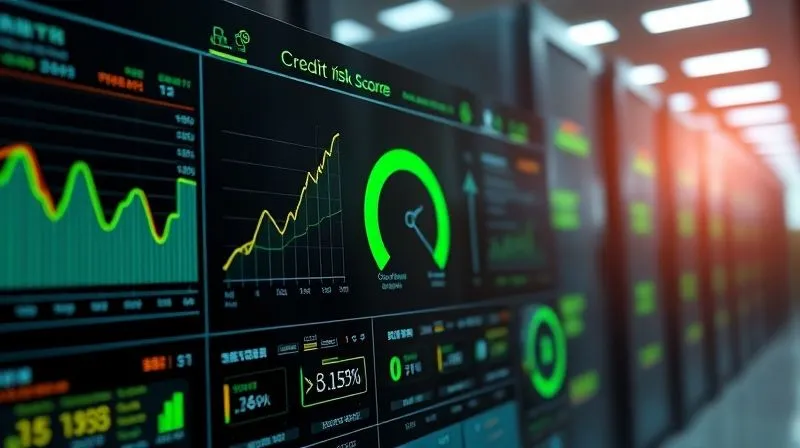
This is where AI truly shines – its ability to predict future outcomes. Predictive analytics transforms risk management from a reactive process into a proactive defense against defaults. By analyzing historical data, identifying patterns, and understanding correlations, AI models can forecast the likelihood of a loan going into default with remarkable precision.
Early Warning Systems for Delinquency
I've seen firsthand how effective AI-powered early warning systems can be. These systems continuously monitor active loans for subtle indicators of distress. These aren't just missed payments; they can include changes in spending habits, increased utilization of other credit lines, or even unusual login patterns on a banking app.
When an AI model identifies these pre-delinquency signals, it can trigger automated alerts to the lender. This allows for timely intervention, such as offering repayment plan adjustments, financial counseling, or proactive communication, significantly increasing the chances of preventing a full-blown default. A study published by McKinsey & Company highlighted that early intervention, often facilitated by AI, can reduce loan losses by 10-20%. Read more on AI in finance by McKinsey.
| Risk Score Range | Predicted Default Probability | Recommended Action |
|---|---|---|
| 900-1000 (Excellent) | <0.5% | Offer prime rates, automated approval |
| 750-899 (Good) | 0.5%-2% | Standard rates, minimal human review |
| 600-749 (Fair) | 2%-7% | Adjusted rates, detailed human review, potential collateral |
| 450-599 (Poor) | 7%-15% | High interest, strict terms, or decline with explanation |
| <450 (Very Poor) | >15% | Decline, refer to financial counseling |

Behavioral Biometrics and Fraud Detection
Fraud is an insidious contributor to online loan default rates. It's not just about identity theft; it encompasses synthetic identities, first-party fraud (borrowers taking out loans with no intention of repaying), and application fraud. AI, particularly behavioral biometrics, offers a powerful defense.
Identifying Anomalous Borrower Behavior
Behavioral biometrics analyzes how a user interacts with a device – keystroke dynamics, mouse movements, scrolling speed, and even how they hold their phone. These seemingly insignificant actions create a unique 'digital fingerprint' for each user. If an applicant's behavior deviates significantly from their established pattern, or from typical human behavior, AI can flag it as suspicious.
For example, if an application is completed at an unusually fast speed, with perfectly consistent keystroke timings, or from an IP address that doesn't match the claimed location, these anomalies can indicate a bot or a fraudster. This layer of security is invisible to the legitimate user but highly effective against malicious actors.
Combating Synthetic Identity Fraud
Synthetic identity fraud, where fraudsters combine real and fake information to create a new identity, is particularly challenging for traditional systems. AI, by cross-referencing vast databases and identifying inconsistencies across multiple data points – even subtle ones – can detect these fabricated identities during the application process. This saves lenders from approving loans to non-existent or fraudulent entities, which would inevitably lead to default.
"The battle against financial fraud is an arms race. AI is our most advanced weapon, constantly learning and adapting to new threats." - My observation from the field.
Integrating these AI-powered fraud detection mechanisms not only prevents direct losses but also strengthens the overall integrity of the lending ecosystem, fostering greater trust among legitimate borrowers and investors. Forbes often covers advancements in AI fraud detection.
Optimizing Collections and Recovery with AI
Even with the most sophisticated predictive models, some loans will inevitably enter delinquency. The goal then shifts from prevention to efficient recovery. Here too, AI analytics offers significant advantages in how to reduce online loan default rates by optimizing collections strategies.
Intelligent Segmentation for Collections
Traditional collections often use a one-size-fits-all approach or simple segmentation. AI, however, can segment delinquent borrowers into highly granular groups based on their predicted likelihood to repay, their financial situation, and even their preferred communication channels. This allows for a far more targeted and effective collections strategy.
For example, AI can identify borrowers who are experiencing temporary hardship and are likely to respond positively to a flexible payment plan, versus those who are intentionally avoiding repayment. This intelligent segmentation ensures that resources are allocated effectively, and communication is tailored for maximum impact, leading to higher recovery rates and better customer relationships.
Personalized Outreach Strategies
Beyond segmentation, AI can personalize the outreach itself. It can determine the optimal time, channel (SMS, email, call), and message content for each borrower. Imagine an AI determining that a borrower is most likely to respond to an SMS reminder on a Tuesday afternoon, offering a specific, flexible payment option. This level of personalization dramatically increases the effectiveness of collection efforts.
By shifting from aggressive, generalized tactics to empathetic, data-driven personalized approaches, lenders can not only recover more funds but also preserve customer relationships, potentially turning a delinquent borrower into a future loyal customer. This is a subtle yet powerful aspect of how to reduce online loan default rates in the long run.

Building Robust AI Models: A Step-by-Step Approach
Implementing AI analytics isn't a 'set it and forget it' solution. It requires a structured, iterative approach to ensure models are effective, fair, and continuously improving. Here's how I advise my clients to build robust AI models to reduce online loan default rates:
- Define Clear Objectives: Start with specific, measurable goals. Is it reducing default rates by X%, improving approval rates by Y% for certain segments, or both? Clear objectives guide model development.
- Data Collection and Preparation: This is the bedrock. Gather all relevant traditional and alternative data. Focus on data quality, cleaning, and normalization. Garbage in, garbage out.
- Feature Engineering: This involves selecting and transforming raw data into features that AI models can use effectively. This often requires deep domain expertise to identify the most predictive variables.
- Model Selection and Training: Choose appropriate machine learning algorithms (e.g., Random Forests, Gradient Boosting, Neural Networks) based on your data and objectives. Train the models using historical data, ensuring a balanced dataset for accuracy.
- Validation and Testing: Rigorously test the model's performance on unseen data. Use metrics like AUC-ROC, precision, recall, and F1-score. Crucially, test for bias and fairness across different demographic groups.
- Deployment and Monitoring: Integrate the AI model into your lending workflow. Crucially, continuously monitor its performance in a live environment. Model drift is a real phenomenon; what works today might degrade over time due to changing borrower behavior or economic conditions.
- Iterative Refinement: AI models are not static. Regularly retrain them with new data, adjust parameters, and explore new algorithms. This continuous improvement cycle is key to sustained success in reducing online loan default rates.
Case Study: FinTech Innovators Inc. Transforms Default Rates
FinTech Innovators Inc., a mid-sized online lender specializing in personal loans, faced a persistent 12% default rate, significantly impacting their bottom line and investor confidence. Traditional credit checks and manual underwriting processes were simply not scalable or accurate enough for their rapid growth.
They partnered with an AI solutions provider (following the steps I outlined above) to implement a comprehensive AI analytics platform. This involved integrating alternative data sources like utility payments and open banking data, developing a dynamic risk scoring model, and deploying an early warning system. Within 18 months, by proactively identifying at-risk borrowers and offering personalized intervention strategies, FinTech Innovators Inc. achieved a remarkable 40% reduction in their default rate, bringing it down to 7.2%. This not only saved them millions in potential losses but also allowed them to responsibly expand their lending portfolio by 25%, demonstrating the profound impact of AI on their operational efficiency and profitability.
Ethical AI and Regulatory Compliance in Lending
While the power of AI to reduce online loan default rates is undeniable, it comes with a critical responsibility: ensuring ethical deployment and strict adherence to regulatory compliance. As an industry veteran, I cannot stress this enough – unchecked AI can lead to discriminatory outcomes and severe legal repercussions.
Ensuring Fairness and Transparency
AI models, if not carefully designed and monitored, can inadvertently perpetuate or even amplify existing biases present in historical data. This can lead to algorithmic discrimination, where certain demographic groups are unfairly denied loans or offered less favorable terms. It's imperative to implement robust bias detection and mitigation techniques throughout the AI lifecycle.
Transparency, often referred to as 'explainable AI' (XAI), is also crucial. Lenders must be able to understand why an AI made a particular decision, especially when it comes to loan denials. This not only builds trust but is often a regulatory requirement. Harvard Business Review frequently publishes on ethical AI in business.
Navigating the Regulatory Landscape
The regulatory environment for AI in finance is rapidly evolving. Lenders must be acutely aware of regulations like the Equal Credit Opportunity Act (ECOA) in the US, GDPR in Europe, and similar consumer protection laws globally. These regulations ensure fair lending practices and data privacy. AI models must be auditable, explainable, and demonstrable as non-discriminatory.
I advise establishing an internal AI ethics committee or working closely with legal and compliance teams to ensure all AI deployments meet stringent ethical and legal standards. This proactive approach prevents costly legal battles and safeguards your brand reputation, which is just as important as reducing default rates.
The Future of Online Lending: Proactive, Personalized, Profitable
The journey to effectively reduce online loan default rates using AI analytics is not a destination but a continuous evolution. As AI technology advances and data sources expand, the capabilities of predictive lending will only grow. We are moving towards an era where every loan decision is informed by a holistic, real-time understanding of risk, tailored to the individual.
I envision a future where AI not only prevents defaults but also proactively offers financial wellness advice to borrowers, helping them manage their finances better and ensuring they remain in good standing. This symbiotic relationship between lender and borrower, powered by intelligent analytics, fosters a more resilient and inclusive financial ecosystem.

| Aspect | Traditional Lending | AI-Driven Lending |
|---|---|---|
| Credit Assessment | Static FICO score, limited data | Dynamic risk profile, alternative data, behavioral biometrics |
| Default Prevention | Reactive, manual review after missed payments | Proactive early warning systems, predictive analytics, real-time monitoring |
| Fraud Detection | Rule-based, signature matching | Pattern recognition, anomaly detection, synthetic identity combating |
| Collections | Generic outreach, aggressive tactics | Intelligent segmentation, personalized outreach, empathetic strategies |
| Loan Outcomes (Typical) | Higher default rates, missed opportunities | Significantly reduced default rates, expanded credit access, higher profitability |
Frequently Asked Questions (FAQ)
Q: Is AI analytics only for large lenders with massive data sets? Not at all. While larger lenders certainly benefit from their data volume, many AI solutions are now accessible to smaller and mid-sized online lenders through cloud-based platforms and API integrations. The key is smart data utilization, not just sheer volume. Even with more modest datasets, AI can uncover patterns that human analysts would miss.
Q: How long does it take to implement AI analytics and see results? The timeline varies significantly based on the complexity of the models and the existing data infrastructure. A pilot program focusing on a specific problem (e.g., reducing application fraud) can show results in 3-6 months. Full-scale integration and optimization to significantly reduce online loan default rates might take 12-18 months, with continuous refinement thereafter.
Q: What are the biggest challenges in adopting AI for default reduction? From my experience, the biggest challenges include data quality and integration, a shortage of skilled AI talent, ensuring regulatory compliance and ethical use (avoiding bias), and securing internal buy-in from stakeholders who may be resistant to change. Overcoming these requires a clear strategy and strong leadership.
Q: Can AI completely eliminate loan defaults? While AI can dramatically reduce online loan default rates, it's unrealistic to expect a 0% default rate. Life happens – unforeseen economic downturns, personal emergencies, or even well-intentioned borrowers facing unexpected hardship can lead to defaults. AI provides the best possible tools to mitigate and manage this risk, but it's not a magic bullet.
Q: How does AI handle new types of fraud or economic shifts that haven't been seen before? This is where the 'learning' aspect of machine learning is critical. While AI models are trained on historical data, their continuous monitoring and iterative refinement allow them to detect novel patterns and anomalies as they emerge. By identifying deviations from established norms, AI can adapt to new fraud tactics or respond to changing economic indicators, often faster than human-driven systems. Regular retraining with fresh data is key.
Key Takeaways and Final Thoughts
- Embrace Alternative Data: Go beyond traditional credit scores to build a richer, more accurate borrower profile.
- Prioritize Predictive Analytics: Implement early warning systems to intervene before defaults become inevitable.
- Fortify Against Fraud: Leverage behavioral biometrics and advanced AI to combat evolving fraud schemes.
- Optimize Collections: Use AI for intelligent segmentation and personalized outreach to maximize recovery.
- Build Ethically: Ensure your AI models are fair, transparent, and compliant with all relevant regulations.
- Commit to Continuous Improvement: AI is an ongoing journey, requiring regular monitoring and refinement.
The digital lending frontier is both exciting and fraught with peril. However, the lenders who strategically leverage AI analytics to understand, predict, and proactively manage risk will be the ones who not only survive but thrive. By adopting these expert-backed strategies, you can significantly reduce online loan default rates, foster healthier loan portfolios, and build a more resilient and profitable future for your online lending business. The time to embrace AI is now; your bottom line depends on it.
Recommended Reading
- Pro Sabbatical: Budgeting Your Year-Long Backpacker Journey
- 5 Urgent Steps: Quickly Replenish Your Business's Depleted Safety Net
- Unlocking Profit: The Ultimate Guide to Analyzing Commercial Real Estate Financials
- How to Challenge a Denied Business Insurance Claim: 7 Expert Steps
- Seamless Fintech API Integration: 7 Steps for Legacy Banking Platforms




Comments
Leave a comment below. Your email will not be published. Required fields marked with *