



Solving client dilemma: giving illiquid assets tax-efficiently?
For over two decades in wealth management, I've witnessed a recurring challenge that often leaves even the most generous clients feeling frustrated: the desire to make a significant philanthropic impact, only to be stymied by the complexities of donating illiquid assets. It’s a common misconception that charitable giving is solely about writing a check; in reality, a substantial portion of true wealth is tied up in non-cash forms.
This isn't just a minor hurdle; it's a profound dilemma. Clients often hold highly appreciated real estate, private business interests, restricted stock, or valuable art collections, all of which come with significant embedded capital gains. The thought of selling these assets, incurring a hefty tax bill, and then donating the remainder can diminish both their charitable intent and their financial efficiency.
In this comprehensive guide, I will share my expert insights and actionable strategies for navigating the intricate landscape of illiquid asset philanthropy. We'll explore proven methods, dissect tax implications, and uncover how you can maximize your charitable impact while optimizing your tax position, ensuring your legacy is both powerful and fiscally intelligent.
Understanding the Challenge: Why Illiquid Assets are Different
When we talk about 'illiquid assets,' we're referring to investments that cannot be easily or quickly converted into cash without a significant loss in value or a lengthy process. Unlike publicly traded stocks or readily accessible cash, these assets require specialized knowledge and strategic planning for charitable transfer.
The primary challenge lies in their valuation and the potential for capital gains taxes. Many illiquid assets, such as a family business or a piece of investment real estate, have appreciated significantly over time. If a donor were to sell these assets themselves, they would typically incur capital gains tax on the appreciation. Donating the cash proceeds would then mean a smaller gift to the charity and a larger tax burden for the donor.
This is where strategic planning becomes paramount. By understanding the unique characteristics of different illiquid assets and leveraging specific charitable vehicles, donors can often bypass capital gains taxes entirely, allowing the full appreciated value of the asset to benefit their chosen cause.
The Foundational Principle: Donor-Advised Funds (DAFs) as a Gateway
In my experience, Donor-Advised Funds (DAFs) are often the most accessible and flexible entry point for clients looking to donate illiquid assets. A DAF is a charitable giving vehicle administered by a public charity, allowing you to make a charitable contribution, receive an immediate tax deduction, and then recommend grants from the fund over time.
The beauty of DAFs, particularly for illiquid assets, is that the sponsoring organization (like Fidelity Charitable, Schwab Charitable, or a community foundation) handles the complexities of valuing, selling, and liquidating the asset. This shields the donor from the administrative burden and, critically, from the capital gains tax that would otherwise apply.
Actionable Steps: Leveraging DAFs for Illiquid Assets
- Identify the Sponsoring Organization: Choose a DAF provider experienced in handling complex assets. Not all providers are equally adept at accepting real estate, private equity, or other non-cash assets.
- Due Diligence and Valuation: Work with your advisor and the DAF sponsor to understand their acceptance criteria and valuation process for your specific asset. This often involves independent appraisals.
- Transfer the Asset: Once accepted, you transfer ownership of the illiquid asset directly to the DAF sponsor. At this point, you typically receive an immediate tax deduction for the fair market value of the asset.
- Liquidation and Grantmaking: The DAF sponsor then sells the asset, liquidates it, and invests the proceeds. These funds are now available for you to recommend grants to qualified charities over your lifetime or beyond.
According to the National Philanthropic Trust's DAF Report, contributions to DAFs have steadily increased, reflecting their growing popularity and utility for sophisticated donors.

Direct Gifts of Appreciated Stock: Beyond the Basics
While often considered 'liquid,' publicly traded stock that has appreciated significantly can present a similar tax dilemma to truly illiquid assets if not handled correctly. Donating appreciated stock directly to a charity is one of the most common and effective tax-efficient strategies.
When you donate stock you’ve held for more than one year directly to a qualified charity, you generally avoid capital gains tax on the appreciation. Furthermore, you can typically deduct the fair market value of the stock on the date of the gift. This dual benefit makes it far more advantageous than selling the stock yourself, paying taxes, and then donating the net proceeds.
Case Study: How Sarah Maximized Her Tech Stock Donation
Sarah, a retired software engineer, held 1,000 shares of a tech company stock she had acquired decades ago for $10,000. The stock was now worth $210,000. She wanted to make a $200,000 charitable contribution to her alma mater.
Scenario A (Selling then Donating): If Sarah sold the stock, she would realize a $200,000 capital gain ($210,000 - $10,000). Assuming a 20% long-term capital gains tax rate, she would owe $40,000 in taxes. She would then donate $170,000 (after-tax proceeds) and receive a deduction for that amount.
Scenario B (Direct Donation): Sarah, following my advice, donated 952 shares directly to her university. She avoided the $40,000 capital gains tax entirely. The university received the full $200,000, and Sarah received a charitable deduction for the full $200,000 fair market value. This strategy not only allowed the university to receive a larger gift but also provided Sarah with a significantly greater tax benefit.
This case vividly illustrates the power of understanding the nuances of asset donation. The principle extends to privately held stock as well, though the valuation and transfer process are considerably more complex and often require specialized legal and financial expertise.
Real Estate Philanthropy: Unlocking Significant Value
Donating real estate—whether it's a primary residence, a vacation home, undeveloped land, or a commercial property—can be one of the most impactful ways to give, especially for clients with substantial real estate holdings. Like appreciated stock, donating real estate directly to a charity can bypass capital gains taxes and provide a significant income tax deduction.
However, real estate gifts come with their own set of complexities, including environmental assessments, property taxes, and the charity's willingness to accept and manage the property. Charities typically prefer properties that are unencumbered, marketable, and free from significant liabilities.
Key Real Estate Giving Options:
- Outright Gift: The simplest form, transferring full ownership to the charity. You get an immediate deduction for the fair market value.
- Gift of a Remainder Interest: You donate your home to a charity but retain the right to live there for life. The charity receives the property after your passing, and you receive an immediate charitable deduction for the present value of the charity's future interest.
- Charitable Remainder Trust (CRT): You transfer real estate into a CRT. The CRT sells the property tax-free, invests the proceeds, and pays you (or other beneficiaries) an income stream for life or a term of years. The remainder goes to charity.
The due diligence for real estate gifts is critical. I always advise clients to engage experienced real estate attorneys, appraisers, and financial advisors to ensure a smooth and compliant transfer. The IRS has strict rules regarding the valuation of real estate donations, which must be adhered to for the deduction to be valid. You can find detailed regulations on the IRS website.

Navigating Complex Assets: Private Equity, Venture Capital, and Art
These are often the most challenging illiquid assets to donate, requiring a high degree of specialization and patience. Clients who have built wealth through private businesses, venture capital investments, or significant art collections often wish to share their success, but the path is not always clear.
Private Equity and Venture Capital Interests:
Donating interests in private equity or venture capital funds, or shares in a privately held company, is a powerful strategy. The key advantage, again, is avoiding capital gains tax on highly appreciated assets. However, these gifts involve:
- Valuation: Determining the fair market value can be complex, often requiring independent third-party appraisals.
- Acceptance: Many charities, especially smaller ones, may be hesitant to accept these assets due to their illiquidity, potential liabilities, or the administrative burden of managing them. Larger DAFs or community foundations are typically better equipped.
- Transfer Restrictions: Private agreements often have restrictions on transferability, requiring consent from other partners or shareholders.
My strategy here is always to facilitate early and direct communication between the donor, their advisors, and the prospective charitable recipient or DAF sponsor. Transparency about the asset's nature and any associated covenants is essential.
Art and Collectibles:
Donating art, antiques, or other collectibles can be incredibly rewarding. The tax deduction depends on how the charity uses the gift:
- Related Use: If the charity uses the art in a way related to its exempt purpose (e.g., a museum displaying a painting), you can deduct the full fair market value.
- Unrelated Use: If the charity sells the art (unrelated use), your deduction is limited to your cost basis.
Valuation is paramount and requires qualified independent appraisers. Furthermore, ensuring the charity has the capacity and intention for 'related use' is critical to maximizing the deduction.
| Asset Type | Primary Challenge | Best Charitable Vehicle | Tax Benefit |
|---|---|---|---|
| Private Equity/VC | Valuation, Transfer Restrictions | DAF, Private Foundation | Avoid capital gains, FMV deduction (with appraisal) |
| Privately Held Stock | Valuation, Shareholder Agreements | DAF, Direct Gift (large charities) | Avoid capital gains, FMV deduction (with appraisal) |
| Art/Collectibles | Valuation, Related Use Rule | Museum, DAF (for sale) | FMV deduction (related use), Cost basis (unrelated) |
| Real Estate | Due Diligence, Marketability | DAF, CRT, Direct Gift | Avoid capital gains, FMV deduction |
Charitable Remainder Trusts (CRTs) and Charitable Lead Trusts (CLTs): A Deeper Dive
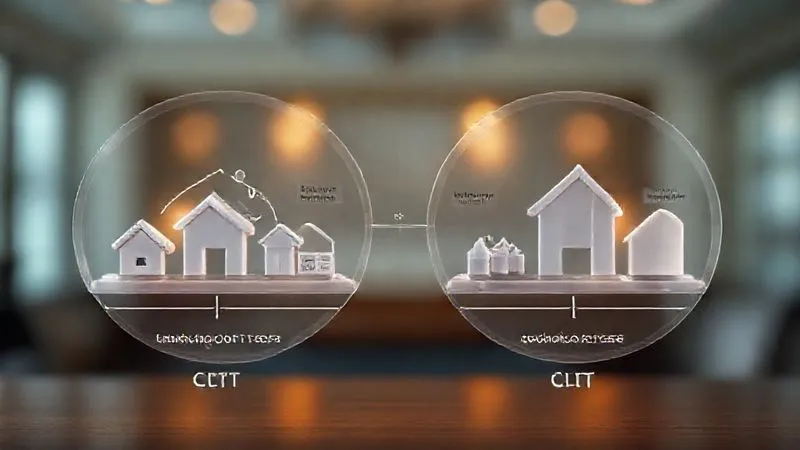
For clients seeking both philanthropic impact and a continued income stream or estate planning benefits, CRTs and CLTs offer sophisticated solutions. These are irrevocable trusts that provide a powerful blend of income, tax savings, and charitable giving.
Charitable Remainder Trusts (CRTs):
A CRT allows you to place assets (often highly appreciated illiquid assets) into an irrevocable trust. The trust then sells the assets tax-free, invests the proceeds, and pays an income stream to you (or other non-charitable beneficiaries) for a specified term or for life. When the term ends, the remaining assets go to your chosen charity.
"CRTs are not just about philanthropy; they are powerful tools for converting highly appreciated, non-income-producing assets into a reliable income stream, all while significantly reducing your tax burden and leaving a lasting legacy." - Industry Specialist Perspective
The benefits are clear: avoidance of capital gains tax upon sale within the trust, an income stream for beneficiaries, and an immediate charitable income tax deduction for the present value of the remainder interest going to charity. CRTs are particularly effective for assets like appreciated real estate or private business interests that generate little current income but have significant embedded gains.
Charitable Lead Trusts (CLTs):
A CLT is essentially the reverse of a CRT. Assets are placed into an irrevocable trust, which then pays an income stream to a charity for a specified term. At the end of the term, the remaining assets revert to you or your non-charitable beneficiaries (e.g., your children).
CLTs are excellent for clients who want to support charities now but also wish to pass assets to heirs with potentially reduced estate and gift taxes. They are particularly attractive in a low-interest-rate environment, as the value of the charitable interest (and thus the deduction) is higher. As wealth management guru Seth Godin often emphasizes, strategic giving is about impact and smart design, and CLTs exemplify this principle.
The Power of Qualified Charitable Distributions (QCDs) for IRAs
While not strictly an 'illiquid asset' strategy in the traditional sense, Qualified Charitable Distributions (QCDs) are a critical tool for tax-efficient giving, especially for clients aged 70½ or older who hold significant wealth in Individual Retirement Accounts (IRAs).
A QCD allows individuals 70½ and older to directly transfer up to $105,000 (as of 2024, indexed for inflation) from their IRA to a qualified charity. This distribution counts towards their Required Minimum Distribution (RMD) but is not included in their taxable income. This is a powerful benefit, especially for those who don't itemize deductions or whose deductions are limited.
I've seen countless clients benefit from QCDs, as they reduce taxable income, fulfill RMD obligations, and support cherished causes, all at once. It’s a straightforward yet highly effective strategy for those with substantial IRA balances looking to make a difference without increasing their adjusted gross income.
Strategic Planning & Due Diligence: Your Roadmap to Impact
The common thread weaving through all these strategies is the absolute necessity of meticulous strategic planning and thorough due diligence. Giving illiquid assets tax-efficiently is rarely a simple transaction; it's a sophisticated financial maneuver that requires a team approach.
Essential Elements of Your Philanthropic Roadmap:
- Assemble Your Advisory Team: This should include your wealth manager, a tax advisor specializing in charitable giving, an estate planning attorney, and potentially a real estate or business valuation expert.
- Understand the Charity's Capacity: Ensure your chosen charity is equipped and willing to accept and manage the specific illiquid asset. Smaller charities may lack the infrastructure or expertise.
- Accurate Valuation: Independent, qualified appraisals are non-negotiable for illiquid assets. The IRS has stringent rules, and an incorrect valuation can lead to disallowed deductions and penalties.
- Timing is Everything: The timing of your gift can significantly impact your tax deduction and the asset's value. Discuss with your advisors the optimal time to make the transfer.
- Documentation: Maintain meticulous records of all transactions, appraisals, and communications. This is crucial for substantiating your charitable deductions.
As I often tell my clients, philanthropic giving is not just about the heart; it's about the head as well. A well-executed plan ensures your generosity delivers maximum impact for the causes you care about, while also providing optimal tax benefits for you and your family. According to a Forbes Finance Council article, integrating philanthropic planning into overall wealth management is no longer optional but essential for high-net-worth individuals.
Frequently Asked Questions (FAQ)
Q: Can I donate a portion of my private business to charity? A: Yes, it is possible, but highly complex. This typically involves donating non-voting shares or a minority interest to a DAF or directly to a charity. The valuation process is critical, requiring a qualified business appraiser. Furthermore, you'll need to consider shareholder agreements and potential restrictions on transfer. It's imperative to involve your business attorney and a specialized tax advisor early in the process.
Q: What are the potential pitfalls of donating illiquid assets? A: The main pitfalls include incorrect valuation leading to disallowed deductions, charities being unwilling or unable to accept the specific asset, unforeseen liabilities associated with the asset (e.g., environmental issues with real estate), and complex transfer processes. Lack of proper planning and an experienced advisory team is the biggest risk.
Q: How long does the process of donating illiquid assets usually take? A: Unlike cash or publicly traded securities, donating illiquid assets can take significant time. Depending on the asset's complexity (e.g., real estate, private equity), the valuation, due diligence, and transfer process can range from several months to over a year. Patience and proactive planning are key.
Q: Can I get a tax deduction for donating an asset that has lost value? A: Generally, it's not tax-efficient to donate an asset that has lost value. If you sell the asset, you can realize the capital loss, which can offset other gains and potentially ordinary income. You could then donate the cash proceeds. Donating an asset with a loss typically limits your deduction to its fair market value, and you lose the benefit of the capital loss.
Q: What if the charity doesn't want my illiquid asset? A: This is a common scenario, particularly with smaller charities that may lack the resources or expertise to manage complex assets. In such cases, a Donor-Advised Fund (DAF) is often the best solution. The DAF's sponsoring organization is equipped to accept, liquidate, and manage a wide range of illiquid assets, allowing you to then recommend grants to your preferred charities from the fund.
Key Takeaways and Final Thoughts
The journey of philanthropic giving with illiquid assets is undoubtedly complex, but the rewards—both for the donor and the causes they champion—are immense. My experience has shown that with the right knowledge, strategic planning, and a trusted team of advisors, the 'dilemma' of solving client dilemma: giving illiquid assets tax-efficiently? transforms into an incredible opportunity.
- Embrace Strategic Planning: Don't view illiquid asset giving as a one-off transaction, but as an integral part of your holistic wealth and estate planning.
- Leverage the Right Vehicles: Donor-Advised Funds (DAFs), Charitable Remainder Trusts (CRTs), and direct gifts of appreciated assets are powerful tools. Understand which one fits your specific asset and philanthropic goals.
- Prioritize Due Diligence: From accurate valuation to understanding charity capacity and transfer restrictions, meticulous due diligence is your shield against complications.
- Build Your Expert Team: This is not a solo endeavor. Surround yourself with experienced wealth managers, tax advisors, and legal professionals.
- Focus on Impact: Remember that the ultimate goal is to make a meaningful difference. Tax efficiency is the enabler, not the end itself.
Your legacy isn't just measured by the wealth you accumulate, but by the positive change you create in the world. By mastering the art of tax-efficient philanthropic giving with illiquid assets, you're not just donating; you're investing in a better future, securing your financial well-being, and leaving a profound mark on the causes closest to your heart. It's a testament to thoughtful generosity, and I encourage you to explore these avenues with confidence and purpose.
Recommended Reading
- 7 Strategies: Hedge Your Portfolio Against Emerging Market Political Risk
- Protect Your Parents: The Ultimate Guide to Avoiding Elder Financial Abuse and Scams
- Unlock the Future: Predicting Global Economic Cycles with Leading Indicators
- 7 Proven Strategies to Minimize Capital Gains Tax on Stock Sales
- Scaling Burn? 7 Strategies When Costs Outpace Startup Revenue Growth





Comments
Leave a comment below. Your email will not be published. Required fields marked with *