



How to track diverse project expenses for accurate client billing?
For over two decades in the finance and budgeting niche, I've witnessed firsthand the silent erosion of profit margins in countless project-based businesses. It often stems not from poor service or weak sales, but from a deceptively simple yet profoundly impactful issue: the inaccurate tracking and billing of diverse project expenses. I've seen promising ventures stumble because they failed to properly account for everything from a last-minute flight to a critical software license, leading to uncomfortable client conversations and, ultimately, lost revenue.
The problem is multifaceted. Project expenses aren't monolithic; they're a complex tapestry of travel, materials, subcontractor fees, software subscriptions, and unforeseen incidentals. Without a robust system, these diverse costs become a black hole, making it nearly impossible to confidently present an itemized, accurate bill to a client. This not only undermines your firm's profitability but also erodes client trust, as vague or padded invoices can quickly sour even the best professional relationships.
That's precisely why I've distilled my years of experience into a definitive framework. In this guide, you will learn not just the 'what' but the 'how' of meticulously tracking diverse project expenses for accurate client billing. We'll explore actionable strategies, leveraging technology and best practices, complete with real-world insights, a mini case study, and expert tips to ensure every billable cent is accounted for, improving your bottom line and solidifying client confidence.
The Core Challenge: Why Diverse Expenses Trip Up Billing
At its heart, the difficulty in tracking diverse project expenses lies in their inherent variability and the sheer volume of transactions. Unlike a fixed-price service, project work often involves dynamic resource allocation and unexpected expenditures that can emerge at any phase. Managing these effectively is the difference between a profitable project and one that quietly bleeds resources.
Understanding the Nuances of Project Costs
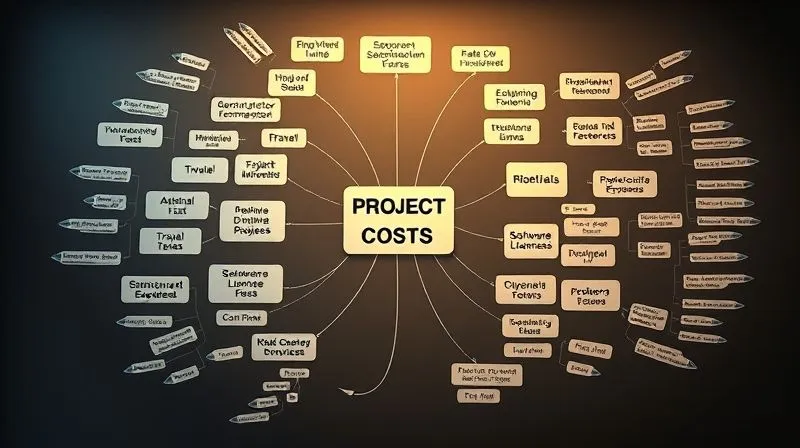
Project costs can broadly be categorized, but it's the granular detail within these categories that often causes headaches. We're talking about:
- Direct Billable Expenses: Costs directly incurred for and attributable to a specific client project, intended to be passed on. Examples include specific software licenses, travel for client meetings, or materials purchased solely for the project.
- Indirect Billable Expenses: Costs that support multiple projects but are allocated based on a predefined methodology. Think a percentage of a shared design software subscription or a pro-rata share of administrative support.
- Non-Billable Expenses: Internal operational costs that are not charged to the client but are crucial for business function. These might include internal training, general office supplies, or marketing efforts. Understanding this distinction is paramount.
- Subcontractor & Vendor Costs: Often a significant portion of project budgets, these require careful tracking of invoices, payment terms, and scope alignment.
- Travel & Entertainment (T&E): Flights, hotels, meals – these can quickly add up and are often subject to strict client policies or internal caps.
“The most common mistake I've observed isn't a lack of spending, but a lack of visibility into that spending. If you can't see it, you can't manage it, and you certainly can't bill for it accurately.”
Without clear definitions and consistent application, expenses can be miscategorized, forgotten, or double-counted, leading to either under-billing (lost revenue) or over-billing (client dissatisfaction). The goal is to achieve a level of granularity that supports both internal financial clarity and external billing transparency.
Step 1: Establishing a Robust Expense Categorization Framework
The foundation of accurate expense tracking is a well-defined categorization framework. This isn't just about labeling; it's about creating a logical structure that ensures every dollar spent can be quickly and accurately assigned to its rightful place and, crucially, to the correct project and client.
Creating a Standardized Chart of Accounts for Projects
Your firm needs a standardized approach to how expenses are logged. This begins with a detailed chart of accounts, expanded to include specific project and client identifiers. Think of it as a financial language that everyone in your organization speaks.
- Define Core Expense Categories: Start with broad categories like 'Travel,' 'Materials,' 'Software,' 'Contract Labor,' 'Miscellaneous.'
- Implement Sub-Categories: Under 'Travel,' you might have 'Flights,' 'Accommodation,' 'Per Diem,' 'Ground Transportation.' Under 'Software,' 'Licensing Fees,' 'Cloud Subscriptions,' 'Custom Development.'
- Assign Unique Project IDs: Every single project must have a distinct identifier. This ID will be the primary link for all associated expenses.
- Establish Client Codes: Similarly, each client should have a unique code. This helps in aggregation and reporting across multiple projects for the same client.
- Introduce Billable/Non-Billable Flags: A critical distinction. Every expense line item should be clearly marked as 'Billable' or 'Non-Billable' to the client. This prevents accidental billing of internal costs.
Implementing consistent cost codes and a clear coding structure across all expense submissions is non-negotiable. It ensures that when an expense is submitted, it's immediately clear what it's for, which project it belongs to, and whether it's intended for client billing. According to a Deloitte study on financial data analytics, firms with standardized data governance models achieve significantly higher accuracy and efficiency in financial reporting.
Step 2: Implementing Real-time Expense Capture and Approval Workflows
The days of shoeboxes full of crumpled receipts are long gone, or at least they should be. Modern project environments demand real-time data capture to prevent forgotten expenses and streamline the billing cycle. This is where technology becomes your indispensable ally.
Leveraging Technology for Seamless Data Entry
Expense management software is no longer a luxury; it's a necessity for any firm dealing with diverse project expenses. These tools provide the infrastructure for immediate, accurate, and compliant expense reporting.
- Mobile Apps for On-the-Go Capture: Employees can snap photos of receipts with their smartphones, which are then processed by Optical Character Recognition (OCR) technology, extracting key data like vendor, date, and amount.
- Automated Policy Enforcement: Software can be configured with your firm's and client's expense policies, flagging out-of-policy spending before it even reaches an approver.
- Integrated Approval Workflows: Expenses are automatically routed to the correct project manager or finance approver, reducing bottlenecks and ensuring timely review.
- Direct Integration with Accounting Systems: Seamless data flow between your expense software and your general ledger or project management system minimizes manual data entry and reduces errors.
“The true power of expense software isn't just in digitizing receipts; it's in creating an unbroken, auditable chain of custody for every single expense, from spend to reconciliation.”
The benefits of automation are profound, as illustrated by the comparison below:
| Aspect | Manual Process | Automated Process |
|---|---|---|
| Expense Submission | Paper forms, stapled receipts, lost documents | Mobile app photo, OCR data extraction, instant upload |
| Approval Time | Days to weeks, chasing signatures | Hours to days, automated routing, digital approvals |
| Error Rate | High (data entry, math errors, policy violations) | Low (OCR accuracy, policy enforcement, validation rules) |
| Reconciliation Effort | Tedious, matching physical receipts to statements | Automated matching, exception reporting |
| Client Billing Prep | Gathering individual expense reports, manual aggregation | One-click report generation, itemized details |
Investing in a reputable expense management platform can yield significant ROI through reduced administrative time, increased accuracy, and faster client billing cycles. Platforms like Expensify, Concur, or Zoho Expense are popular choices, each offering different feature sets suitable for various business sizes. For an in-depth comparison of leading platforms, you can consult reviews on sites like G2.com.
Step 3: Allocating Expenses Accurately to Projects and Clients
Once expenses are captured, the next critical step is ensuring they are correctly attributed. This isn't always straightforward, especially when an expense might touch multiple projects or departments.
Direct vs. Indirect Costs: The Allocation Dilemma
The principle here is clear: only expenses that directly benefit a specific client project and are agreed upon in the contract should be billed. Indirect costs, while necessary for business operations, need careful handling.
- Direct Assignment: Whenever possible, directly assign an expense to a single project using its unique ID. This is the cleanest and most transparent method. For example, a flight ticket purchased specifically for 'Project Alpha' is easily assigned.
- Pro-Rata Allocation: For shared resources or expenses (e.g., a software license used across 3 projects), you might allocate the cost based on usage, project revenue, or employee hours spent on each project. The key is to have a consistent, defensible methodology. For instance, if 'Project Beta' consumes 40% of the consultant's time, it might bear 40% of the shared software cost.
- Clear Project IDs on Every Transaction: Ensure that when an expense is submitted, the associated project ID is a mandatory field. This forces immediate allocation at the point of entry.
Case Study: How BrightFuture Consulting Streamlined Expense Allocation
BrightFuture Consulting, a mid-sized firm specializing in digital transformation, struggled with accurately allocating shared software licenses and administrative overhead. They used a combination of subscription services that supported all their client projects. Initially, they simply absorbed these costs, which skewed project profitability metrics. By implementing a pro-rata allocation system based on the percentage of consulting hours each project consumed, they were able to accurately distribute these indirect billable costs. This change revealed that several 'profitable' projects were actually losing money when all costs were considered, allowing BrightFuture to adjust their pricing strategies and improve overall firm profitability by 15% within a year, leading to more accurate client billing and better resource management.
The goal is to move beyond simply tracking expenses to actively managing them within the context of each project. This requires not only robust systems but also clear communication with project managers and team members about the importance of accurate coding.

Step 4: Reconciling and Verifying Expenses for Billing Readiness
Even with the best systems, errors can occur. Regular reconciliation and verification are the final checkpoints before an expense makes its way onto a client invoice. This step is crucial for maintaining accuracy, integrity, and trust.
The Critical Role of Regular Reconciliation
Reconciliation is the process of comparing your recorded expenses against source documents (receipts, bank statements, vendor invoices) to ensure consistency and identify discrepancies. It's an internal audit that protects both your firm and your client.
- Match Receipts to Transactions: Ensure every expense recorded in your system has a corresponding, valid receipt or proof of purchase. Automated systems can often flag unmatched transactions.
- Review Against Project Budgets: Compare actual expenses against the approved project budget. Significant variances should trigger an investigation and, if necessary, client communication.
- Verify Billable Status: Double-check that only expenses explicitly marked as 'Billable' (and within client contract terms) are being prepared for invoicing.
- Cross-Reference Vendor Invoices: For subcontractor or vendor costs, ensure that your records match the invoices received from those third parties. Discrepancies here can lead to significant financial leakage.
- Generate an Audit Trail: A robust system should provide a clear audit trail, showing who submitted an expense, who approved it, and when. This transparency is invaluable for dispute resolution and compliance.
As the Financial Accounting Standards Board (FASB) emphasizes, robust internal controls, including regular reconciliation, are fundamental to reliable financial reporting. This meticulous verification process not only catches errors but also ensures compliance with client contracts and internal policies. For more on accounting best practices, refer to resources from authoritative bodies like FASB.
Step 5: Generating Transparent and Itemized Client Invoices
The culmination of all your meticulous tracking and verification efforts is the client invoice. This document is not just a request for payment; it's a reflection of your professionalism, transparency, and the value you've delivered.
Crafting Invoices That Build Trust, Not Confusion
A well-structured invoice provides clarity, instills confidence, and minimizes billing disputes. Vague or aggregated expense lines are a recipe for client frustration.
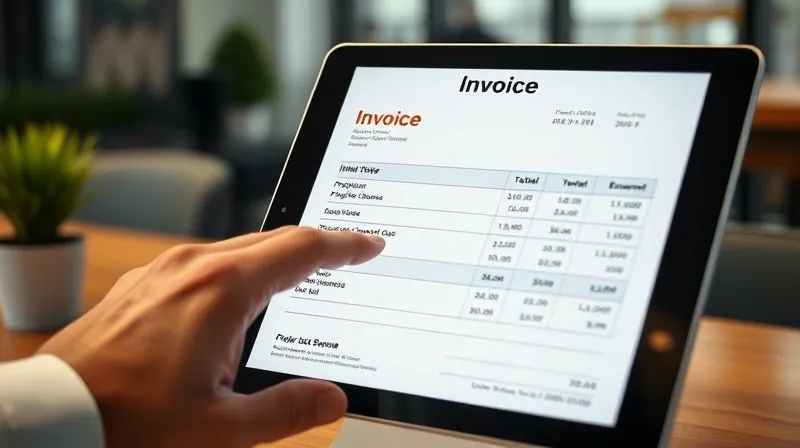
- Itemized Detail is Key: Do not simply list 'Project Expenses: $X.' Break down each expense by date, vendor, description, amount, and even attach digital copies of receipts where appropriate.
- Reference Project & Task Codes: Clearly link each expense item back to the specific project and, if applicable, the task or phase it relates to.
- Separate Billable Expenses from Fees: Present professional fees (e.g., hourly rates, fixed project fees) distinctly from billable expenses. This enhances clarity.
- Adhere to Client Billing Guidelines: Many clients have specific requirements for how expenses should be presented. Always review and comply with these.
- Use Clear, Professional Language: Avoid jargon. The descriptions of expenses should be easy for anyone to understand.
“An invoice should tell a clear, concise story of value delivered and costs incurred. If your client has to call you to understand their bill, you've already lost a degree of trust.”
By providing a crystal-clear breakdown, you preempt questions and demonstrate that you've managed their funds with diligence and integrity. This transparency is a cornerstone of strong client relationships and ensures faster payment cycles. A study published in Harvard Business Review highlighted that transparency in billing and communication is a key driver of client satisfaction and long-term loyalty in professional services.
Advanced Strategies for Complex Project Scenarios
While the five steps above form a robust foundation, some projects come with unique complexities that require additional foresight and strategic planning.
Handling Multi-Currency and International Expenses
For international projects, dealing with multiple currencies adds a layer of complexity. My advice:
- Establish a Consistent Conversion Policy: Decide whether to use the exchange rate on the date of transaction, the date of expense submission, or a monthly average. Be consistent and transparent with your client.
- Leverage Software with Multi-Currency Support: Many modern expense management systems automatically handle currency conversions, often integrating with real-time exchange rate feeds.
- Document Exchange Rates: Always record the exchange rate used for each conversion, especially if not using an automated system. This is crucial for reconciliation and client queries.
Managing Subcontractor and Vendor Expenses
Subcontractors are an extension of your team, and their expenses need equally rigorous tracking:
- Clear Contracts: Ensure your contracts with subcontractors explicitly define what expenses are billable, how they should be submitted, and what documentation is required.
- Centralized Invoice Processing: All subcontractor invoices should flow through a single, controlled process, ideally within your expense management or accounts payable system.
- Align Payment Terms: Coordinate subcontractor payment terms with your client billing cycles to manage cash flow effectively.
- Client Pre-Approval: For significant subcontractor expenses, consider obtaining client pre-approval, especially if it deviates from the initial project scope or budget.
By proactively addressing these advanced scenarios, you can maintain control over even the most intricate project finances, ensuring that every expense is accounted for and billed correctly.
Frequently Asked Questions (FAQ)
What's the best software for diverse project expense tracking? The 'best' software depends on your specific needs, team size, and budget. For small to medium businesses, options like Expensify, Zoho Expense, and Rydoo offer excellent features for real-time capture, approvals, and integrations. Larger enterprises might lean towards more comprehensive solutions like SAP Concur or Oracle NetSuite. I always recommend trying free trials to see which interface and features best align with your workflow.
How do I handle non-billable expenses effectively? Non-billable expenses should still be tracked meticulously, but segregated from billable ones. They are vital for internal cost analysis, budgeting, and understanding true operational overhead. Use your expense management system to flag them clearly as 'non-billable' and ensure they are never included on client invoices. Regularly review these costs to identify areas for internal efficiency.
What if clients dispute expense charges? Disputes are rare with transparent, itemized billing, but they can happen. Your robust audit trail (receipts, approvals, project IDs) becomes your best defense. Calmly present the documented proof, explain the expense's relevance to the project, and reference your contract terms. Having a clear communication protocol for disputes, potentially involving the project manager, is essential.
How often should I reconcile project expenses? For optimal control, I recommend reconciling project expenses at least weekly, if not daily for very active projects. This allows for immediate identification of discrepancies and prevents issues from snowballing. Monthly reconciliation is an absolute minimum before generating client invoices. Regularity is key to maintaining data integrity.
Can I track time and expenses together? Absolutely, and it's highly recommended. Many project management and professional services automation (PSA) platforms offer integrated time and expense tracking. This allows you to link specific hours worked and expenses incurred directly to tasks and projects, providing a holistic view of project costs and making billing significantly more accurate and efficient.
Key Takeaways and Final Thoughts
Navigating the complexities of diverse project expenses for accurate client billing can seem daunting, but it's an essential discipline that underpins profitability and client trust in any project-based business. Drawing from my extensive experience, I've seen how mastering this area transforms financial operations.
- Standardize Categorization: Implement a clear, detailed expense categorization framework with unique project and client IDs.
- Automate Capture: Leverage expense management software for real-time, accurate expense capture and streamlined approval workflows.
- Allocate Diligently: Ensure every expense is precisely allocated to its respective project, distinguishing between direct and indirect costs.
- Reconcile Rigorously: Conduct regular, thorough reconciliation against source documents to verify accuracy and build an unassailable audit trail.
- Invoice Transparently: Present clients with itemized, clear invoices that build trust and minimize disputes.
By embracing these strategies, you're not just tracking numbers; you're building a foundation of financial integrity and operational excellence. This commitment to detail will not only safeguard your firm's profitability but also solidify your reputation as a trustworthy and professional partner. Start implementing these steps today, and watch your billing accuracy and client satisfaction soar.
Recommended Reading
- Unsafe Products: 7 Steps to Financial Recovery & Consumer Justice
- 7 Proven Strategies: Minimizing Estate Tax on Illiquid Family Business Assets
- 7 Strategies: Maximize Financial Returns from Impact Investments
- Unveiling the Truth: Why Gross Domestic Product is Often Misjudged Globally
- License Jeopardized? 7 Steps to Erase Complex Credit Report Errors





Comments
Leave a comment below. Your email will not be published. Required fields marked with *