



How to Minimize Capital Gains When Rebalancing Client Portfolios?
For over two decades in wealth management, I've witnessed firsthand the anxiety that surges through clients when discussing portfolio rebalancing – not because of the market shifts, but because of the specter of capital gains taxes. It's a common dilemma: you meticulously craft an asset allocation, the market moves, and suddenly, your carefully constructed portfolio deviates. Rebalancing is essential for maintaining risk profiles and long-term goals, yet the act of selling appreciated assets can trigger significant tax liabilities, eroding hard-earned gains.
This isn't just an inconvenience; it's a critical challenge that can undermine a client's financial objectives. Ignoring tax implications during rebalancing is akin to leaving money on the table, directly impacting net returns and long-term wealth accumulation. The goal is always to optimize after-tax returns, and capital gains can be a formidable adversary if not managed strategically.
In this definitive guide, I will share the proven frameworks, expert insights, and actionable strategies that I and other seasoned professionals employ to effectively minimize capital gains when rebalancing client portfolios. We'll move beyond generic advice, diving deep into practical techniques, real-world scenarios, and the often-overlooked nuances that can make a substantial difference to your clients' bottom lines.
Understanding the Capital Gains Landscape in Portfolio Rebalancing
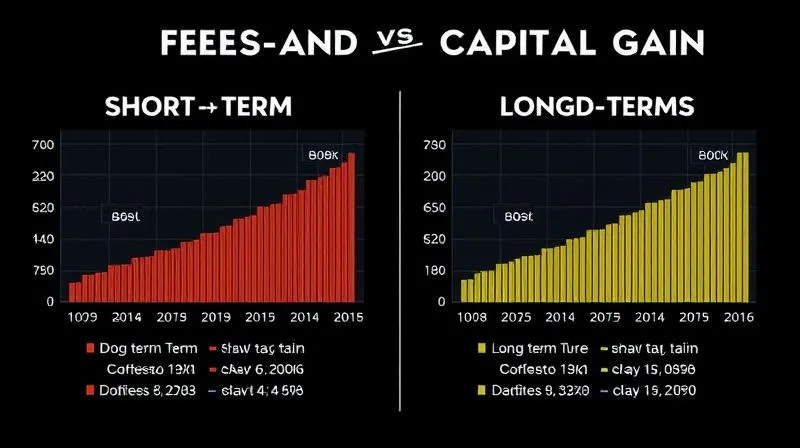
Before we delve into mitigation strategies, it's crucial to grasp the fundamental mechanics of capital gains tax in the context of rebalancing. When you sell an investment for more than its purchase price (its cost basis), you realize a capital gain. This gain is then subject to taxation, either short-term (for assets held one year or less) or long-term (for assets held longer than one year), with different tax rates applying to each.
The challenge arises because rebalancing often necessitates selling assets that have performed well, thus accumulating significant unrealized gains. Simply selling these assets without a strategic approach can inadvertently trigger substantial tax events, undermining the very purpose of prudent portfolio management. My experience has shown that a proactive understanding of these tax implications is the first step toward effective mitigation.
The Impact of Cost Basis and Holding Period
The cost basis of an asset is its original value for tax purposes, adjusted for commissions, stock splits, or reinvested dividends. Understanding this basis is paramount because it directly determines the size of the capital gain. The holding period, as mentioned, dictates whether the gain is short-term or long-term, which can mean a difference of 10-20 percentage points in the tax rate for many investors.
"In my practice, I always emphasize that the journey of wealth preservation begins with a meticulous understanding of each asset's cost basis and holding period. This foundational knowledge empowers us to make surgical decisions during rebalancing."
For example, selling an asset held for 11 months might incur a tax rate of up to 37% (ordinary income rates), whereas holding it for just one more month could drop that rate to 15% or 20% for long-term gains, depending on the client's income bracket. This seemingly small difference in holding period can have a monumental impact on the after-tax return.
Foundational Principle: Tax-Loss Harvesting as a Proactive Tool
One of the most powerful and widely utilized strategies to minimize capital gains when rebalancing client portfolios is tax-loss harvesting. This involves selling investments at a loss to offset capital gains and, potentially, a limited amount of ordinary income.
- Identify Losses: Regularly review client portfolios for positions with unrealized losses. These are assets currently trading below their cost basis.
- Realize Losses: Sell these underperforming assets. The realized losses can then be used to offset any realized capital gains from selling appreciated assets during rebalancing.
- Offset Gains: Capital losses can first offset capital gains of the same type (short-term losses against short-term gains, long-term losses against long-term gains). If there are remaining losses, they can then offset gains of the other type.
- Offset Ordinary Income: If total capital losses exceed total capital gains, up to $3,000 of the net capital loss can be used to offset ordinary income in a given tax year. Any remaining losses can be carried forward indefinitely to future tax years.
- Beware the Wash Sale Rule: A critical consideration is the wash sale rule. If you sell an investment at a loss and then buy a "substantially identical" security within 30 days before or after the sale, the loss will be disallowed. This means you cannot simply sell a stock for a loss and immediately buy it back.
Case Study: How Apex Investments Optimized Tax-Loss Harvesting
Apex Investments, a mid-sized wealth management firm, faced a common issue with a client, Mrs. Chen. Her portfolio had significant unrealized gains in her tech holdings, but also some underperforming energy sector ETFs. By strategically selling the energy ETFs for a $20,000 loss, Apex was able to offset $20,000 of the gains realized from rebalancing her tech allocation. This proactive approach saved Mrs. Chen approximately $3,000-$4,000 in immediate capital gains taxes, allowing her to reinvest the full amount rather than seeing a portion go to taxes. This resulted in a more efficient rebalance and enhanced her overall after-tax return.
Strategic Asset Location: The Power of Account Types
Beyond tax-loss harvesting, the strategic placement of different types of assets across various account types (taxable, tax-deferred, tax-exempt) is a cornerstone of minimizing capital gains. This is often referred to as "asset location."
The core principle is to house tax-inefficient investments in tax-advantaged accounts (like IRAs or 401(k)s) and tax-efficient investments in taxable accounts. This strategy significantly reduces the drag of taxes on overall portfolio performance.
- Tax-Inefficient Assets: These typically include investments that generate significant ordinary income or short-term capital gains, such as actively managed funds with high turnover, REITs, or high-yield bonds. Placing these in tax-deferred accounts allows income and gains to compound tax-free until withdrawal, or even tax-free entirely in Roth accounts.
- Tax-Efficient Assets: These are investments that generate qualified dividends or long-term capital gains, such as broad-market index funds, ETFs, or individual stocks with low turnover. These are generally better suited for taxable accounts because their gains are taxed at lower long-term capital gains rates.
For instance, if a client holds a bond fund that pays significant interest income, placing it in a taxable brokerage account would mean that income is taxed annually at ordinary income rates. Moving that bond fund to a traditional IRA or 401(k) allows that income to grow tax-deferred. Conversely, a growth stock with high appreciation potential but low dividend yield is often best suited for a taxable account, as its gains will only be taxed upon sale, and then at preferential long-term rates.
The Nuance of Specific Share Identification: Beyond FIFO
When selling shares of a security that were purchased at different times and prices, the default method for calculating cost basis is often First-In, First-Out (FIFO). While simple, FIFO isn't always the most tax-efficient method. As an experienced advisor, I consistently leverage specific share identification.
Specific share identification allows you to choose which specific shares of a security to sell. This flexibility is invaluable for managing capital gains. For example, if you own 100 shares of XYZ Corp, acquired in three separate lots:
- Lot A: 25 shares bought at $50
- Lot B: 50 shares bought at $75
- Lot C: 25 shares bought at $100
If XYZ is now trading at $90, and you need to sell 50 shares for rebalancing, under FIFO, you would sell Lot A (25 shares at $50 gain) and 25 shares from Lot B (at $15 gain). However, with specific identification, you could choose to sell:
- High-cost basis shares: Sell 25 shares from Lot C (gain of -$10/share, a loss!) and 25 shares from Lot B (gain of $15/share). This significantly reduces the overall capital gain.
- Loss shares: If the market dipped, you could specifically sell shares that are at a loss to harvest those losses, even if other lots are at a gain.
The key is to instruct your custodian to sell specific lots. This requires diligent record-keeping and clear communication, but the tax savings can be substantial. According to an IRS publication on Investment Income and Expenses, taxpayers have the flexibility to identify specific shares, provided they can prove which shares were sold.
| Scenario | Shares Sold | Cost Basis (Avg) | Sale Price | Total Gain |
|---|---|---|---|---|
| FIFO Method | 50 | $66.67 | $90 | $1,166.50 |
| Specific ID (Minimizing Gain) | 50 | $87.50 | $90 | $125.00 |
| Specific ID (Harvesting Loss) | 50 | $70.00 (25 from $50, 25 from $90) | $75 | $250.00 |
Charitable Giving: A Win-Win for Philanthropy and Tax Efficiency
For charitably inclined clients, donating appreciated securities directly to a qualified charity can be an incredibly powerful strategy to minimize capital gains. Instead of selling the appreciated stock, realizing a gain, and then donating cash, the client donates the stock itself.
- Avoid Capital Gains Tax: When appreciated stock held for more than one year is donated, the donor typically avoids paying capital gains tax on the appreciation.
- Receive a Tax Deduction: The donor can usually claim an itemized tax deduction for the full fair market value of the stock on the date of the donation, up to certain IRS limits.
- Net Benefit: The charity receives the full value of the stock, and the donor receives a tax deduction while avoiding the capital gains tax they would have paid had they sold the stock themselves.
This strategy is particularly effective when rebalancing requires reducing exposure to a highly appreciated asset. Instead of selling it and triggering a taxable event, you can advise the client to donate those shares, effectively removing them from the portfolio in a tax-efficient manner. This is not just a tax strategy; it's a values-aligned approach that resonates deeply with many clients.

Direct Indexing: Customization for Capital Gains Control
Direct indexing, once reserved for ultra-high-net-worth individuals, is becoming increasingly accessible and offers unparalleled control over capital gains. Instead of investing in a mutual fund or ETF that tracks an index, direct indexing involves owning the individual stocks that comprise the index.
This approach provides several key advantages for minimizing capital gains:
- Enhanced Tax-Loss Harvesting: With direct ownership of individual stocks, you have far more opportunities for tax-loss harvesting. Instead of waiting for an entire fund to be down, you can harvest losses from individual underperforming stocks within the index, even if the overall index is up. This creates a continuous stream of realized losses to offset gains.
- Customization: Direct indexing allows for highly customized portfolios. You can exclude specific companies based on ESG preferences, or even manage around existing low-cost basis positions to avoid triggering immediate gains.
- Deferral of Gains: By continuously harvesting losses, you can effectively defer capital gains over a longer period, reducing the immediate tax burden during rebalancing.
As research from financial institutions like Vanguard and Fidelity suggests, direct indexing can add significant basis points to after-tax returns, primarily through its superior tax-loss harvesting capabilities. For clients with substantial taxable assets, this strategy can be a game-changer in how to minimize capital gains when rebalancing client portfolios.
Utilizing Qualified Opportunity Zones (QOZs) for Deferred Gains
For clients with significant capital gains, Qualified Opportunity Zones (QOZs) offer a unique and powerful way to defer and potentially reduce capital gains taxes. This program, established by the Tax Cuts and Jobs Act of 2017, encourages investment in economically distressed communities.
The mechanism is as follows:
- Realize a Capital Gain: A client sells an appreciated asset (e.g., stock, real estate) and realizes a capital gain.
- Invest in a QOF: Within 180 days of realizing the gain, the client invests the gain (not the original basis) into a Qualified Opportunity Fund (QOF).
- Deferral: The capital gain from the original sale is deferred until the earlier of December 31, 2026, or when the QOF investment is sold.
- Reduction: If the QOF investment is held for at least 5 years, the deferred gain is reduced by 10%. If held for 7 years, it's reduced by an additional 5% (total 15%).
- Tax-Free Growth: If the QOF investment is held for 10 years or more, any appreciation on the QOF investment itself becomes entirely tax-free.
While QOZs involve illiquid, long-term investments in specific real estate or businesses, they can be an exceptional tool for clients facing substantial capital gains from rebalancing or other asset sales. It's a complex area, and due diligence on the QOF and underlying investments is paramount, but the tax benefits can be extraordinary, especially for high-net-worth individuals seeking sophisticated solutions.
Advanced Rebalancing Tactics: Glide Paths and Tolerances
Beyond specific tax strategies, the very approach to rebalancing itself can be optimized to minimize capital gains. Traditional rebalancing often involves selling assets that have grown beyond their target allocation and buying those that have fallen below. However, this can be done more artfully.
- Rebalancing with Cash Flows: Instead of selling appreciated assets, use new cash contributions (e.g., from savings, bonuses, or RMDs) to purchase underweighted assets. This allows the appreciated assets to continue growing without triggering a sale.
- Tolerances and Thresholds: Instead of rebalancing every time an asset class deviates slightly, set tolerance bands (e.g., +/- 5% from target allocation). Only rebalance when an asset class exceeds these bands. This reduces the frequency of trades and thus the potential for capital gains. However, be mindful that wider bands might lead to increased risk drift.
- Glide Path Rebalancing: For clients nearing retirement, a "glide path" approach gradually shifts asset allocation over time without sharp, immediate rebalances. This smooths out potential tax events and allows for more predictable tax planning.
- Loss Harvesting During Rebalance: As discussed, actively look for opportunities to sell loss positions simultaneously with gain positions during a rebalance.
A well-defined rebalancing policy, agreed upon with the client, that incorporates these tactical considerations can significantly reduce the tax burden over time. It's a continuous optimization process, not a one-time event.
Integrating Estate Planning for Long-Term Capital Gains Management
For many clients, wealth management extends beyond their lifetime. Integrating estate planning with asset allocation and rebalancing strategies can offer profound, long-term capital gains benefits, particularly through the "step-up in basis" rule.
When an individual inherits an asset, its cost basis is typically "stepped up" to its fair market value on the date of the decedent's death. This means that if an asset has appreciated significantly over the original owner's lifetime, the heirs receive it with a new, higher cost basis, effectively eliminating the capital gains tax on all the appreciation that occurred during the original owner's life.
Therefore, for clients with highly appreciated assets and no immediate need for liquidity, holding onto those assets rather than selling them (and incurring capital gains) might be a wise estate planning strategy. This allows the assets to pass to heirs with a stepped-up basis, making future sales by the heirs far more tax-efficient. This strategy requires careful consideration of the client's age, health, and liquidity needs, but it's an incredibly powerful tool in the arsenal of long-term wealth preservation. Forbes often highlights the importance of understanding the stepped-up basis in estate planning.
Example: The Stepped-Up Basis Advantage
Consider a client, Mr. Thompson, who purchased 1,000 shares of a tech stock at $10 each many years ago. The stock is now worth $200 per share. If Mr. Thompson sells, he realizes a $190,000 capital gain. However, if he holds the stock until his passing, and his heirs inherit it when it's still valued at $200 per share, their cost basis becomes $200. If they then sell it immediately, they incur virtually no capital gains tax. This is a powerful illustration of how estate planning profoundly impacts capital gains.
Frequently Asked Questions (FAQ)
Question? Is it always better to avoid capital gains at all costs, even if it means deviating significantly from the target asset allocation?
Detailed answer: No, absolutely not. While minimizing capital gains is crucial, it should never come at the expense of sound portfolio management. The primary goal of rebalancing is to maintain the desired risk profile and alignment with long-term financial objectives. Allowing a portfolio to drift significantly due to fear of capital gains can expose a client to undue risk or cause them to miss out on growth opportunities. The strategies discussed here are about *minimizing* capital gains while still effectively rebalancing, not eliminating rebalancing altogether. It's a delicate balance, and a skilled advisor understands when to incur some gains for the greater good of the portfolio's health.
Question? How often should one consider tax-loss harvesting, and what are the practical limitations?
Detailed answer: Tax-loss harvesting should be considered opportunistically throughout the year, not just at year-end. Market downturns or individual stock underperformance can create opportunities at any time. Many advanced wealth management platforms now offer automated or semi-automated tax-loss harvesting. The main practical limitation is the wash sale rule, which requires careful tracking to avoid disallowing losses. Also, excessive trading to harvest losses can incur transaction costs, though these are often minimal with modern brokerage platforms. The benefit of the tax deduction must outweigh these costs.
Question? Are Qualified Opportunity Zones (QOZs) suitable for all clients looking to defer capital gains?
Detailed answer: QOZs are not suitable for all clients. They involve investing in illiquid, long-term assets, often in real estate or private businesses within specific geographic areas. This means the capital will be tied up for a significant period (at least 10 years for maximum benefits), and there's inherent risk associated with such investments. They are generally best suited for accredited investors with significant capital gains, a high risk tolerance, and a long-term investment horizon who do not require immediate access to those funds. Thorough due diligence on the specific QOF and its underlying projects is absolutely essential.
Question? How does the "specific share identification" method work with mutual funds or ETFs, where individual share lots might be less clear?
Detailed answer: While often associated with individual stocks, specific share identification can still apply to mutual funds and ETFs. Most brokerage firms and fund companies allow you to specify which shares (by purchase date or cost basis) you wish to sell. You typically instruct your broker to sell specific lots (e.g., "sell the shares purchased on [date] at [price]"). It's crucial to provide these instructions *before* the sale settles. If no specific instructions are given, the default is often FIFO or average cost basis, depending on the account type and prior elections. Always confirm your custodian's default method and your ability to override it.
Question? What role do current tax laws play, and how often should strategies be reviewed?
Detailed answer: Current tax laws play an absolutely critical role, as they dictate the very framework within which these strategies operate. Tax laws are dynamic, evolving with new legislation and IRS rulings. Strategies for minimizing capital gains should be reviewed at least annually, or whenever there are significant changes in tax legislation, a client's financial situation (e.g., a large income change, inheritance), or major market shifts. Staying abreast of legislative changes, perhaps through professional financial publications like The Wall Street Journal's tax section or the CFA Institute's research, is paramount for an experienced industry specialist.
Key Takeaways and Final Thoughts
- Minimizing capital gains isn't about avoiding rebalancing; it's about executing it with tax efficiency in mind.
- Proactive tax-loss harvesting, strategic asset location, and specific share identification are foundational strategies.
- For charitably inclined clients, donating appreciated stock offers a powerful dual benefit.
- Advanced tools like direct indexing provide granular control over capital gains and enhanced harvesting opportunities.
- Qualified Opportunity Zones offer unique deferral and reduction benefits for significant gains, though with specific criteria.
- Integrating estate planning, particularly the step-up in basis, can provide long-term tax advantages for heirs.
- Regular review of strategies in light of changing tax laws and client circumstances is non-negotiable.
As I've emphasized throughout my career, effective wealth management is not just about growing assets; it's about preserving and optimizing after-tax returns. The strategies discussed here provide a comprehensive framework to navigate the complexities of capital gains when rebalancing client portfolios. By adopting a proactive, informed, and strategic approach, you can significantly enhance your clients' financial outcomes, building trust and demonstrating true expertise. Remember, every dollar saved in taxes is a dollar that can continue to compound for your clients' future.
Recommended Reading
- Unlock Secret Deals: Find Cheap Flights with These Top Websites
- Unlock the Secret: Should You Pay Off Credit Cards Before Statement?
- Unlock Financial Wisdom: How Consumer Rights Shield Your Literacy
- Remote Payroll: 7 Critical Steps for New State Tax Laws
- Unlock Your Dream Home: How to Get Financing for an Auctioned Foreclosed Home





Comments
Leave a comment below. Your email will not be published. Required fields marked with *