



What to do when new state tax laws impact remote employee payroll?
For over 20 years in the finance and tax landscape, I've witnessed firsthand how quickly regulatory environments can shift, particularly in areas as dynamic as employment and taxation. The rise of remote work, while offering immense flexibility and talent access, has unfortunately introduced a labyrinth of compliance complexities, especially when new state tax laws impact remote employee payroll.
Many businesses, even well-established ones, find themselves caught flat-footed, struggling to adapt their payroll systems and processes to accommodate the patchwork of state and local tax regulations. This isn't just about withholding the correct amount; it's about understanding nexus, reciprocity agreements, and the ever-evolving definitions of where work is performed. The penalty for non-compliance isn't just financial; it can damage reputation and divert critical resources.
But fear not. In this definitive guide, I'll walk you through a clear, actionable framework to not only understand but proactively manage the impact of new state tax laws on your remote employee payroll. We'll delve into expert insights, real-world strategies, and the essential tools you need to ensure compliance, mitigate risks, and maintain operational efficiency, giving you a tangible solution for what to do when new state tax laws impact remote employee payroll.
Understanding the Shifting Sands of State Tax Nexus
Before any action can be taken, it's crucial to grasp the concept of tax nexus. This is the legal term for the connection between a taxing authority (a state or locality) and an entity (your business or employee) that requires the entity to collect and remit taxes. For remote employees, nexus can be established simply by their physical presence in a state, even if your company has no other physical footprint there.
I've seen countless businesses mistakenly believe that if their headquarters are in one state, all employees fall under that state's tax umbrella. This couldn't be further from the truth. New state tax laws are increasingly aggressive in asserting nexus based on remote worker presence, leading to obligations for income tax withholding, unemployment insurance, and even workers' compensation in multiple states.
Understanding these varying definitions of nexus is your foundational step. Some states operate under a 'convenience of the employer' rule, meaning if an employee lives out of state but works remotely for a convenience (not necessity) of the employer, their income might still be sourced to the employer's state. Other states use a 'physical presence' rule, where work performed within their borders creates nexus. This complexity underscores why a one-size-fits-all approach is a recipe for disaster.
"The digital economy has outpaced traditional tax frameworks, forcing states to innovate. Businesses must anticipate these shifts, not just react to them."
According to a recent Deloitte study on state tax issues for remote workers, the landscape is in constant flux, with states continually updating their guidance. This makes ongoing monitoring not just advisable, but absolutely essential. Ignoring these nuances can lead to significant penalties and back taxes.

The Critical First Step: Comprehensive Remote Employee Audits
When new state tax laws impact remote employee payroll, the very first tactical move is to conduct a thorough audit of your entire remote workforce. You can't fix what you don't fully understand. This audit goes beyond simply knowing where your employees physically reside; it delves into where their work is actually performed.
- Identify Employee Locations: Document the primary physical address where each remote employee performs their duties. This is paramount for determining potential state nexus.
- Review Work Arrangements: Understand the nature of their remote work. Is it temporary, permanent, or hybrid? Are there any agreements in place regarding their work location?
- Assess 'Convenience of Employer' Rules: For employees residing in states with these rules (e.g., New York, Delaware, Pennsylvania), determine if their remote work is for your convenience or a business necessity. This can significantly alter tax obligations.
- Verify State Registration: Check if your company is already registered to do business and withhold taxes in the states where your remote employees reside. If not, this is a critical gap to address.
- Update Employee Records: Ensure all HR and payroll records accurately reflect the current work locations and any relevant state tax forms (e.g., W-4s reflecting multi-state withholding).
I advise creating a detailed spreadsheet for this audit. It brings clarity to what can feel like an overwhelming task. Here's a simplified example of how you might structure it:
| Employee ID | Primary Work State | Residency State | Company Registered in State | Convenience Rule Applicable |
|---|---|---|---|---|
| EMP001 | CA | CA | Yes | N/A |
| EMP002 | NY | NY | Yes | Yes |
| EMP003 | TX | TX | No | N/A |
| EMP004 | FL | GA | No | No |
This audit will highlight immediate areas of non-compliance and pinpoint which employees are most affected by new state tax laws, allowing you to prioritize your next steps effectively.
Establishing Robust Multi-State Payroll Tax Withholding Protocols
Once you've identified where your employees are working and where nexus exists, the next challenge is implementing accurate withholding protocols. This is where most companies falter, risking under-withholding penalties or over-withholding, which can lead to employee dissatisfaction.
- Register in New States: For every state where you've established nexus and have withholding obligations, you must register with that state's taxing authority. This typically involves obtaining a state employer identification number. Don't skip this step; it's foundational.
- Understand State-Specific Withholding Rules: Each state has its own income tax rates, withholding tables, and filing frequencies. Some states have no income tax, while others have reciprocal agreements that exempt employees from withholding in their work state if they pay taxes in their home state.
- Update Payroll Software: Your payroll system must be capable of handling multi-state withholding. Manually calculating this for every employee in every state is prone to error and unsustainable. Ensure your software can accurately apply the correct state and local taxes based on the employee's work location.
- Collect Updated W-4s (or equivalent): Employees might need to fill out state-specific withholding allowance certificates. For instance, an employee working in State A but residing in State B might need to submit forms for both states, especially if a reciprocity agreement is in play.
- Monitor Thresholds and Triggers: Some states have de minimis thresholds for nexus, meaning a very brief presence might not trigger obligations. However, new state tax laws are often lowering these thresholds, so continuous monitoring is key.
I've seen businesses get into hot water because they assumed their payroll provider would automatically handle all multi-state complexities. While many do, it's ultimately your responsibility to ensure the data fed into the system is accurate and that the system is configured correctly for each state.
Leveraging Technology: Payroll Software & Compliance Tools
In today's complex tax environment, trying to manage multi-state remote employee payroll manually is not just inefficient; it's a significant liability. Leveraging the right technology is no longer a luxury but a necessity for what to do when new state tax laws impact remote employee payroll.
Modern payroll software solutions are designed to handle the intricacies of multi-state taxation. They can:
- Automatically calculate state and local taxes based on employee work location.
- Generate and file state-specific tax forms.
- Integrate with HR systems for seamless data flow.
- Provide compliance alerts for new state tax laws or changes.
When selecting or evaluating your current payroll system, ask these critical questions: Does it support all states where I have employees? Can it handle reciprocal agreements? Does it offer real-time updates for tax law changes? Companies like ADP, Paychex, Gusto, and Rippling offer robust multi-state payroll capabilities. However, even with advanced software, it's vital to have human oversight and understanding of the underlying principles.
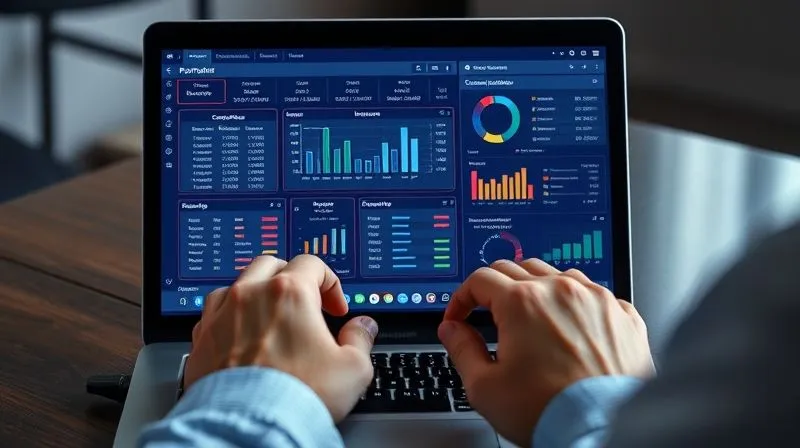
"Technology is an enabler, not a replacement for vigilance. It simplifies compliance, but the strategic understanding remains with the business leader."
I recall a client, 'InnovateTech,' a fast-growing startup, initially tried to manage their 15 remote employees across 7 states using a basic spreadsheet. Within six months, they faced penalties from two states for incorrect withholding and late filings. The cost of rectifying these errors, including legal fees and fines, far exceeded what a premium multi-state payroll software would have cost them annually. They quickly invested in a robust system, which not only streamlined their process but also provided peace of mind.
Navigating State-Specific Registration and Reporting Requirements
Beyond simply withholding taxes, each state where you establish nexus will have its own set of registration and reporting requirements. This is a critical component of what to do when new state tax laws impact remote employee payroll, and it's often overlooked.
This includes:
- Employer Registration: Obtaining a state employer identification number (EIN) or equivalent.
- Unemployment Insurance (UI) Registration: Registering with the state's unemployment agency to pay UI taxes.
- Workers' Compensation: Ensuring compliance with state-specific workers' compensation laws, which can vary wildly.
- New Hire Reporting: Most states require employers to report new hires to a state directory within a few days of their start date.
- Annual Reporting: Filing annual reconciliation forms (e.g., W-2s, 1099s) with the appropriate state agencies, often by specific deadlines.
The deadlines and specific forms for these requirements differ significantly from state to state. For instance, California's new hire reporting might be different from Texas's. Missing these deadlines or filing incorrect forms can lead to further penalties and administrative headaches. I recommend creating a compliance calendar that outlines all state-specific due dates for registrations, filings, and payments.
For more detailed guidance on state-specific requirements, the IRS provides links to individual state government websites, which are invaluable resources for official information. Always cross-reference information with the most current state tax department publications.
Building a Proactive Communication and Training Framework
Compliance isn't just about systems and processes; it's about people. A crucial aspect of managing the impact of new state tax laws on remote employee payroll is fostering clear communication and providing adequate training, both internally and to your employees.
- Internal Stakeholder Training: Ensure your HR, payroll, and finance teams are fully educated on the multi-state tax implications. Regular training sessions on new state tax laws and compliance updates are non-negotiable.
- Employee Education: Clearly communicate to your remote employees how new tax laws might affect their paychecks. Explain changes in withholding, the importance of accurate address information, and any forms they might need to complete. Transparency builds trust.
- Policy Updates: Review and update your company's remote work policy to explicitly address tax implications, work location requirements, and the employee's responsibility in maintaining accurate information.
- Dedicated Contact Point: Establish a clear point of contact within your organization (e.g., HR or payroll specialist) for employees to direct tax-related questions. This prevents misinformation and ensures consistent guidance.
- Regular Reviews: Schedule periodic reviews (e.g., quarterly or semi-annually) of your remote workforce's locations and any changes to state tax laws. This proactive approach helps you stay ahead of potential issues rather than reacting to them.
I've observed that companies that invest in this proactive communication framework experience fewer compliance issues and higher employee satisfaction. Employees feel supported and informed, reducing anxiety around their pay and tax obligations.
When to Call in the Experts: Tax Attorneys and CPA Firms
While this guide provides a robust framework, there will inevitably be situations where the complexity of new state tax laws impacting remote employee payroll demands specialized expertise. Knowing when to engage external tax attorneys or CPA firms is a mark of a truly experienced leader.
You should consider bringing in experts when:
- You have employees in a large number of states with highly complex or unique tax laws.
- Your business operates in states with 'convenience of employer' rules, which often require nuanced interpretation.
- You are expanding into new states with remote workers for the first time.
- You receive a notice of audit or non-compliance from a state taxing authority.
- You are unsure about specific nexus thresholds or reciprocity agreements.
- You need to establish a robust, legally sound multi-state tax strategy for long-term growth.
A qualified tax attorney can provide legal opinions on nexus and compliance obligations, helping you mitigate legal risks. A CPA firm specializing in multi-state taxation can assist with payroll setup, filing requirements, and ongoing advisory services. Their expertise is invaluable in navigating the intricate details and ensuring full compliance, especially when new state tax laws create ambiguity.
Case Study: How 'Global Connect Inc.' Mastered Multi-State Payroll Compliance
Case Study: How Global Connect Inc. Mastered Multi-State Payroll Compliance
Global Connect Inc., a rapidly expanding tech firm with 200 employees, found itself in a precarious position when new state tax laws began to emerge following a post-pandemic shift to fully remote work. Their employees were distributed across 30 different states, and their existing payroll system, while adequate for a centralized workforce, was buckling under the weight of multi-state withholding, unemployment insurance, and local tax complexities.
Initially, their finance team attempted to manually track state-specific requirements, leading to missed deadlines and incorrect withholdings in three states, resulting in penalties totaling over $50,000. This prompted their CEO to seek immediate, comprehensive solutions for what to do when new state tax laws impact remote employee payroll.
Global Connect Inc. implemented a three-pronged strategy based on expert recommendations:
- Comprehensive Audit & Policy Revision: They first engaged a multi-state tax specialist to conduct a full nexus audit for all employee locations. Based on this, they revised their remote work policy to clearly outline tax responsibilities and location reporting requirements for employees.
- Integrated Payroll & HRIS System: They upgraded to a top-tier HRIS (Human Resources Information System) with integrated multi-state payroll capabilities. This system automated tax calculations, filings, and compliance alerts for each state where they had employees.
- Ongoing Training & Advisory: They established quarterly training sessions for their HR and finance teams on evolving state tax laws. Furthermore, they retained a tax advisory firm for ongoing consultation, ensuring they remained ahead of any new legislative changes.
Within 12 months, Global Connect Inc. achieved 100% compliance across all 30 states. They eliminated all penalties, reduced manual payroll processing time by 40%, and significantly boosted employee confidence in their payroll accuracy. This proactive approach turned a compliance nightmare into a competitive advantage, demonstrating the power of structured, expert-led action.
Frequently Asked Questions (FAQ)
Q: What is the 'convenience of the employer' rule, and how does it affect remote payroll? The 'convenience of the employer' rule, primarily enforced by states like New York, Delaware, and Pennsylvania, dictates that if an employee works remotely for their own convenience rather than the employer's necessity, their income may still be sourced to the employer's primary business state for income tax purposes. This means you might still need to withhold taxes for the employer's state, even if the employee physically resides and works in another state. It's a complex area that often requires legal interpretation to determine if the remote work is truly for convenience or necessity.
Q: Do I need to register my business in every state where I have a remote employee? Generally, yes, if the presence of that remote employee creates a 'tax nexus' for your business in that state. Nexus is the legal threshold for requiring tax compliance. This registration typically involves obtaining a state employer identification number, registering for unemployment insurance, and potentially workers' compensation. Some states may have de minimis thresholds, but it's always safest to consult with a tax professional or the state's tax department.
Q: How do reciprocity agreements impact multi-state remote payroll? Reciprocity agreements are arrangements between two states that allow residents of one state who work in the other to pay income tax only to their state of residence. This simplifies withholding, as the employer only needs to withhold for the employee's home state. However, the employee usually needs to file a specific form (like a W-4 or state equivalent) to claim this exemption. Not all states have these agreements, and the specifics vary, so it's crucial to verify for each pair of states involved.
Q: What are the biggest risks of non-compliance with state tax laws for remote employees? The biggest risks include significant financial penalties, interest charges on underpaid taxes, and potential legal action from state taxing authorities. Beyond monetary costs, non-compliance can lead to reputational damage, increased administrative burden from audits, and even the loss of your business's ability to operate in certain states. It also creates employee dissatisfaction if their tax withholdings are incorrect.
Q: Can payroll software fully automate multi-state tax compliance, or do I still need human oversight? While modern payroll software significantly streamlines and automates multi-state tax calculations, filings, and reporting, human oversight and strategic understanding remain absolutely essential. Software relies on accurate input and correct configuration. It cannot interpret complex legal nuances like nexus rules or 'convenience of the employer' without expert guidance. It's a powerful tool for execution, but the strategy and verification must come from informed human experts.
Key Takeaways and Final Thoughts
Navigating the intricate web of new state tax laws impacting remote employee payroll is undoubtedly one of the most significant compliance challenges businesses face today. However, by adopting a structured, proactive approach, you can transform this challenge into a well-managed operational process.
- Prioritize a Comprehensive Audit: Know exactly where your employees are and what their work arrangements entail.
- Understand Nexus & Withholding: Grasp the fundamentals of state tax nexus and establish accurate multi-state withholding protocols.
- Leverage Technology Wisely: Utilize robust payroll software, but ensure it's configured and monitored by knowledgeable personnel.
- Stay Informed & Proactive: Continuously monitor new state tax laws, register in all necessary states, and meet all reporting requirements.
- Communicate & Train: Educate your teams and employees to foster transparency and compliance.
- Consult Experts When Needed: Don't hesitate to engage tax attorneys or CPA firms for complex scenarios.
The landscape of remote work and state taxation will continue to evolve. Your commitment to staying informed and adapting your strategies is not just about avoiding penalties; it's about building a resilient, compliant, and thriving distributed workforce. By taking these steps, you're not just reacting to change; you're mastering it, ensuring your business's long-term success in the modern economy.
Recommended Reading
- Unlock Financial Freedom: How to Build a Monthly Budget for Variable Income
- Unlock Smart Savings: The Ultimate Guide to Cutting Vacation Food Costs
- Break Free: How to Break Bad Spending Habits on a Budget Now!
- Rebalancing Your Portfolio: 7 Strategies to Combat Global Inflation's Erosion
- Derivatives Taxes: How to Handle Tax Implications (2024 Guide)





Comments
Leave a comment below. Your email will not be published. Required fields marked with *