


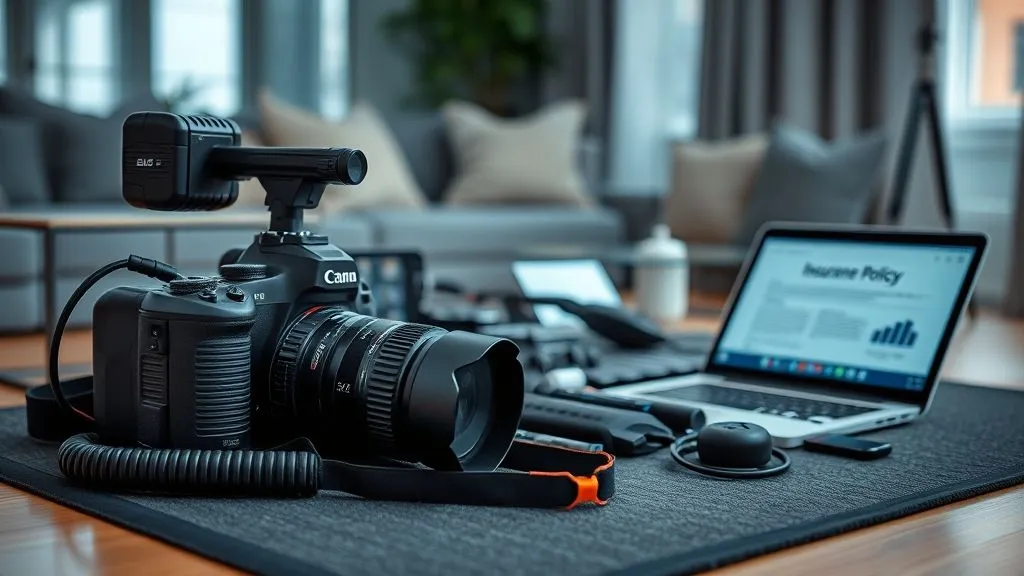
How to insure high-value professional equipment in a rental?
For over two decades in the finance and insurance sector, particularly within the nuanced world of renters' coverage, I've witnessed a recurring, heartbreaking scenario: a talented professional, often a freelancer or small business owner, suffers a significant loss of their high-value equipment due to theft, fire, or water damage in their rented space. The immediate assumption is that their standard renters insurance will cover it, only for them to discover the harsh reality of inadequate coverage.
This isn't just a minor inconvenience; for many, their professional equipment isn't merely an asset, it's their livelihood. The anxiety of losing a camera worth thousands, a high-end laptop, specialized tools, or audio recording gear, coupled with the potential for business interruption, creates immense stress. Standard renters' policies are designed for personal possessions, not the specific risks and valuations associated with professional tools of the trade, especially when used for commercial purposes.
In this definitive guide, I'll walk you through a proven, step-by-step framework to ensure your high-value professional equipment in a rental is genuinely protected. We'll delve into the specific types of coverage you need, how to accurately value your assets, the critical policy details often overlooked, and how to maintain robust protection over time. My goal is to equip you with the knowledge and actionable insights to confidently safeguard your professional future.
Understanding the Gaps: Why Standard Renters Insurance Falls Short
Many renters mistakenly believe their basic policy will cover everything inside their apartment, including their work equipment. While renters insurance is crucial for personal belongings and liability, it typically has significant limitations when it comes to professional tools and gear.
Firstly, most standard policies include specific sub-limits for certain categories of items, such as electronics, jewelry, or collectibles. For instance, your policy might only cover up to $2,500 for electronics, which is woefully inadequate for a professional-grade camera kit or a high-performance workstation. Secondly, and perhaps more critically, many policies contain exclusions for items used for business purposes. If your equipment is integral to your income-generating activities, an insurer might deny a claim entirely, arguing it falls outside the scope of personal property coverage. I've seen this mistake countless times, leading to devastating financial setbacks for individuals.
Expert Insight: Standard renters insurance is designed for personal risk, not commercial exposure. Assuming it covers your business equipment is a dangerous gamble that can jeopardize your livelihood.
These limitations mean that if your $10,000 professional video camera is stolen from your rented apartment, your standard renters policy might only pay out a fraction of its value, or nothing at all, leaving you to shoulder the substantial replacement cost yourself. This is precisely why a more targeted approach is not just recommended, but absolutely essential for anyone with high-value professional equipment.
Step 1: Inventory and Valuation – Knowing What You Own
The foundation of any robust insurance strategy begins with a thorough understanding of what you need to protect. This isn't just about listing items; it's about accurately valuing them and documenting their existence and condition. As an experienced mentor in this field, I can't stress enough how critical this initial step is, not only for securing the right coverage but also for expediting any future claims.
- Create a Detailed Inventory: Go room by room, listing every piece of professional equipment. Include brand names, model numbers, serial numbers, and purchase dates. Don't forget accessories like specialized lenses, external hard drives, microphones, or unique tools that are part of a larger kit.
- Determine Current Value: For each item, establish its current replacement cost. This is the amount it would cost to buy a brand-new equivalent item today. For older or unique items, you might need to research market prices or consult with a specialist. Keep in mind that technology depreciates quickly, but some specialized tools can hold their value or even appreciate.
- Gather Proof of Purchase: Collect receipts, invoices, or credit card statements for all significant purchases. Digital copies are ideal for easy storage and retrieval. This documentation is vital for proving ownership and original value in the event of a claim.
- Photograph and Videotape Your Equipment: Take clear, well-lit photos of each item, showing its condition and any unique identifiers like serial numbers. A video walkthrough of your workspace, narrating the items and their serial numbers, provides an invaluable visual record. Store these securely off-site, perhaps in a cloud service.
- Obtain Professional Appraisals (If Necessary): For truly high-value, antique, or custom-built equipment (e.g., vintage musical instruments, bespoke machinery, fine art photography equipment), a professional appraisal from a certified expert is indispensable. This provides an undisputed valuation that insurers will readily accept.
This comprehensive inventory serves as your cornerstone. It helps you articulate your needs to an insurance provider, ensures you don't underinsure, and significantly streamlines the claims process should you ever need it. Without this groundwork, you're essentially guessing, which is a gamble I never recommend.
Step 2: Exploring Specialized Insurance Options for Professionals
Once you have a clear inventory and valuation, the next step is to identify the right type of insurance. This is where we move beyond the limitations of standard renters insurance and explore solutions specifically designed for professionals with valuable equipment.
Scheduled Personal Property Endorsement (SPPE)
An SPPE, also known as a personal articles floater, is an add-on to your existing renters or homeowners policy. It allows you to list specific high-value items individually, providing broader coverage than what's typically included in the base policy. Unlike standard renters insurance, SPPEs often cover perils like accidental damage or mysterious disappearance, which are usually excluded.
- Benefits: Broader coverage (often 'all-risk'), no deductible for some items, coverage for specific perils beyond standard policy.
- Considerations: Each item must be individually listed and valued, increasing premiums for each addition. Best for a limited number of very high-value items.
Inland Marine Policy (Equipment Floater)
Don't let the name confuse you; 'Inland Marine' insurance has evolved far beyond covering goods transported by sea. Today, it's a flexible policy designed to cover property that is frequently moved or located off-premises. For professionals who take their equipment to different job sites, client meetings, or even just coffee shops, this is an excellent solution.
- Benefits: Covers equipment both on and off your rental premises, broad 'all-risk' coverage, ideal for mobile professionals.
- Considerations: Can be a standalone policy or an endorsement. Premiums depend on the total value of equipment and the scope of coverage.
Business Personal Property (BPP) Coverage
If your professional equipment is primarily used for a home-based business, or if you're a freelancer operating out of your rental, Business Personal Property (BPP) coverage might be the most comprehensive option. This is typically part of a broader business owner's policy (BOP) or a commercial property policy. It covers items like computers, specialized tools, inventory, and office furniture used specifically for your business.
- Benefits: Designed specifically for business assets, covers a wider range of perils and situations relevant to commercial operations, can include business interruption coverage.
- Considerations: Might be overkill for someone with minimal business activity. Usually requires a formal business entity or significant business income.
The choice among these options depends heavily on your specific needs, the nature of your work, and how often your equipment leaves your rental property. I always advise clients to consider their workflow and risk exposure when making this decision.
| Coverage Type | Best For | Key Feature | Typical Scope |
|---|---|---|---|
| Scheduled Personal Property Endorsement (SPPE) | Few, very high-value items (e.g., single camera, instrument) | Attached to renters policy, 'all-risk' for listed items | On-premises, potentially off-premises for listed items |
| Inland Marine (Equipment Floater) | Professionals with mobile equipment (e.g., photographers, musicians) | Covers items in transit and off-premises | Worldwide or specific territories, 'all-risk' for covered equipment |
| Business Personal Property (BPP) | Home-based businesses, freelancers with significant equipment | Designed for commercial assets, part of business policy | Primarily on-premises business property, can extend off-premises |
Step 3: Navigating Policy Details – Deductibles, Coverage Limits, and Exclusions
Once you've identified the right type of policy, the real work of understanding the fine print begins. This stage is crucial for avoiding unpleasant surprises down the line. It's not enough to simply have a policy; you need to understand what it *actually* covers and, perhaps more importantly, what it *doesn't*.
- Replacement Cost Value (RCV) vs. Actual Cash Value (ACV): This is one of the most critical distinctions. ACV pays out the depreciated value of your item, meaning you'll receive less than what it costs to replace it new. RCV, on the other hand, pays for the cost of a brand-new equivalent item. Always opt for RCV coverage for your professional equipment if available, even if it means a slightly higher premium. It's a non-negotiable for true protection.
- Understanding Deductibles: Your deductible is the amount you pay out-of-pocket before your insurance coverage kicks in. A higher deductible usually means a lower premium, but ensure it's an amount you can comfortably afford in an emergency. For high-value professional equipment, a lower deductible might be a wise investment to minimize your immediate financial burden during a loss.
- Coverage Limits: Beyond the overall policy limit, specialized policies often have per-item limits or category limits. Double-check that the limits for your specific equipment adequately match their replacement cost. Don't assume; verify.
- Exclusions and Limitations: Every policy has them. Common exclusions include wear and tear, intentional damage, damage from pests, or certain natural disasters not covered by the base policy. Read through these carefully. If you have unique equipment or operate in specific environments, discuss potential exclusions with your insurer. For example, some policies might exclude damage during transportation unless specifically endorsed.
- Perils Covered: Understand what specific events (perils) your policy protects against. While 'all-risk' policies offer broad protection, they still have exclusions. Named perils policies, conversely, only cover what's explicitly listed. For professional equipment, 'all-risk' with minimal exclusions is generally the gold standard.
As the Insurance Information Institute often emphasizes, understanding your policy thoroughly is the first line of defense against unexpected claims issues. Don't hesitate to ask your insurance broker or agent to walk you through every section, ensuring you have absolute clarity on your coverage.
Step 4: Documenting Ownership and Condition for Claims
Having the right policy is only half the battle. The other half is ensuring you can successfully make a claim when disaster strikes. This hinges entirely on your ability to provide clear, irrefutable documentation of ownership, value, and the condition of your equipment *before* any loss occurred. I've seen too many valid claims complicated or even denied due to insufficient proof.
Imagine your high-value drone is stolen. Without proper documentation, proving its existence, serial number, and original purchase price becomes incredibly difficult. Insurers need concrete evidence to process claims efficiently and fairly. This is why the comprehensive inventory from Step 1 becomes your most powerful tool here.
- Secure Storage of Documentation: Keep all your receipts, appraisals, photos, and videos in a secure, off-site location. Cloud storage, encrypted external hard drives, or a fireproof safe at a trusted friend's house are excellent options. Do not rely solely on digital copies stored on the very equipment you're trying to insure!
- Regular Updates: As you acquire new equipment, upgrade existing pieces, or sell off old gear, immediately update your inventory and documentation. This ensures your coverage remains accurate and your proof of ownership is current.
- Condition Reports: For very high-value or delicate equipment, consider having a professional condition report done periodically. This is particularly useful for items that might be prone to damage or wear during use, providing a baseline for their state prior to any incident.
- Police Reports and Incident Documentation: In the event of theft, fire, or other incidents, immediately file a police report or obtain an official incident report. Document the scene with photos and videos if safe to do so. These official records are vital for your insurance claim.
Think of this as building a bulletproof case for your future self. The more prepared you are with detailed, organized documentation, the smoother and faster your claims process will be, allowing you to replace your equipment and get back to work with minimal disruption.
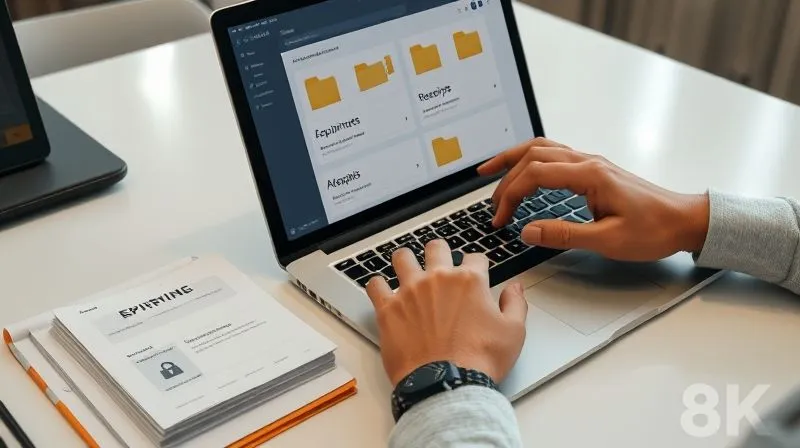
Step 5: Regular Review and Updates – Keeping Your Coverage Current
The world of professional equipment is dynamic. New technologies emerge, values fluctuate, and your own business needs evolve. Therefore, your insurance coverage should not be a 'set it and forget it' affair. A static policy quickly becomes an inadequate policy. This final step is about proactive maintenance of your insurance portfolio.
- Annual Policy Review: Make it a habit to review your policy at least once a year, ideally before renewal. This is the perfect time to cross-reference your current equipment inventory with your listed items and coverage limits.
- Update for New Acquisitions: Whenever you purchase a significant new piece of equipment, don't wait for your annual review. Contact your insurer immediately to add it to your policy. Delays can leave new, expensive items uninsured for weeks or months.
- Adjust for Disposed Equipment: If you sell, donate, or retire old equipment, remove it from your policy. This can potentially lower your premiums and ensures your policy accurately reflects your current assets.
- Account for Value Changes: Some equipment depreciates rapidly (e.g., consumer electronics), while others might hold or even increase in value (e.g., specialized vintage gear). If you have items that significantly change in value, update their insured amount. Re-appraisals every few years might be necessary for certain assets.
- Review Policy Terms and Conditions: Insurance companies occasionally update their policy language, terms, or exclusions. During your annual review, take a moment to skim for any significant changes that might impact your coverage. Your insurer should notify you of major changes, but it's always wise to double-check.
By consistently engaging with your insurance coverage, you ensure that it remains a living, relevant document that accurately protects your professional assets. This proactive approach minimizes the risk of discovering a gap in coverage precisely when you need it most. As Forbes Advisor notes, ensuring your policy aligns with your current assets is key to financial security.
Case Study: Sarah's Photography Gear and the Unexpected Leak
Sarah, a freelance architectural photographer, operated her business from her rented apartment. Her gear, including a professional camera body, multiple lenses, a drone, and a high-end editing workstation, was valued at approximately $25,000. She had a standard renters insurance policy with a $50,000 personal property limit, believing she was adequately covered.
One evening, a pipe burst in the apartment above hers, sending water cascading into her workspace. Her camera bag, containing her primary camera and two lenses, was directly in the path of the water. Her editing workstation also suffered significant water damage.
When Sarah filed a claim, she was devastated to learn that her renters insurance policy had a sub-limit of $2,500 for business equipment and explicitly excluded damage to items used for commercial purposes beyond a very low threshold. The insurer offered a payout for only a fraction of her workstation's value and nothing for her camera equipment, citing the business use exclusion. Sarah was left with a loss of over $20,000 and faced significant business interruption while trying to replace her essential tools.
The Lesson: Had Sarah invested in a Scheduled Personal Property Endorsement for her most valuable camera gear and an Inland Marine policy for her equipment (which she often took off-site), or even a Business Personal Property rider for her home office, her losses would have been almost entirely covered. This real-world (though fictionalized for privacy) scenario underscores the critical difference between general coverage and specialized protection for professional assets.
Frequently Asked Questions (FAQ)
Q: Does my standard renters insurance ever cover business equipment?
A: Very minimally, if at all. Standard renters insurance is designed for personal property. It typically has low sub-limits for specific categories (like electronics) and often includes explicit exclusions for items used for commercial or business purposes. While it might offer a tiny amount of coverage for incidental business use, it's never sufficient for high-value professional equipment that is integral to your livelihood. Always assume your standard policy will not provide adequate protection for your professional gear.
Q: What if I use my equipment for both personal and professional use?
A: This is a common scenario for many creative professionals. In such cases, the line between 'personal' and 'business' can become blurry. It's crucial to disclose this dual-use to your insurer. Depending on the primary use and value, an insurer might recommend a Scheduled Personal Property Endorsement (SPPE) if the personal use is significant, or an Inland Marine/Business Personal Property policy if the professional use predominates. Some specialized insurers offer hybrid policies or endorsements tailored for this exact situation. Transparency with your agent is key to ensuring proper coverage.
Q: Is an appraisal always necessary for my professional equipment?
A: For truly high-value items, unique pieces, or equipment where market value can fluctuate significantly (e.g., vintage instruments, custom-built machinery, rare collectibles), a professional appraisal is highly recommended, often required by insurers for SPPE or Inland Marine policies. For more common professional electronics (like standard cameras or laptops), detailed receipts, serial numbers, and photos are usually sufficient, provided their replacement cost is clearly documented. Always check with your specific insurer about their appraisal requirements for items exceeding a certain value threshold.
Q: How often should I update my insurance policy for my equipment?
A: I strongly recommend reviewing your policy and equipment inventory at least once a year, ideally during your policy renewal period. However, you should update your policy immediately whenever you acquire new, high-value equipment, significantly upgrade existing gear, or dispose of insured items. Prompt updates ensure that your coverage accurately reflects your current assets and prevents gaps in protection for new purchases or paying for coverage on items you no longer own.
Q: What's the difference between Actual Cash Value (ACV) and Replacement Cost Value (RCV) for equipment?
A: This is a fundamental difference in how claims are paid. Actual Cash Value (ACV) pays you the depreciated value of your item at the time of loss, factoring in wear and tear. For example, a five-year-old laptop might only be worth a fraction of its original cost under ACV. Replacement Cost Value (RCV), on the other hand, pays you the amount it would cost to buy a brand-new, equivalent item today, without deduction for depreciation. For professional equipment, RCV is almost always the superior choice, as it allows you to replace your tools without significant out-of-pocket expenses, ensuring minimal disruption to your work.
Key Takeaways and Final Thoughts
Protecting your high-value professional equipment in a rental isn't just about ticking a box; it's about safeguarding your livelihood and ensuring business continuity. As an expert in this niche, I've seen the severe consequences of underinsurance, and I urge you to take these steps seriously.
- Know Your Assets: Create a meticulous, documented inventory with accurate valuations.
- Choose Specialized Coverage: Standard renters insurance is insufficient. Explore SPPE, Inland Marine, or BPP.
- Understand the Details: Prioritize RCV, manage deductibles, and scrutinize exclusions.
- Document Everything: Maintain secure, off-site records of ownership and condition.
- Review Regularly: Keep your policy current with annual reviews and immediate updates for new acquisitions.
Your professional equipment represents a significant investment of time, money, and passion. Don't let a preventable oversight leave you vulnerable. By proactively implementing these strategies, you're not just buying insurance; you're investing in peace of mind and the resilience of your professional journey. Take action today, and ensure your valuable gear is truly protected, allowing you to focus on what you do best.
Recommended Reading
- Slash Foreign Transaction Fees: 7 Smart Strategies for Budget Business Travel
- 9 Advanced Methods: Maximize Rental Property Cash Flow in 2024
- Direct Deposit Failed? 7 Steps to Resolve Employee Payroll Issues Fast
- Unlock Elite Wealth Management: Should High Net Worth Use a Family Office?
- The Smart Move: Knowing When to Drop Collision Car Insurance and Save



Comments
Leave a comment below. Your email will not be published. Required fields marked with *