



Minimize Foreign Transaction Fees for Budget Professional Travel?
For over 15 years in the financial services sector, specifically within budget travel logistics, I've seen countless professionals and their companies needlessly hemorrhage money on foreign transaction fees. It's a silent killer of travel budgets, often overlooked until the expense report hits, revealing a surprising chunk of funds lost to avoidable charges.
The pain point is palpable: you're focused on delivering value for your organization, closing deals, or attending critical conferences. The last thing you need is the stress of hidden banking fees eroding your carefully planned budget, adding an unwelcome layer of complexity to already demanding professional travel. These charges, though seemingly small individually, accumulate rapidly, turning a lean budget into an unexpectedly costly endeavor.
But what if I told you there are proven, actionable strategies to virtually eliminate these fees, transforming your budget professional travel into a truly cost-effective and financially savvy operation? In this definitive guide, I'll share expert insights, practical frameworks, and real-world scenarios to equip you with the knowledge to navigate international payments like a seasoned pro, ensuring every dollar spent abroad goes towards your professional goals, not your bank's bottom line.
The Hidden Drain: Understanding Foreign Transaction Fees
Before we can minimize foreign transaction fees for budget professional travel, we must first understand what they are and how they operate. Essentially, a foreign transaction fee is a charge levied by your bank or credit card issuer for processing a transaction in a foreign currency or through a foreign bank, even if it's in your home currency. It's typically a percentage of the transaction amount, ranging from 1% to 3%, and it applies to purchases, cash withdrawals, and sometimes even online transactions with international merchants.
Expert Insight: "Foreign transaction fees are often obscured in your statements, making them easy to miss until they've significantly impacted your budget. Proactive understanding is your first line of defense."
Types of Fees You'll Encounter
While the umbrella term 'foreign transaction fee' is common, it's worth noting the nuances:
- Credit Card Foreign Transaction Fees: The most common, applied by your card issuer on purchases made outside your home country.
- ATM Withdrawal Fees: Beyond your bank's own ATM fees, you might incur a foreign transaction fee from your bank and a usage fee from the foreign ATM operator.
- Dynamic Currency Conversion (DCC) Fees: This is a sneaky one. When offered the choice to pay in your home currency abroad, always decline. While it seems convenient, the merchant's exchange rate is almost always worse, effectively adding a hidden fee.
- Wire Transfer Fees: For larger sums or specific business payments, wire transfers come with their own set of international fees, both from sending and receiving banks.
Your Financial Arsenal: Choosing the Right Cards
The single most impactful decision you can make to minimize foreign transaction fees for budget professional travel is selecting the right payment cards. This isn't just about convenience; it's about strategic financial planning.
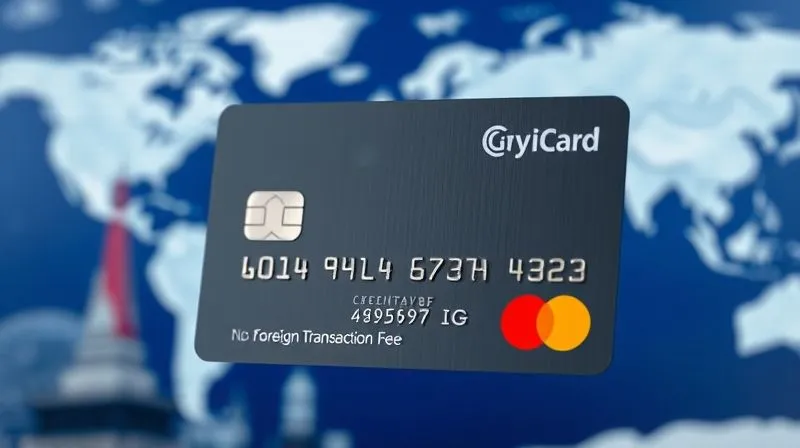
No Foreign Transaction Fee Credit Cards
These are your champions for international spending. Many credit card issuers now offer cards specifically designed for travel, waiving the typical 1-3% foreign transaction fee. I always advise my clients to secure at least one of these before any international trip.
- Research Thoroughly: Look for cards from major issuers (Visa, Mastercard, American Express) that explicitly state "no foreign transaction fees." Focus on those with good travel rewards or cashback if applicable to your company's expense policy.
- Consider Annual Fees vs. Benefits: Some premium travel cards have annual fees but offer substantial benefits like travel insurance, lounge access, or accelerated rewards, which might outweigh the fee if you travel frequently. For budget travel, however, prioritize cards with no annual fee or a very low one.
- Understand the Network: Visa and Mastercard are almost universally accepted worldwide. American Express and Discover have less global acceptance, though it's improving.
- Apply in Advance: Don't wait until the last minute. Card applications and delivery can take weeks.
According to a recent report by Forbes Advisor, the market for no foreign transaction fee cards has expanded significantly, offering competitive options for every type of traveler.
Debit Cards and ATM Withdrawals
While credit cards are ideal for purchases, you'll often need local currency for smaller vendors, tips, or emergencies. Your debit card can be a viable option, but proceed with caution.
- Use Fee-Free Debit Cards: Just like credit cards, some banks offer debit cards with no foreign ATM fees and no foreign transaction fees. These are gold for cash withdrawals abroad. Research challenger banks or credit unions, as they often have more favorable international policies.
- Withdraw Larger Sums Less Frequently: To minimize per-transaction ATM fees (from the local bank), withdraw a larger amount once instead of multiple small withdrawals.
- Always Decline DCC: If an ATM asks if you want to be charged in your home currency, always choose the local currency. This ensures you get the network's exchange rate, which is typically much better.
Smart Money Moves: Currency Exchange and Cash Management
Beyond your choice of cards, how you manage your actual currency exchange can significantly impact your budget. Avoid the airport kiosks and hotel exchange desks; their rates are notoriously poor.
Pre-Paid Travel Cards vs. Local Currency
While pre-paid travel cards can seem convenient, I've found their exchange rates and reloading fees often negate any perceived benefits for budget professional travel. My recommendation leans towards a strategic combination of a no-foreign-transaction-fee credit card for purchases and a fee-free debit card for cash withdrawals. This approach offers the best rates and flexibility.
| Method | Pros | Cons |
|---|---|---|
| No-FTF Credit Card | No foreign transaction fees, rewards, purchase protection, widely accepted | Not ideal for small cash-only vendors, potential for overspending |
| No-FTF Debit Card | Fee-free ATM withdrawals, direct access to funds, good exchange rates | Limited fraud protection compared to credit cards, less widely accepted for purchases |
| Multi-Currency Account/Card | Hold multiple currencies, excellent rates, easy transfers | Requires setup, less physical presence than traditional banks |
| Cash (Exchanged Locally) | Universally accepted, good for small purchases | Security risk, can get poor exchange rates if not careful |
Case Study: Sarah's European Business Trip Savings
Sarah, a marketing consultant, had an upcoming 10-day business trip to Germany and France. In the past, she'd relied on her standard credit card and made frequent ATM withdrawals with her regular debit card. Her average foreign transaction fees and poor exchange rates amounted to nearly $150 per trip.
Before her last trip, I advised her to apply for a no-foreign-transaction-fee credit card and open an account with a challenger bank offering a fee-free international debit card. She loaded a small amount onto the debit card for emergencies and planned to use the credit card for all major expenses.
Result: Sarah saved approximately $120 in fees and unfavorable exchange rates on her last trip. She used her new credit card for hotels, train tickets, and restaurant meals, and made just two large ATM withdrawals with her fee-free debit card for local transport and small purchases. This simple shift allowed her to allocate more of her budget directly to business needs, showcasing how a little planning can significantly minimize foreign transaction fees for budget professional travel.
Leveraging Digital Wallets and Fintech Solutions
The financial technology (fintech) landscape has rapidly evolved, offering powerful tools to minimize foreign transaction fees for budget professional travel. These solutions provide flexibility and often superior exchange rates compared to traditional banks.
The Rise of Multi-Currency Accounts
Companies like Wise (formerly TransferWise) and Revolut offer multi-currency accounts that allow you to hold, send, and spend money in dozens of different currencies. You can convert funds at interbank exchange rates (or very close to them) with minimal, transparent fees. Many also come with a physical debit card that automatically deducts from the correct currency balance.
This is particularly useful if your professional travel involves multiple countries or if you frequently deal with international clients. You can receive payments in foreign currencies directly into your account and spend them without additional conversion fees.

Peer-to-Peer Payment Platforms
While less common for direct business expenses, P2P platforms like PayPal (with caution regarding fees) or local equivalents can be useful for reimbursing colleagues or making small, informal payments. Always check the conversion rates and fees, as they can sometimes be higher than dedicated multi-currency accounts. For official business, stick to more formal methods.
For deeper insights into fintech solutions for international payments, consider exploring resources like Investopedia's guide on international money transfers.
Strategic Planning: Before, During, and After Your Trip
Minimizing fees isn't just about the tools you use; it's also about a disciplined approach to planning and execution.
Pre-Departure Checklist
- Notify Your Banks: Inform your credit and debit card issuers of your travel dates and destinations to prevent fraud alerts and card freezing.
- Set Up Online Banking/Mobile Apps: Ensure you can monitor your accounts and manage cards remotely.
- Have a Backup Plan: Carry at least two different no-foreign-transaction-fee cards (e.g., one Visa, one Mastercard) and some local currency. Keep them in separate locations.
- Understand Your Company's Expense Policy: Familiarize yourself with reimbursement procedures and approved payment methods.
On-the-Ground Best Practices
- Pay in Local Currency: As emphasized, always decline Dynamic Currency Conversion (DCC).
- Use Credit for Major Purchases: Leverage the rewards and fraud protection of your no-FTF credit card.
- Use Debit for Cash: Strategically withdraw cash from ATMs with your no-FTF debit card.
- Keep Receipts: Essential for expense reporting and reconciling any discrepancies.
Post-Trip Expense Reconciliation
Upon your return, meticulously review your bank and credit card statements. Look for any unexpected foreign transaction fees or unfavorable exchange rates. This post-trip audit is crucial for identifying areas for improvement and ensuring accurate expense reporting. It also helps you refine your strategy for future travel.
Negotiating Corporate Travel Policies for Fee Minimization
As an experienced professional, you have the opportunity to advocate for better financial practices within your organization. If your company's current travel policy doesn't adequately address foreign transaction fees, it's time to build a business case.
Building a Business Case for Fee Reduction
I've personally guided several companies through this process, demonstrating the tangible savings that can be achieved. Here's how to approach it:
- Quantify the Problem: Gather data from past expense reports showing the total amount lost to foreign transaction fees. Present this as a percentage of overall travel spend.
- Propose Solutions: Outline the strategies discussed here – recommending specific no-foreign-transaction-fee corporate cards, implementing multi-currency accounts, or providing clear guidelines for employees.
- Highlight Benefits Beyond Savings: Emphasize reduced administrative burden for expense reporting, improved employee satisfaction (no personal out-of-pocket losses), and enhanced financial agility for the company.
- Seek Buy-In: Present your findings and recommendations to finance, HR, and senior management. Frame it as a strategic initiative, not just a cost-cutting measure.
As Harvard Business Review often highlights, strategic cost management is a key differentiator for competitive businesses.
Common Pitfalls and How to Avoid Them
Even with the best intentions, certain mistakes can still lead to unnecessary fees. I've seen these trip up even seasoned travelers:
- Forgetting to Notify Your Bank: This can lead to your card being declined, forcing you to use less optimal payment methods or incur emergency fees.
- Ignoring Dynamic Currency Conversion (DCC): The allure of seeing prices in your home currency is strong, but it's almost always a ripoff. Always choose the local currency.
- Over-reliance on a Single Card: If your primary card is lost, stolen, or declined, you need a backup.
- Not Tracking Expenses Diligently: Without proper tracking, identifying and disputing incorrect charges or exorbitant fees becomes impossible.
- Assuming All "Travel Cards" Are Fee-Free: Always read the fine print. A card marketed for travel might still have foreign transaction fees.
Crucial Warning: "Never assume. Always verify the fee structure of any card you plan to use internationally, and always choose local currency for transactions abroad."

Frequently Asked Questions (FAQ)
Question: Can I really completely avoid foreign transaction fees? Yes, absolutely. By strategically using no-foreign-transaction-fee credit and debit cards, coupled with smart currency management and avoiding Dynamic Currency Conversion, you can effectively eliminate these charges from your budget professional travel expenses. It requires planning, but the savings are significant.
Question: Are multi-currency digital accounts secure for business use? Many reputable multi-currency platforms are regulated financial institutions with robust security measures, including FDIC/FSCS protection (depending on region) and strong encryption. However, always exercise due diligence, choose well-established providers, and adhere to best practices for online security. They can be incredibly secure and efficient for professional use.
Question: What if my company only provides a standard corporate credit card with fees? This is a common challenge. Your best approach is to advocate for policy changes, as detailed in the 'Negotiating Corporate Travel Policies' section. In the interim, for personal expenses you'll be reimbursed for, you might use a personal no-FTF card and submit those expenses separately, ensuring your company's policy allows for this. Always clarify reimbursement procedures upfront.
Question: Is it better to exchange cash before I leave or once I arrive? Generally, it's best to avoid exchanging large sums of cash at airports or hotels, whether at home or abroad, as their rates are typically poor. The most cost-effective method is usually to withdraw local currency from an ATM using a no-foreign-transaction-fee debit card once you arrive. For a very small amount of emergency cash, a small exchange at your home bank might be acceptable.
Question: How can I track my foreign expenses effectively to minimize errors? Utilize expense tracking apps that integrate with your bank accounts or allow manual entry with photo receipts. Many modern apps can categorize expenses and handle multiple currencies. For corporate travel, adhere strictly to your company's approved expense reporting software. Regular reconciliation against your bank and card statements is key.
Key Takeaways and Final Thoughts
- Prioritize No-FTF Cards: Your primary strategy to minimize foreign transaction fees for budget professional travel must be to acquire and utilize credit and debit cards explicitly waiving these fees.
- Master Currency Conversion: Always choose to pay in the local currency to avoid expensive Dynamic Currency Conversion (DCC).
- Embrace Fintech: Explore multi-currency accounts for superior exchange rates and simplified international money management.
- Plan Diligently: From notifying your bank to having backup payment methods, proactive planning saves money and stress.
- Advocate for Change: Don't hesitate to build a case for improved corporate travel policies regarding international fees.
Navigating international finances doesn't have to be a minefield of hidden fees. By adopting these expert-backed strategies, you can transform your approach to budget professional travel, ensuring that every business trip is not only productive but also financially optimized. The savings you unlock aren't just numbers on a spreadsheet; they represent resources that can be reinvested into your professional development, your company's growth, or simply a more comfortable and stress-free travel experience. Go forth, negotiate, and conquer those fees!
Recommended Reading
- FATF Travel Rule: 7 Steps for Crypto Exchange Compliance
- Build Credit on a Budget: Your Ultimate Guide (Even with Low Income)
- Unlock Dream Family Trips: 9 Budget Hacks for Lasting Memories
- Unmasking Fraud: How Big Data Finance Revolutionizes Protection
- Avoid Pitfalls: How to Select a Trustworthy Trustee for Your Trust





Comments
Leave a comment below. Your email will not be published. Required fields marked with *