



How to Effectively Challenge Systemic Credit Score Manipulation Complaints?
For over two decades in the trenches of consumer finance, I've witnessed firsthand the devastating impact that credit score inaccuracies and, more alarmingly, systemic manipulation can have on an individual's life. It’s not just about a few points here or there; it’s about denied loans, higher interest rates, missed opportunities, and the crushing weight of financial exclusion. I've seen countless individuals feel powerless against the monolithic credit reporting agencies and lenders, believing their situation is hopeless.
The problem isn't always a simple data entry error; sometimes, it's a pattern, a systemic flaw, or even an intentional misrepresentation that can feel like a direct assault on your financial well-being. This isn't a minor inconvenience; it's a fundamental breach of trust and consumer rights, leaving you to pick up the pieces while struggling to understand the opaque systems at play. The frustration is palpable, and the path to resolution often seems shrouded in complexity.
But here’s the crucial insight I want to share: you are not powerless. In this definitive guide, I will equip you with a robust framework, actionable strategies, and the expert insights needed to not just challenge, but effectively dismantle, systemic credit score manipulation. We'll explore everything from understanding the legal landscape to crafting an irrefutable dispute, escalating your case, and ultimately, reclaiming your financial narrative with authority and confidence.
Understanding the Landscape: What is Systemic Credit Score Manipulation?
Before we can challenge it, we must first define what we’re up against. Systemic credit score manipulation goes beyond isolated errors. It refers to patterns of inaccuracies, misleading reporting practices, or even deliberate actions by financial institutions, data furnishers, or credit bureaus that collectively result in a distorted or unfairly lowered credit score for a significant number of consumers. This isn't about one late payment you genuinely missed; it's about a fundamental flaw in the reporting or scoring mechanism itself.
In my experience, these issues often stem from several sources: automated reporting glitches, misinterpretation of complex financial products (like deferred interest plans), aggressive debt collection practices that report inaccurate account statuses, or even outdated data matching algorithms that merge profiles incorrectly. The impact is widespread, affecting not just individuals but entire segments of the population who rely on these scores for fundamental life necessities.
Identifying the Red Flags of Systemic Issues
How do you differentiate a simple error from a systemic problem? Look for patterns. Are multiple accounts reporting the same incorrect status? Are you seeing discrepancies across all three major credit bureaus (Experian, Equifax, TransUnion) that point to a shared data source error rather than individual reporting? Have you been denied credit multiple times for reasons that don't align with your payment history? These are the indicators that suggest something larger is at play.
- Consistent Inaccuracies: Multiple accounts showing incorrect payment statuses, balances, or dates.
- Discrepancies Across Bureaus: Significant differences in how the same account is reported by different bureaus.
- Unexplained Score Drops: Sudden, drastic drops in your score without any apparent new negative activity.
- Generic Denial Reasons: Lenders citing vague 'credit risk' without specific details when you have a good history.
- Identity Mix-Ups: Seeing accounts on your report that clearly belong to someone else, suggesting data merging errors.
"The first step to combating systemic credit score manipulation is recognizing that the problem extends beyond your individual report; it's a flaw in the system itself, and identifying patterns is your most potent weapon."

The Regulatory Framework: Your Legal Arsenal
Understanding your rights is paramount. The cornerstone of consumer credit protection in the United States is the Fair Credit Reporting Act (FCRA). This federal law dictates how credit reporting agencies collect, use, and share your information. Crucially, it grants you the right to dispute inaccurate information and requires credit bureaus and data furnishers (like banks and creditors) to investigate your disputes.
Beyond the FCRA, the Consumer Financial Protection Bureau (CFPB) plays a critical role. Established after the 2008 financial crisis, the CFPB is a government agency dedicated to ensuring fairness in the financial marketplace. They handle consumer complaints against financial institutions and have the authority to take enforcement actions against companies that violate consumer protection laws. Their online complaint portal is an invaluable tool for escalating unresolved issues.
Key Provisions of the FCRA You Must Know
- Right to Accuracy: Credit bureaus must ensure the information they report about you is accurate and verifiable.
- Right to Dispute: You have the right to dispute any information in your credit report that you believe is inaccurate or incomplete.
- Investigation Requirement: Once you dispute, the credit bureau must investigate within 30 days (45 days in some cases) and typically notify the data furnisher.
- Deletion of Unverified Information: If the information cannot be verified, it must be removed from your report.
- Right to a Free Credit Report: You are entitled to one free credit report from each of the three major bureaus annually via AnnualCreditReport.com.
These legal protections are not mere suggestions; they are enforceable rights designed to protect you from the very systemic issues we're discussing. Leveraging them effectively is key to your success.
Documenting Your Case: The Power of Evidence
In the realm of credit disputes, the mantra is simple: documentation, documentation, documentation. Every successful challenge against systemic credit score manipulation hinges on a meticulously organized body of evidence. This is where your inner detective comes out. You need to gather every piece of information that supports your claim of inaccuracy or manipulation.
Step-by-Step Evidence Collection
- Obtain All Three Credit Reports: Access your free reports from Experian, Equifax, and TransUnion via AnnualCreditReport.com. Review each one carefully, highlighting every inaccuracy.
- Gather Supporting Documents: This includes bank statements, cancelled checks, payment confirmations, loan agreements, correspondence from creditors, debt validation letters, and any communication that contradicts the information on your credit report.
- Create a Detailed Timeline: Chronologically list every relevant event, including when you opened accounts, made payments, received notices, and identified inaccuracies. This helps establish a clear narrative.
- Keep a Communication Log: Document every phone call (date, time, person spoken to, summary of conversation), email, and letter sent or received. Assign a unique reference number to each interaction.
- Screenshot Everything: If you're disputing online, take screenshots of the dispute submission, confirmation pages, and any responses.
Remember, the burden of proof, while eventually shifting to the credit bureau to verify disputed information, initially rests on you to present a compelling case. The more thorough your documentation, the harder it is for them to dismiss your complaint as frivolous.
Crafting an Irrefutable Dispute Letter
Your dispute letter is your formal declaration of war against inaccuracies. It must be clear, concise, factual, and backed by your collected evidence. Sending a generic, vague letter is a common mistake that often leads to unsatisfactory outcomes. This is where you leverage your documentation to construct an undeniable argument.
Key Elements of an Effective Dispute Letter
- Clearly Identify Yourself: Full name, address, date of birth, and Social Security number.
- Specify the Report and Account: State which credit report (Experian, Equifax, or TransUnion) the inaccuracy appears on, and clearly identify the account number and creditor name.
- Detail the Inaccuracy: Precisely describe what is wrong. For example, 'Account #123456789 from ABC Bank shows a 60-day late payment on 01/15/2023, but my records show a payment was made on 12/28/2022.'
- Explain Why It's Inaccurate: Briefly state your reasoning, referencing your attached evidence.
- State Your Desired Action: Clearly request the removal or correction of the inaccurate information.
- Enclose Copies of Evidence: Never send originals. Clearly list all enclosed documents.
- Request Confirmation: Ask for written confirmation of the investigation's outcome and a corrected credit report.
- Send via Certified Mail: This provides a verifiable record of when and to whom the letter was sent.
For systemic issues, your letter might also highlight patterns, referring to multiple accounts or recurring types of errors. This signals to the bureau that it's not an isolated incident but a deeper problem requiring more scrutiny.
| Dispute Letter Element | Effective Approach | Ineffective Approach |
|---|---|---|
| Identification | Full Name, SSN, DOB, Current Address | Partial name, no SSN |
| Inaccuracy Detail | Specific account number, date, exact error | Vague 'my score is wrong' |
| Supporting Evidence | Copies of bank statements, payment receipts | No evidence, 'trust me' |
| Desired Action | 'Please remove late payment on account X' | 'Fix my credit' |
| Delivery Method | Certified mail with return receipt | Standard mail, no tracking |
Escalation Pathways: Beyond the Initial Dispute
What happens if your initial dispute with the credit bureau doesn't yield the desired results? This is where many consumers give up, but it's precisely when you need to double down and escalate your efforts. Systemic issues often require persistence and a multi-pronged approach.
Complaining to the Consumer Financial Protection Bureau (CFPB)
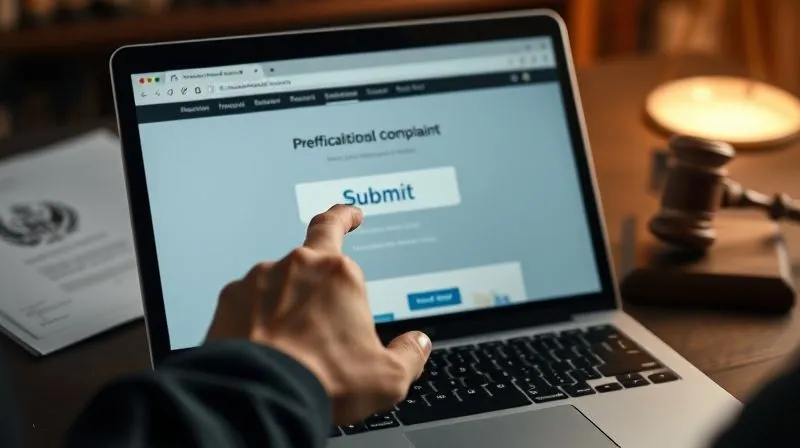
The CFPB is your most powerful ally in escalating complaints. They act as an intermediary, forwarding your complaint to the company (credit bureau or data furnisher) and expecting a response. More importantly, they track these complaints, identifying patterns that could lead to enforcement actions. When you file a complaint with the CFPB, you are contributing to a larger dataset that can expose systemic issues.
- Gather All Previous Correspondence: Include your initial dispute letters, any responses from the credit bureaus or furnishers, and documentation of their failure to correct the issue.
- Visit the CFPB Website: Go to consumerfinance.gov/complaint and follow the instructions to submit your detailed complaint.
- Be Specific: Clearly state that you've already disputed with the credit bureau/furnisher and they failed to resolve the systemic issue. Attach all relevant documents.
- Monitor Your Complaint: The CFPB will usually get a response from the company within 15 days. You'll be notified and can review their response.
Contacting Your State Attorney General
State Attorneys General often have consumer protection divisions that can intervene in cases of unfair or deceptive business practices. While they may not handle individual disputes, a pattern of complaints from their constituents can prompt investigations into systemic issues affecting many consumers in their state. This adds another layer of governmental oversight to your challenge.
Reporting to the Federal Trade Commission (FTC)
The FTC collects complaints about identity theft and other fraudulent activities. While they don't resolve individual disputes, your report helps them identify trends and potential widespread scams or unfair practices. Reporting to the FTC, alongside the CFPB, strengthens the collective voice against systemic manipulation.
When to Seek Professional Legal Counsel
While many disputes can be resolved through diligent self-advocacy, there comes a point, especially with systemic credit score manipulation, where professional legal counsel becomes indispensable. If you've exhausted all other avenues – disputes, CFPB complaints, etc. – and the inaccuracies persist, it's time to consider legal action.
An attorney specializing in consumer law or FCRA violations can evaluate your case, advise on the strength of your evidence, and represent you in negotiations or litigation. They understand the nuances of the law and can often compel credit bureaus and furnishers to take action where individual efforts have failed. Furthermore, if a credit bureau or furnisher has violated the FCRA, you may be entitled to damages, including statutory damages, actual damages, and even attorney's fees.
Case Study: Sarah's Persistent Battle Against Systemic Errors
Sarah, a client I advised, found herself in a nightmare scenario. After multiple disputes, her credit reports still showed three collection accounts that belonged to a person with a similar name, despite her providing irrefutable proof of identity and a notarized affidavit. The credit bureaus would remove them, only for them to reappear months later, a clear systemic data matching error. She had filed CFPB complaints, but the issue persisted. Frustrated and unable to secure a mortgage, Sarah finally consulted an FCRA attorney. The attorney filed a lawsuit against the credit bureaus for repeated FCRA violations. Within weeks, the accounts were permanently removed, and Sarah received a settlement for the damages she incurred. This demonstrates how legal action, when necessary, can be the most effective way to challenge entrenched systemic issues.
"Don't view legal counsel as a last resort, but rather as a powerful strategic option when systemic credit score manipulation threatens your financial future and all other avenues have been exhausted. An expert attorney can level the playing field."
Proactive Measures to Safeguard Your Credit
While we've focused on challenging existing manipulation, prevention is always better than cure. Adopting proactive habits can significantly reduce your vulnerability to systemic errors and allow you to catch issues early.
- Regularly Monitor All Three Credit Reports: Don't just check your score; scrutinize the details of each report from Experian, Equifax, and TransUnion at least annually, if not more frequently.
- Review Account Statements: Reconcile your bank and credit card statements with your own records to spot any discrepancies that could lead to incorrect reporting.
- Set Up Fraud Alerts: Consider placing fraud alerts or credit freezes, especially if you suspect identity theft or are concerned about unauthorized access.
- Communicate Clearly with Creditors: Keep thorough records of all correspondence with lenders and service providers, especially regarding payments, disputes, or account changes.
- Understand Your Financial Products: Be fully aware of the terms and conditions of all your loans and credit lines to avoid misunderstandings that could lead to reporting errors.
These habits empower you to be your own first line of defense, transforming you from a passive recipient of your credit score into an active guardian of your financial reputation. Catching a systemic error early can save you months, if not years, of financial stress and effort.

Frequently Asked Questions (FAQ)
Q: How long does it typically take to resolve a systemic credit score manipulation complaint? A: The timeline can vary significantly. Initial disputes with credit bureaus are typically resolved within 30-45 days. However, systemic issues, especially if they require escalation to the CFPB or legal action, can take several months, or even over a year, to fully resolve. Persistence and thorough documentation are key to expediting the process.
Q: Can challenging systemic issues hurt my credit score further? A: No, challenging inaccurate or manipulated information on your credit report is your legal right and will not negatively impact your score. In fact, successfully removing negative inaccuracies will ultimately improve your score. Be wary of any advice suggesting otherwise.
Q: What if the credit bureau claims the information is 'verified' but I know it's wrong? A: This is a common hurdle, especially with systemic issues. If the credit bureau claims verification, you must re-dispute with even stronger evidence, emphasizing the systemic nature of the error and the lack of a proper investigation. This is often the point where escalating to the CFPB or seeking legal counsel becomes critical, as 'verification' can sometimes be perfunctory.
Q: Are there any costs associated with challenging credit score manipulation? A: For individual disputes, there are generally no direct costs beyond postage for certified mail. If you engage a credit repair service, they will charge fees. If you pursue legal action, some consumer attorneys work on a contingency basis, meaning they only get paid if you win, and often, the FCRA allows for attorney's fees to be covered by the defendant if you prevail.
Q: What's the difference between a credit freeze and a fraud alert? A: A credit freeze locks down your credit report, preventing new credit accounts from being opened in your name. You must 'thaw' or unfreeze it to apply for new credit. A fraud alert, on the other hand, simply requires businesses to take extra steps to verify your identity before extending credit, but it doesn't block new applications. Both are tools to protect against identity theft, but a freeze offers stronger protection against new account fraud.
Key Takeaways and Final Thoughts
Navigating the complexities of credit reporting and challenging systemic credit score manipulation can feel like an uphill battle, but it is a battle you can absolutely win with the right knowledge and approach. My years in this industry have taught me that persistence, meticulous documentation, and a deep understanding of your consumer rights are your most potent weapons.
- Be Your Own Advocate: Proactively monitor your credit and gather robust evidence for any dispute.
- Master the FCRA: Understand your legal rights and leverage them at every turn.
- Escalate Strategically: Don't hesitate to use the CFPB and consider legal counsel when necessary.
- Preventative Measures: Implement ongoing credit monitoring and safeguard practices.
Remember, your credit score is more than just a number; it's a gateway to financial opportunities and a reflection of your economic identity. Don't let systemic flaws or manipulation dictate your financial future. Equip yourself with the knowledge, take decisive action, and reclaim the integrity of your credit report. The journey may require patience and resilience, but the reward of a fair and accurate financial standing is profoundly worth the effort.
Recommended Reading
- 7 Steps: How to Avoid Unknowingly Funding Human Rights Abuses in My Portfolio?
- Urgent Loan? 7 Rapid Steps to Boost Your Business Credit Score Now
- Raise Your Credit Score Fast & Free: The Ultimate Guide [2024]
- Unmasking Crypto Scams: How to Identify Rug Pulls in New Projects
- Unlock Your Financial Future: How to Understand Sections of Your Annual Credit Report





Comments
Leave a comment below. Your email will not be published. Required fields marked with *