



How to avoid greenwashing in ESG fund selection for client portfolios?
For over two decades in the finance industry, specializing in ethical and sustainable investing, I've witnessed the profound evolution of ESG. What began as a niche concept has blossomed into a mainstream imperative, driven by growing client demand for investments that align with their values and contribute positively to the world. Yet, with this growth comes a significant challenge: the pervasive shadow of greenwashing.
The problem is palpable. As financial advisors, we stand at the critical intersection of client aspirations and market realities. Our clients are increasingly sophisticated, seeking genuine impact and transparency, but the market is flooded with funds making vague, unsubstantiated, or even misleading ESG claims. This isn't just about misallocation of capital; it's about eroding client trust, damaging our professional reputation, and undermining the very integrity of the sustainable finance movement.
This comprehensive guide is designed to equip you, the diligent financial advisor, with a robust framework and actionable strategies to confidently navigate the complex landscape of ESG fund selection. We'll move beyond surface-level claims, delve into practical due diligence, and empower you to discern true ESG leaders from mere marketers, ensuring your client portfolios genuinely reflect their ethical commitments.
Understanding the Nuances of Greenwashing in ESG Investing
Before we can effectively combat greenwashing, we must first understand its multifaceted nature within the ESG investment sphere. It’s far more insidious than simply making false claims; often, it’s about selective disclosure, vague language, or a disproportionate emphasis on minor positive attributes to distract from significant negative impacts.
What is Greenwashing, Really? Beyond the Obvious
Greenwashing, in essence, is the practice of making an unsubstantiated or misleading claim about the environmental, social, or governance benefits of a product, service, or company. In the context of ESG funds, this can manifest in several ways:
- Vague Terminology: Using words like 'sustainable,' 'green,' or 'ethical' without clear, measurable criteria or definitions.
- Irrelevant Claims: Highlighting a minor ESG positive while ignoring a more significant negative impact elsewhere in the company or portfolio.
- Misleading Labels: Applying ESG labels to funds that only minimally integrate ESG factors, or worse, include companies with glaring ESG controversies.
- Data Manipulation: Presenting ESG data selectively or out of context to paint a favorable picture.
- Lack of Transparency: Failing to disclose methodologies, specific holdings, or engagement strategies clearly.
Why Greenwashing is More Prevalent in ESG Funds
The rise of ESG investing has created a fertile ground for greenwashing. Demand is soaring, and with it, the incentive for fund providers to label existing products as ESG-compliant or launch new ones with minimal genuine integration. Unlike traditional financial metrics, ESG data can be qualitative, subjective, and inconsistent across different reporting standards, making it harder for the average investor – and even some advisors – to verify claims.
“The challenge with ESG isn't just about identifying bad actors; it’s about navigating the gray areas, where intentions may be good but execution is lacking, or where marketing outpaces genuine impact. True due diligence requires skepticism and a deep dive into the underlying data.”
The lack of universal regulatory standards for ESG disclosures further compounds this issue, creating an environment where self-reporting can be easily exploited. As advisors, our role is to cut through this noise and ensure our clients' investments are genuinely aligned with their values.
The Foundation: Establishing a Robust Due Diligence Framework
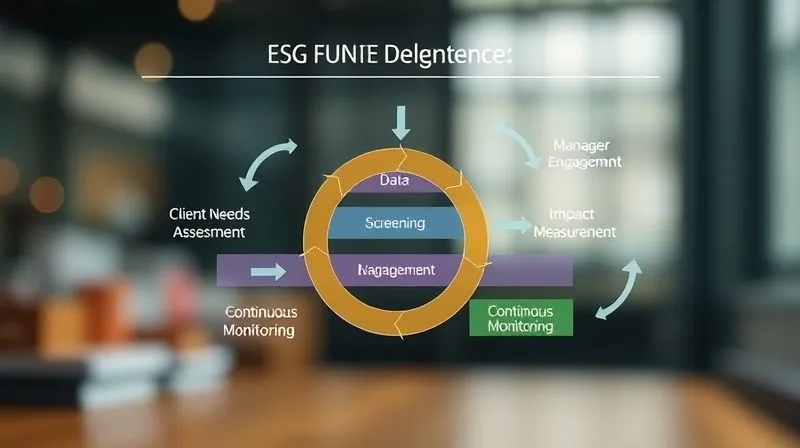
To effectively combat greenwashing, you need a systematic, repeatable process. Relying on gut feelings or marketing brochures is a recipe for disaster. I've found that a structured due diligence framework is your best defense, ensuring consistency and thoroughness in your ESG fund selection.
Here’s how to build one:
- Define Your Client's ESG Priorities: Before even looking at funds, clearly articulate what 'ESG' means to your client. Is it climate change, social equity, ethical governance, or a combination? This clarity will guide your screening process.
- Establish Clear ESG Investment Criteria: Based on client priorities, develop specific, measurable criteria. For example, 'no fossil fuels,' 'minimum 30% female board representation,' or 'companies with net-zero targets by 2040.'
- Implement a Multi-Layered Screening Approach: Don't rely on a single data source or rating. Combine proprietary analysis with third-party data, fund prospectuses, and direct engagement.
- Document Everything: Maintain detailed records of your due diligence process for each fund. This not only aids in future reviews but also provides transparency for clients and regulatory compliance.
- Regular Review Cycle: ESG factors are dynamic. Commit to reviewing funds at least annually, or when significant news impacts a holding or the fund's strategy.
Building this framework is an investment in time, but it pays dividends in client trust and portfolio integrity. It transforms you from a reactive consumer of ESG information to a proactive, informed selector.
Deciphering Data: Beyond Marketing Spin to Material Impact
The heart of avoiding greenwashing lies in your ability to critically analyze the data presented by fund managers and third-party providers. This requires moving past headlines and marketing materials to the actual substance of a fund's ESG integration.
Scrutinizing ESG Reports and Prospectuses
When reviewing a fund's official documents, look for specificity and measurable outcomes, not just aspirational statements. A truly ESG-focused fund will provide:
- Clear Investment Mandate: Does the prospectus explicitly state its ESG objectives and how they integrate into the investment process?
- Specific Exclusion/Inclusion Criteria: Are there defined lists of industries or companies the fund will or will not invest in? 'Avoids controversial weapons' is good; 'Excludes companies deriving >5% revenue from thermal coal' is better.
- Engagement Strategy: How does the fund manager engage with portfolio companies on ESG issues? What are their proxy voting policies? Are there examples of successful engagements?
- Impact Reporting: Beyond financial returns, does the fund report on its actual ESG impact? This could include carbon footprint reduction, diversity metrics, or community benefits from its holdings.
- Transparency of Holdings: While not always fully disclosed, look for a representative sample of holdings and explanations for their inclusion based on ESG criteria.
As Harvard Business Review highlights, the inconsistency in ESG data makes rigorous scrutiny essential. Don't be afraid to ask for more detail if the reports are vague.
Leveraging Third-Party ESG Ratings (with Caution)
Third-party ESG ratings (from providers like MSCI, Sustainalytics, Bloomberg, etc.) can be valuable starting points, but they are not infallible. Each provider uses its own methodology, weighting different ESG factors, which can lead to vastly different ratings for the same company or fund.
- Understand the Methodology: Familiarize yourself with how each rating agency collects, processes, and weights its data. Are they backward-looking or forward-looking? Do they focus on operational risk or societal impact?
- Look for Consensus, But Question Discrepancies: If a fund has wildly different ratings from reputable agencies, it’s a red flag that warrants deeper investigation.
- Don't Treat Ratings as the Final Word: Use them as a filter, but always combine them with your own qualitative and quantitative analysis. They are tools, not definitive judgments.
“Data validation is paramount. Any fund can present glossy reports, but the true test of ESG commitment lies in the verifiable, material impact data and the robust processes underpinning it. If it sounds too good to be true, it often is.”
The 'S' and 'G' Factor: Often Overlooked, Easily Faked
Many funds emphasize the 'E' (Environmental) component of ESG, as it's often more tangible and easier to market. However, a genuinely sustainable investment integrates all three pillars. Greenwashing often hides in weak Social (S) and Governance (G) practices, which are harder to quantify but equally critical.
Social Metrics: Beyond Philanthropy
True social responsibility goes far beyond charitable donations. Look for evidence of:
- Employee Welfare: Fair wages, safe working conditions, health benefits, employee development, and low turnover rates.
- Diversity & Inclusion: Representation across all levels, equitable pay, and inclusive policies.
- Community Engagement: Positive local impact, responsible supply chain management, and avoidance of human rights abuses.
- Data Privacy & Security: Robust policies and track record in protecting customer data.
Governance: The Bedrock of True Sustainability
Strong governance is the foundation upon which environmental and social initiatives can truly thrive. Without it, even the best intentions can falter. Scrutinize:
- Board Independence: A significant number of independent directors, diverse backgrounds, and clear separation of CEO and Chair roles.
- Executive Compensation: Alignment of executive pay with long-term ESG performance, not just short-term financial gains.
- Shareholder Rights: Transparent proxy voting processes and responsiveness to shareholder concerns.
- Ethics & Compliance: Robust anti-corruption policies, whistleblower protections, and a strong ethical culture.
Case Study: The 'Green' Tech Giant's Hidden Flaws
Consider 'EcoTech Innovations,' a fictional tech company lauded for its innovative renewable energy solutions and minimal carbon footprint. Many ESG funds included it purely based on its 'E' score. However, a deeper dive into its 'S' and 'G' revealed significant issues: a high employee turnover rate due to poor working conditions and lack of growth opportunities, and a board dominated by insiders with questionable executive compensation packages tied to aggressive, short-term financial targets. Funds that only screened for environmental impact missed these critical red flags, inadvertently supporting a company that, while green on the outside, was unsustainable in its human capital and governance practices. By applying a holistic ESG lens, discerning advisors would have identified these risks, protecting client values and investments.

Engaging with Fund Managers: Asking the Right Questions
Once you've done your initial data crunching, direct engagement with fund managers is indispensable. This isn't just about validating data; it's about assessing their philosophy, commitment, and the depth of their ESG expertise. Treat this as a critical interview for your clients' capital.
Here are key questions I always recommend asking:
- "Describe your ESG integration process. How is ESG research incorporated into your fundamental analysis, and who performs this analysis?" (Look for a systematic, integrated approach, not an outsourced or superficial add-on.)
- "Can you provide specific examples of companies you've excluded or engaged with due to ESG concerns, and what was the outcome?" (Concrete examples demonstrate genuine activity, not just policy statements.)
- "How do you measure and report on the non-financial impact of the fund's investments? What metrics do you use, and how often is this reported?" (Look for clear, consistent, and transparent impact reporting beyond just financial returns.)
- "What are your proxy voting policies, and how do you exercise shareholder rights to influence ESG outcomes in portfolio companies?" (Active ownership is a hallmark of true ESG commitment.)
- "How do you address ESG controversies that arise within your portfolio companies? What's your process for monitoring and responding?" (Demonstrates risk management and ongoing commitment.)
- "What percentage of your investment team has dedicated ESG expertise or certifications?" (Indicates the depth of internal knowledge and commitment.)
This direct dialogue helps you gauge the fund manager's genuine commitment and understanding, distinguishing between those who truly embed ESG and those merely checking boxes. For more insights on this, consider resources like those from the CFA Institute on ESG Investing.
Implementing a "Red Flag" Checklist for ESG Funds
Even with thorough due diligence, certain indicators should immediately trigger a deeper investigation. I've developed a 'Red Flag' checklist over the years that has saved me and my clients from numerous greenwashing traps. This isn't exhaustive, but it covers the most common pitfalls.
| Red Flag Indicator | Implication for Due Diligence |
|---|---|
| Vague or generic ESG claims | Requires demanding specific, measurable criteria and impact reports. |
| Heavy reliance on self-reported data without third-party verification | Cross-reference with multiple independent sources; question data integrity. |
| High fees for an 'ESG' overlay without clear added value | Justify the premium; ensure the ESG integration warrants the cost. |
| Significant holdings in controversial industries (e.g., tobacco, weapons, fossil fuels) without clear exclusion policies | Directly contradicts ethical investing; immediate disqualification for many clients. |
| Lack of transparency on holdings, engagement, or voting records | Indicates something to hide; demand full disclosure or avoid. |
| ESG claims focused almost exclusively on the 'E' (Environmental) with weak 'S' or 'G' scores | Holistic ESG analysis needed; investigate social and governance practices thoroughly. |
| Fund manager cannot articulate a clear, consistent ESG philosophy | Suggests a lack of genuine commitment or understanding; avoid. |
| Recent re-branding of an existing fund as 'ESG' without significant changes to its investment strategy | Classic greenwashing tactic; scrutinize the 'new' strategy for genuine integration. |
Using this checklist as part of your initial screening can quickly filter out the most egregious examples of greenwashing, allowing you to focus your deeper analysis on funds that show genuine promise. It's about being proactive rather than reactive, protecting your clients from investments that might appear green but are fundamentally flawed.

Continuous Monitoring and Re-evaluation
The world of ESG is not static. Companies evolve, new regulations emerge, and what constitutes 'sustainable' can shift. Therefore, your due diligence doesn't end once a fund is selected for a client's portfolio. Continuous monitoring and periodic re-evaluation are crucial to ensure ongoing alignment with client values and to guard against emerging greenwashing tactics.
Tracking Fund Performance Against ESG Goals
Just as you track financial performance, you must also monitor a fund's ESG performance. This involves:
- Regular Review of Fund ESG Reports: Compare current reports against previous ones to identify trends, improvements, or regressions in ESG metrics.
- Monitoring ESG News and Controversies: Use news aggregators and ESG data providers to stay informed about any controversies involving fund holdings or the fund manager itself. A sudden scandal at a key holding could warrant re-evaluation.
- Re-engaging with Fund Managers: Periodically check in with fund managers to understand any changes in their ESG strategy, team, or engagement priorities.
- Client Feedback: Incorporate client feedback into your review process. Their evolving values or concerns might necessitate a change in portfolio holdings.
Staying Abreast of Regulatory Changes and Evolving Standards
The regulatory landscape for ESG is developing rapidly, particularly in regions like the EU with its Sustainable Finance Disclosure Regulation (SFDR) and Taxonomy. Staying informed about these changes is vital:
- New Disclosure Requirements: Understand how new regulations might impact the reporting standards for funds and companies, offering you more transparent data.
- Industry Best Practices: Follow leading industry bodies and academic research on evolving ESG methodologies and impact measurement.
- Emerging ESG Themes: Be aware of new ESG themes gaining prominence (e.g., biodiversity, circular economy, digital ethics), as these may influence future fund offerings and client interests.
Proactive monitoring ensures that your client portfolios remain genuinely aligned with ethical investing principles and are resilient against the ever-present threat of greenwashing.
Frequently Asked Questions (FAQ)
How often should I re-evaluate ESG funds in a client portfolio? I recommend a formal re-evaluation at least annually, coinciding with your regular client portfolio reviews. However, you should also conduct ad-hoc reviews whenever there are significant market shifts, new regulatory announcements, or major controversies involving a fund or its key holdings. Ongoing monitoring of ESG news should be a daily or weekly practice.
Are there specific industries more prone to greenwashing? While greenwashing can occur anywhere, industries with a historically high environmental impact (e.g., energy, mining, heavy manufacturing) or those facing intense consumer scrutiny (e.g., fashion, food & beverage) are often more prone to it. Companies in these sectors may try to highlight minor 'green' initiatives to distract from larger, systemic issues. Always apply extra scrutiny to funds heavily invested in these areas.
What role do proxy voting and shareholder engagement play in avoiding greenwashing? They play a crucial role! Active ownership, through proxy voting and direct engagement with company management, is a powerful tool for fund managers to influence corporate behavior and drive genuine ESG improvements. Funds that actively engage and transparently report on their proxy voting records demonstrate a deeper commitment to ESG. If a fund claims to be ESG but is passive in its ownership, that's a red flag.
Can small, emerging ESG funds be trusted? Yes, but with heightened due diligence. Smaller funds might be more nimble and genuinely innovative in their ESG approach, but they may lack the extensive research teams or track record of larger players. Focus on the clarity of their investment mandate, the expertise of their small team, their transparency, and their willingness to engage directly with you. Some of the most impactful ESG strategies come from boutique firms, but verify their claims rigorously.
How do I explain greenwashing risks to my clients without eroding trust in ESG? Transparency is key. Frame it as part of your role in protecting their investments and ensuring their values are genuinely reflected. Explain that while ESG investing is powerful, the market is still maturing, and your expertise is essential to navigate its complexities. Emphasize your robust due diligence process, which is designed specifically to identify and avoid greenwashing, thereby enhancing their trust in your guidance and the integrity of their sustainable investments.
Key Takeaways and Final Thoughts
Navigating the ESG investment landscape requires vigilance, expertise, and a commitment to genuine impact. Greenwashing is a persistent challenge, but it is one we, as experienced financial advisors, are uniquely positioned to overcome. By adopting a rigorous, systematic approach to fund selection, you not only protect your clients' capital but also uphold the integrity of the ethical investing movement.
- Be Skeptical, Always: Question vague claims and demand specificity and measurable data.
- Go Beyond the 'E': Ensure a holistic view of Environmental, Social, and Governance factors.
- Engage Directly: Ask fund managers tough, pointed questions about their processes and impact.
- Use a Checklist: Implement a red flag system to quickly identify problematic funds.
- Monitor Continuously: ESG is dynamic; regular review and adaptation are non-negotiable.
Ultimately, your role is to be the trusted guide, helping clients align their financial goals with their deepest values. By mastering the art of avoiding greenwashing, you empower them to invest with confidence, knowing that their portfolios are not just performing financially, but are also contributing to a more sustainable and equitable future. This is not just good practice; it's essential for the future of finance.
Recommended Reading
- Breaking a Business CD Early? 5 Tax Implications You Must Know
- Urgent: 7 Strategies to Mitigate Bank Loan Portfolio Interest Rate Risk?
- Challenging Systemic Credit Score Manipulation: Your Expert Guide
- 7 Proven Strategies: What to Do When Rising Rates Crush Rental Cash Flow?
- Unveiling the Truth: Are Budgeting Apps Safe for Your Financial Data?





Comments
Leave a comment below. Your email will not be published. Required fields marked with *