



How Can Professionals Rapidly Access Emergency Cash During Crisis?
For over two decades in finance, particularly in emergency fund planning and wealth preservation, I’ve witnessed firsthand how even the most financially savvy professionals can be blindsided by unforeseen crises. From unexpected medical emergencies to sudden job loss or market downturns impacting business ventures, the illusion of financial stability can shatter in an instant.
The unique challenges professionals face—often characterized by high fixed costs, complex investment portfolios, and significant reputational stakes—mean that a generic 'emergency fund' might not cut it. The real problem isn't just having money; it's having the right money, in the right place, accessible at the right speed, when you need it most.
This article isn't just about accumulating cash; it's about strategic liquidity. I will provide you with actionable frameworks, expert insights, and proven strategies designed for professionals to rapidly access emergency cash during crisis, ensuring your financial resilience and peace of mind.
The Unseen Vulnerability: Why Professionals Need a Rapid Access Plan
Many professionals operate under the assumption that their substantial income or robust investment portfolio inherently protects them from financial shocks. While a strong financial position is undoubtedly an advantage, it doesn't automatically translate to rapid liquidity when a crisis hits. In fact, a complex financial structure can sometimes hinder quick access to funds.
I've seen countless professionals caught off guard, facing scenarios where their assets are tied up in illiquid investments, or their emergency savings are not as readily available as they believed. This isn't a failing of financial planning per se, but often a blind spot concerning the true meaning of 'accessible' cash. Your ability to rapidly access emergency cash during crisis can be the difference between weathering a storm and facing significant, long-term setbacks.
“True financial security isn’t just about how much you have, but how quickly you can mobilize what you have when circumstances demand it.” – Industry Expert Insight
Pillar 1: Re-evaluating Your Existing Emergency Fund Structure
The traditional advice of keeping 3-6 months of expenses in a savings account is a solid foundation, but for professionals, we need to add a layer of sophistication: accessibility and diversification of liquidity. Not all emergency funds are created equal when speed is paramount.
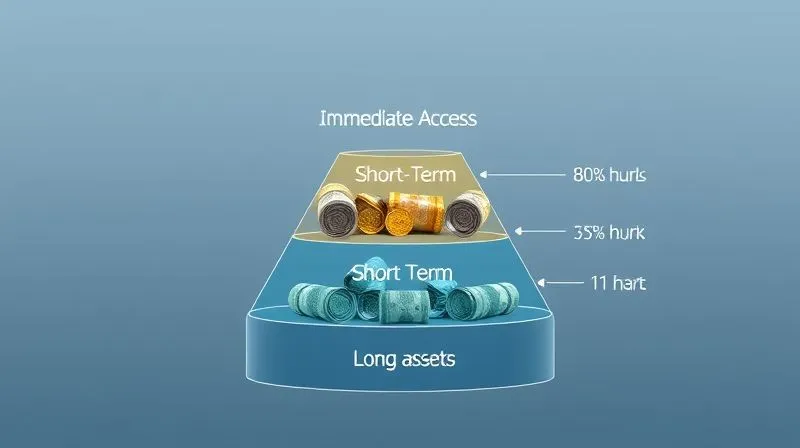
Think beyond a single savings account. Consider a tiered liquidity approach that segments your emergency funds based on urgency and accessibility. This ensures you have immediate funds for minor issues, and increasingly larger sums available for severe crises, without sacrificing potential growth on all your capital.
Tiered Liquidity Approach: A Strategic Blueprint
To truly rapidly access emergency cash during crisis, you need a plan that considers different levels of urgency and impact. Here’s how I advise my clients to structure their emergency funds:
- Tier 1: Immediate Access (1-3 months of essential expenses): This should be in a high-yield savings account or a money market account. It’s for truly immediate needs – a car repair, a sudden urgent bill. It's liquid, interest-bearing, and not subject to market fluctuations.
- Tier 2: Short-Term Access (3-6 months of essential expenses): This can be held in a short-term CD ladder, a conservative bond ETF, or a prime money market fund. The goal here is slightly higher yield than Tier 1, with a bit more buffer time (a few days to a week) to access.
- Tier 3: Medium-Term Access (6-12+ months of essential expenses): For larger, less common emergencies like job loss or a significant home repair. This could be in a taxable brokerage account invested in highly liquid, diversified ETFs, or even a pre-approved line of credit. The trade-off is slightly less immediate access for potentially better returns.
By segmenting your funds this way, you optimize for both liquidity and growth, ensuring you can rapidly access emergency cash during crisis without disrupting your entire financial strategy.
Pillar 2: Strategic Use of Credit Lines and Secured Loans
While not ideal for every situation, pre-approved credit lines and secured loans can serve as powerful tools for professionals who need to rapidly access emergency cash during crisis, especially when other liquid assets are insufficient or inaccessible. The key is to establish these facilities *before* a crisis hits, not during it, when terms might be less favorable.
Personal Lines of Credit (PLOC)
A Personal Line of Credit is essentially a flexible loan from a bank or credit union that allows you to borrow up to a certain limit, as needed. You only pay interest on the amount you borrow. For professionals with strong credit histories and stable incomes, PLOCs can be pre-approved with significant limits, offering immediate liquidity.
- Pre-Approval is Key: Apply for a PLOC when your finances are strong. This ensures better rates and higher limits.
- Understand the Terms: Be clear on interest rates (variable vs. fixed), fees, and repayment schedules.
- Use Sparingly: Think of a PLOC as a backup emergency fund, not a primary one, due to interest costs.
Securities-Backed Lines of Credit (SBLOC)
For professionals with substantial investment portfolios, an SBLOC can be an incredibly efficient way to rapidly access emergency cash during crisis without selling assets. An SBLOC allows you to borrow money using your investment portfolio as collateral. This means you don't liquidate your investments, allowing them to continue growing, while still accessing needed funds.
However, SBLOCs come with risks, primarily margin calls if the value of your collateralized investments drops significantly. Understanding these risks and maintaining a conservative borrowing ratio is crucial. For more detailed information on SBLOCs, I recommend exploring resources from reputable financial institutions or educational platforms like Investopedia.
Home Equity Lines of Credit (HELOC)
If you own a home with substantial equity, a Home Equity Line of Credit (HELOC) can provide a significant source of rapid cash. Similar to a PLOC, a HELOC allows you to borrow against your home's equity up to a certain limit. It typically offers lower interest rates than personal loans or credit cards because it's secured by your home.
While powerful, a HELOC also carries the risk of losing your home if you default. It's a serious commitment and should be considered carefully. The application process can take several weeks, so it's a tool for pre-crisis planning rather than immediate crisis response. The Consumer Financial Protection Bureau (CFPB) offers excellent guidance on HELOCs.
Pillar 3: Unlocking Value from Investments (The Last Resort)
When all other options are exhausted, strategically unlocking value from your investment portfolio becomes a necessity. This is often the most painful route, as it can involve selling assets at an inopportune time or incurring tax liabilities. The goal here is to minimize the damage while still being able to rapidly access emergency cash during crisis.
Strategic Portfolio Liquidation
Panic selling is almost always a mistake. If you must sell investments, do so with a clear strategy. Prioritize selling assets with minimal capital gains tax implications (e.g., those held for less than a year, or those where losses can offset gains). Always consult with a financial advisor and tax professional before making significant liquidation decisions.
- Identify Tax-Efficient Assets: Look for investments with minimal unrealized gains, or even those with losses that can be harvested.
- Diversify Sales: Avoid selling a single asset class entirely. Spread the impact across your portfolio.
- Consider Staggered Sales: If time allows, sell in tranches to average out prices and potentially reduce market impact.
Borrowing Against Retirement Accounts (401k Loans)
Borrowing from your 401k or other qualified retirement plans should be considered a measure of last resort. While it allows you to rapidly access emergency cash during crisis without credit checks and with relatively low interest rates (which you pay back to yourself), there are significant downsides. If you leave your job and don't repay the loan, it can become a taxable distribution, subject to income tax and a 10% penalty if you're under 59½. The IRS provides detailed guidelines on 401k loans that are essential to review.
Pillar 4: Leveraging Professional Networks and Temporary Income Streams
Sometimes, the solution to rapidly access emergency cash during crisis isn't about existing assets, but about generating new income. Professionals have a unique advantage here due to their specialized skills and extensive networks.
Consulting Gigs and Freelance Work
If you're facing a temporary income shortfall, leveraging your professional expertise for short-term consulting or freelance projects can provide quick cash. Many companies are willing to pay a premium for specialized skills on a project basis, allowing you to monetize your knowledge rapidly.
- Update Your Professional Profile: Make sure your LinkedIn and other professional profiles clearly highlight your skills and availability for contract work.
- Reach Out to Your Network: Inform former colleagues, clients, and mentors about your availability. Often, referrals are the quickest way to land a gig.
- Identify Niche Skills: What specific, high-value skills do you possess that are in demand? Focus on these.
Peer-to-Peer Lending (as a borrower)
Platforms like Prosper or LendingClub connect borrowers directly with investors. While interest rates can vary, these platforms often offer faster approval processes than traditional banks, making them a viable option for professionals needing to rapidly access emergency cash during crisis. However, always compare rates and terms carefully.
| Option | Speed of Access | Cost | Risk |
|---|---|---|---|
| High-Yield Savings (Tier 1) | Instant/1 Business Day | Low (opportunity cost) | Very Low |
| Personal Line of Credit | 1-3 Business Days (after approval) | Moderate (interest rates) | Moderate (debt) |
| Securities-Backed Line of Credit | 1-5 Business Days | Low (interest rates) | High (margin calls) |
| HELOC | Weeks (application), Instant (after approval) | Low (interest rates) | High (home as collateral) |
| 401k Loan | 1-2 Weeks | Low (interest paid to self) | High (taxable event if defaulted) |
| Freelance/Consulting | Variable (project-dependent) | Low (effort/time) | Low (income generation) |
Case Study: Dr. Anya Sharma's Rapid Response to a Medical Emergency
I recall a client, Dr. Anya Sharma, a successful surgeon, who faced a sudden, severe medical emergency involving a close family member overseas. The situation required immediate travel, specialist medical care not covered by her existing insurance, and several weeks of lost income due to her absence. Despite a robust retirement portfolio and substantial real estate, her immediate cash reserves were not enough to cover the estimated $75,000 in upfront costs.
Fortunately, Dr. Sharma had, on my recommendation, established a tiered emergency fund and a pre-approved Personal Line of Credit (PLOC) a year prior. Her Tier 1 and 2 funds (high-yield savings and short-term CDs) covered her travel and initial expenses. For the larger medical bills and income replacement, she activated her PLOC, which had a limit of $100,000 and was immediately accessible. This allowed her to rapidly access emergency cash during crisis without touching her investment portfolio, which was experiencing a temporary dip.
By having these mechanisms in place, Dr. Sharma avoided liquidating stocks at a loss, maintained her long-term financial growth, and focused entirely on her family's well-being. She repaid the PLOC within six months using her returning income and a bonus. Her proactive planning saved her from a potentially devastating financial and emotional ordeal.
“Preparation isn't just about having money; it's about having the right financial tools ready for deployment when life throws its toughest curveballs.” – Lesson from Dr. Sharma’s Experience

The Psychological Aspect: Maintaining Composure Under Pressure
Even with the best financial strategies, a crisis can be emotionally taxing. The ability to rapidly access emergency cash during crisis is not just about financial mechanics; it's also about maintaining mental clarity and making sound decisions under pressure. Fear and panic can lead to costly mistakes, such as liquidating assets prematurely or taking on high-interest debt.
The "Financial Fire Drill"
Just as businesses conduct fire drills, I encourage my clients to conduct 'financial fire drills.' This means mentally (and sometimes practically) walking through various crisis scenarios: What if I lost my job? What if I had a major medical expense? Where would the money come from, and how would I access it? This practice helps to normalize the thought process and reduces panic when a real crisis occurs. Knowing your options beforehand empowers you to act decisively.
Seeking Professional Guidance
During a crisis, it’s easy to feel overwhelmed. Don’t hesitate to seek advice from a trusted financial advisor. An objective third party can help you assess your options, navigate complex financial decisions, and provide emotional support. They can help you stick to your plan and avoid impulsive actions. Resources like FINRA BrokerCheck or the National Association of Personal Financial Advisors (NAPFA) can help you find qualified professionals.
Frequently Asked Questions (FAQ)
How quickly can I get a PLOC approved and access funds? The approval process for a Personal Line of Credit (PLOC) can vary, typically taking anywhere from a few days to a couple of weeks, depending on the financial institution and your credit profile. Once approved, accessing funds is often immediate through online transfers or checks, making it a truly rapid option for those who have planned ahead.
What are the tax implications of liquidating investments for emergency cash? Liquidating investments can trigger capital gains taxes. If you sell investments held for less than a year, the gains are taxed as ordinary income, which is typically higher. Long-term capital gains (assets held for over a year) are taxed at more favorable rates. It's crucial to consult a tax professional to understand the specific implications for your situation and explore strategies to minimize your tax burden.
Is it ever advisable to use credit cards for emergencies? While credit cards offer immediate access to funds, their high interest rates make them a very expensive option for emergency cash, especially for larger amounts or if you can't pay off the balance quickly. I generally advise against using credit cards for emergencies unless it's a very small, short-term need that can be repaid within the billing cycle, or if it's the absolute last resort and no other rapid access emergency cash during crisis options are available.
How much emergency cash should I *really* have as a professional? While the standard 3-6 months of expenses is a good starting point, for professionals with higher fixed costs, complex financial lives, or unpredictable income streams (e.g., business owners), I often recommend aiming for 6-12 months, segmented across a tiered liquidity structure. This provides a greater buffer and more flexibility to rapidly access emergency cash during crisis without drastic measures.
What's the biggest mistake professionals make in a cash crisis? The biggest mistake I've observed is waiting until a crisis hits to figure out how to access funds. This leads to impulsive decisions, often involving selling assets at a loss, taking on high-interest debt, or incurring unnecessary penalties. Proactive planning, establishing credit lines when not needed, and understanding your liquidity options beforehand are crucial to avoid this pitfall.
Key Takeaways and Final Thoughts
- Proactive Planning is Paramount: Don't wait for a crisis; establish your rapid access mechanisms when your finances are strong.
- Adopt a Tiered Liquidity Strategy: Segment your emergency funds for optimal balance between accessibility and growth.
- Leverage Pre-Approved Credit Lines: PLOCs, SBLOCs, and HELOCs can be powerful tools if established and understood beforehand.
- Understand Investment Liquidation Risks: Treat selling investments or borrowing from retirement funds as a last resort, with careful consideration of tax and long-term implications.
- Monetize Your Expertise: Your professional skills and network are valuable assets for generating rapid, temporary income.
- Maintain Emotional Composure: Financial planning includes mental preparedness for crisis situations.
As professionals, your financial journey is often complex and demanding. The ability to rapidly access emergency cash during crisis isn't just a safety net; it's a testament to your foresight and strategic planning. By implementing these expert-backed strategies, you're not just preparing for the unexpected; you're building a fortress of financial resilience that will allow you to navigate any storm with confidence and control. Be proactive, be prepared, and empower your financial future.

Recommended Reading
- Stalled Campaign? 5 Proven Ways to Reignite Crowdfunding Before Deadline
- Mastering NFT Capital Gains: 7 Steps for Accurate Tax Reporting
- 7 Mandates: What Financial Advisors Must Do About Student Debt
- Avoid 5 Costly Payroll Tax Penalties: Small Business Guide
- Unlock Your Financial Freedom: Ultimate Tips for Managing Student Financial Aid Effectively





Comments
Leave a comment below. Your email will not be published. Required fields marked with *