



How to Accurately Calculate NFT Capital Gains for Complex Tax Reporting?
For over a decade and a half in the digital finance trenches, I've witnessed the evolution of virtual assets from obscure curiosities to mainstream investment vehicles. The advent of Non-Fungible Tokens (NFTs) brought with it a wave of innovation, creativity, and, inevitably, a new frontier of tax complexity.
Many early adopters, driven by passion and the thrill of a nascent market, often overlooked the intricate financial reporting requirements that would follow their successful (or unsuccessful) ventures. The sheer volume and variety of NFT transactions – from minting to selling, trading, fractionalizing, and even lending – create a daunting labyrinth for even seasoned investors when tax season arrives.
This comprehensive guide isn't just a theoretical overview; it's a distillation of my experience and insights, designed to equip you with the actionable frameworks, step-by-step processes, and expert knowledge needed to confidently navigate how to accurately calculate NFT capital gains for complex tax reporting, ensuring compliance and optimizing your financial position.
Understanding the Fundamentals: What Constitutes an NFT Capital Gain?
Before diving into the mechanics, it's crucial to grasp the core concept: what exactly is an NFT capital gain or loss? In essence, it's the difference between what you paid for an NFT (its cost basis) and what you received when you disposed of it (its net proceeds).
The IRS, and most global tax authorities, generally classify NFTs as collectibles or property for tax purposes. This means their sale, exchange, or other disposition typically triggers a capital gain or loss event. The classification as a collectible can sometimes lead to higher tax rates for long-term gains compared to traditional capital assets.
Short-Term vs. Long-Term Capital Gains: The Time Factor
The duration you hold an NFT significantly impacts its tax treatment. An NFT held for one year or less before disposition results in a short-term capital gain or loss. These gains are taxed at your ordinary income tax rates, which can be considerably higher than long-term rates.
Conversely, if you hold an NFT for more than one year, any gain or loss upon disposition is classified as long-term capital gain or loss. Long-term capital gains often benefit from preferential tax rates, making this distinction incredibly important for tax planning. I've seen clients save thousands by simply understanding and applying this holding period rule.

Establishing Your NFT Cost Basis: The Foundation of Accurate Reporting
The cost basis is the bedrock of capital gains calculation. Without an accurate cost basis, you cannot determine your true profit or loss. This is often where the complexity begins for NFT investors, as acquisition methods vary widely.
Acquisition Methods and Their Impact on Basis
Your cost basis isn't just the sticker price of an NFT; it encompasses all expenses directly attributable to its acquisition. This includes:
- Direct Purchases: If you bought an NFT with fiat currency (USD, EUR, etc.), the cost basis is straightforward: the amount paid. If purchased with cryptocurrency (ETH, SOL, etc.), the cost basis is the fair market value (FMV) of the crypto at the exact time of the transaction, plus any associated fees.
- Minting Costs: When you mint an NFT, the cost basis includes the initial mint price (if any) and all gas fees paid in cryptocurrency. These gas fees, when converted to their fiat equivalent at the time of the transaction, are crucial components of your basis.
- Airdrops and Gifts: NFTs received via airdrop or as a gift generally have a cost basis of zero at the time of receipt. However, if the giver paid tax on the gift, or if the airdrop was considered income, the basis might be different. Consult a tax professional for specific advice on these scenarios.
- Staking Rewards or Play-to-Earn (P2E) NFTs: NFTs earned through staking or P2E games are typically considered ordinary income at the fair market value when received. This FMV then becomes their cost basis for future capital gain calculations.
- Step 1: Document All Acquisition Costs. For every NFT, meticulously record the date of acquisition, the amount paid (in fiat or crypto), the specific cryptocurrency used, and its fair market value in fiat at the exact transaction time. Include all associated gas fees, platform fees, and any other direct costs.
- Step 2: Convert Crypto Costs to Fiat at Time of Transaction. This is critical. You cannot simply use the current value of your crypto. Use reliable historical pricing data from reputable exchanges for the precise date and time of your NFT purchase or mint.
| Transaction Type | Date | Cost (ETH) | ETH Price (USD) | Cost Basis (USD) |
|---|---|---|---|---|
| NFT Purchase (ETH) | 2023-01-15 | 0.5 | 1500 | 750 |
| Minting Fee (ETH) | 2023-03-01 | 0.05 | 1700 | 85 |
| Airdrop (0 Cost) | 2023-05-10 | 0 | N/A | 0 |
Navigating Sales, Swaps, and Other Dispositions
Once you've established your cost basis, the next step in how to accurately calculate NFT capital gains involves understanding what constitutes a taxable disposition and how to calculate the net proceeds.
Calculating Net Proceeds from an NFT Sale
The net proceeds from an NFT sale are not simply the gross sale price. You must subtract any expenses directly related to the sale. This typically includes:
- Platform Fees: Fees charged by marketplaces like OpenSea, Magic Eden, or Rarible.
- Royalties Paid: Royalties paid to the original creator or subsequent holders of the NFT, which are often automatically deducted from the sale price.
- Gas Fees for Selling/Transferring: Any gas fees incurred to initiate or complete the sale or transfer of the NFT.
Your capital gain (or loss) is then calculated as: Net Sale Proceeds - Cost Basis = Capital Gain/Loss.
Understanding Like-Kind Exchange Rules (and their Demise)
Historically, under Section 1031 of the U.S. tax code, certain exchanges of "like-kind" property could defer capital gains taxes. Many in the crypto space hoped this might apply to NFT-to-NFT swaps. However, the Tax Cuts and Jobs Act of 2017 severely limited Section 1031 to only apply to real property, effectively eliminating its applicability to digital assets.
Important: This means that an NFT-to-NFT swap is almost always a taxable event. When you trade one NFT for another, you are essentially selling the first NFT for the fair market value of the second NFT at the time of the swap, triggering a capital gain or loss. The NFT you receive then acquires a new cost basis equal to its fair market value at the time of the exchange.
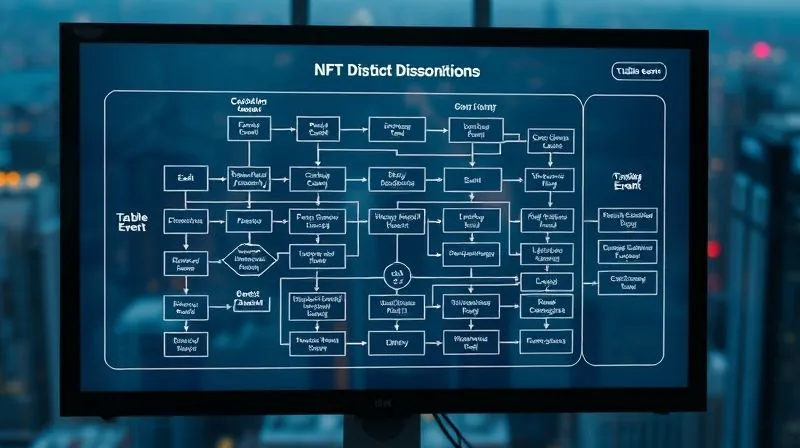
Dealing with Gas Fees, Royalties, and Transaction Costs
Gas fees and royalties are a recurring headache for NFT traders. Their treatment for tax purposes isn't always intuitive, and miscategorization can lead to incorrect capital gain calculations.
Allocating Transaction Fees Effectively
The general rule of thumb for gas fees is to categorize them based on the transaction they facilitate:
- Acquisition Gas Fees: Gas fees paid to mint or purchase an NFT are generally added to the NFT's cost basis. This reduces your potential capital gain when you eventually sell the NFT.
- Disposition Gas Fees: Gas fees paid to sell, transfer, or burn an NFT are typically deducted from the sale proceeds, effectively reducing your net proceeds and thus your capital gain.
- Failed Transactions: Gas fees for failed transactions (e.g., a mint that didn't go through) are generally treated as a loss, specifically an ordinary loss, as no asset was acquired. However, their deductibility can be complex and may depend on your jurisdiction.
Royalties also have two sides: those you pay and those you receive.
- Royalties Paid: When you sell an NFT, and a portion of the sale goes to the creator as a royalty, this amount is deducted from your gross proceeds, reducing your taxable gain.
- Royalties Received: If you are an NFT creator and receive royalties from secondary sales, these are generally treated as ordinary income, not capital gains. This income must be reported and is subject to self-employment taxes if you're operating as a business.
"The devil is in the details with NFT transaction costs. Proper categorization can significantly impact your capital gain or loss, often transforming what appears to be a minor expense into a significant tax advantage or liability."
Advanced Scenarios: Fractionalized NFTs, Lending, and Staking
As the NFT ecosystem matures, so do the financial instruments built around it. Fractionalized NFTs, lending protocols, and staking introduce additional layers of tax complexity.
Fractionalized NFTs: A Unique Challenge
Fractionalized NFTs allow multiple owners to hold a share of a single NFT. This can make tax calculations more intricate. When you sell a fraction of an NFT, you're essentially selling a portion of an asset. Your cost basis for that fraction is a pro-rata share of the original NFT's total cost basis. For example, if you own 10% of an NFT with a $10,000 basis, your basis for that 10% is $1,000.
Each sale of a fraction is a separate capital gains event. Similarly, if you acquire fractions, you'll need to track the cost basis for each purchase separately, potentially using a method like FIFO (First-In, First-Out) or specific identification if permitted by your tax authority.
NFT Lending and Staking Rewards
Lending out your NFTs through decentralized protocols or staking them to earn rewards presents distinct tax considerations:
- NFT Lending: If you lend an NFT and receive interest (e.g., in crypto), that interest is generally considered ordinary income at its fair market value at the time of receipt. The act of lending the NFT itself is typically not a taxable event unless there's a change in beneficial ownership. If you borrow an NFT, any interest paid might be deductible, depending on your jurisdiction and the purpose of the loan.
- NFT Staking: Rewards earned from staking NFTs are usually treated as ordinary income at their fair market value when received. This value then becomes their cost basis for future capital gains calculations when you eventually sell or exchange them. The act of staking the NFT itself is generally not a taxable event, assuming you retain ownership.
| Scenario | Action | Tax Implication |
|---|---|---|
| Fractionalized NFT Sale | Calculate basis based on ownership percentage | Capital Gain/Loss |
| NFT Lending (Borrower) | Interest paid is typically deductible | Expense |
| NFT Staking Rewards | Value at receipt is ordinary income | Income, then Capital Gain/Loss on disposition |
Leveraging Technology: Crypto Tax Software and Blockchain Explorers
Manually tracking every NFT transaction, especially for active traders, is a recipe for errors and frustration. This is where technology becomes your indispensable ally in how to accurately calculate NFT capital gains.
Choosing the Right Tax Software for Digital Assets
A robust crypto tax software solution can automate much of the data aggregation and calculation process. When selecting one, look for:
- Comprehensive Integration: It should connect seamlessly with major NFT marketplaces (OpenSea, Rarible, etc.), cryptocurrency exchanges, and various blockchain networks (Ethereum, Solana, Polygon, etc.) to pull your transaction data automatically.
- Cost Basis Methodologies: Ensure it supports various cost basis methods (FIFO, LIFO, HIFO, specific identification) and allows you to choose the most tax-efficient one for your situation.
- Detailed Reporting: The software should generate IRS Form 8949 (or equivalent for your jurisdiction), capital gains/losses reports, and income reports for staking rewards or airdrops.
- Audit Trail: It should provide a clear, exportable audit trail of all calculations and underlying transactions.
- Step 1: Consolidate All Transaction Data. Before importing, gather all your wallet addresses, exchange API keys, and marketplace transaction histories.
- Step 2: Import into Chosen Software. Connect your wallets and exchanges. Manually input any transactions the software can't automatically detect (e.g., off-chain trades, obscure airdrops).
- Step 3: Review and Reconcile Reports. This is crucial. Don't blindly trust the software. Cross-reference its generated reports with your own records to ensure accuracy, especially regarding cost basis and fair market values.
For official guidance on virtual currencies from the U.S. Internal Revenue Service, refer to their dedicated section: IRS Guidance on Virtual Currencies.
The Importance of Meticulous Record-Keeping
Even with advanced software, your commitment to diligent record-keeping is paramount. Software is only as good as the data it receives. In my experience, the clients who fare best during tax time are those who maintain impeccable records from day one.
Building a Robust Audit Trail
What should your audit trail include? Everything. This isn't just about transactions; it's about context and proof:
- Transaction Details: Dates, times, transaction IDs (hash), wallet addresses involved, specific NFTs acquired or disposed of.
- Fair Market Value: The FMV of any cryptocurrency used for purchases/sales, or received as income, at the exact time of the transaction.
- Associated Costs: All gas fees, platform fees, royalty payments, and any other direct expenses.
- Screenshots: Capture screenshots of minting events, marketplace listings, successful sales, and any communication related to NFT transactions.
- Smart Contract Details: Keep records of the smart contract addresses for your NFTs.
- Gift/Airdrop Documentation: Any relevant information about how an NFT was acquired if it wasn't a direct purchase.
Case Study: The Proactive Collector's Advantage
I recall a client, Sarah, who was an early and enthusiastic collector of generative art NFTs. She had hundreds of transactions across multiple blockchains. Initially, she felt overwhelmed by the thought of tax reporting. However, from the outset, she committed to meticulous record-keeping. She used a spreadsheet to log every mint, purchase, and sale, cross-referencing with blockchain explorers and her wallet history. When tax season came, she imported her data into a tax software, but her detailed personal records allowed her to identify and correct several discrepancies the software missed, particularly around complex gas fee allocations and specific identification of high-value NFTs. This proactive approach not only ensured she accurately reported her gains but also allowed her to strategically harvest losses, ultimately saving her thousands of dollars in taxes and providing invaluable peace of mind during a potential audit.
Working with a Crypto-Savvy Tax Professional
While this guide provides a robust framework for how to accurately calculate NFT capital gains, there are situations where the complexity warrants expert assistance. I always advise clients that knowing when to seek professional help is a sign of financial intelligence.
When to Seek Expert Assistance
Consider engaging a tax professional with proven expertise in digital assets if:
- You have a High Volume or Value Portfolio: The more transactions and the higher the value of your NFTs, the greater the potential for error and the higher the stakes.
- Complex Transaction Types: If you're involved in fractionalized NFTs, NFT lending, sophisticated DeFi strategies involving NFTs, or cross-chain swaps, a specialist can help navigate the nuances.
- Cross-Border Implications: If you're a global citizen, or your transactions span multiple jurisdictions, international tax laws can be incredibly complex.
- Audit Concerns: If you've received correspondence from a tax authority or have concerns about past filings, a professional can represent you and provide guidance.
A good crypto tax accountant can not only ensure compliance but also offer strategic advice on optimizing your tax position, such as loss harvesting or understanding the implications of different entity structures. For a deeper dive into the world of NFTs, Forbes Advisor provides excellent resources: Understanding NFTs: Forbes Advisor.
Common Pitfalls and How to Avoid Them
Even with the best intentions, I've observed several recurring mistakes that NFT investors make, leading to incorrect reporting and potential issues with tax authorities.
- Ignoring Gas Fees: Underestimating or overlooking gas fees, especially those associated with minting or purchasing, leads to an inflated capital gain because your cost basis is understated.
- Miscalculating Cost Basis: Failing to convert cryptocurrency values to fiat at the exact time of transaction is a common blunder. Using the current value or an average value instead of the spot price can significantly skew your calculations.
- Overlooking Small Transactions: Every single transaction, no matter how small, has tax implications. Airdrops, micro-transactions, or even failed transactions need to be accounted for.
- Confusing Income with Capital Gains: Royalties received, staking rewards, or P2E earnings are generally ordinary income, not capital gains. Misclassifying these can lead to incorrect tax rates and underreporting.
- Neglecting Wash Sale Rules (Where Applicable): While not universally applied to crypto or NFTs in all jurisdictions yet, some countries are considering or implementing rules similar to the 'wash sale' rule for stocks. This prevents you from selling an asset at a loss and repurchasing a 'substantially identical' asset within a short period to claim the loss. Stay informed about your local regulations.
- Poor Record-Keeping: This is the biggest pitfall. A lack of organized, verifiable records makes accurate reporting almost impossible and leaves you vulnerable in an audit.
Staying informed about the broader crypto ecosystem and its regulatory landscape is also crucial. For insights into the evolving digital economy, Deloitte offers valuable perspectives: Deloitte on the Crypto Ecosystem.
Frequently Asked Questions (FAQ)
What if I received an NFT as a gift? What is its cost basis? Generally, if you receive an NFT as a gift, your cost basis is the same as the donor's adjusted basis. However, if the fair market value of the NFT at the time of the gift is less than the donor's basis, and you sell it for a loss, your basis for calculating that loss might be limited to the FMV at the time of the gift. This is a nuanced area, and specific tax advice is recommended.
Are gas fees always deductible? Gas fees are deductible, but their treatment varies. Fees for acquiring an NFT add to its cost basis. Fees for selling an NFT reduce your sale proceeds. Fees for failed transactions are generally treated as an ordinary loss. It's crucial to categorize them correctly.
How do I handle NFTs that were burned or lost? If an NFT is permanently lost, stolen, or intentionally burned (destroyed), it can generally be considered a capital loss. You would report a capital loss equal to its cost basis. You'll need substantial proof of the loss, such as transaction hashes, wallet addresses, and ideally, police reports for theft.
Do I need to report NFT transactions even if I didn't make a profit? Yes, absolutely. All dispositions of NFTs (sales, swaps, gifts, burns) must be reported, regardless of whether they resulted in a gain or a loss. This is essential for accurate record-keeping and to properly offset any gains with losses.
Can I use specific identification for my NFTs to minimize taxes? In many jurisdictions, including the U.S., you can use specific identification for digital assets if you can clearly identify which specific NFT was sold. This allows you to choose which NFT (e.g., one with a higher cost basis) to sell to reduce your capital gains. This requires meticulous record-keeping of each NFT's unique identifier and its specific cost basis.
Key Takeaways and Final Thoughts
Navigating the complexities of NFT capital gains for tax reporting is undoubtedly challenging, but it is far from insurmountable. By adopting a disciplined approach and leveraging the right tools, you can transform what seems like an intimidating task into a manageable process.
- Establish Accurate Cost Basis: This is the single most critical step. Document every cost, including all gas fees, converting crypto to fiat at the exact transaction time.
- Understand Disposition Events: Recognize that sales, swaps, and even some lending or staking activities can trigger taxable events.
- Leverage Technology & Expertise: Utilize crypto tax software for automation but always review its output. Don't hesitate to consult a crypto-savvy tax professional for complex scenarios.
- Maintain Meticulous Records: Your audit trail is your best defense. Keep detailed records of every transaction, including dates, values, and associated fees.
- Stay Informed: The regulatory landscape for digital assets is constantly evolving. Keep abreast of changes in tax laws in your jurisdiction.
The world of NFTs offers incredible opportunities, but with those opportunities come responsibilities. By mastering how to accurately calculate NFT capital gains for complex tax reporting, you not only ensure compliance but also gain a clearer picture of your financial standing, allowing you to make more informed decisions for your future in the decentralized economy. Embrace the challenge, stay organized, and you'll navigate these waters with confidence.
Recommended Reading
- 5 Proven Strategies: Mitigating Tail Risk in Multi-Asset Portfolios
- Debt Restructuring: 5 Proven Ways to Protect Your Business Credit
- Urgent Loan? 7 Rapid Steps to Boost Your Business Credit Score Now
- Professionals: 5 Steps to Inflation-Proof Your Retirement Savings
- 5 Reasons Why Traditional Credit Monitoring Fails to Detect Fraud





Comments
Leave a comment below. Your email will not be published. Required fields marked with *