



Understanding the Altcoin Landscape: Beyond Bitcoin's Shadow
For over 15 years in the digital currency space, I've had a front-row seat to the industry's explosive growth and its often-brutal volatility. I've witnessed the birth of groundbreaking technologies and the demise of countless projects that promised the moon. What started as a niche interest has blossomed into a global financial phenomenon, and at its heart, beyond Bitcoin, lies the vast, often bewildering world of altcoins.
Many investors, captivated by the allure of 100x returns, dive headfirst into altcoins without a compass. They're often swayed by social media hype, fear of missing out (FOMO), or a superficial understanding of a project's fundamentals. This approach, I've seen countless times, inevitably leads to significant losses, disillusionment, and a deep distrust of the market's potential. The problem isn't just the inherent risk; it's the lack of a structured, disciplined approach to identifying genuine value amidst the noise.
This article isn't about guaranteeing you riches; it's about equipping you with the same frameworks and critical thinking I've honed over decades. You'll learn how to cut through the hype, conduct thorough due diligence, understand the nuances of various altcoin categories, and build a resilient portfolio. My goal is to transform you from a hopeful speculator into a strategic investor, capable of making informed decisions in the dynamic altcoin market.
What Exactly Are Altcoins, and Why Do They Matter?
The term 'altcoin' is simply a portmanteau of 'alternative coin,' referring to any cryptocurrency that isn't Bitcoin. While Bitcoin pioneered the concept of decentralized digital money, altcoins emerged to address its perceived limitations or to explore entirely new use cases. They represent a vast and diverse ecosystem, each with its unique protocol, consensus mechanism, and vision.
From Ethereum, which introduced smart contracts and decentralized applications (dApps), to Solana, designed for high-speed transactions, altcoins are the engines of innovation in the crypto space. They power decentralized finance (DeFi), enable non-fungible tokens (NFTs), facilitate supply chain management, and even support entirely new forms of social interaction in Web3. Understanding their diversity is the first step towards appreciating their potential and inherent complexities.
"Altcoins are not just 'other' cryptocurrencies; they are the frontier of digital innovation, constantly pushing the boundaries of what blockchain technology can achieve beyond simple value transfer."
This constant evolution means that while Bitcoin remains the digital gold standard, altcoins represent the venture capital arm of the crypto economy. They offer opportunities for exponential growth but come with commensurate risks, making a discerning eye and a robust research methodology absolutely essential.
The Siren Song of High Returns: Common Pitfalls and How to Avoid Them
The allure of altcoins often stems from their potential for parabolic gains, but this also makes them a magnet for opportunistic scams and ill-informed investments. I've observed several recurring pitfalls that consistently trap new and even experienced participants.
Pitfall 1: Ignoring Tokenomics
Many investors focus solely on a project's whitepaper or team, completely overlooking its tokenomics – the economic model governing the cryptocurrency. A project might have a brilliant idea, but if its token distribution is heavily centralized, if there's an inflationary supply with no burning mechanism, or if a significant portion of tokens are locked up by early investors with impending unlock dates, it can severely impact future price action.
For instance, a token with a massive circulating supply and a low market cap might seem cheap, but a high total supply with frequent unlocks can dilute value. Conversely, a token with a deflationary mechanism or strong utility that drives demand can be incredibly attractive. Always scrutinize the supply schedule, distribution, vesting periods, and utility of the token within its ecosystem.
Pitfall 2: Neglecting the Project Team
In the decentralized world, the human element might seem less critical, but it's far from it. The team behind an altcoin project is its lifeblood. Are they doxxed (publicly identified)? Do they have a proven track record in blockchain or relevant industries? Is their communication transparent and consistent?
I've seen projects with incredible technology falter because of an inexperienced, uncommitted, or even malicious team. Conversely, a strong, dedicated, and transparent team can navigate challenges and pivot effectively. Research their backgrounds, check their LinkedIn profiles, and assess their engagement with the community. A lack of transparency or a history of failed projects are major red flags.
"In the volatile altcoin market, diligent research is your shield against hype and your sword against speculation. Never invest based on emotion alone."
My 7-Step Framework for Altcoin Due Diligence
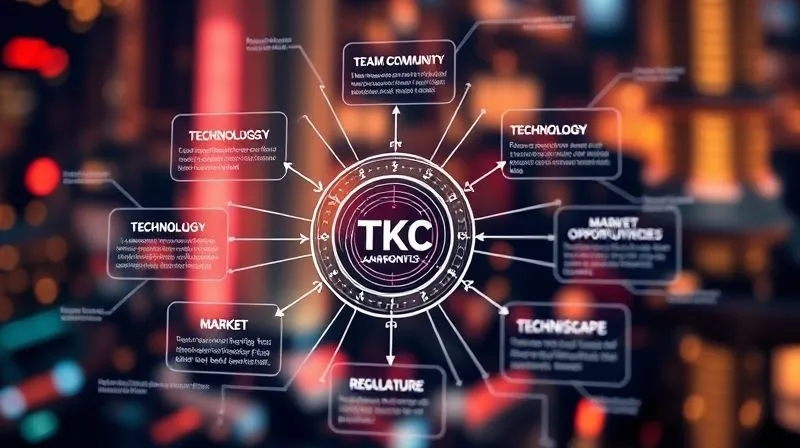
To avoid the common pitfalls and identify genuinely promising altcoins, I've developed a comprehensive 7-step due diligence framework. This isn't a checklist to tick off quickly; it's a deep dive into the core viability of any project.
-
Problem-Solution Fit: Does it Solve a Real Problem?
Every successful project addresses a genuine need or inefficiency. Ask yourself: What specific problem does this altcoin aim to solve? Is it a significant problem? Is its proposed solution innovative and practical? Does a market for this solution already exist, or does it need to be created? A project that's a solution looking for a problem is rarely a good investment.
-
Team & Advisors: Who's Behind the Wheel?
As discussed, the team's credibility is paramount. Investigate their experience in blockchain, software development, and business. Look for relevant past successes or failures. Are advisors reputable and genuinely involved? A strong, experienced, and transparent team is a cornerstone of trust and execution.
-
Technology & Roadmap: Is it Innovative and Feasible?
Dive into the project's whitepaper and technical documentation. Is the technology novel? Is it open-source? What consensus mechanism does it use? Is the roadmap clear, ambitious yet achievable, and regularly updated? Examine the GitHub activity; active development is a positive sign. Avoid projects that promise revolutionary tech but show no tangible progress.
-
Tokenomics & Utility: What's the Token's Purpose?
Beyond the price, what gives the token value? Does it have a clear utility within its ecosystem (e.g., for governance, staking, gas fees, accessing services)? Analyze the supply schedule, vesting periods, inflation/deflation mechanisms, and distribution. A token that merely exists for speculation without strong utility is a riskier bet.
-
Community & Ecosystem: Is it Active and Growing?
A vibrant, engaged community is a powerful indicator of a project's health and potential for adoption. Check their social media presence (Twitter, Discord, Telegram, Reddit), forum discussions, and developer activity. Are community members genuinely interested and contributing, or is it just hype? A strong ecosystem of dApps, developers, and users signals long-term viability.
-
Market Cap & Liquidity: Is it Sustainable?
Evaluate the project's market capitalization. Is it a small-cap with high growth potential but also high risk, or a large-cap with more stability? Examine its trading volume and liquidity across exchanges. Low liquidity can lead to significant price swings and difficulty in exiting positions. Compare its valuation to competitors in the same niche.
-
Risk Assessment: What Are the Potential Downsides?
No investment is without risk. Identify the potential vulnerabilities: regulatory uncertainty, competition, technological hurdles, security risks (audits?), market sentiment shifts, or economic downturns. Consider worst-case scenarios and how the project might weather them. Understanding the risks allows you to make a more balanced investment decision.
| Due Diligence Factor | Good Indicator | Red Flag Indicator |
|---|---|---|
| Team Transparency | Doxxed team with public profiles, active communication | Anonymous team, vague bios, no public interaction |
| Token Utility | Clear use-case for staking, governance, or network fees | Token exists purely for speculation with no intrinsic use |
| Development Activity | Active GitHub, frequent updates, clear roadmap progress | Stagnant GitHub, missed deadlines, vague future plans |
| Community Engagement | Vibrant, engaged discussions on multiple platforms | Bot-filled social media, generic comments, little genuine interaction |
| Market Cap & Liquidity | Healthy trading volume, reasonable market cap for its stage | Extremely low liquidity, easily manipulated price, inflated valuation |
Case Study: The Rise and Fall of 'Project Phoenix' (A Cautionary Tale)
Let me share a fictional, yet all too common, scenario I've observed. Let's call it 'Project Phoenix.' Phoenix launched with immense hype, promising to be the 'Ethereum killer' with unheard-of transaction speeds and zero fees. Its whitepaper was slick, full of buzzwords, and attracted a massive following on social media, driven by influencers touting its imminent explosion.
Initially, the price of Phoenix (PHX) tokens soared. Early investors saw fantastic returns, fueling more FOMO. However, a deeper look using my 7-step framework would have revealed significant red flags. While the technology *sounded* revolutionary, the GitHub repository showed minimal actual development. The team was largely anonymous, with vague LinkedIn profiles that didn't stand up to scrutiny. Most critically, the tokenomics were disastrous: 70% of the total supply was held by the founding team and early venture capitalists, with a vesting schedule that allowed for massive unlocks just six months after launch.
As the unlock date approached, the team's communication became sparse. The promised dApps were nowhere in sight. When the tokens unlocked, the founders and VCs began offloading their holdings into the market, causing a catastrophic price collapse. The community, once vibrant, dissolved into anger and despair. Project Phoenix, despite its initial meteoric rise, ultimately proved to be a classic pump-and-dump, leaving countless retail investors with significant losses. This scenario underscores why a rigorous, dispassionate due diligence process is non-negotiable.

Building a Resilient Altcoin Portfolio: Diversification and Risk Management
Even with thorough due diligence, the altcoin market remains inherently risky. Therefore, a robust portfolio strategy centered on diversification and disciplined risk management is crucial. I always advise against putting all your eggs in one basket.
Diversification isn't just about owning multiple altcoins; it's about diversifying across categories (e.g., Layer 1s, DeFi, NFTs, infrastructure), market caps (small, mid, large), and even investment theses. For instance, you might allocate a portion to established Layer 1s like Ethereum or Solana, another to promising DeFi protocols, and a smaller, speculative portion to emerging projects.
The Importance of Position Sizing
One of the most critical aspects of risk management is position sizing. This means determining how much capital to allocate to each individual investment. My rule of thumb is simple: never invest more than you can comfortably afford to lose in any single altcoin. For highly speculative projects, this might mean a very small percentage of your overall portfolio (e.g., 0.5-2%). For more established altcoins, you might allocate a larger, but still carefully considered, percentage (e.g., 3-5%).
"Capital preservation is paramount. The goal isn't just to make money, but to ensure you stay in the game long enough to benefit from future opportunities."
Employing strategies like setting stop-loss orders can help limit potential downside, while having clear profit-taking targets prevents greed from eroding gains. Remember, it's better to take profits gradually than to watch them disappear in a market downturn. According to a Forbes Advisor article on portfolio diversification, spreading investments across various asset classes is key to mitigating risk – a principle that holds true, perhaps even more so, in the crypto space.
Staying Ahead: Monitoring Trends and Adapting Your Strategy
The digital currency landscape evolves at a breakneck pace. What's cutting-edge today can be obsolete tomorrow. To succeed with altcoins, you must commit to continuous learning and adaptation. This means staying informed about macroeconomic factors, technological advancements, and shifts in market sentiment.
I regularly monitor developments in areas like Layer 2 scaling solutions, zero-knowledge proofs (ZK-Rollups), decentralized identity, and the growing intersection of AI and blockchain. These aren't just technical curiosities; they represent potential fundamental shifts that could elevate certain altcoins and diminish others. Understanding these trends allows you to anticipate future opportunities and reposition your portfolio proactively.
Beyond technology, keeping an eye on on-chain analytics can provide valuable insights into network activity, whale movements, and overall market health. Social sentiment analysis tools can also offer a snapshot of public perception, though I caution against making decisions based solely on sentiment. As a Deloitte report on the future of digital assets highlights, the convergence of traditional finance with digital assets is accelerating, bringing new complexities and opportunities that demand constant vigilance.
The Future of Altcoins: Innovation, Regulation, and Mass Adoption
Looking forward, the trajectory of altcoins is inextricably linked to three major forces: continued innovation, evolving regulatory frameworks, and the march towards mass adoption. We are witnessing the foundational layers of Web3 being built, with altcoins powering everything from decentralized social media to robust gaming ecosystems and self-sovereign identity solutions.
Institutional interest in altcoins is growing, moving beyond just Bitcoin and Ethereum. As clarity emerges around regulation in major economies, more traditional financial players will enter the space, bringing significant capital and infrastructure. This institutionalization could lend greater stability and legitimacy to the altcoin market, but also introduce new forms of market dynamics.
Ultimately, the long-term success of many altcoins hinges on their ability to deliver real-world utility and attract mainstream users. Projects that focus on user experience, security, and scalability will be best positioned for sustained growth. As a National Bureau of Economic Research paper on digital currency regulation suggests, regulatory clarity will be a critical catalyst for broader adoption and innovation, shaping which altcoins thrive in the coming decade.
Frequently Asked Questions (FAQ)
How do I identify a rug pull before it happens? Identifying a rug pull involves meticulous due diligence. Look for anonymous teams, lack of clear utility for the token, unusually high promised returns (often too good to be true), highly centralized token distribution, and minimal legitimate development activity (check GitHub). Scrutinize liquidity pools for locking mechanisms; if liquidity isn't locked, the team can withdraw it, 'pulling the rug.'
What's the difference between a utility token and a security token? A utility token is designed to provide access to a product or service within a specific ecosystem (e.g., paying for transaction fees, governance rights). A security token represents an ownership stake in an underlying asset, like a company's equity, real estate, or a share of profits, and is subject to securities regulations. The distinction often depends on how it's offered and whether investors expect profit solely from the efforts of others (Howey Test).
Should I invest in meme coins? Meme coins, like Dogecoin or Shiba Inu, are driven primarily by social media sentiment, community hype, and viral trends rather than fundamental utility. While they can offer explosive, short-term gains, they are extremely volatile and carry exceptionally high risk. I generally advise against significant investment in meme coins and, if you choose to, treat them as pure speculation with very small capital allocations you are prepared to lose entirely.
How does staking work and what are the risks? Staking involves locking up your cryptocurrency to support the operations of a proof-of-stake (PoS) blockchain network. In return, you earn rewards (additional tokens). Risks include 'slashing' (losing staked tokens due to validator misbehavior), impermanent loss if the token's price drops significantly while staked, and illiquidity (your tokens are locked for a period). Always understand the specific staking mechanism and associated risks for each altcoin.
What impact will Central Bank Digital Currencies (CBDCs) have on altcoins? The long-term impact of CBDCs on altcoins is still a subject of debate. Some argue CBDCs could legitimize digital currencies, driving broader adoption of blockchain technology and potentially benefiting certain altcoins. Others fear CBDCs could increase government control over money, potentially stifling the decentralized ethos that many altcoins embody. It's likely to create a more complex, multi-layered financial landscape where both co-exist, with altcoins continuing to innovate in niche areas CBDCs won't cover.
Key Takeaways and Final Thoughts
- Altcoins are the engine of innovation in the digital currency space, offering diverse use cases beyond Bitcoin.
- Meticulous due diligence is non-negotiable; always research the problem-solution fit, team, technology, tokenomics, community, and market factors.
- Avoid common pitfalls like ignoring tokenomics or neglecting team transparency, which can lead to significant losses.
- Implement a robust risk management strategy, including diversification across categories and disciplined position sizing.
- Stay continuously informed about market trends, technological advancements, and regulatory changes to adapt your investment strategy.
The world of altcoins is a dynamic frontier, offering unparalleled opportunities for those willing to approach it with discipline, knowledge, and a long-term perspective. It's not a get-rich-quick scheme, but a complex ecosystem demanding respect and rigorous analysis. By adopting the strategies and mindset I've outlined, you can navigate this exciting, yet challenging, landscape with greater confidence and significantly enhance your chances of long-term success. Remember, informed decisions are your most valuable asset in the digital age. Good luck, and happy investing!
Recommended Reading
- 7 Proven Steps: How to Accurately Value High-Growth Stocks with Negative Earnings
- Debt Settlement & Your License: 5 Ways to Protect Your Career
- Debt Collector Harassment: What Are Your Rights? (Protect Yourself!)
- High-Earner's Emergency Fund Eroding? 7 Steps to Rebalance & Thrive
- Keep Your Money Safe: How to Protect Your Bank Account Online


Comments
Leave a comment below. Your email will not be published. Required fields marked with *