


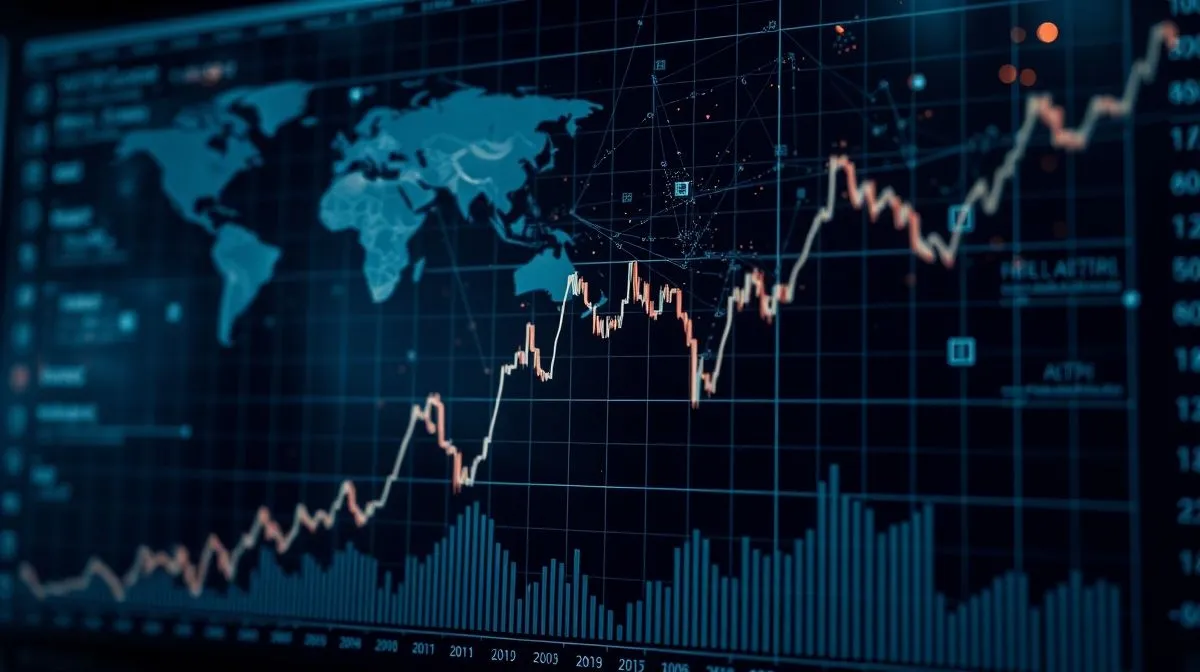
Why Do Global Financial Crises Recur So Often?
Imagine a vast ocean, sometimes calm and predictable, at other times lashed by violent storms that capsize even the sturdiest vessels. This is often how the global financial system behaves. Despite decades of experience, countless economic theories, and robust regulatory frameworks, a puzzling question persists: why do global financial crises recur so often?
It's a question that has haunted economists, policymakers, and ordinary citizens alike. From the speculative manias of the 17th-century tulip bubble to the devastating subprime mortgage crisis of 2008, the patterns of boom and bust seem to repeat with unsettling regularity, each time leaving behind a trail of economic devastation, job losses, and shattered trust.
In this comprehensive guide, we will embark on a journey to unravel the intricate layers behind this persistent phenomenon. We will explore the fundamental forces at play, from human psychology and market dynamics to regulatory challenges and the increasing interconnectedness of our global economy, providing you with a deeper understanding of why these financial storms keep returning and what lessons we can draw from them.
The Anatomy of a Crisis: Understanding the Core Mechanisms
To understand why global financial crises recur so often, we must first dissect their underlying mechanisms. While each crisis has its unique trigger, common threads often weave through their fabric.
Market Bubbles and Irrational Exuberance
One of the most classic precursors to a financial crisis is the formation of a market bubble. This occurs when asset prices – be it stocks, real estate, or commodities – surge far beyond their fundamental value, driven by speculative demand rather than intrinsic worth. Investors, fueled by optimism and the fear of missing out, engage in a feedback loop, pushing prices ever higher.
- Speculative Fever: People buy assets not for their income potential, but purely on the expectation that prices will continue to rise.
- Herd Mentality: As prices climb, more participants jump in, creating a self-fulfilling prophecy until the bubble inevitably bursts.
- Credit Expansion: Often, this speculation is financed by easy credit, making the system more vulnerable when prices correct.
Leverage and Interconnectedness
Leverage, or borrowing money to amplify returns, is a double-edged sword. While it can boost profits in good times, it magnifies losses when markets turn. Excessive leverage within financial institutions and across the economy creates systemic risk.
- Domino Effect: When one highly leveraged institution fails, it can trigger a chain reaction, pulling down others to whom it is connected through complex financial instruments and lending relationships.
- Shadow Banking: A significant portion of financial activity occurs outside traditional regulated banks, in the 'shadow banking' system, making it harder to monitor and control systemic risks.
Regulatory Arbitrage and Moral Hazard
Financial innovation often outpaces regulation. Institutions may exploit loopholes or operate in less regulated sectors (regulatory arbitrage) to maximize profits. This can lead to a build-up of risk that regulators only discover after a crisis has begun.
Furthermore, the concept of 'too big to fail' creates moral hazard. Large financial institutions might take on excessive risks, knowing that governments will likely bail them out to prevent a broader collapse, shifting the cost to taxpayers.
Historical Echoes: Lessons from Past Crises
History, as they say, doesn't repeat itself, but it often rhymes. Examining past global financial crises reveals recurring patterns and offers invaluable, albeit often unheeded, lessons.
The Great Depression (1929)
Triggered by the stock market crash of 1929, the Great Depression was exacerbated by widespread bank failures, a collapse in international trade, and an ill-timed contraction of the money supply. It highlighted the dangers of unregulated markets, insufficient deposit insurance, and protectionist trade policies.
The Asian Financial Crisis (1997)
This crisis began with the collapse of the Thai baht and rapidly spread across Southeast Asia. It was characterized by massive capital outflows, currency devaluations, and widespread corporate bankruptcies, exposing the vulnerabilities of economies heavily reliant on foreign capital and fixed exchange rates.
The Global Financial Crisis (2008)
Perhaps the most recent and impactful, the GFC stemmed from a subprime mortgage bubble in the U.S. and its subsequent collapse. Complex financial instruments like Mortgage-Backed Securities (MBS) and Collateralized Debt Obligations (CDOs) spread toxic assets throughout the global financial system. The crisis underscored the dangers of opaque financial markets, excessive leverage, and inadequate regulation of non-bank financial institutions. A landmark Federal Reserve analysis highlighted the interconnectedness that led to its global spread.
The Human Element: Psychology, Greed, and Fear
Beyond the technical aspects of finance, human behavior plays a crucial, often irrational, role in the genesis and spread of financial crises. Markets are not just cold calculations; they are arenas of human emotion.
Behavioral Biases in Financial Markets
Investors and policymakers are susceptible to various cognitive biases. These include overconfidence, where individuals overestimate their abilities; confirmation bias, where they seek out information that confirms their existing beliefs; and anchoring, where they rely too heavily on initial pieces of information. These biases can lead to poor decision-making and the amplification of market trends.
- Herding: The tendency of individuals to follow the actions of a larger group, often ignoring their own information or analysis.
- Availability Heuristic: Overestimating the likelihood of events based on their vividness or recency in memory.
The Herd Mentality and Panics
During boom times, a collective euphoria can take hold, leading to a 'herd mentality' where investors pile into popular assets, inflating bubbles. Conversely, when confidence erodes, fear can quickly turn into panic. This collective flight to safety can trigger sudden market crashes, bank runs, and liquidity crunches, turning a localized problem into a full-blown crisis. The speed of information in the digital age can accelerate these emotional responses.
Policy and Regulation: A Constant Game of Catch-Up
Governments and central banks are the primary guardians against financial instability. Yet, their efforts often resemble a perpetual game of catch-up, as financial innovation continually creates new challenges.
The Challenge of Effective Regulation
Designing effective financial regulation is inherently difficult. It must strike a balance between fostering innovation and preventing excessive risk-taking. Regulations that are too stringent can stifle economic growth, while those that are too lax invite disaster. A key challenge is regulating the 'shadow banking' sector, which operates outside traditional oversight.
- Pro-cyclicality: Some regulations can inadvertently amplify booms and busts, tightening when the economy is weak and loosening when it's overheating.
- Global Coordination: Financial markets are global, but regulation remains largely national. This creates opportunities for regulatory arbitrage and complicates crisis management.
Central Bank Responses and Their Limitations
Central banks, like the U.S. Federal Reserve or the European Central Bank, play a critical role in managing financial stability through monetary policy. They can cut interest rates, provide liquidity to banks, and act as a 'lender of last resort' during a crisis. However, their tools have limitations.
For instance, prolonged periods of low interest rates, while intended to stimulate growth, can also encourage excessive risk-taking and asset bubbles. The International Monetary Fund's insights often highlight the delicate balance central banks must maintain.
Global Interconnectedness: When a Local Tremor Becomes a Tsunami
In our increasingly globalized world, financial systems are deeply interconnected. What starts as a problem in one corner of the globe can rapidly spread, demonstrating why global financial crises recur so often with such widespread impact.
The Domino Effect of Globalization
Capital flows across borders with unprecedented speed and volume. This facilitates investment and growth but also means that financial shocks can be transmitted rapidly. A bank failure in one country can trigger a liquidity crunch in another, as cross-border lending and investment linkages unravel.
- Contagion: The rapid spread of financial instability from one market or country to others.
- Systemic Risk: The risk that the failure of one financial institution or market could trigger a cascade of failures across the entire system.
Sovereign Debt and Cross-Border Capital Flows
Many countries rely on international markets to finance their government debt. A loss of confidence in a country's ability to repay its debt can lead to a sovereign debt crisis, as seen in the Eurozone crisis. This can have ripple effects, impacting banks that hold that debt and potentially leading to broader financial instability. Understanding global financial interconnectedness is crucial for policymakers.
Identifying Warning Signs: Can We Predict the Next Crisis?
While predicting the exact timing and nature of the next crisis remains elusive, economists and policymakers constantly strive to identify potential warning signs. The goal is not perfect foresight, but rather to build resilience and prepare for inevitable shocks.
Key Economic Indicators to Monitor
Several indicators are closely watched for signs of impending trouble:
- Credit Growth: Rapid expansion of private sector credit, especially household debt, can signal a build-up of risk.
- Asset Price Bubbles: Sharp increases in housing or equity prices, unsupported by fundamentals, are red flags.
- Current Account Deficits: Large and persistent deficits can indicate an over-reliance on foreign capital, making an economy vulnerable to sudden capital outflows.
- Interbank Lending Rates: Spikes in these rates can signal a loss of trust between banks, indicating liquidity problems.
The Role of Early Warning Systems (and their limitations)
International organizations like the IMF and national regulatory bodies develop early warning systems that use various economic and financial indicators to assess vulnerability to crises. While these systems have improved, they are not infallible. The complexity of financial markets, the speed of information, and the inherent 'unknown unknowns' mean that no system can guarantee prevention.
Mitigating Future Risks: Strategies for Resilience
Given that crises seem to be an inherent feature of dynamic financial systems, the focus shifts from outright prevention to mitigation and building resilience. How can we make the system stronger and better able to withstand shocks?
Strengthening Financial Institutions
Post-2008 reforms, such as the Basel III accords, aimed to increase bank capital requirements and liquidity buffers, making banks more robust. Reducing interconnectedness through measures like 'living wills' (resolution plans for failing banks) also helps limit contagion.
- Capital Requirements: Mandating banks to hold more equity capital relative to their assets provides a cushion against losses.
- Stress Testing: Regularly testing banks' ability to withstand severe economic shocks helps identify vulnerabilities.
International Cooperation and Coordination
Since financial crises are often global, effective responses require international cooperation. This includes coordinated regulatory efforts, information sharing, and collective action during times of crisis. Forums like the G20 and the Financial Stability Board play crucial roles in fostering this coordination. According to World Economic Forum reports, global collaboration is increasingly vital.
Fostering Financial Literacy
Educating individuals about financial risks, responsible borrowing, and investment principles can empower them to make sound decisions and reduce their vulnerability to speculative bubbles and predatory lending. A more financially literate populace is a more resilient one.
Frequently Asked Questions (FAQ)
What is a global financial crisis? A global financial crisis is a severe disruption to financial markets and institutions that spreads across multiple countries, leading to significant economic contraction, widespread job losses, and a loss of confidence in the financial system.
Are all financial crises preventable? While some aspects of financial crises can be mitigated through strong regulation and prudent policy, completely preventing them is challenging due to inherent human behaviors (greed, fear) and the dynamic, innovative nature of financial markets. The goal is often to make them less frequent and less severe.
How do central banks respond to financial crises? Central banks typically respond by cutting interest rates, providing emergency liquidity to banks, purchasing assets (quantitative easing), and acting as a 'lender of last resort' to stabilize the financial system and restore confidence.
What is systemic risk? Systemic risk is the risk that the failure of one financial institution or market could trigger a cascade of failures throughout the entire financial system, leading to a broader economic collapse. It's the risk of a domino effect.
How does globalization impact financial crises? Globalization increases financial interconnectedness, allowing capital to flow more freely but also enabling financial shocks to spread rapidly across borders through trade, investment, and confidence channels, turning local problems into global crises.
Recommended Reading
- Secure Your Future: Building an Emergency Fund for Unexpected Crises
- Unfair Bank Fees? Know Your Rights & Fight Back!
- Global Trade: Fueling or Foiling Small Business Growth?
- Unlock Stock Market Success: Machine Learning Analysis Secrets
- College Budgeting 101: Master Your Living Expenses Now!
Conclusion
The question, 'Why do global financial crises recur so often?' doesn't have a single, simple answer. It's a complex interplay of human psychology, market dynamics, regulatory challenges, and the undeniable reality of an interconnected global economy. While the specific triggers and manifestations evolve, the underlying patterns – from speculative bubbles and excessive leverage to regulatory gaps and the contagious spread of fear – remain strikingly consistent. Understanding these forces is not just an academic exercise; it's crucial for policymakers striving to build more resilient systems and for individuals seeking to navigate an unpredictable financial landscape. While we may never fully eradicate financial crises, by learning from history and continuously adapting our approaches, we can aspire to make them less frequent, less severe, and ultimately, less damaging to human well-being.





Comments
Leave a comment below. Your email will not be published. Required fields marked with *