



What to do when seed funding runs out before Series A?
For over 15 years in the startup finance ecosystem, I've witnessed the exhilarating highs of groundbreaking innovation and the gut-wrenching lows of promising ventures faltering. One of the most critical, yet common, pitfalls I've observed is the premature exhaustion of seed funding before a Series A round materializes.
This isn't just a financial crunch; it's an existential crisis that can paralyze even the most resilient founding teams. The pressure is immense, the stakes are incredibly high, and the path forward often feels obscured by a fog of uncertainty and dwindling resources.
But here's the crucial insight: running low on seed capital doesn't automatically spell doom. In fact, it can be a catalyst for radical strategic clarity and operational efficiency. In this definitive guide, I'll share actionable frameworks, real-world strategies, and the expert insights you need to navigate this treacherous period, extend your runway, and position your startup for a successful Series A.
The Harsh Reality: Why Seed Funding Often Falls Short
Let's be clear: you're not alone in facing this challenge. The journey from seed to Series A is notoriously difficult, and many factors can contribute to capital depletion. Understanding these root causes is the first step toward effective mitigation.
Miscalculating Burn Rate and Runway
One of the most frequent errors I've seen is an overly optimistic projection of expenses versus an underestimation of the time required to hit critical milestones. Startups often underestimate the true cost of customer acquisition, product development cycles, or scaling operations. A common mistake is not accounting for unforeseen expenses or delays that inevitably arise.
Scope Creep and Uncontrolled Growth
The allure of adding new features or expanding into adjacent markets can be powerful. However, without strict discipline, this "scope creep" can quickly drain resources. While agility is a startup's strength, uncontrolled growth, or pursuing too many initiatives simultaneously, dilutes focus and accelerates burn without delivering proportionate value.
Market Shifts and Investor Sentiment
External factors, entirely beyond your control, can also play a significant role. A sudden downturn in the economy, a shift in investor appetite for your specific sector, or even a competitor's breakthrough can make fundraising incredibly challenging. The market isn't static, and what was attractive to investors six months ago might not be today. According to Harvard Business Review, fundraising during economic uncertainty demands a more robust and adaptable strategy.
Immediate Action Plan: Stabilizing the Ship
When you realize seed funding is running out, panic is a natural reaction. But it's unproductive. Your immediate priority must be to gain absolute clarity on your financial situation and stabilize operations.
Acknowledge the Crisis, Don't Hide It
The first step is honest self-assessment. Don't bury your head in the sand. Gather your co-founders and key leadership. Present the unvarnished truth about your remaining runway. Transparency, even when difficult, builds trust and ensures everyone is aligned on the severity and urgency of the situation.
Deep Dive into Financials: The 13-Week Cash Flow Forecast
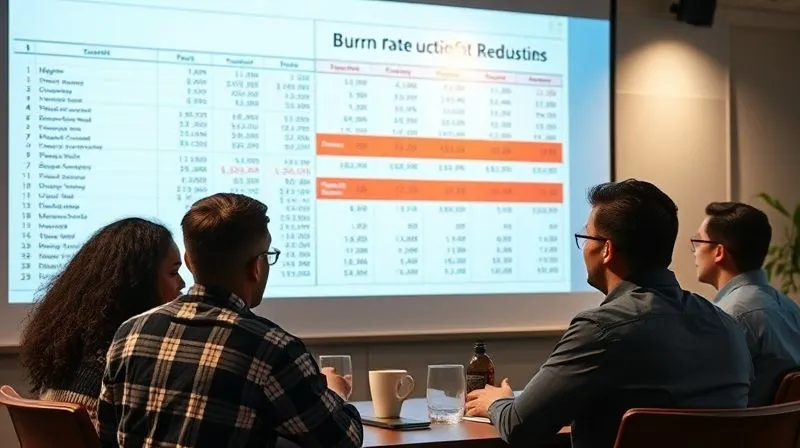
This isn't just about knowing your bank balance; it's about understanding your cash flow with granular precision. You need a detailed 13-week cash flow forecast, updated weekly, sometimes daily. This short-term projection helps you anticipate immediate shortfalls and make proactive decisions.
- Identify All Cash Inflows: List every anticipated source of cash – sales, receivables, grants, etc. Be conservative.
- Itemize All Cash Outflows: Detail every single expense, from salaries and rent to software subscriptions and marketing spend. Categorize them as fixed or variable.
- Project Future Balances: Calculate your projected cash balance at the end of each week for the next 13 weeks.
- Identify Trigger Points: Mark where your cash balance dips below a critical threshold. These are your "panic points" that demand immediate action.
Understanding your cash flow is non-negotiable. It provides the data-driven foundation for every subsequent decision. Here’s a simplified example of what a cash flow projection might reveal:
| Week | Starting Cash | Inflows | Outflows | Ending Cash |
|---|---|---|---|---|
| 1 | $150,000 | $20,000 | $45,000 | $125,000 |
| 2 | $125,000 | $25,000 | $40,000 | $110,000 |
| 3 | $110,000 | $15,000 | $48,000 | $77,000 |
| 4 | $77,000 | $30,000 | $42,000 | $65,000 |
| 5 | $65,000 | $20,000 | $50,000 | $35,000 |
Ruthless Cost Cutting: Every Penny Counts
Once you have a clear financial picture, it's time for decisive action. This isn't about minor adjustments; it's about identifying and eliminating non-essential expenses with surgical precision. Question every line item in your budget.
- Personnel: This is often the largest expense. Consider temporary salary reductions, hiring freezes, or, as a last resort, layoffs. These are agonizing decisions, but often necessary for survival.
- Software & Subscriptions: Audit every SaaS tool. Are you using them all? Can you downgrade plans or switch to free alternatives?
- Marketing & Sales: Immediately cut experimental or low-ROI campaigns. Focus only on channels with proven, immediate returns.
- Office Space: Can you move to a cheaper co-working space, or go fully remote temporarily?
This phase requires tough choices, but delaying them only exacerbates the problem. The goal is to extend your runway by any means necessary, buying you precious time to pivot or fundraise.
Extending Your Runway: Strategic Maneuvers
Beyond immediate cost-cutting, you need to explore strategic avenues to inject capital or significantly reduce your cash burn without crippling your core operations.
Bridge Funding and Convertible Notes
Bridge rounds, often structured as convertible notes or SAFEs, are designed to provide a short-term cash infusion to help you reach critical milestones for a larger round. These are typically from existing investors who want to protect their initial investment or new investors who see potential if you can hit specific targets.
Pros: Faster to close than a full equity round, less dilutive in the short term, signals continued investor confidence. Cons: Can be highly dilutive if valuation caps are low, signals previous struggles if not framed correctly, can be difficult to secure if traction is stagnant.
"Bridge funding isn't a silver bullet; it's a lifeline. It buys you time, but that time must be used to prove your value proposition unequivocally, not just to tread water."
Revenue Generation Acceleration
The most sustainable way to extend your runway is by generating more revenue. This means a laser focus on sales and monetization, often shifting priorities from long-term growth to immediate cash flow.
- Focus on Existing Customers: Upsell, cross-sell, and ensure high retention. It's far cheaper to retain and grow existing relationships than acquire new ones.
- Expedite Sales Cycles: Can you offer incentives for faster deal closures? Streamline your sales process.
- Pilot Programs: Offer paid pilot programs to enterprise clients, demonstrating value while securing early revenue.
- Revisit Pricing: Are you underpricing your product or service? A slight increase for new customers or premium features could significantly impact your bottom line.
Non-Dilutive Funding Options
While often overlooked by venture-backed startups, non-dilutive funding can be a lifesaver, as it doesn't require giving up equity.
- Grants: Government grants (e.g., SBIR/STTR in the US, Horizon Europe in EU) or corporate grants can provide substantial funding for specific R&D or innovation projects. They are highly competitive but worth exploring.
- Venture Debt: This is a form of loan typically offered by specialized banks or funds, often alongside an equity round. It's less dilutive than equity but comes with interest payments and covenants. Use with extreme caution and a clear repayment plan.
- Crowdfunding: Equity crowdfunding can provide a decent cash injection and customer validation, though it comes with its own set of regulatory and marketing challenges.
Re-Evaluating Your Product and Market Fit (PMF)
A funding crunch forces a critical examination of your core offering. Is your product truly solving a pressing problem for a sufficiently large market? This period demands brutal honesty and a willingness to adapt.
The Pivot or Persevere Dilemma
This is perhaps the most agonizing decision. Do you double down on your current strategy, believing you're just short on time or resources? Or do you make a fundamental change to your product, market, or business model? The answer lies in data and honest customer feedback, not just founder intuition. As Forbes highlights, a successful pivot is often born from deeply understanding market signals.

Hyper-Focus on Core Value Proposition
Strip away all non-essential features or secondary markets. What is the absolute core problem you solve, and for whom? Concentrate all your remaining resources on perfecting and delivering that core value. This might mean temporarily sacrificing broader ambitions for immediate, undeniable impact.
Customer Feedback Loop Reinforcement
Engage deeply with your most loyal customers. What do they love? What frustrates them? What problems are they still trying to solve? Their insights are invaluable for validating your core value and identifying potential areas for a strategic pivot. Use their feedback to refine your product and narrative.
Case Study: How InnovateCo Secured a Bridge Round
InnovateCo, a SaaS startup, found itself with only 4 months of runway left. Their initial product, a broad CRM tool, wasn't gaining sufficient traction for Series A. Instead of panicking, the founders initiated an intense 2-week "customer sprint." They interviewed their top 20 paying customers, discovering a consistent need for a highly specialized analytics dashboard that their existing CRM barely touched. They pivoted their development focus entirely to this niche, creating a standalone analytics tool. With a clear, validated, and highly specialized product, they approached their existing seed investors with a compelling narrative and secured a bridge round for 6 months, ultimately leading to a successful Series A focused on the new product.
Investor Relations: Re-Engaging and Rebuilding Trust
Your existing investors are your most likely source of additional capital, and new investors will scrutinize how you've handled this challenging period. Communication and a revised strategy are paramount.
Transparent Communication is Key
Do not wait until you have 30 days of cash left. Proactively communicate with your existing investors about your financial situation, the actions you're taking, and your revised plan. Be honest about mistakes made, but emphasize the lessons learned and the decisive steps being implemented. They are partners, and they need to be informed.
Presenting a New Narrative and Milestones
Your fundraising narrative will shift. It's no longer about initial potential; it's about resilience, adaptability, and validated traction. You need to clearly articulate:
- The Problem Identified: Acknowledge why the previous plan didn't fully pan out.
- The Actions Taken: Detail cost-cutting, revenue acceleration, or pivot strategies.
- The New Milestones: Clearly define 3-5 critical, achievable milestones that, once hit, will unequivocally demonstrate Series A readiness.
- The Ask: Be precise about the amount of capital needed and exactly how it will be deployed to hit those new milestones.
This revised narrative demonstrates maturity and a data-driven approach, essential for regaining investor confidence. Remember, investors want to back founders who can navigate adversity.
Targeting the Right Investors for Your New Phase
If you're seeking new capital, your investor target list might need to change. Some seed investors specialize in early-stage validation, while Series A investors often look for more robust traction and clearer unit economics. If you've pivoted, seek out investors with expertise and a portfolio in your new niche. Research their previous investments and ensure alignment with your revised vision.
Building a Resilient Team Through Uncertainty
Your team is your greatest asset, and navigating a funding crisis will test their resolve. How you manage internal communication and morale can make or break your ability to execute your turnaround plan.
Openness and Empathy
While you might not share every granular detail, be transparent with your team about the challenges. Explain the situation, the actions being taken, and the "why" behind tough decisions like cost cuts or hiring freezes. Show empathy for their concerns and anxiety. Acknowledge the difficulty but instill confidence in the plan forward.
Retaining Key Talent
Identify your critical team members – those whose skills are indispensable for your survival and future growth. Work to retain them. This might involve clear communication about the path forward, revised incentive structures (e.g., more equity for less cash in the short term, if appropriate), or demonstrating how their work directly contributes to the company's survival and success.
Maintaining Morale and Focus
A team operating under stress can quickly lose motivation. Celebrate small wins, reiterate the company's mission, and ensure everyone understands their role in the survival strategy. Keep communication channels open for questions and feedback. Focus on what you can control and the progress being made.
Here’s a snapshot of a proactive communication strategy during a funding crunch:
| Phase | Frequency | Key Message |
|---|---|---|
| Initial Acknowledgment | Immediate All-Hands | Transparency about runway, outlining immediate actions, emphasizing collective effort. |
| Cost-Cutting Implementation | Weekly Updates | Explaining 'why' behind decisions, highlighting progress in runway extension, reiterating shared vision. |
| Fundraising/Pivot Efforts | Bi-Weekly Updates | Sharing non-confidential progress on new strategies, investor meetings, celebrating small wins, reinforcing team's critical role. |
| Stabilization/New Path | Monthly/Quarterly | Clear path forward, new milestones, renewed focus on growth, acknowledging team resilience. |
Preparing for Series A: A Stronger, Leaner Company
The ultimate goal of navigating this seed-to-Series A gap is not just survival, but emergence as a stronger, more disciplined, and more attractive investment opportunity. This crisis, if managed correctly, can be your crucible.
Demonstrating Traction and Unit Economics
Series A investors are looking for clear evidence of traction, repeatable sales processes, and positive unit economics. This means showing a consistent customer acquisition cost (CAC), a compelling customer lifetime value (LTV), and a clear path to profitability. The period of scarcity should force you to optimize these metrics like never before. A Deloitte study on startup funding trends often highlights the increasing scrutiny on these operational metrics.
Crafting a Compelling Growth Story
Your Series A pitch deck will tell a story of resilience, learning, and validated opportunity. It's not just about what you've built, but how you've adapted, survived, and proven your ability to execute under pressure. Highlight the strategic decisions made during the funding crunch and the positive outcomes. Show how these challenges forged a more robust business model.
Due Diligence Readiness
When you do get investor interest, you'll need to be ready for rigorous due diligence. All your financial models, customer data, legal documents, and intellectual property should be meticulously organized and easily accessible. The discipline you imposed during the funding crisis should extend to your internal record-keeping, projecting professionalism and trustworthiness.
Frequently Asked Questions (FAQ)
Q: How do I tell my team we're low on funds without causing mass panic? A: Transparency is key, but it must be delivered with a clear plan and empathy. Hold an all-hands meeting, acknowledge the challenge directly, but immediately follow with the specific, actionable steps you are taking to extend runway and secure future funding. Emphasize their critical role in the solution and maintain consistent updates, even if they're small. Focus on the collective effort and the path forward, not just the problem.
Q: Is bridge funding always a bad sign to future investors? A: Not necessarily. While it can sometimes indicate previous struggles, a well-executed bridge round that helps a company hit critical milestones can be viewed positively. It shows existing investors' continued belief and the team's ability to adapt. The key is to frame the bridge round as a strategic move to de-risk the Series A, not merely a desperate attempt to stay afloat. Demonstrate clear progress made during the bridge period.
Q: What's the fastest way to generate revenue when cash is critically low? A: Focus on immediate, high-margin opportunities with existing customers or highly qualified leads. This means upselling or cross-selling to current clients, offering expedited services for a premium, or launching limited-time, high-value offers. Avoid long sales cycles or experimental marketing. Consider offering short-term consulting related to your expertise if your product isn't generating fast enough sales.
Q: Should I consider a "down round" if valuation is an issue? A: A down round (raising money at a lower valuation than your previous round) is generally a last resort due to its significant dilution and negative signal. However, survival is paramount. If a down round is the only viable path to extend runway and hit milestones that will secure a much higher valuation in the future, it might be a necessary evil. Always explore all other options thoroughly first, and if you proceed, communicate transparently with existing investors to manage expectations.
Q: How can I avoid this situation next time around? A: Proactive financial planning is crucial. Always maintain a detailed 12-18 month cash flow forecast, updated monthly. Build in contingency buffers for unexpected expenses or delays. Be conservative with revenue projections and aggressive with expense management. Develop clear, measurable milestones for each funding stage and track progress rigorously. Most importantly, foster a culture of financial discipline from day one and maintain open communication with your board and investors.
Key Takeaways and Final Thoughts
Navigating the perilous waters when seed funding runs out before Series A is one of the toughest challenges an entrepreneur can face. But it's also an unparalleled opportunity to forge a more resilient, focused, and ultimately, more valuable company.
- Act Decisively: Don't delay tough decisions. Immediate, surgical action on financials is paramount.
- Embrace Transparency: Communicate openly and honestly with your team and investors.
- Prioritize Revenue & Runway: Shift focus to immediate cash generation and extend your operational life.
- Re-evaluate & Pivot: Be brave enough to question your assumptions and adapt your strategy based on data.
- Build a Stronger Foundation: Use this crucible to optimize unit economics and prepare a compelling Series A narrative.
I've seen startups not just survive, but thrive, after confronting this exact dilemma. It's a test of leadership, grit, and strategic acumen. By applying these principles, you're not just buying time; you're building a stronger, more sustainable business ready to attract the next round of investment. Believe in your vision, trust your team, and execute with unwavering resolve. The journey from seed to Series A is a marathon, not a sprint, and sometimes, the most challenging stretches yield the greatest triumphs.
Recommended Reading
- Unlock Financial Peace: How an Emergency Fund Shields You
- Unearthing Profits: 7 Keys to Avoiding Hidden Land Liabilities
- 7 Proven Strategies: Halting Student Dropout Amidst Soaring Living Costs
- Urgent Home Repair: 5 Pro Strategies for Accessing Emergency Funds
- Digital Savings AML: 5 Steps to Seamless, Compliant Onboarding





Comments
Leave a comment below. Your email will not be published. Required fields marked with *