



How to Quantify Complex Cyber Risk for Advanced Insurance Policies?
For over 15 years in the financial and insurance technology space, I've witnessed a profound transformation in how organizations approach risk. What was once a qualitative, 'checkbox' exercise has evolved into a critical, data-driven imperative, especially when it comes to the shadowy, ever-shifting landscape of cyber threats. I've seen countless companies struggle to bridge the gap between their technical cybersecurity posture and the financial language demanded by sophisticated insurance underwriters. It's not enough to say 'we're secure'; you need to prove it with numbers.
The core problem many face is translating highly technical vulnerabilities and potential attack scenarios into tangible financial impacts. Insurers, particularly for advanced policies covering business interruption, reputational damage, and supply chain risks, are no longer satisfied with generic risk matrices. They require granular, quantifiable data to accurately price policies and ensure adequate coverage. This disconnect leaves many businesses underinsured, overpaying, or worse, unable to secure comprehensive protection against their most significant digital threats.
In this definitive guide, I will share a comprehensive, 5-step framework that I've seen successfully implemented by leading organizations. We will delve into practical methodologies, actionable steps, and expert insights to help you precisely quantify complex cyber risk. By the end, you'll not only understand how to speak the language of financial risk but also possess the tools to secure advanced insurance policies that truly reflect your organization's unique cyber exposure.
The Evolving Landscape of Cyber Risk: Why Traditional Models Fail
The days when cyber risk was solely an IT department's concern are long gone. Today, it's a board-level issue, directly impacting revenue, brand reputation, operational continuity, and shareholder value. I've seen this shift unfold dramatically, moving from a focus on firewalls and antivirus to a holistic understanding of systemic business risk. Traditional qualitative risk assessments, often relying on high, medium, and low ratings, simply don't cut it anymore for advanced insurance policies.
These qualitative models, while easy to implement, suffer from inherent subjectivity and a lack of financial context. They might tell you a data breach is 'high risk,' but they won't tell you if that means a $1 million or a $100 million loss. This ambiguity is precisely why insurers are pushing back. They need concrete figures, not vague descriptors, to assess their own risk exposure and allocate capital responsibly. Without this financial translation, you're essentially asking an insurer to write a blank check based on a feeling.
"The true cost of a cyber incident extends far beyond immediate remediation, encompassing long-term reputational damage, customer churn, and regulatory fines. Quantifying these complex variables is paramount for effective risk transfer."
According to a World Economic Forum report, cybercrime remains one of the fastest-growing global risks, with the potential to inflict widespread economic disruption. This underscores the urgency for organizations to adopt more sophisticated, quantitative approaches to risk management. It's about moving from 'what if' to 'how much'.
Step 1: Defining Your Digital Crown Jewels and Threat Landscape
Before you can quantify risk, you must first understand what you're protecting and from whom. In my experience, many organizations falter here, either by casting too wide a net or, conversely, by overlooking critical assets. This foundational step is about precision and clarity.
Identifying Critical Assets and Business Processes
Your 'digital crown jewels' aren't just your servers; they are the information assets and business processes that, if compromised, would cause significant financial or operational harm. Think beyond the obvious. It includes:
- Personally Identifiable Information (PII): Customer data, employee records.
- Intellectual Property (IP): Trade secrets, patents, proprietary algorithms.
- Operational Technology (OT) & Industrial Control Systems (ICS): For manufacturing, utilities, healthcare.
- Critical Business Applications: ERP, CRM, custom-built platforms.
- Key Supply Chain Data: Information shared with vital partners.
I always advise mapping these assets to the specific business processes they enable. If your customer database is compromised, what's the direct impact on sales, customer trust, and regulatory compliance? This linkage is crucial for later financial quantification.

Understanding Your Attack Surface and Adversaries
Once you know what's valuable, you need to understand how it could be attacked and by whom. Your attack surface includes every point where an unauthorized actor could enter your network or access your data. This extends beyond your perimeter to cloud services, third-party vendors, and even employee home networks.
Consider your likely adversaries:
- Nation-State Actors: Highly sophisticated, often targeting critical infrastructure or intellectual property.
- Organized Cybercrime: Financially motivated, focused on ransomware, data exfiltration, and fraud.
- Insider Threats: Disgruntled employees or accidental compromises.
- Hacktivists: Motivated by ideology or social causes.
Understanding these threat actors helps you prioritize defenses and model realistic attack scenarios. For deeper insights into global threat trends, I often refer clients to reports like the Verizon Data Breach Investigations Report (DBIR), which provides invaluable data on attack patterns and motives.
Step 2: Leveraging Advanced Risk Assessment Methodologies
With your assets and threats defined, the next step is to adopt a methodology that allows for true financial quantification. This is where we move beyond 'high, medium, low' and into the realm of probabilities and financial impacts.
FAIR (Factor Analysis of Information Risk) Methodology
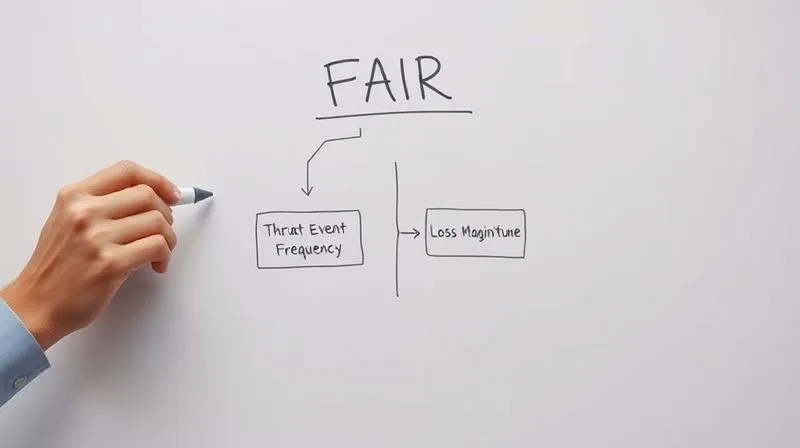
In my experience, the FAIR methodology is one of the most robust and widely recognized frameworks for quantifying cyber risk in financial terms. It breaks down risk into its fundamental components, allowing for objective measurement and analysis. FAIR focuses on two primary factors:
- Loss Event Frequency (LEF): How often a particular cyber incident is likely to occur over a given period (e.g., once every 5 years).
- Probable Loss Magnitude (PLM): The financial impact if that incident *does* occur (e.g., between $5 million and $15 million).
By analyzing these factors – considering threat event frequency, vulnerability, control strength, and various forms of loss (productivity, response, reputation, etc.) – FAIR allows you to calculate a probable range of financial losses due to cyber incidents. This probabilistic approach is exactly what advanced insurance underwriters are looking for.
"FAIR provides a common language for business and technical stakeholders, transforming abstract cyber threats into concrete financial risks that can be managed, mitigated, and insured."
Quantitative Models: Monte Carlo Simulations and Bayesian Networks
For even greater precision and to account for uncertainty, I often recommend leveraging quantitative models like Monte Carlo simulations or Bayesian networks. These tools take the inputs from methodologies like FAIR (e.g., ranges for loss event frequency and magnitude) and run thousands of simulations to generate a distribution of potential financial outcomes.
A Monte Carlo simulation can show you, for example, that there's a 90% chance your annual cyber losses will be between $X and $Y, with a 5% chance they could exceed $Z. This level of probabilistic insight is incredibly valuable for underwriting, as it helps insurers understand their potential exposure with a much higher degree of confidence than qualitative ratings ever could. Bayesian networks, on the other hand, can model complex dependencies between various risk factors and update probabilities as new information becomes available, providing a dynamic risk picture.
| Risk Assessment Type | Output | Financial Context | Actionability for Insurance | Key Limitation |
|---|---|---|---|---|
| Qualitative (Traditional) | High/Medium/Low, Red/Amber/Green | Limited to None | Low | Subjectivity, lack of financial granularity |
| Quantitative (FAIR/Monte Carlo) | Probabilistic financial loss ranges ($X - $Y) | Direct, measurable dollar values | High | Requires data, initial setup complexity |
For organizations looking to delve deeper into the mathematical underpinnings of these models, resources from academic institutions or specialized risk management consultancies can provide valuable guidance. A good starting point would be to explore papers from institutions focused on risk analytics, such as those found on JSTOR for academic research on risk modeling.
Step 3: Translating Technical Vulnerabilities into Financial Impact
This is where the rubber meets the road. You've identified your assets and chosen your methodology. Now, you need to connect specific technical weaknesses and threat scenarios to their potential financial consequences. This requires a collaborative effort between your cybersecurity, finance, and legal teams.
Direct Costs: Breach Response, Fines, Remediation
These are the more straightforward costs to quantify, though they can still be substantial. They include:
- Incident Response: Forensic investigations, legal counsel, crisis communications.
- Regulatory Fines: Penalties for non-compliance (GDPR, CCPA, HIPAA).
- Remediation: Patching systems, upgrading security controls, rebuilding compromised infrastructure.
- Notification Costs: Informing affected individuals of a data breach.
- Credit Monitoring: Offering services to impacted customers.
Each of these can be estimated based on industry benchmarks, historical data, and expert opinion. For example, the average cost per record for a data breach can provide a starting point for calculating notification and credit monitoring expenses based on the number of records potentially exposed.
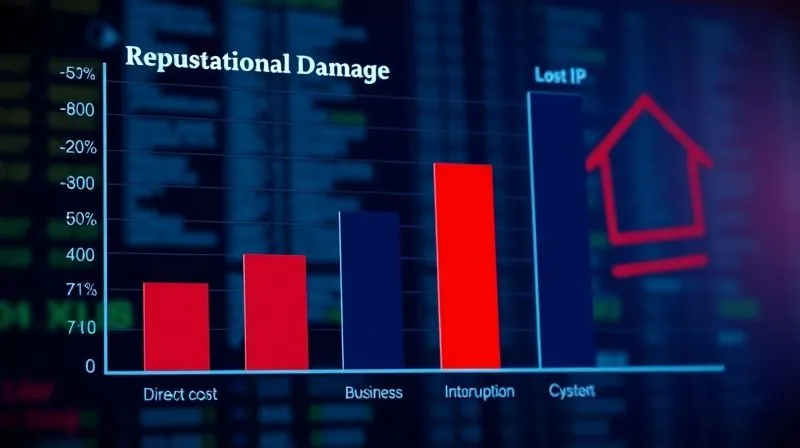
Indirect Costs: Reputational Damage, Business Interruption, Lost IP
These are often harder to pin down but can represent the largest portion of a cyber incident's total cost. This is where advanced insurance policies offer critical coverage, and where your quantification efforts truly shine.
- Business Interruption: Loss of revenue due to system downtime, inability to process orders, or disrupted operations.
- Reputational Damage: Loss of customer trust, decreased sales, impact on stock price, long-term brand erosion.
- Loss of Intellectual Property: Theft of trade secrets, blueprints, or proprietary algorithms, leading to competitive disadvantage.
- Customer Churn: Direct loss of customers unwilling to continue business after a breach.
Quantifying these requires careful analysis. For business interruption, you'd calculate average daily revenue and estimate potential downtime. For reputational damage, you might use proxy metrics like projected customer churn rates or brand value depreciation. This is where the true art of cyber risk quantification lies.
Case Study: Quantifying Business Interruption for MedTech Inc.
MedTech Inc., a mid-sized medical device manufacturer, faced a ransomware attack that encrypted their production control systems and halted operations. Their initial qualitative assessment simply labeled it 'high risk.' However, using a quantitative approach, they broke down the potential financial impact:
They identified that each day of downtime cost them approximately $500,000 in lost production and delayed shipments. During the incident, they experienced 7 days of full outage and 14 days of reduced capacity (at 50% loss). Additionally, they estimated a 5% loss in customer retention over the next year due to reputational damage, translating to $2 million in lost future revenue. The direct costs (response, decryption, remediation) were $1.5 million. By summing these, they arrived at a quantifiable loss range of $1.5M (direct) + $3.5M (interruption) + $2M (reputational) = $7M, with a potential upper bound of $10M if the outage extended. This detailed breakdown allowed them to secure an advanced cyber insurance policy with specific business interruption coverage limits that truly matched their exposure, something generic policies wouldn't have offered.
Step 4: Integrating Threat Intelligence and Historical Data
No risk quantification effort is complete without leveraging both external threat intelligence and, crucially, your own historical data. This step adds realism and empirical grounding to your models.
Utilizing Industry Benchmarks and Threat Feeds
External threat intelligence provides context about the broader cyber landscape. This includes:
- Industry-Specific Reports: Data on common attack vectors, breach costs, and threat actors targeting your sector.
- Vulnerability Databases: Information on newly discovered vulnerabilities and their potential exploitability.
- Global Threat Feeds: Real-time data on emerging threats, malware campaigns, and geopolitical cyber activity.
By integrating this intelligence, you can refine your loss event frequency estimates and identify emerging risks that might not yet be apparent internally. For example, if a new ransomware variant is specifically targeting your industry, your estimated LEF for ransomware attacks should be adjusted upwards. Reputable sources like Mandiant's threat intelligence reports are invaluable for this.
Building a Historical Loss Database
While external data is helpful, your organization's own historical data is gold. I've often seen companies overlook the treasure trove of information within their own incident response logs, helpdesk tickets, and security reports. Even small, seemingly insignificant incidents can provide data points for your models.
Start by documenting every cyber-related incident, no matter how minor. For each incident, record:
- Type of incident (e.g., phishing, malware, unauthorized access).
- Affected assets and systems.
- Duration of disruption.
- Direct costs incurred (e.g., IT hours, external consultants).
- Estimated indirect costs (e.g., lost productivity, customer complaints).
- Mitigating controls that were in place.
"Your own historical data, even if imperfect, provides the most relevant empirical evidence for your risk quantification models. Start collecting it systematically today."
Over time, this database will become an invaluable resource for calibrating your FAIR model inputs and validating your Monte Carlo simulations. It allows you to move from generic industry averages to organization-specific probabilities, which is far more compelling for insurance underwriters.
| Incident ID | Type | Affected Systems | Direct Cost | Indirect Cost (Est) | Duration |
|---|---|---|---|---|---|
| 2023-001 | Phishing/BEC | Email, Finance App | $15,000 | $50,000 (lost productivity) | 2 days |
| 2023-002 | DDoS Attack | Website, E-commerce | $25,000 | $150,000 (lost sales) | 6 hours |
| 2024-001 | Malware Infection | Internal Network | $5,000 | $20,000 (remediation time) | 1 day |
Step 5: Articulating Risk for Advanced Insurance Underwriters
Having done all the hard work of quantification, the final crucial step is to present your findings in a clear, concise, and compelling manner to insurance underwriters. This is your opportunity to demonstrate your organization's maturity in cyber risk management and secure the most favorable terms for advanced policies.
Preparing a Data-Driven Risk Profile
Forget the generic security questionnaires. You need to provide a comprehensive, data-driven risk profile that speaks the language of financial exposure. This should include:
- Executive Summary: High-level overview of your cyber risk posture and key financial exposures.
- Asset Inventory: A summary of your critical digital assets and their business context.
- Threat Scenarios & Financial Impact: Detailed breakdowns of your most probable and impactful cyber scenarios, quantified using FAIR or similar methodologies, with clear financial ranges (e.g., "There is an 80% probability that annual cyber losses will not exceed $X million").
- Control Effectiveness: Evidence of your security controls and their impact on reducing loss event frequency and magnitude.
- Incident History: A summary of your internal historical incidents and how they've informed your current risk profile.
- Business Continuity & Disaster Recovery Plans: Documentation proving your ability to recover from incidents.
The goal is to demonstrate that you understand your risk intimately, that you've invested in managing it, and that you're seeking insurance to transfer residual risk, not to cover unknown exposures.
Understanding Policy Structures and Coverage Nuances
With your robust risk profile in hand, you can now engage in a much more informed dialogue with underwriters. This allows you to negotiate for advanced policies that are truly tailored to your specific quantified risks. Pay close attention to:
- Coverage Limits: Ensure they align with your quantified probable maximum loss (PML) for various scenarios.
- Sub-Limits: Understand any specific caps on coverage for certain types of losses (e.g., ransomware, business interruption).
- Exclusions: Be clear about what is NOT covered and why. Your quantification might reveal gaps that need specific riders.
- Retroactive Dates: Important for policies covering past incidents.
- Waiting Periods & Deductibles: How these impact your self-retention and when coverage kicks in.
By understanding these nuances, you can ensure your advanced insurance policy is a strategic asset, not just a compliance checkbox. I always encourage clients to work closely with specialized cyber insurance brokers who can help navigate these complex policy structures. For more on how major insurers approach cyber policies, you might find resources from AIG's cyber insurance page helpful.
Beyond Quantification: Continuous Monitoring and Adaptation
Quantifying cyber risk is not a one-time event; it's an ongoing process. The threat landscape, your organizational assets, and your security posture are constantly evolving. Therefore, your risk quantification efforts must also be dynamic.
Establishing a Cyber Risk Management Program
A mature cyber risk management program extends beyond initial quantification. It involves:
- Continuous Monitoring: Regularly assessing your security controls and identifying new vulnerabilities.
- Threat Intelligence Integration: Continuously feeding new threat data into your risk models.
- Incident Review: Learning from every incident, no matter how small, and updating your historical loss data.
- Risk Reporting: Providing regular, data-driven reports to senior leadership and the board.
- Policy Review: Annually reviewing and adjusting your cyber insurance policies based on your updated risk profile.
This iterative process ensures that your understanding of cyber risk remains current and that your insurance coverage evolves alongside your exposure. It's about building a culture of continuous improvement and data-driven decision-making.
The Iterative Nature of Cyber Insurance
Just as your risk profile changes, so too will the cyber insurance market. Underwriters are constantly refining their models, and policy terms can shift based on global incident trends and regulatory changes. By maintaining a robust, quantified risk posture, you position your organization as a preferred client, potentially securing better rates and more comprehensive coverage.
"Cyber resilience isn't just about preventing attacks; it's about understanding, quantifying, and rapidly recovering from them. Insurance is a critical component of that resilience strategy."
Ultimately, the goal is to create a virtuous cycle: better quantification leads to better understanding, which leads to better controls, more appropriate insurance, and ultimately, greater cyber resilience. This proactive approach transforms cyber risk from a daunting unknown into a manageable business challenge.
Frequently Asked Questions (FAQ)
Is FAIR the only method for quantification? While FAIR (Factor Analysis of Information Risk) is widely regarded as a leading methodology for its financial focus and structured approach, it's not the only one. Other frameworks like NIST CSF can provide a strong foundation for identifying controls, but they typically require additional steps to translate technical risks into financial terms. The key is to choose a methodology that prioritizes financial quantification and allows for probabilistic modeling.
How do I get started with limited historical data? Many organizations face this challenge. Begin by leveraging industry-specific benchmarks and publicly available breach cost reports. These can provide initial ranges for your loss event frequency and probable loss magnitude. Simultaneously, start building your internal incident database, even for minor events. Over time, as you accumulate your own data, you can gradually refine and customize these external benchmarks to better reflect your unique environment.
What role does AI play in cyber risk quantification? AI and machine learning are increasingly playing a significant role. They can analyze vast amounts of threat intelligence data to identify emerging patterns, predict potential attack vectors, and even automate parts of the vulnerability assessment process. For quantification, AI can help refine probabilistic models by identifying correlations in historical data that humans might miss, leading to more accurate estimates of loss event frequency and magnitude.
How often should I re-evaluate my cyber risk? Cyber risk is dynamic, so continuous re-evaluation is crucial. I recommend a formal, comprehensive re-quantification at least annually, especially before your insurance renewal cycle. However, significant changes to your organization (e.g., major system deployments, mergers/acquisitions, new critical data assets) or the threat landscape (e.g., new zero-day vulnerabilities, major geopolitical shifts) should trigger an immediate, targeted reassessment.
Can small businesses also benefit from this approach? Absolutely. While the scale of implementation might differ, the principles remain the same. Even a small business has critical assets, faces specific threats, and incurs financial losses from cyber incidents. While they might not implement complex Monte Carlo simulations internally, understanding the financial impact of potential breaches allows them to make informed decisions about their security investments and secure appropriate, cost-effective cyber insurance, which is often even more critical for smaller entities with fewer reserves.
Key Takeaways and Final Thoughts
Navigating the complexities of cyber risk and advanced insurance policies requires a strategic shift from qualitative guesswork to quantitative precision. This journey, while demanding, is essential for securing your organization's digital future.
- Embrace Financial Quantification: Move beyond 'high, medium, low' to concrete dollar values for cyber risk.
- Know Your Assets & Threats: Precisely define what you're protecting and from whom.
- Leverage Methodologies: Utilize frameworks like FAIR to structure your quantification efforts.
- Integrate Data: Combine external threat intelligence with your internal historical incident data.
- Communicate with Underwriters: Present a data-driven risk profile to secure tailored and effective advanced insurance policies.
- Adopt Continuous Management: Cyber risk is iterative; your approach must be too.
By adopting this comprehensive framework, you're not just buying an insurance policy; you're investing in a robust cyber resilience strategy. You'll gain a deeper understanding of your true cyber exposure, make more informed security investment decisions, and ultimately, protect your organization from the escalating costs of digital threats. The future belongs to those who can quantify their risk with confidence. Begin your journey today.
Recommended Reading
- 5 Proven Strategies: How to Minimize Financial Risk from Product Safety Recalls?
- Unlock Your Dream Home: 5 Proven Strategies to Lower Student Loan DTI
- 7 Pillars: Preventing Smart Contract Exploits in Blockchain Finance
- 7 Proven Strategies to Minimize Capital Gains Tax on Complex Portfolios
- 7 Steps to Spot Greenwashing: Your Guide to Ethical Investment Screening





Comments
Leave a comment below. Your email will not be published. Required fields marked with *