



How to Optimize Portfolio Withdrawals to Avoid Tax Traps
For over two decades in the financial planning trenches, specializing in retirement income, I've witnessed a recurring and heartbreaking scenario: retirees, after diligently saving for years, inadvertently lose a significant portion of their hard-earned nest egg to avoidable taxes during their withdrawal phase. It's a silent wealth destroyer, often overlooked until it's too late. I've seen clients make costly mistakes simply because they lacked a strategic withdrawal plan, turning what should be a comfortable retirement into a period of unnecessary financial stress.
The dream of retirement often involves relaxing, traveling, and pursuing passions, not grappling with complex tax codes. Yet, the reality is that without a sophisticated approach, your portfolio withdrawals can trigger unexpected tax burdens, erode your capital, and potentially shorten the lifespan of your savings. The fear of outliving your money is real, and the specter of high taxes only amplifies that anxiety, making the transition from accumulation to distribution far more daunting than it needs to be.
This comprehensive guide isn't just about understanding tax rules; it’s about mastering a proactive, integrated framework for managing your retirement income. I’ll share actionable strategies, real-world insights, and practical frameworks that I’ve developed and refined with countless clients. You’ll learn how to strategically sequence your withdrawals, leverage different account types, and employ advanced tactics to minimize your tax liability, ensuring your money works harder for you throughout your retirement years.
Understanding the Retirement Tax Landscape: The Foundation of Smart Withdrawals
Before we dive into specific strategies, it's crucial to grasp the diverse tax implications of different retirement accounts. In my experience, a lack of understanding here is the root cause of many tax traps. Your portfolio likely consists of a mix of pre-tax (Traditional IRAs, 401(k)s), tax-free (Roth IRAs, Roth 401(k)s), and taxable (brokerage accounts) assets, each with its own set of rules.
Pre-tax accounts, like Traditional IRAs and 401(k)s, are funded with pre-tax dollars, grow tax-deferred, and are taxed as ordinary income upon withdrawal. This is where many retirees get caught, especially when Required Minimum Distributions (RMDs) kick in. Roth accounts, on the other hand, are funded with after-tax dollars, grow tax-free, and qualified withdrawals are entirely tax-free. This makes them incredibly powerful for tax diversification. Finally, taxable brokerage accounts hold assets like stocks, bonds, and mutual funds where capital gains and dividends are taxed annually or upon sale, often at more favorable long-term capital gains rates.
A common mistake I observe is retirees defaulting to withdrawing from their most accessible or largest account first, without considering the tax consequences. This often means draining pre-tax accounts, pushing them into higher tax brackets, and missing opportunities to leverage tax-free growth. The goal is to create a multi-year withdrawal plan that considers your current income needs, future RMDs, and projected tax brackets, allowing you to strategically choose which 'bucket' to draw from at any given time.

| Account Type | Contribution Tax | Growth Tax | Withdrawal Tax | RMDs |
|---|---|---|---|---|
| Traditional IRA/401(k) | Tax-deductible | Tax-deferred | Ordinary income | Yes, starting age 73 |
| Roth IRA/401(k) | After-tax | Tax-free | Tax-free (qualified) | No (Roth IRA), Yes (Roth 401(k) - can be rolled to Roth IRA) |
| Taxable Brokerage | After-tax | Taxed annually (dividends) or upon sale (capital gains) | Capital gains/ordinary income | No |
The Bucket Strategy: A Visual Approach to Withdrawal Sequencing
One of the most effective frameworks I teach clients is the 'Bucket Strategy' for retirement withdrawals. This isn't just about diversification in terms of investments; it's about diversifying your *withdrawal sources* based on time horizons and tax characteristics. It helps you manage market volatility and tax efficiency simultaneously.
Here's how it generally works:
- Bucket 1: Cash/Short-Term Assets (1-2 years of living expenses). This bucket is for immediate needs and acts as a buffer against market downturns. It should be easily accessible and liquid.
- Bucket 2: Income-Producing Assets (3-7 years of living expenses). This might include high-quality bonds, dividend stocks, or other stable income generators. The goal here is growth with moderate risk, providing income for the mid-term.
- Bucket 3: Growth Assets (8+ years of living expenses). This bucket holds your more aggressive investments like equities. These are long-term assets, allowed to grow without immediate withdrawal pressure, maximizing their potential.
When you need to make a withdrawal, you first draw from Bucket 1. If Bucket 1 needs replenishing, you assess the market. In a good market, you might rebalance by selling some appreciated assets from Bucket 3 and moving profits to Bucket 1 or 2. In a down market, you draw from Bucket 2 to avoid selling Bucket 3 assets at a loss, allowing them time to recover. This strategy inherently provides flexibility, minimizing the risk of selling assets during a market dip and reducing the impact of the dreaded 'sequence of returns risk.' Furthermore, by strategically choosing which bucket to replenish from (e.g., selling taxable gains from Bucket 3 in a low-income year), you can manage your tax exposure.
“A well-designed bucket strategy isn't just about managing risk; it's about creating a disciplined, tax-aware roadmap for your retirement income, giving you peace of mind even during market turbulence.”
Strategic Roth Conversions: A Powerful Tax Shield
Roth conversions are arguably one of the most potent tools in a retiree's tax planning arsenal, yet they are often underutilized or misunderstood. The basic premise is simple: you move money from a pre-tax account (like a Traditional IRA) to a Roth IRA, paying taxes on the converted amount in the year of conversion. The magic happens afterward: all future qualified withdrawals from the Roth IRA are entirely tax-free.
Case Study: The Smiths' Smart Roth Conversion
I advised John and Mary Smith, both 65, who had substantial Traditional IRA balances and were concerned about future RMDs pushing them into higher tax brackets. Their current income was relatively low, as they were in the 'gap years' before Social Security and full pension benefits kicked in. We identified this as a prime opportunity. Over three years, we executed partial Roth conversions, carefully staying within the 12% and 22% tax brackets. They paid taxes on about $50,000 each year, totaling $150,000 converted. This resulted in approximately $18,000 in taxes paid over three years. However, by age 73, their Roth balances had grown significantly, and their RMDs from their remaining Traditional IRAs were substantially lower. The money they converted and its growth will now be entirely tax-free for the rest of their lives and for their heirs, avoiding potentially hundreds of thousands in future RMD taxes. This demonstrates the power of proactive planning.
When does a Roth conversion make sense?
- Low-income years: If you have years where your income is temporarily lower (e.g., early retirement before Social Security, or if you're working part-time), you can convert funds at a reduced tax rate.
- Anticipated higher future tax rates: If you believe tax rates will be higher in the future (a strong possibility given national debt), paying taxes now at a known rate can be advantageous.
- Large pre-tax balances: If you have substantial Traditional IRA/401(k) balances, RMDs could be very large, pushing you into higher tax brackets. Roth conversions can reduce these future RMDs.
- Estate planning: Roth IRAs offer incredible estate planning benefits because they have no RMDs for the original owner and can be passed to heirs tax-free for up to 10 years (under current law for non-spouse beneficiaries), allowing for continued tax-free growth.
The key is to model different scenarios and understand the long-term tax savings versus the immediate tax cost. It's a strategic move, not a blanket recommendation for everyone. According to a study by Fidelity, strategic Roth conversions can add significant longevity to your portfolio by mitigating future tax burdens.

Navigating Required Minimum Distributions (RMDs)
Required Minimum Distributions (RMDs) are a critical aspect of retirement planning that often catches retirees off guard. Once you reach a certain age (currently 73 for most), the IRS mandates that you begin withdrawing a minimum amount from your pre-tax retirement accounts (Traditional IRAs, 401(k)s, 403(b)s, etc.). Failure to do so incurs a hefty penalty – 25% (or 10% if corrected promptly) of the amount you *should* have withdrawn. This is a classic tax trap.
The RMD amount is calculated by dividing your account balance on December 31st of the previous year by a life expectancy factor provided by the IRS. The calculation can be complex, especially with multiple accounts. My advice is always to plan for RMDs proactively, rather than reacting to them at year-end.
Strategies to Manage RMDs:
- Qualified Charitable Distributions (QCDs): If you are charitably inclined and age 70½ or older, you can direct up to $105,000 (as of 2024) directly from your IRA to a qualified charity. This amount counts towards your RMD but is excluded from your taxable income, which can be incredibly powerful for reducing your Adjusted Gross Income (AGI) and potentially lowering Medicare premiums.
- Roth Conversions: As discussed, reducing your pre-tax IRA balance through Roth conversions in earlier, lower-income years will directly reduce your future RMDs.
- Delaying RMDs from 401(k)s (if still working): If you're still working past age 73 and not a 5% owner of the company, you can often delay RMDs from your *current employer's* 401(k) until you retire. However, RMDs from other IRAs or former employer plans still apply.
- Strategic Withdrawals Beyond RMD: Don't just take your RMD. Consider taking more than the minimum if you are in a low tax bracket for the year. This is part of a broader tax-bracket management strategy, 'filling up' lower brackets before RMDs potentially force you into higher ones in later years.
Understanding and proactively managing your RMDs is paramount. I always tell my clients, 'Don't let the IRS dictate your withdrawals; you should be in control.' For detailed information on RMD rules and life expectancy tables, the IRS website is the authoritative source.
Tax-Loss Harvesting and Capital Gains Management
Managing capital gains and losses in your taxable brokerage accounts is another critical component of optimizing portfolio withdrawals and avoiding unnecessary tax traps. Many retirees focus solely on their retirement accounts, neglecting the opportunities in their non-qualified accounts.
Tax-loss harvesting involves selling investments at a loss to offset capital gains and, potentially, a limited amount of ordinary income. For example, if you realize $10,000 in capital gains from selling one stock, and you have another stock that's down $10,000, you can sell the losing stock to offset the gains, essentially making your gain tax-free. If your losses exceed your gains, you can deduct up to $3,000 against ordinary income per year, carrying forward any remaining losses indefinitely. This can be a powerful strategy, especially during market downturns, to reduce your overall tax bill.
Conversely, managing capital gains is about being strategic about *when* you realize them. For many retirees, especially those with lower overall income, long-term capital gains can be taxed at 0% up to a certain income threshold (e.g., $94,050 for married filing jointly in 2024). This creates a golden opportunity to sell appreciated assets from your taxable accounts in years where your income is low, effectively realizing gains tax-free. I often call this 'filling up the 0% bracket.'
“Don't underestimate the power of your taxable accounts. They offer unparalleled flexibility for tax management, allowing you to control capital gains and leverage losses in ways your retirement accounts can't.”
Actionable Steps for Capital Gains Management:
- Review your portfolio annually: Identify any holdings with significant unrealized losses that could be harvested.
- Coordinate with income: If you anticipate a low-income year (e.g., early retirement), plan to sell appreciated assets from your taxable accounts to utilize the 0% long-term capital gains bracket.
- Be mindful of wash sales: If you sell an investment at a loss, you cannot repurchase the 'substantially identical' security within 30 days before or after the sale, or the loss will be disallowed.
- Consider charitable contributions of appreciated stock: Instead of selling appreciated stock and donating cash, donate the stock directly to a charity. You avoid paying capital gains tax on the appreciation, and you can still claim a deduction for the fair market value of the stock.
For a deeper dive into tax-loss harvesting rules, I recommend resources from firms like Charles Schwab or Investopedia.
Coordinating Social Security with Portfolio Withdrawals
The decision of when to claim Social Security benefits is one of the most significant financial choices a retiree makes, and it has profound implications for portfolio withdrawals and tax planning. Social Security benefits themselves can be taxable, adding another layer of complexity to your income strategy.
Up to 85% of your Social Security benefits can be subject to federal income tax, depending on your 'provisional income.' Provisional income includes your Adjusted Gross Income (AGI), plus any tax-exempt interest, plus 50% of your Social Security benefits. This means that drawing too much from your pre-tax retirement accounts can push more of your Social Security benefits into taxable territory.
Strategic Considerations:
- Delaying Social Security: For many, delaying Social Security until age 70 offers the highest benefit amount and can be a powerful inflation hedge. However, if you delay, you'll need to draw more from your portfolio in the interim. This is where strategic withdrawals from Roth or taxable accounts can be incredibly valuable, allowing you to minimize your taxable income and keep future Social Security benefits less exposed to taxes.
- Bridging the Gap: If you retire before claiming Social Security, you'll need income to cover your expenses. This is an excellent opportunity to use funds from taxable accounts or perform Roth conversions, as your overall income will likely be lower, thus reducing the tax impact on these withdrawals.
- Tax-Efficient Sequencing: By strategically drawing from different account types, you can manage your provisional income to minimize the taxation of your Social Security benefits. For example, if you have a year where your provisional income is close to a threshold, you might draw more from a Roth IRA (which doesn't count towards provisional income) instead of a Traditional IRA.
The interplay between Social Security and your portfolio withdrawals is a delicate balance. It requires careful modeling of your income streams over time. I've often seen clients leave significant money on the table by making an uninformed Social Security claiming decision, which then cascades into less-than-optimal portfolio withdrawals and higher taxes.
Sequence of Returns Risk: Mitigating Early Withdrawals
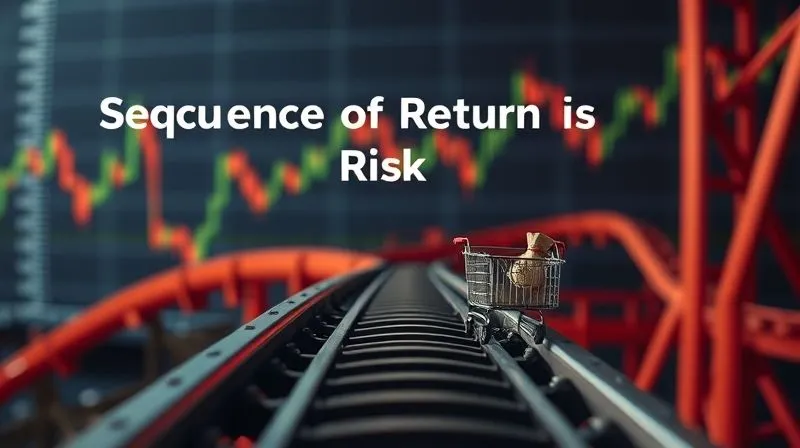
One of the most insidious threats to a retirement portfolio is the 'sequence of returns risk.' This is the danger that poor investment returns early in your retirement, combined with withdrawals, can severely deplete your portfolio, making it difficult to recover and sustain your income throughout retirement. It's not just about the *average* return, but the *order* in which those returns occur.
Imagine two retirees: both retire with $1 million, both experience an average 7% annual return over 30 years, and both withdraw 4% annually. However, one experiences negative returns early on, while the other experiences them later. The retiree with early negative returns is far more likely to run out of money because withdrawals are being made from a shrinking base, amplifying the losses.
Strategies to Combat Sequence of Returns Risk:
- The Cash Bucket Strategy: As discussed earlier, maintaining 1-2 years of living expenses in cash or highly liquid assets allows you to avoid selling growth assets during a market downturn. This is your primary defense against sequence risk.
- Dynamic Withdrawal Strategies: Instead of a fixed withdrawal rate, consider a flexible approach. In good market years, you might take a slightly higher withdrawal or replenish your cash bucket more aggressively. In down years, you might reduce your withdrawal slightly, or draw exclusively from your cash bucket. This requires discipline but can significantly enhance portfolio longevity.
- Delaying Retirement or Working Part-Time: If market conditions are poor as you approach retirement, consider delaying your full retirement by a year or two, or working part-time. This reduces the immediate pressure on your portfolio and allows it more time to recover.
- Utilizing a Home Equity Line of Credit (HELOC): In a severe market downturn, a HELOC can act as a last-resort 'emergency fund,' allowing you to cover expenses without selling investments at a loss. This is a high-risk strategy and should be used with extreme caution and only after consulting a financial advisor.
According to research from institutions like Vanguard, a flexible spending approach combined with maintaining a cash reserve can significantly improve the sustainability of a retirement portfolio in the face of sequence of returns risk. This isn't just theory; I've seen it save clients' retirements during volatile periods.
Building a Dynamic Withdrawal Plan: Flexibility is Key
In my experience, the biggest mistake retirees make is thinking their withdrawal plan is a static document. The financial landscape, your personal needs, and market conditions are constantly evolving. A truly optimized portfolio withdrawal strategy is dynamic, adaptable, and reviewed regularly.
A well-structured dynamic plan allows you to: 1) Respond to market fluctuations without panic selling. 2) Adjust to changes in your health or lifestyle expenses. 3) Capitalize on new tax laws or opportunities. 4) Optimize your tax liability year after year.
Elements of a Dynamic Withdrawal Plan:
- Annual Review: At least once a year, preferably with your financial advisor, review your portfolio performance, current expenses, income needs, and projected tax situation.
- Tax-Bracket Management: Actively manage your taxable income each year. Look for opportunities to 'fill' lower tax brackets with Roth conversions or capital gains realizations. Avoid unnecessarily pushing yourself into higher brackets.
- Rebalancing Strategy: Your withdrawal strategy should be integrated with your portfolio rebalancing. Instead of just selling to rebalance, you can often use withdrawals to bring your asset allocation back into line. For example, if stocks have done well, you might withdraw from your equity holdings to replenish your cash bucket, effectively 'trimming' your winners.
- Contingency Planning: What if you need more money than planned? What if a major health event occurs? Having a clear plan for these scenarios (e.g., specific funds earmarked, insurance policies, or a HELOC as a last resort) is crucial.
Remember, your retirement income plan is a living document. It should evolve with you and the world around you. According to a study published in the Journal of Financial Planning, flexibility in withdrawal strategies significantly enhances portfolio longevity compared to rigid, fixed-percentage rules.
| Strategy Element | Frequency | Purpose |
|---|---|---|
| Annual Review | Annually (or more often if market/life changes) | Assess portfolio, expenses, taxes, re-align goals |
| Tax-Bracket Management | Yearly, proactively | Utilize low tax brackets, minimize RMD impact |
| Rebalancing & Withdrawals | Quarterly/Annually | Maintain asset allocation, fund income needs, leverage gains/losses |
| Contingency Planning | Bi-annually/As needed | Prepare for unexpected expenses or market downturns |
Frequently Asked Questions (FAQ)
Question? What is the '4% Rule' for withdrawals, and is it still relevant today?
The 4% Rule suggests that retirees can safely withdraw 4% of their initial portfolio balance, adjusted for inflation annually, with a high probability of not running out of money over a 30-year retirement. While it's a useful historical guideline, in my expert opinion, it's less relevant as a rigid rule today. Factors like lower interest rates, longer lifespans, and market volatility mean a dynamic approach with flexibility (as discussed above) is often more prudent than a fixed 4% rule. It serves as a starting point for discussion, but not a definitive strategy.
Question? How does the SECURE Act and SECURE Act 2.0 affect my RMDs and beneficiaries?
The SECURE Act of 2019 pushed the RMD starting age from 70½ to 72. SECURE Act 2.0 further increased this to 73 in 2023, and it will rise to 75 in 2033. For beneficiaries of inherited IRAs (non-spouses), the 'stretch IRA' was largely eliminated, replaced by a 10-year rule, meaning the entire inherited IRA must be distributed within 10 years of the original owner's death. This dramatically changes estate planning for retirement accounts and emphasizes the value of Roth conversions for heirs. These changes underscore why a dynamic plan is essential. For the most up-to-date information, always refer to IRS guidelines.
Question? Can I reverse a Roth conversion if I change my mind?
No. Under the Tax Cuts and Jobs Act of 2017, the ability to 'recharacterize' a Roth conversion (i.e., undo it) was eliminated starting in 2018. Once you convert funds to a Roth IRA, that conversion is generally permanent. This highlights the importance of careful planning and modeling before executing a Roth conversion, as the decision cannot be undone.
Question? What if I need significantly more money than my plan allows in an emergency?
This is where a robust emergency fund (separate from your retirement income buckets) is crucial. Ideally, you'd have 3-6 months of living expenses in an accessible savings account. If that's insufficient, you might consider drawing from a taxable brokerage account first, as capital gains are often taxed at lower rates than ordinary income from pre-tax retirement accounts. A last resort might be a Home Equity Line of Credit (HELOC), but this carries significant risk. Always consult with your advisor to explore the least costly option for your specific situation.
Question? How often should I review and adjust my retirement withdrawal strategy?
I strongly recommend an annual review, at a minimum. However, significant life events (e.g., a major health change, a large inheritance, a market crash, or new tax legislation) warrant an immediate review. Proactive adjustments based on these changes are far more effective than reacting after the fact. Think of it as an ongoing process, not a one-time setup.
Key Takeaways and Final Thoughts
Navigating retirement withdrawals to minimize taxes isn't about finding a single magic bullet; it's about integrating multiple sophisticated strategies into a cohesive, dynamic plan. My years of experience have consistently shown that those who take a proactive, informed approach not only save substantial amounts in taxes but also gain invaluable peace of mind, knowing their financial future is secure.
- Understand Your Account Types: Recognize the tax implications of pre-tax, Roth, and taxable accounts.
- Implement a Bucket Strategy: Create time-segmented asset buckets to manage market volatility and withdrawal sequencing.
- Leverage Roth Conversions: Strategically convert funds during low-income years to create a tax-free income stream.
- Master RMDs: Plan proactively for Required Minimum Distributions, using QCDs and other tactics to mitigate their tax impact.
- Optimize Taxable Accounts: Utilize tax-loss harvesting and 0% capital gains brackets to your advantage.
- Coordinate with Social Security: Make informed decisions about claiming Social Security to minimize benefit taxation.
- Embrace Flexibility: Your plan must be dynamic, adapting to market changes, tax laws, and personal circumstances.
Remember, your retirement journey is unique. The strategies discussed here provide a powerful framework, but their optimal application depends on your specific financial situation, risk tolerance, and goals. Don't go it alone. Seek out a trusted financial advisor who specializes in retirement income planning to help you craft and continually refine a personalized strategy. The effort you put into optimizing your portfolio withdrawals will pay dividends, quite literally, for the rest of your life, allowing you to truly enjoy the retirement you’ve worked so hard for.
Recommended Reading
- 7 Steps: Adapt Client Portfolios to Sudden New Tax Legislation
- 7 Steps: Verify Genuine Green Bond Impact & Avoid Greenwashing
- Unlock AML Efficiency: How RegTech Transforms Compliance Processes
- Unlock Your Golden Years: How to Generate Reliable Income in Retirement?
- Quantify Your Impact: Measuring Values-Based Investments' Real Effect




Comments
Leave a comment below. Your email will not be published. Required fields marked with *