


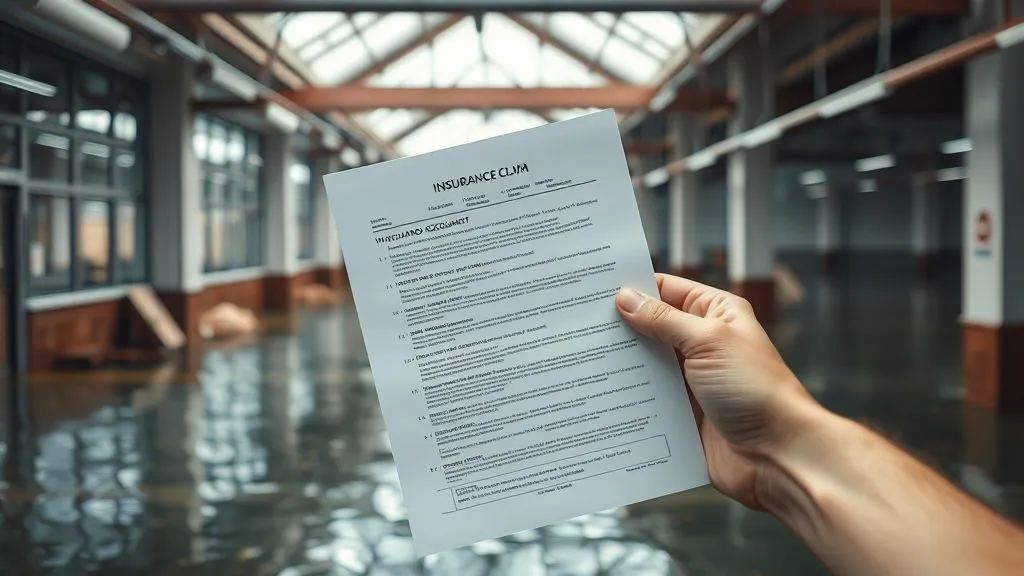
How to navigate complex flood insurance claims for commercial properties?
For over two decades in the finance and insurance sector, particularly within the challenging niche of property insurance, I've witnessed firsthand the devastating impact of flood events on commercial enterprises. I’ve seen businesses, large and small, brought to their knees not just by the water itself, but by the labyrinthine process of recovering through insurance. The path to a successful flood insurance claim for a commercial property isn't just about damage; it's about meticulous documentation, strategic communication, and an unwavering understanding of your policy.
The problem isn't merely the physical damage, which is often catastrophic. It's the subsequent financial paralysis, the operational disruption, and the sheer mental exhaustion that comes with trying to make sense of a complex insurance policy while simultaneously rebuilding your business. Many commercial property owners enter this process unprepared, making crucial mistakes that can lead to claim delays, underpayments, or even outright denials. This isn't just a financial hit; it's a threat to your business's very existence.
In this definitive guide, I'll draw upon my extensive experience to provide you with a robust framework for navigating even the most complex commercial flood insurance claims. We'll explore actionable strategies, dissect real-world scenarios, and uncover expert insights that will empower you to secure the maximum possible recovery, ensuring your business not only survives but thrives beyond the floodwaters. Consider this your essential roadmap to resilience.
Understanding Your Commercial Flood Policy Inside Out
The first, and arguably most critical, step in successfully navigating a complex flood insurance claim is to truly understand your policy. I've seen countless business owners caught off guard by exclusions or limitations they were unaware of, simply because they hadn't thoroughly reviewed their policy before disaster struck. This isn't just a piece of paper; it's the contract that dictates your recovery.
Commercial flood insurance policies, whether through the National Flood Insurance Program (NFIP) or private insurers, are distinct from standard property insurance. They often have separate limits for building coverage and contents coverage. Crucially, business interruption or loss of use coverage, standard in many commercial property policies, is often excluded from basic flood policies and must be purchased separately, if available. Always check your deductibles, which can be significant for flood claims, and understand how they apply to both building and contents.
Pay close attention to what's covered and what's explicitly excluded. For instance, damage from sewer backup or sump pump failure is typically not covered by a standard flood policy unless the backup was a direct result of an overflowing body of water. Similarly, certain types of property, like fences, landscaping, or vehicles, might have limited or no coverage. I cannot stress enough the importance of an annual policy review with your broker, especially if your business operations or property value changes.
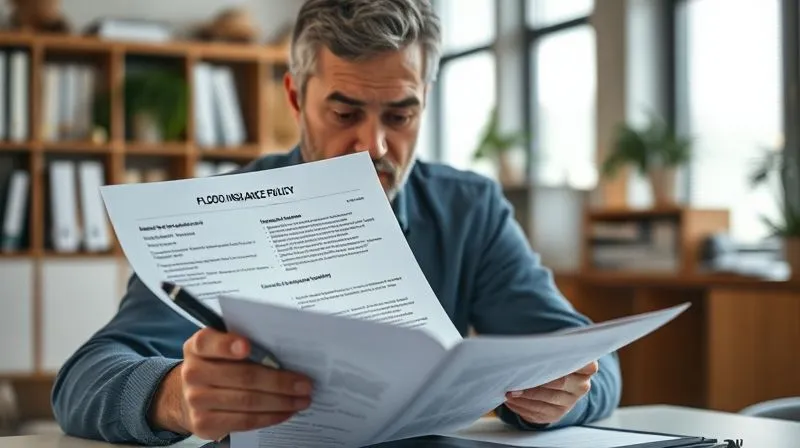
Immediate Post-Flood Actions: Securing Your Property and Documentation
Once the floodwaters recede, panic can set in. However, your immediate actions are paramount, not just for safety but for the integrity of your claim. As an experienced specialist, I've observed that the businesses that recover fastest are those that act decisively and methodically from hour one. Your first priority, always, is the safety of your employees and customers.
After ensuring safety, your next steps involve mitigating further damage and meticulously documenting everything. Insurers expect policyholders to take reasonable steps to prevent additional loss, often referred to as 'duty to mitigate.' This could mean hiring professionals to pump out water, drying out the property, or securing damaged areas. Keep detailed records of all mitigation expenses, as these are often reimbursable.
Documentation is your bedrock. Without comprehensive evidence, your claim will struggle. I advise creating a 'damage diary' from day one. Here’s an actionable list of immediate steps:
- Ensure Safety: Do not enter flooded areas until authorities confirm it's safe. Watch for structural damage, electrical hazards, and contaminated water.
- Document Everything Extensively: Before any cleanup or repair, take hundreds of photos and videos. Capture every angle, every damaged item, every water line. Use a timestamped camera if possible.
- Create an Inventory: List all damaged property, including equipment, machinery, inventory, furniture, and fixtures. Include purchase dates, original costs, and estimated replacement values. Photos are crucial here.
- Collect Receipts & Records: Gather purchase receipts, invoices, and previous appraisals for high-value items. This substantiates your claims for contents.
- Separate Damaged from Undamaged: If feasible, move undamaged items to a safe, dry location. Do not discard damaged items until the adjuster has inspected them or you have explicit permission.
- Contact Your Insurer Immediately: Report the claim as soon as possible. Get a claim number and the contact information for your assigned adjuster. Document every conversation.
Remember, the burden of proof is largely on you, the policyholder. The more detailed and organized your documentation, the smoother the claims process will be.
The Art of Accurate Damage Assessment and Valuation
This is where many commercial property owners falter. Estimating flood damage isn't just about counting broken items; it's a complex process that often requires specialized expertise. In my experience, relying solely on the insurer's adjuster for valuation can lead to significant underpayment, especially for complex commercial losses involving unique machinery, specialized inventory, or intricate building systems.
Consider engaging independent experts. A public adjuster, hired by you, can represent your interests and prepare a comprehensive claim on your behalf. For structural damage, a forensic engineer can assess the full extent of the damage, distinguishing between visible and hidden issues. For contents, a professional inventory specialist can help value your lost assets accurately. This investment often pays for itself many times over in a higher settlement.
A critical distinction in flood claims is often between covered flood damage and other water-related damage. For instance, if a pipe bursts due to the external flood, the flood policy might cover it. But if the pipe bursts independently, it might fall under a different (or no) policy. This is a common area of dispute. Furthermore, quantifying business interruption losses is incredibly complex. You'll need detailed financial statements, sales records, and projections to prove lost income and extra expenses incurred to continue operations. It’s not simply lost revenue; it’s lost profit, considering all fixed and variable costs.
| Damage Type | Documentation Needed | Key Considerations |
|---|---|---|
| Structural (Foundation) | Photos/Videos, Engineer's Report, Repair Estimates | Hidden damage, long-term stability |
| HVAC/Electrical Systems | Photos/Videos, HVAC/Electrical Contractor's Report, Repair/Replacement Quotes | Contamination, functional testing |
| Inventory/Contents | Detailed Inventory List, Purchase Receipts, Valuation Appraisals | Depreciation vs. Replacement Cost Value (RCV) |
| Business Interruption | Financial Statements (P&L, Balance Sheets), Sales Records, Expense Records, Expert Opinion (CPA) | Period of restoration, extra expenses, lost profits |
Navigating the Adjuster's Visit: What to Expect and How to Prepare
The adjuster's visit is a pivotal moment in your claim. This individual, whether from the NFIP or a private insurer, is tasked with assessing your damage on behalf of the insurance company. While they are professionals, their primary goal is to evaluate the claim against your policy terms, not necessarily to advocate for your maximum recovery. I've seen policyholders make critical errors during this visit that jeopardize their entire claim.
Preparation is key. Have all your documentation ready and organized: your policy, your damage diary, photos, videos, inventory lists, and any repair estimates you've already obtained. Walk through the property with the adjuster, pointing out every detail of the damage. Don't assume they will see everything. Be polite but firm in presenting your evidence. If you have engaged a public adjuster, they should be present during this visit to represent your interests directly.
Avoid making definitive statements about the cause of damage or specific repair costs during the initial visit. Stick to facts and observations. If the adjuster asks you to sign anything, read it carefully and understand its implications. Never sign a release of liability or a final settlement offer without thoroughly reviewing it, ideally with legal counsel or your public adjuster. Remember, their initial assessment is just that – an initial assessment, not necessarily the final word.
Expert Insight: "The single biggest mistake commercial property owners make during an adjuster's visit is failing to present a comprehensive, organized, and independently verified assessment of their losses. You must be your own advocate, armed with irrefutable evidence."
According to a study by the National Association of Public Insurance Adjusters (NAPIA), claims handled by public adjusters often result in significantly higher settlements than those handled directly by policyholders. This underscores the value of expert representation during this critical phase.
Strategies for Effective Communication and Negotiation
The claims process is inherently a negotiation. From the moment you file to the final settlement, your ability to communicate effectively and negotiate assertively will heavily influence your outcome. I've guided numerous businesses through contentious claims, and consistent, clear, and documented communication is always the cornerstone of success.
Maintain a detailed log of every communication with your insurer and adjuster: dates, times, names, and a summary of the conversation. Follow up phone calls with emails summarizing what was discussed and agreed upon. This creates an undeniable paper trail that can be invaluable in case of disputes. When responding to requests for information, do so promptly and thoroughly, but always ensure the information provided supports your claim.
It's common for initial settlement offers to be lower than your actual losses. Don't accept the first offer if it doesn't adequately cover your damage. Be prepared to present a counter-proposal, backed by your detailed documentation, independent assessments, and repair estimates. Clearly articulate why your valuation is accurate and where the insurer's offer falls short. If negotiations stall, understand your options for dispute resolution, which may include mediation, appraisal, or litigation. Knowing when to escalate and when to compromise is a delicate balance, often best managed with professional guidance.
For more information on the appeals process for NFIP claims, you can refer to official FEMA guidelines: FEMA Flood Insurance Appeals.
Case Study: How Harborfront Logistics Secured Full Flood Recovery
Case Study: Harborfront Logistics' Resilience After a Category 3 Hurricane
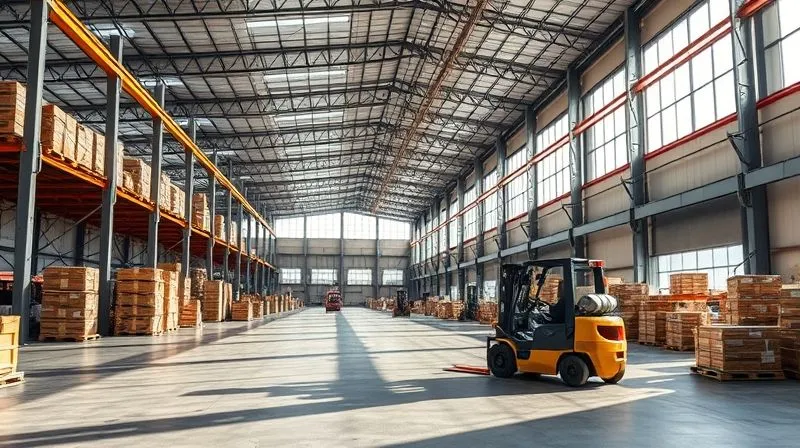
Harborfront Logistics, a mid-sized shipping and warehousing company located near a major coastal port, faced a devastating challenge when a Category 3 hurricane brought unprecedented storm surge, flooding their primary warehouse and administrative offices. The floodwaters reached nearly five feet inside the facility, destroying millions of dollars in inventory, specialized forklifts, and critical IT infrastructure. Their initial NFIP flood insurance claim was met with an offer that was less than 30% of their estimated losses, citing 'depreciation' on equipment and 'insufficient proof' for much of their inventory.
Facing potential bankruptcy, Harborfront Logistics, on my advice, immediately engaged a public adjuster and a forensic accountant. The public adjuster meticulously re-documented every aspect of the physical damage, bringing in a structural engineer to identify hidden foundation stress and an industrial equipment appraiser to accurately value their specialized machinery at replacement cost, not depreciated value. The forensic accountant, working with Harborfront's internal team, built a robust case for business interruption, demonstrating lost contractual revenue and unavoidable fixed costs during the 6-month period of restoration.
Armed with this comprehensive, independently verified documentation, their public adjuster reopened negotiations. They presented a detailed package, including expert reports, revised inventory lists with supporting invoices, and a granular business interruption analysis. After several rounds of negotiation and a formal appraisal process (a contractual dispute resolution mechanism), Harborfront Logistics successfully secured a settlement that covered 95% of their actual losses, including full replacement cost for equipment and a substantial business interruption payout. This allowed them to rebuild, replace their assets, and resume operations within eight months, ultimately saving their business.
Leveraging Professional Help: Public Adjusters and Legal Counsel
While I empower businesses to be their own advocates, there's a point where the complexity and stakes of a commercial flood claim necessitate professional intervention. Knowing when to call in the cavalry is a strategic decision that can dramatically alter your claim's trajectory. I've often seen policyholders hesitate, fearing additional costs, only to lose far more in unrecovered damages.
A public adjuster is an independent claims expert who works exclusively for you, the policyholder. Unlike the insurance company's adjuster, a public adjuster's loyalty is solely to your interests. They help you prepare, present, and negotiate your claim, ensuring all covered damages are identified and valued correctly. They understand policy language, claims procedures, and negotiation tactics. Their fees are typically a percentage of the final settlement, meaning they are incentivized to maximize your recovery. For significant commercial losses, the value they add almost always outweighs their cost.
Legal counsel becomes invaluable when disputes escalate, especially if the insurer denies your claim outright, offers a severely inadequate settlement, or engages in bad faith practices. An attorney specializing in insurance law can interpret complex policy clauses, advise on legal rights, and represent you in litigation if necessary. While it's a step to consider carefully, having legal representation can be a powerful deterrent against unfair claims practices and can ensure your rights are fully protected.
The decision to hire these professionals should be based on the complexity of your claim, the extent of your losses, and your comfort level with handling the process yourself. For most substantial commercial flood claims, I strongly recommend at least consulting with a public adjuster early in the process.
Proactive Measures: Future-Proofing Your Commercial Property Against Flood Risk
The best claim is the one you never have to file. While floods are unpredictable, your preparedness doesn't have to be. As an industry specialist, I advocate for a proactive approach to flood risk management, combining robust insurance with physical mitigation strategies. This isn't just about reducing potential damage; it's about building business resilience.
First, regularly review and update your flood insurance policy. Don't wait for renewal notices; schedule an annual meeting with your insurance broker. Discuss changes in your property's value, inventory levels, business operations, and any new flood risks identified in your area. Ensure your coverage limits are adequate for both building and contents at today's replacement costs, and explicitly discuss business interruption coverage. Understanding your policy's definitions of 'flood' and 'damage' is crucial for future claims.
Second, implement physical mitigation strategies. These can range from simple, cost-effective measures to more significant structural changes. Elevating critical machinery and electrical systems, installing backflow valves, sealing cracks in foundations, or even relocating key assets to higher floors can dramatically reduce your vulnerability. Many communities participate in FEMA's Community Rating System (CRS), which offers flood insurance premium discounts for properties in communities that implement flood mitigation activities. Check if your community participates.
| Mitigation Strategy | Benefit | Cost Implication |
|---|---|---|
| Elevating Utilities/Equipment | Protects critical infrastructure from floodwaters, reduces replacement costs. | Moderate upfront cost, significant long-term savings. |
| Installing Backflow Valves | Prevents sewage backups into the property during flooding. | Low to moderate cost, prevents highly damaging and unsanitary losses. |
| Floodproofing (Dry/Wet) | Seals property to prevent water entry (dry) or allows water to enter and drain (wet) with flood-resistant materials. | High initial investment, but can be highly effective for certain properties. |
| Developing a Flood Response Plan | Ensures rapid, organized action during a flood event, minimizing damage and downtime. | Low financial cost, high organizational effort, invaluable for recovery. |
Finally, create a comprehensive flood response plan. This plan should detail immediate actions before, during, and after a flood, including evacuation routes, emergency contacts, data backup procedures, and a clear chain of command. Practice this plan regularly. A well-rehearsed plan significantly reduces chaos and ensures critical steps, like documentation, are not overlooked in the heat of the moment.
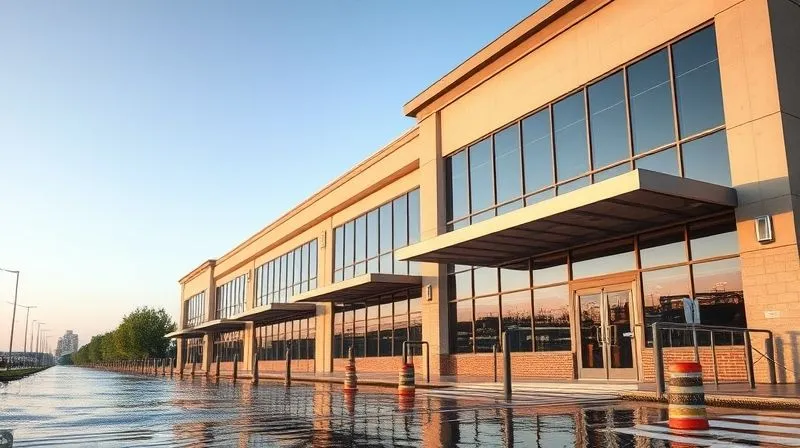
For more insights on flood mitigation, the National Institute of Building Sciences offers valuable resources: National Institute of Building Sciences.
Frequently Asked Questions (FAQ)
Question: What if my insurer denies the claim, citing a "sewer backup" exclusion, even though there was widespread area flooding? This is a common point of contention. A standard flood insurance policy typically excludes damage from sewer backup or sump pump failure unless it's a direct consequence of a flood. The key here is causality. If the municipal sewer system backed up because of an overwhelming volume of floodwaters, then the damage could potentially be covered under your flood policy. However, if the sewer backup occurred independently of external flooding (e.g., a blockage), it would likely be excluded. You'll need strong evidence – photos of floodwaters outside, expert testimony if available – to prove the causal link. This is precisely when engaging a public adjuster or legal counsel becomes critical to argue your case effectively.
Question: How do I prove business interruption losses effectively, especially if my business was already struggling before the flood? Proving business interruption (BI) losses requires meticulous financial documentation. You'll need Profit & Loss statements, balance sheets, tax returns, and sales records from before the flood, ideally for several years, to establish a baseline. A forensic accountant can be invaluable here. They will analyze your historical performance, industry trends, and the specific impact of the flood to project what your business would have earned during the period of restoration. If your business was struggling, the challenge is greater, but you still need to prove the flood caused further, measurable interruption to your operations and profitability beyond existing issues. Documentation of extra expenses incurred to mitigate losses or continue operations (e.g., temporary relocation costs) is also crucial.
Question: Is it worth hiring a public adjuster, and when should I do it? For complex commercial flood claims, especially those involving significant damage, business interruption, or disputes, hiring a public adjuster is almost always worth it. Their expertise in policy interpretation, damage assessment, and negotiation can lead to substantially higher settlements. I recommend engaging a public adjuster as early as possible in the process – ideally, right after you've filed the initial claim and before the insurer's adjuster makes their first visit. This allows them to manage the entire process from the outset, ensuring all documentation is collected correctly and presented optimally.
Question: What's the biggest mistake businesses make in flood claims? In my experience, the single biggest mistake is under-documenting their losses and failing to fully understand their policy. Many businesses rush into cleanup or repairs without thoroughly photographing and itemizing every piece of damaged property. They also often assume their policy covers everything, only to find critical exclusions or insufficient limits. This lack of preparation and understanding puts them at a severe disadvantage when negotiating with the insurer.
Question: Can I get coverage for mold after a flood, or is that always excluded? Coverage for mold after a flood is a tricky area. Generally, flood insurance policies (especially NFIP) do not cover mold damage unless it is directly caused by and within the scope of the covered flood event, and efforts were made to mitigate it. Crucially, if mold develops because of delayed cleanup or inadequate drying post-flood, it may not be covered. You have a duty to mitigate, which includes drying out the property quickly to prevent mold growth. Documenting your immediate drying and remediation efforts is vital. Some private flood policies might offer limited mold coverage, but it's typically an add-on and has specific limitations. Always check your policy for specific mold provisions.
Key Takeaways and Final Thoughts
Navigating complex flood insurance claims for commercial properties is undoubtedly one of the most challenging aspects of post-disaster recovery. However, it is not an insurmountable task. My two decades in this specialized field have shown me that preparedness, meticulous documentation, expert guidance, and proactive communication are the cornerstones of a successful claim and, ultimately, a resilient business.
- Know Your Policy: Don't wait for a flood to understand your coverage limits, deductibles, and exclusions.
- Document Everything: Photos, videos, inventory lists, and expense receipts are your most powerful tools.
- Act Swiftly, Mitigate Smartly: Take immediate, documented steps to prevent further damage.
- Value Accurately: Don't settle for less; use independent experts to assess your losses thoroughly.
- Communicate Strategically: Maintain detailed logs and negotiate assertively, backed by evidence.
- Consider Professional Help: Public adjusters and legal counsel can be invaluable investments.
- Future-Proof Your Business: Regular policy reviews and physical mitigation build long-term resilience.
The journey to recovery can be arduous, but by implementing these strategies, you empower your business to stand strong against the unpredictable forces of nature. Remember, a flood is a disaster, but a poorly managed claim doesn't have to be. With the right approach, you can transform a potential catastrophe into a testament to your business's enduring strength and strategic foresight. Be prepared, be persistent, and reclaim your future.
Recommended Reading
- Blue-Chip Plunge? 7 Expert Steps When Your Stock Portfolio Dips
- 7 Steps to Advise Clients: Lump Sum vs. Annuity Pension Decisions
- 7 Steps: Prioritize Bills After Medical Event When Emergency Fund is Gone
- Unlock the Secret: How to Legally Erase Collections from Your Credit Report
- What is the Long-Term Economic Impact of US-China Tech Decoupling?





Comments
Leave a comment below. Your email will not be published. Required fields marked with *