


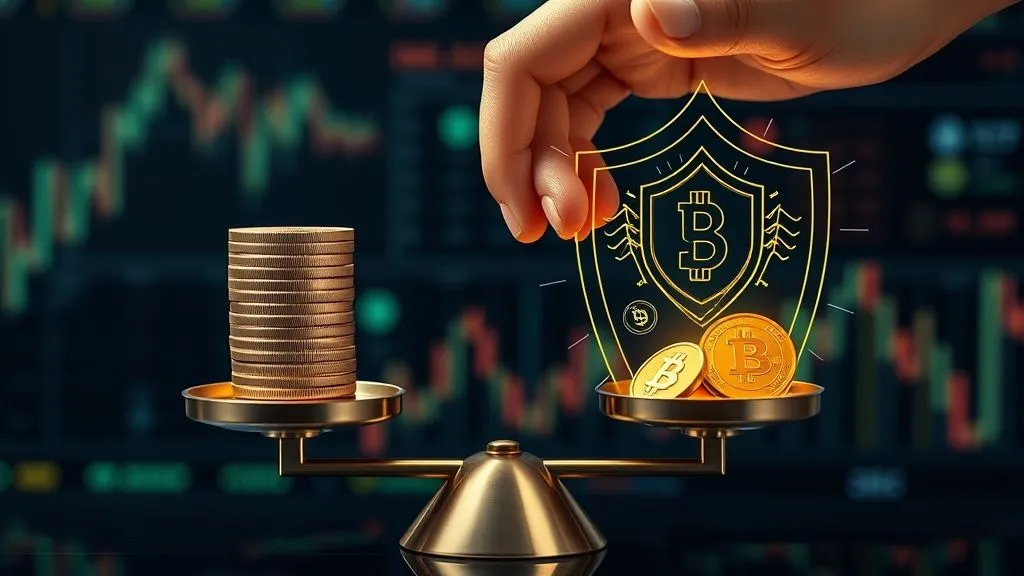
How to Mitigate Impermanent Loss in DeFi Liquidity Pools Effectively?
For over a decade immersed in the volatile yet exhilarating world of digital currency, I've witnessed countless innovations that promised financial freedom. Yet, alongside the incredible opportunities, I've also seen a recurring challenge that often blindsides even seasoned participants: the subtle, often misunderstood phenomenon of impermanent loss in DeFi liquidity pools. It’s a silent killer of potential profits, turning what seemed like lucrative yield farming into a frustrating exercise in capital erosion.
The allure of high Annual Percentage Yields (APYs) in decentralized finance (DeFi) liquidity pools is undeniable. Providing liquidity to Automated Market Makers (AMMs) can be incredibly rewarding, but it comes with a significant caveat: impermanent loss. This isn't a realized loss until you withdraw, but it represents the opportunity cost of holding your assets outside the pool, or the divergence in value compared to simply HODLing. Many enter these pools with grand visions of compounding returns, only to find their portfolio value diminished relative to what it would have been if they had just held their original assets.
But here's the good news: you don't have to be a casualty of impermanent loss. In this definitive guide, I'll draw upon my extensive experience to equip you with a robust framework and actionable strategies. We’ll dive deep into understanding its mechanics and, more importantly, explore seven expert-backed tactics on how to mitigate impermanent loss in DeFi liquidity pools effectively, ensuring your journey into DeFi is not just profitable, but also sustainable.
Understanding the Beast: What is Impermanent Loss (IL) Really?
Before we can effectively mitigate impermanent loss, we must first truly understand its nature. Imagine you contribute two assets, say ETH and USDC, to a liquidity pool. The AMM maintains a constant product formula, typically x * y = k, where x and y are the quantities of each token, and k is a constant. This formula ensures a balanced pool, but it also dictates how arbitrageurs interact with it.
The Mechanics of AMMs and Price Divergence
When the market price of one asset, like ETH, changes significantly outside the pool, arbitrageurs step in. If ETH's price rises on external exchanges, they'll buy cheaper ETH from the liquidity pool by selling USDC into it, until the pool's price matches the external market. Conversely, if ETH's price drops, they'll sell ETH into the pool for USDC. This rebalancing act is crucial for keeping the pool's prices aligned with the broader market, but it's also the root cause of impermanent loss.
The pool always tries to maintain its value in terms of the total underlying assets. However, because arbitrageurs are removing the appreciating asset and adding the depreciating one (or vice-versa), your share of the pool ends up having less value than if you had simply held the initial quantities of each asset separately. It’s an opportunity cost, a theoretical loss that only becomes real when you withdraw your liquidity.
"Impermanent loss is not a bug in DeFi; it's a feature of how AMMs maintain price equilibrium. Understanding this mechanism is the first step towards mastering liquidity provision."

Strategy 1: Prioritizing Stablecoin Pairs and Low Volatility Assets
One of the most straightforward and effective ways to mitigate impermanent loss is to choose your liquidity pairs wisely. The core principle of impermanent loss is price divergence. Therefore, by minimizing divergence, you minimize IL.
Stablecoin-to-Stablecoin Pools: Providing liquidity to pools consisting solely of stablecoins (e.g., USDC/USDT, DAI/USDC) is often called the 'holy grail' for IL reduction. Since these assets are pegged to the same value (typically $1), their price divergence is minimal, making impermanent loss negligible. While yields might be lower than highly volatile pairs, the stability and reduced risk can make them an attractive option for conservative LPs. Protocols like Curve Finance specialize in these types of pools.
Correlated Asset Pools: Another excellent approach is to choose pairs where the assets are highly correlated, meaning their prices tend to move in the same direction and magnitude. A classic example is ETH/stETH (Lido Staked ETH). Since stETH is designed to trade very closely to ETH, the price divergence is often small, leading to lower impermanent loss. Similarly, wrapped versions of the same asset (e.g., WETH/ETH) or assets within the same ecosystem (e.g., SOL/mSOL) can offer similar benefits.
To identify suitable pairs, look for:
- Pairs with a long history of price correlation.
- Assets with similar underlying fundamentals or use cases.
- Pools on AMMs designed specifically for stable or pegged assets.
| Pair Type | Volatility | Impermanent Loss Risk | Typical APY Range |
|---|---|---|---|
| Stablecoin-Stablecoin (e.g., USDC/USDT) | Very Low | Very Low | 3-8% |
| Highly Correlated (e.g., ETH/stETH) | Low-Medium | Low | 5-15% |
| Uncorrelated (e.g., ETH/BTC) | Medium-High | Medium-High | 8-25% |
| Volatile-Stable (e.g., ETH/USDC) | High | High | 10-50%+ |
Strategy 2: Embracing Concentrated Liquidity Pools (CLPs) with Caution
The advent of Concentrated Liquidity Pools (CLPs), popularized by Uniswap v3, introduced a paradigm shift in liquidity provision. Unlike traditional AMMs where your liquidity is spread across the entire price range from zero to infinity, CLPs allow LPs to specify a narrow price range where their capital is active. This innovation can be a powerful tool to mitigate impermanent loss in DeFi liquidity pools, but it requires a more active and informed approach.
Benefits of CLPs: By concentrating your liquidity within a specific range, you achieve significantly higher capital efficiency. This means you earn more fees with less capital, as your assets are actively used for swaps more frequently. If the price stays within your chosen range, you can potentially earn substantial fees, effectively offsetting or even outweighing any impermanent loss.
The Double-Edged Sword: The flip side is that if the price moves outside your chosen range, your liquidity becomes completely inactive, and your position essentially converts entirely into the asset that appreciated (if price went up) or depreciated (if price went down). This can lead to a much higher impermanent loss compared to a full-range pool if you don't manage your position. It demands vigilance and a willingness to actively rebalance or adjust your ranges.
- Research Volatility: Before setting a range, analyze the historical volatility of the pair. For stable pairs, a tighter range might be suitable. For volatile assets, a wider, yet still concentrated, range might be safer.
- Set Realistic Ranges: Avoid overly tight ranges unless you are prepared for constant monitoring and rebalancing. Consider setting a range that encompasses expected price movements for your investment horizon.
- Active Management: Be prepared to adjust your ranges. If the price moves out of your range, you'll need to either withdraw your liquidity, update your range, or provide additional capital to a new range.
- Rebalancing Strategies: Some LPs employ strategies to rebalance their positions as prices move, taking profits or cutting losses, and re-establishing new concentrated ranges.
"Concentrated liquidity can dramatically boost your capital efficiency, but it transforms passive liquidity provision into an active management role. It's a powerful tool for those who understand and embrace its demands."

Strategy 3: Single-Sided Liquidity and Protocol-Specific Solutions
While most traditional AMMs require two assets for liquidity provision, innovative protocols are emerging that offer mechanisms to reduce or even eliminate impermanent loss, often through single-sided liquidity or unique tokenomics.
Single-Sided Liquidity Pools: Some platforms allow you to provide liquidity with just one asset. The protocol then handles the pairing and rebalancing, often using internal mechanisms or external services to manage IL risk for the user. For instance, certain lending protocols might allow single-asset staking that then gets deployed into liquidity pools with IL protection built-in. This simplifies the LP experience and significantly reduces the mental burden of IL.
IL-Offsetting Mechanisms: A growing number of DeFi protocols are designing their tokenomics or pool structures to specifically address impermanent loss. This can include:
- Higher Trading Fees: Pools with very high trading fees might generate enough revenue to comfortably offset potential IL.
- Protocol-Owned Liquidity (POL): Protocols that own and manage their own liquidity can sometimes absorb IL for users, or strategically manage assets to minimize its impact.
- Token Incentives: While not directly mitigating IL, some protocols offer substantial token rewards to LPs, which are designed to compensate for any potential IL, effectively making it profitable even with IL present.
Case Study: How AstroSwap Reduced IL Exposure for LPs
AstroSwap, a fictional but realistic decentralized exchange, faced a common problem: attracting liquidity for its native token (ASTRO) against a stablecoin (USDT) due to high impermanent loss fears. LPs were hesitant to provide liquidity, despite attractive APYs. AstroSwap implemented a novel 'Dynamic IL Protection' mechanism. For users providing liquidity for a minimum of 90 days, the protocol would partially reimburse any impermanent loss exceeding 5% of their initial deposit, using a portion of the protocol's trading fees and a dedicated insurance fund. This innovative approach significantly boosted LP confidence, leading to a 200% increase in total value locked (TVL) in their ASTRO/USDT pool within three months. LPs felt secure, knowing there was a safety net, and AstroSwap benefited from deeper liquidity, demonstrating how thoughtful protocol design can effectively mitigate impermanent loss in DeFi liquidity pools.
Always research the specific mechanics of a protocol before providing single-sided liquidity or relying on IL-offsetting features, as these can vary widely and carry their own risks. For example, some protocols use oracles to price assets, which could introduce other vulnerabilities. You can often find detailed explanations in a project's whitepaper or documentation, which often includes insights into their risk management strategies. An example of a platform exploring such mechanisms is Curve Finance, known for its stablecoin-optimized AMM design.
Strategy 4: Hedging Impermanent Loss with Derivatives
For the more sophisticated and risk-aware liquidity provider, hedging impermanent loss using derivatives offers a powerful, albeit complex, strategy. This involves taking an opposing position in a derivatives market (like perpetual futures or options) to offset the potential loss in your liquidity pool position.
The Basic Idea: Impermanent loss occurs when the price of one asset in your pair moves significantly relative to the other. If you're providing ETH/USDC liquidity and ETH's price skyrockets, you effectively sell ETH from the pool for USDC. To hedge this, you could take a short position on ETH in a perpetual futures market. If ETH's price rises, your LP position incurs IL, but your short futures position gains, offsetting the loss. Conversely, if ETH's price drops, your LP position gains relative to holding, while your short futures position loses, again balancing out.
- Identify the Volatile Asset: Determine which asset in your LP pair is most likely to cause significant price divergence.
- Calculate Your Exposure: Understand the approximate amount of the volatile asset you're effectively 'long' or 'short' in your LP position at different price points.
- Take an Opposing Position: Open a corresponding short or long position in a derivatives market (e.g., perpetual futures, options) to neutralize your exposure. This requires careful sizing of your hedge.
- Monitor and Adjust: Derivatives positions require active management. Margin calls, funding rates (for perpetuals), and option expiry dates must be closely monitored.
This strategy is not for the faint of heart. It introduces additional risks, such as liquidation risk on your derivatives position, funding rate costs, and the complexity of managing multiple positions across different platforms. However, when executed correctly, it can be an extremely effective way to mitigate impermanent loss, turning a speculative venture into a more delta-neutral strategy.
"Hedging IL with derivatives is akin to using a complex financial instrument to protect your core investment. It's a testament to the sophistication of DeFi, but demands a deep understanding of both liquidity provision and derivatives markets."
According to research by academics studying AMMs, hedging strategies can significantly reduce the variance of LP returns, albeit at the cost of additional transaction fees and active management overhead.
Strategy 5: Dynamic Rebalancing and Impermanent Loss Trackers
Even with the best initial strategies, market conditions can change rapidly. This is where active monitoring and dynamic rebalancing become crucial. Relying on 'set it and forget it' for volatile pairs is a recipe for potential impermanent loss.
Monitoring Your Position: Regularly check the performance of your liquidity pool position. This means not just looking at the APY, but specifically tracking your impermanent loss. Many portfolio trackers and analytics platforms now offer dedicated IL tracking features.
Tools for Tracking IL: Platforms like DeBank, ApeBoard, or specific pool calculators on AMM interfaces can help you visualize your IL. These tools typically show you the current value of your LP tokens compared to simply holding the initial assets, giving you a clear picture of your impermanent loss. Understanding these metrics is vital to effectively mitigate impermanent loss in DeFi liquidity pools.
- Set Alerts: Configure alerts for significant price movements of your paired assets, or for when your impermanent loss crosses a certain threshold.
- Evaluate Rebalance Points: If your IL becomes too high, or if the market outlook for one of your assets changes drastically, it might be time to re-evaluate your position. This could mean:
- Withdrawing Liquidity: If the IL is too high and the fees aren't compensating, it might be better to cut losses and redeploy capital elsewhere.
- Adjusting Ranges (for CLPs): If the price moves out of your concentrated range, you'll need to update it to start earning fees again.
- Rebalancing Assets: In some cases, you might withdraw, sell some of the appreciating asset, and re-enter the pool with a more balanced proportion, or move to a different pool entirely.
- Consider Your Time Horizon: Short-term price fluctuations might lead to high IL, but if your long-term conviction in the assets is strong, you might hold through it, hoping for price convergence or sufficient fees to compensate.
Active management is a commitment, but it’s a necessary one for optimizing returns and minimizing risks in dynamic DeFi environments. This vigilance helps you identify when the 'impermanent' part of the loss is becoming 'permanent' relative to your investment goals.

Strategy 6: Advanced Tactics: Impermanent Loss Insurance & Liquidity Manager DAOs
As the DeFi ecosystem matures, so do the solutions designed to address its inherent risks. Beyond individual strategies, collective and institutional approaches are emerging to help mitigate impermanent loss.
Impermanent Loss Insurance: The concept of DeFi insurance is gaining traction, with platforms offering coverage for various risks, including impermanent loss. While still nascent, these services aim to provide a safety net for LPs. You might pay a premium (often in stablecoins or the protocol's native token) for coverage. If your impermanent loss exceeds a certain threshold, the insurance protocol would compensate you for a portion or all of that loss. Projects like Nexus Mutual and other specialized DeFi insurance providers are exploring and offering such products, providing a layer of security that was previously unavailable.
Liquidity Manager DAOs and Managed Funds: Decentralized Autonomous Organizations (DAOs) and specialized funds are also stepping in to manage liquidity on behalf of members or investors. These entities often employ teams of quantitative analysts and strategists who actively manage large pools of capital across various AMMs and protocols. Their expertise in dynamic rebalancing, range setting (for CLPs), and even hedging can significantly reduce impermanent loss for their participants. By pooling resources and expertise, these DAOs can achieve economies of scale and sophisticated risk management that individual LPs might find challenging to implement on their own.
While these advanced tactics offer promising solutions, they also come with their own considerations:
- Cost of Premiums: Insurance premiums can eat into your potential profits, so a cost-benefit analysis is essential.
- Smart Contract Risk: Both insurance protocols and DAOs operate on smart contracts, which carry inherent risks of bugs or exploits.
- Centralization Concerns: While DAOs aim for decentralization, the decision-making process for managing funds might still be concentrated among a few key contributors.
These evolving solutions represent the collective effort of the DeFi community to build a more robust and secure financial system. As the space matures, I anticipate more sophisticated and accessible options to effectively mitigate impermanent loss in DeFi liquidity pools will become available.
Strategy 7: The Impermanent Loss Checklist: Making Informed Decisions
Before you commit your hard-earned assets to a liquidity pool, it’s imperative to go through a rigorous checklist. In my experience, the biggest mistakes in DeFi often stem from insufficient due diligence. This checklist will help you make informed decisions and proactively mitigate impermanent loss.
- Asset Volatility Assessment: How volatile are the assets in the pair? High volatility equals higher IL risk. Are they stablecoins, highly correlated assets, or wildly divergent tokens?
- Trading Fees vs. Potential IL: Do the expected trading fees (and any additional farming rewards) realistically compensate for the potential impermanent loss? Calculate the estimated break-even point.
- Protocol Reputation and Security: Is the AMM or protocol well-established and audited? What is its track record? Avoid new, unaudited protocols, especially with significant capital.
- Your Risk Tolerance: How much impermanent loss are you comfortable with? Be honest with yourself. If you can't stomach a 10-20% divergence, stick to stablecoin pools.
- Time Horizon: Are you a short-term yield farmer or a long-term liquidity provider? Longer time horizons might allow fees to accumulate and potentially offset IL, but also expose you to prolonged divergence.
- Available Tools & Active Management: Are you prepared to actively monitor your position, adjust ranges, or even hedge? Do you have access to reliable IL trackers?
- Community Sentiment & Development: What does the community say about the pool and protocol? Is the development team active and responsive? A thriving community often indicates a more resilient project.
This comprehensive approach is how you transform from a passive participant into an active, strategic liquidity provider. It’s about understanding the nuances of the game and playing it smart, rather than just chasing the highest APY. For a deeper dive into the underlying economic principles of AMMs and IL, consider exploring resources from institutions like Harvard Business Review's insights on digital finance, which often touch upon emerging financial models.
Frequently Asked Questions (FAQ)
Q: Is impermanent loss always realized? No, impermanent loss is only realized when you withdraw your liquidity from the pool. If the prices of the assets return to their original ratio (or closer to it) before you withdraw, the impermanent loss diminishes or even disappears. It's an opportunity cost rather than a direct capital loss until withdrawal.
Q: Can impermanent loss be greater than 100%? Theoretically, yes, but it's extremely rare and implies one of the assets has become worthless or nearly worthless. For a typical 50/50 pool, if one asset's price drops to zero, your impermanent loss would approach 100% relative to holding the other asset. In practical terms, while IL can be significant, it rarely exceeds 100% unless there's a catastrophic de-pegging or asset failure.
Q: How do fees affect impermanent loss? Trading fees earned by liquidity providers act as a compensation mechanism for impermanent loss. If the fees you earn (and any additional farming rewards) are greater than the impermanent loss incurred, then providing liquidity can still be profitable. This is why high-volume pools, even with volatile assets, can sometimes be attractive, as the fee income might outweigh the IL.
Q: What is the best way to calculate impermanent loss? The most accurate way is to compare the current value of your LP tokens (after withdrawing and selling assets at current market rates) with the value your initial assets would have if you had simply held them outside the pool. Many DeFi portfolio trackers and specialized impermanent loss calculators can automate this for you, providing real-time estimates.
Q: Are all liquidity pools subject to impermanent loss? Most standard Automated Market Maker (AMM) liquidity pools are subject to impermanent loss due to their rebalancing mechanism. However, pools composed entirely of stablecoins or highly correlated pegged assets (like ETH/stETH) have significantly reduced, often negligible, impermanent loss. Additionally, some newer protocols or specific pool designs might implement features to mitigate or absorb IL for LPs.
Key Takeaways and Final Thoughts
Navigating the DeFi landscape as a liquidity provider demands more than just chasing high APYs; it requires a deep understanding of underlying mechanisms like impermanent loss and the strategic deployment of mitigation techniques. My journey through digital finance has taught me that knowledge, vigilance, and a proactive approach are your greatest assets.
- Choose Wisely: Prioritize stablecoin pairs or highly correlated assets to minimize divergence.
- Master CLPs: Leverage concentrated liquidity for capital efficiency, but commit to active management.
- Explore Innovations: Investigate single-sided liquidity options and protocol-specific IL solutions.
- Consider Hedging: For advanced users, derivatives can be a powerful tool for risk neutralization.
- Monitor Actively: Use IL trackers and dynamic rebalancing to stay ahead of market shifts.
- Evaluate Advanced Tools: Look into IL insurance and liquidity manager DAOs as the ecosystem evolves.
- Perform Due Diligence: Always use a comprehensive checklist before committing capital.
The world of DeFi is constantly evolving, presenting both incredible opportunities and complex challenges. By arming yourself with these strategies on how to mitigate impermanent loss in DeFi liquidity pools effectively, you're not just protecting your capital; you're becoming a more sophisticated and resilient participant in the decentralized future. Stay informed, stay strategic, and may your yields be plentiful and your impermanent loss, well, truly impermanent. For ongoing market insights, I often refer to reputable sources like Cointelegraph or CoinDesk.
Recommended Reading
- Slash Business Bank Fees 20% Annually: 7 Expert Strategies & Tools
- Medical Bill Shock? 7 Steps When Your Emergency Fund Falls Short
- Philanthropic Legacies: 7 Steps to Prevent Future Family Conflict
- Unlock Elite Wealth Management: Should High Net Worth Use a Family Office?
- Unlock the Secret: How to Find Super Cheap Flights Using Error Fares




Comments
Leave a comment below. Your email will not be published. Required fields marked with *