



How to mitigate Bitcoin portfolio risk during extreme volatility?
For over 15 years in the digital asset space, I've witnessed the exhilarating highs and the gut-wrenching lows of the Bitcoin market. I remember the parabolic run of 2017, the subsequent crypto winter, and the incredible surge to new all-time highs in 2021, followed by another significant correction. Through it all, one constant remains: volatility. It's the very nature of this nascent, revolutionary asset class, and it's something every serious investor must learn to navigate, not just endure. I've seen countless investors, both novice and experienced, make costly mistakes during these periods, often succumbing to fear or greed.
The fear and anxiety that extreme Bitcoin price swings can induce are palpable. Many new entrants, captivated by the promise of exponential gains, find themselves paralyzed or making impulsive, regrettable decisions when their portfolio value plummets by 30%, 50%, or even more in a matter of weeks. This isn't just about losing money on paper; it's about the emotional toll, the shattered confidence, and the potential for long-term financial setbacks if not managed correctly. The challenge isn't whether volatility will strike, but how prepared you are when it does. The question of how to mitigate Bitcoin portfolio risk during extreme volatility becomes paramount.
In this definitive guide, I will share my accumulated wisdom and battle-tested strategies on how to mitigate Bitcoin portfolio risk during extreme volatility. We'll move beyond simplistic advice to explore actionable frameworks, real-world analogies, and expert insights designed to fortify your digital asset holdings, preserve capital, and position you for long-term success, even when the market feels like a rollercoaster without seatbelts. My goal is to empower you with the knowledge and discipline to transform volatility from a threat into an opportunity, ensuring your journey through the crypto landscape is both profitable and sustainable.
Understanding Bitcoin Volatility: The Why and How
Before we can mitigate risk, we must first understand its source. Bitcoin's volatility is a product of several interacting factors, making it distinct from traditional asset classes. Unlike established markets with centuries of regulatory frameworks and institutional depth, crypto is still in its infancy. This leads to thinner order books, especially for less liquid assets, meaning even relatively small trades can trigger significant price movements.
Furthermore, Bitcoin is heavily influenced by speculation and sentiment. News events, regulatory announcements, macroeconomic shifts, and even influential tweets can send prices soaring or crashing within minutes. The 24/7 nature of crypto markets means there's no closing bell to pause and reflect, intensifying reactions. As a veteran, I've observed that the lack of circuit breakers, common in traditional equity markets, allows price discovery to be far more aggressive and often brutal.
"Volatility is not a bug in Bitcoin; it's a feature of a truly free and global market in its early stages. Embrace it, but manage it with discipline." - Industry Specialist Insight
Understanding these drivers—market immaturity, speculative nature, global accessibility, and continuous trading—is the first step in acknowledging the inherent risk. It's not about wishing volatility away, but rather building a robust strategy to thrive within it. This foundational understanding sets the stage for implementing practical risk mitigation techniques.
The Foundation: Diversification Beyond Bitcoin
While Bitcoin often serves as the cornerstone of a digital asset portfolio, putting all your eggs in one basket, even a golden one, is a classic investment blunder. Diversification is your first line of defense against extreme price swings in any single asset. In the crypto space, this means looking beyond just Bitcoin.
Why Diversify Your Crypto Portfolio?
- Reduced Single-Asset Risk: If Bitcoin experiences a significant downturn, other assets in your portfolio might perform differently, cushioning the blow.
- Exposure to Different Use Cases: Altcoins offer exposure to various blockchain technologies, industries, and growth narratives that Bitcoin doesn't cover.
- Potential for Higher Returns: While riskier, some altcoins can offer higher percentage gains during bull cycles, enhancing overall portfolio growth.
- Lower Overall Volatility: A well-diversified portfolio, even within crypto, often exhibits less extreme swings than a single-asset portfolio.
Diversification doesn't just mean buying a handful of altcoins. It involves a strategic allocation across different categories:
- Layer-1 Blockchains: Ethereum, Solana, Cardano, Avalanche – these offer different technical approaches and ecosystems.
- Decentralized Finance (DeFi): Protocols like Aave, MakerDAO, Compound – focusing on lending, borrowing, and stablecoin issuance.
- Gaming/Metaverse Tokens: Axie Infinity, Decentraland, The Sandbox – tapping into emerging digital economies.
- Stablecoins: USDT, USDC, DAI – these peg their value to fiat currencies (like the US Dollar) and act as a safe haven during market downturns, preserving capital.
However, it's crucial to understand that many altcoins are highly correlated with Bitcoin. During severe market corrections, almost everything tends to fall. This is why true diversification might also involve allocating a portion of your wealth to traditional assets, providing a non-correlated hedge. According to a study published in the Journal of Finance, Modern Portfolio Theory emphasizes combining assets with varying risk-return profiles to optimize returns for a given level of risk.
Strategic Allocation: Dollar-Cost Averaging (DCA) and Value Averaging
One of the most effective strategies to combat volatility, particularly for long-term investors, is to remove emotion from your buying decisions. This is where Dollar-Cost Averaging (DCA) and its more advanced cousin, Value Averaging, come into play. These methods help you acquire assets systematically, regardless of market conditions.
Dollar-Cost Averaging (DCA) Explained:
- Set a Fixed Investment Amount: Decide on a specific amount of money you want to invest (e.g., $100).
- Choose a Regular Interval: Determine how often you'll invest (e.g., weekly, bi-weekly, monthly).
- Automate Your Purchases: Set up recurring buys on your preferred exchange or platform.
By doing this, you buy more Bitcoin when prices are low and less when prices are high. Over time, this averages out your purchase price, reducing the risk of buying in at a market top. It's a simple, disciplined approach that has proven highly effective in volatile markets.
Value Averaging (VA): A More Dynamic Approach:
Value Averaging takes DCA a step further. Instead of investing a fixed amount, you aim to grow your portfolio's value by a fixed amount each period. This means you invest more when prices are down (to reach your target value) and less, or even sell, when prices are up significantly. VA requires more active management but can potentially lead to better returns than DCA, particularly in highly volatile assets like Bitcoin.
Example: If you aim for your Bitcoin portfolio to increase by $1000 each month:
- If Bitcoin drops, you might need to invest $1500 to reach your target value.
- If Bitcoin soars, you might only need to invest $500, or even sell a small amount if your portfolio value grows beyond your target without any new investment.
Both DCA and VA instill discipline, prevent emotional decision-making, and are excellent ways to manage risk during extreme volatility by systematically building your position over time. I've seen many investors who stuck to their DCA plan emerge from bear markets with significantly stronger positions than those who tried to time the market.
Hedging Techniques: Stablecoins and Derivatives
For more experienced investors, or those with larger portfolios, active hedging strategies can provide robust protection during periods of extreme volatility. These techniques allow you to offset potential losses in your Bitcoin holdings.
1. Utilizing Stablecoins as a Safe Haven:
As mentioned, stablecoins are cryptocurrencies pegged to a stable asset, typically the US Dollar. During a sharp market downturn, converting a portion of your Bitcoin into stablecoins can effectively 'lock in' your current value, protecting it from further depreciation. Once the market stabilizes or you identify a potential bottom, you can convert your stablecoins back into Bitcoin or other desired assets.
- Pros: Simple, accessible, low transaction fees, preserves capital, allows for quick re-entry.
- Cons: Opportunity cost if the market recovers sharply, requires active monitoring.
2. Derivatives for Advanced Hedging:
Derivatives, such as futures and options, allow you to bet on the future price movements of Bitcoin without owning the underlying asset directly. For risk mitigation, you can use these instruments to hedge your existing spot holdings.
- Shorting Bitcoin Futures: If you hold Bitcoin in your spot wallet and anticipate a significant price drop, you can open a short position on a Bitcoin futures contract. If Bitcoin's price falls, the profit from your short position can offset the losses in your spot holdings.
- Buying Put Options: A put option gives you the right, but not the obligation, to sell Bitcoin at a predetermined price (strike price) before a certain date. If Bitcoin's price drops below your strike price, the put option gains value, again offsetting losses in your spot holdings. This acts like an insurance policy.
Derivatives are powerful tools but come with significant risks due to leverage. They are best suited for investors with a deep understanding of financial markets and risk management. Always start with small positions and fully understand the mechanics. Reputable platforms like CME Group offer regulated Bitcoin futures, while various crypto exchanges provide perpetual futures and options. It's crucial to understand that these instruments amplify both gains and losses.
Setting Stop-Losses and Taking Profit Strategically
Having a clear exit strategy for both downside protection and upside realization is paramount when navigating volatility. Many investors get caught holding assets through massive corrections because they lacked a predefined plan. I've always advocated for a 'set it and forget it' approach for long-term holds, but for active trading or managing a portion of your portfolio, stop-losses and strategic profit-taking are indispensable.
Implementing Stop-Loss Orders:
A stop-loss order is an instruction to automatically sell your Bitcoin if its price falls to a certain level. This limits your potential losses. There are several types:
- Fixed Stop-Loss: Set a specific price point below your purchase price where you'll exit. For example, if you buy Bitcoin at $30,000, you might set a stop-loss at $27,000 (a 10% loss).
- Trailing Stop-Loss: This dynamically adjusts. It follows the price up by a fixed percentage or amount but stays fixed once the price starts falling. This allows you to lock in gains while still protecting against a sudden reversal. For instance, a 10% trailing stop-loss means if Bitcoin hits $33,000, your stop-loss moves to $29,700 ($33,000 - 10%). If it then drops, the stop-loss stays at $29,700.
The key is to set your stop-loss based on your risk tolerance and market structure, not arbitrary percentages. Consider technical analysis support levels or previous resistance converted to support.
Strategic Profit-Taking:
Equally important is knowing when to take profits. The euphoria of a bull run can make investors believe prices will go up indefinitely, leading to missed opportunities to secure gains. My advice is to scale out of positions.
- Partial Profit-Taking: As Bitcoin hits certain price targets, sell a small percentage (e.g., 10-20% of your holdings). This allows you to realize gains while still participating in further upside.
- Rebalancing Triggers: If Bitcoin's surge causes it to exceed your target portfolio allocation (e.g., it now makes up 70% instead of your desired 50%), sell the excess and reallocate to other assets or stablecoins.
This disciplined approach to both cutting losses and securing gains is crucial for long-term portfolio health, especially when learning how to mitigate Bitcoin portfolio risk during extreme volatility. It prevents greed from dictating your actions and ensures you don't give back all your paper gains during a correction.
| Scenario | Bitcoin Price | Investment Amount | Action |
|---|---|---|---|
| Initial Investment | $30,000 | $10,000 | Buy 0.33 BTC |
| Price Drop (10%) | $27,000 | N/A | Fixed Stop-Loss Triggered (Sell 0.33 BTC) |
| Price Rise (10%) | $33,000 | N/A | Trailing Stop-Loss Moves to $29,700 |
| Profit Target 1 | $40,000 | N/A | Sell 20% of holdings |
| Profit Target 2 | $50,000 | N/A | Sell another 20% of holdings |
The Power of Cold Storage and Security Best Practices
While often overlooked in discussions about market volatility, the security of your holdings is a fundamental aspect of risk mitigation. What good are sophisticated trading strategies if your assets are compromised? In the decentralized world of crypto, you are your own bank, and with that comes immense responsibility. I've seen too many promising portfolios vanish due to hacks, scams, or simple negligence.
Embrace Cold Storage:
The golden rule in crypto security is to move your assets off exchanges once you're not actively trading them. This is known as cold storage. Hardware wallets (like Ledger or Trezor) are physical devices that store your private keys offline, making them virtually impervious to online hacks. They are the gold standard for securing significant crypto holdings.
- Purchase from Official Sources: Always buy hardware wallets directly from the manufacturer to avoid tampered devices.
- Proper Setup: Follow the setup instructions meticulously, paying close attention to generating and backing up your seed phrase.
- Secure Your Seed Phrase: This 12-24 word phrase is the master key to your funds. Write it down physically (never digitally!) and store it in multiple secure, discreet locations, away from your hardware wallet. Never share it with anyone.
General Security Best Practices:
- Strong, Unique Passwords: Use complex, unique passwords for all your crypto accounts and enable 2-Factor Authentication (2FA) with an authenticator app (like Authy or Google Authenticator), not SMS.
- Beware of Phishing: Always double-check URLs, emails, and messages. Scammers often impersonate legitimate entities to steal your credentials. Never click suspicious links.
- Verify Addresses: When sending crypto, always double-check the recipient's address. A single wrong character can lead to irreversible loss of funds. Send a small test transaction first for large amounts.
- Regular Backups: Ensure you have backups of any necessary wallet files or seed phrases, stored securely offline.
Your diligence in security directly impacts your ability to mitigate the ultimate risk: losing your assets entirely. For more detailed guidance, resources from reputable security firms or official hardware wallet providers like Ledger Academy offer invaluable insights.

Emotional Discipline: The Unsung Hero of Risk Mitigation
In the volatile world of Bitcoin, your greatest enemy is often not the market itself, but your own emotional responses to it. Fear, uncertainty, doubt (FUD), and fear of missing out (FOMO) are powerful psychological forces that can lead even seasoned investors astray. I've witnessed firsthand how rational strategies are abandoned in the heat of a market frenzy or panic. Cultivating emotional discipline is, arguably, the most critical skill for long-term success in crypto.
Stick to Your Plan:
Before you invest a single satoshi, develop a clear investment thesis, define your risk tolerance, and establish your entry and exit strategies (as discussed with DCA, stop-losses, and profit-taking). Write it down. When volatility strikes, refer back to your plan. This helps you avoid impulsive decisions driven by market noise. Remember, your plan was made with a clear head; stick to it when emotions run high.
Avoid Constant Monitoring:
Obsessively checking charts and price movements can exacerbate anxiety and lead to overtrading. Set aside specific times to review your portfolio, perhaps daily or weekly, but resist the urge to react to every minor fluctuation. The 24/7 nature of crypto is a double-edged sword; use it wisely.
"The biggest profits in crypto are often made by those who can sit still, not by those who constantly chase the market." - Industry Specialist Insight
Learn from Behavioral Finance:
Understanding concepts like herd mentality, confirmation bias, and loss aversion can help you recognize and counteract their influence on your decisions. As highlighted by behavioral economics research, humans are inherently irrational in financial decision-making. Being aware of these cognitive biases is the first step towards overcoming them. Resources from institutions like Harvard Business Review often delve into the psychological pitfalls of investing.
Ultimately, emotional discipline is about patience and conviction. If you believe in Bitcoin's long-term value proposition, then short-term volatility becomes noise. It's an opportunity to accumulate, not to panic sell. This discipline is a cornerstone of how to mitigate Bitcoin portfolio risk during extreme volatility effectively.
Monitoring and Rebalancing Your Portfolio
Even with a well-diversified and strategically allocated portfolio, the job isn't done. The dynamic nature of the crypto market means your initial allocations can quickly become skewed. Regular monitoring and periodic rebalancing are essential for maintaining your desired risk profile and optimizing returns.
Why Rebalance?
- Maintain Risk Tolerance: If Bitcoin surges, it might represent a larger percentage of your portfolio than you're comfortable with, increasing your overall risk exposure. Rebalancing brings it back in line.
- Automate Profit-Taking: When an asset performs exceptionally well, rebalancing means selling a portion of it, effectively taking profits.
- Buy the Dip: Conversely, when an asset underperforms, rebalancing means buying more of it to restore your target allocation, allowing you to acquire assets at lower prices.
How to Rebalance:
- Set Target Allocations: Define the percentage you want each asset (Bitcoin, Ethereum, stablecoins, etc.) to represent in your portfolio.
- Determine Rebalancing Frequency: Quarterly or semi-annually is a common approach. You can also rebalance when an asset deviates by a certain percentage (e.g., +/- 5-10%) from its target.
- Execute Trades: Sell assets that have grown beyond their target allocation and use the proceeds to buy assets that have fallen below their target.
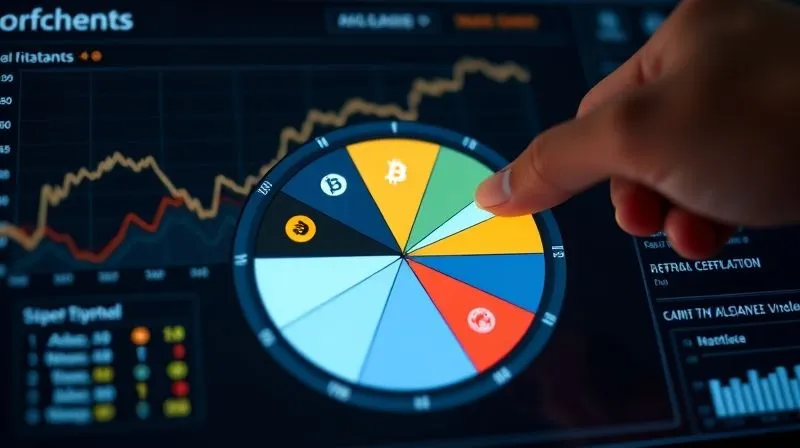
For example, if your target is 50% Bitcoin and 50% Ethereum, but a Bitcoin rally pushes it to 70% of your portfolio, you would sell some Bitcoin and buy Ethereum to restore the 50/50 balance. This systematic approach ensures you're consistently trimming winners and adding to laggards, a classic strategy for managing risk and optimizing long-term performance.
Several portfolio tracking tools and platforms can help you monitor your allocations and even automate rebalancing, simplifying the process. Consistent monitoring and disciplined rebalancing are critical components of how to mitigate Bitcoin portfolio risk during extreme volatility, ensuring your strategy remains aligned with your long-term goals.
Case Study: Navigating the 2021-2022 Bear Market with a Resilient Portfolio
Let's consider 'Alex', an investor who started with a $100,000 portfolio in early 2021. Instead of going all-in on Bitcoin, Alex diversified. His initial allocation was: 50% Bitcoin, 30% Ethereum, 10% Solana, 10% USDC (stablecoin). He also committed to a monthly DCA of $1,000 into Bitcoin and Ethereum.
When Bitcoin reached its all-time high in late 2021, Alex's portfolio had grown significantly, with Bitcoin now representing 65% of his holdings. Following his rebalancing plan, he sold enough Bitcoin to bring it back to 50%, moving the profits into USDC and slightly increasing his Ethereum and Solana positions, which had lagged. He also had a trailing stop-loss set for his Solana holdings.
During the subsequent bear market of 2022, Bitcoin and altcoins saw substantial corrections. Alex's portfolio, thanks to his USDC allocation and the profits he secured, experienced a smaller percentage drawdown compared to a Bitcoin-only portfolio. His monthly DCA continued, allowing him to accumulate more Bitcoin and Ethereum at significantly lower prices. When Solana hit his trailing stop-loss, a portion of it was sold, preserving capital that would have otherwise been lost in deeper declines.
By early 2023, as the market showed signs of recovery, Alex's portfolio was well-positioned. His average cost basis for Bitcoin and Ethereum was lower due to DCA, his USDC provided liquidity, and his rebalancing meant he wasn't overexposed to any single asset. He demonstrated that by consistently applying diversification, DCA, rebalancing, and strategic profit/loss management, it is entirely possible to mitigate Bitcoin portfolio risk during extreme volatility and emerge stronger on the other side.
| Strategy | Impact | Outcome in 2022 Bear Market |
|---|---|---|
| Diversification | Reduced single-asset risk, exposure to varied growth narratives. | Lower overall portfolio drawdown compared to Bitcoin-only. |
| Dollar-Cost Averaging (DCA) | Lowered average purchase price over time. | Accumulated more assets at discounted prices, improved position for recovery. |
| Rebalancing | Maintained target risk profile, automated profit-taking. | Secured gains from early 2021 rally, prevented overexposure to Bitcoin's subsequent fall. |
| Stop-Losses (Trailing) | Limited downside risk on specific assets. | Preserved capital from significant declines in altcoins like Solana. |
Frequently Asked Questions (FAQ)
Q: Is it possible to completely eliminate Bitcoin portfolio risk during extreme volatility? A: No, it's not possible to completely eliminate risk, especially in highly volatile assets like Bitcoin. The goal of risk mitigation is to manage, reduce, and prepare for potential losses, not to eradicate them entirely. By implementing the strategies discussed, you can significantly reduce your exposure to extreme downside and improve your long-term success rate, but some level of risk is inherent to investing in Bitcoin.
Q: Should I sell all my Bitcoin during a bear market to avoid further losses? A: Panicking and selling all your Bitcoin during a bear market is often a regrettable decision. While it might prevent immediate further losses, it also guarantees you miss out on any subsequent recovery. A more disciplined approach involves rebalancing into stablecoins, continuing DCA to lower your average cost, or utilizing hedging strategies, rather than a complete capitulation. Emotional discipline is key here.
Q: How much of my portfolio should be in Bitcoin versus altcoins and stablecoins? A: This depends entirely on your personal risk tolerance, investment horizon, and financial goals. A common approach for conservative crypto investors might be 60% Bitcoin, 20% Ethereum, 10% other altcoins, and 10% stablecoins. More aggressive investors might tilt towards higher altcoin exposure. The crucial part is to define your allocation and stick to a rebalancing schedule.
Q: Are these strategies only for experienced traders, or can beginners use them? A: Many of these strategies, such as diversification, Dollar-Cost Averaging, and basic security practices (cold storage), are highly recommended and accessible for beginners. More advanced techniques like derivatives hedging or complex stop-loss orders might require more experience and understanding. Start with the foundational strategies and gradually build your expertise.
Q: What are the biggest mistakes investors make during extreme Bitcoin volatility? A: The biggest mistakes I've observed are: 1) Panicking and selling at the bottom (capitulation), 2) Chasing pumps and buying at the top (FOMO), 3) Over-leveraging, 4) Not having a clear investment plan, and 5) Neglecting security. These emotional and undisciplined actions often lead to significant losses.
Key Takeaways and Final Thoughts
Navigating the turbulent waters of Bitcoin's extreme volatility can be daunting, but it is far from impossible. As an experienced industry specialist, I've seen that success in this space hinges not on avoiding volatility, but on intelligently managing it. By adopting a disciplined, strategic approach, you can transform market chaos into an opportunity for growth and portfolio fortification.
- Diversify Wisely: Look beyond Bitcoin to a mix of altcoins and stablecoins, and consider traditional assets for true non-correlation.
- Embrace Systematic Investing: Dollar-Cost Averaging (DCA) and Value Averaging remove emotion and average out your purchase price.
- Implement Hedging: Utilize stablecoins as a safe haven, and for advanced users, explore derivatives to offset risk.
- Define Your Exits: Set clear stop-losses to protect capital and strategic profit-taking targets to secure gains.
- Prioritize Security: Cold storage and robust security practices are your ultimate defense against total loss.
- Cultivate Emotional Discipline: Stick to your plan, avoid constant monitoring, and understand behavioral biases.
- Monitor and Rebalance: Regularly review your portfolio and rebalance to maintain your desired risk profile.
The journey through the digital currency landscape is a marathon, not a sprint. By diligently applying these strategies on how to mitigate Bitcoin portfolio risk during extreme volatility, you equip yourself not just to survive the market's wildest swings, but to thrive within them. Stay informed, stay disciplined, and most importantly, stay confident in your well-researched strategy. The future of finance is volatile, but with the right approach, it can be incredibly rewarding.
Recommended Reading
- 7 Steps: Prioritize Bills After Medical Event When Emergency Fund is Gone
- 7 Steps: Selecting Cyber Insurance Against Evolving Threats
- How to Manage Mortgage Debt During Job Loss: Your Urgent Guide to Stability
- 7 Critical Due Diligence Steps for Selecting Annuity Providers
- Mastering Fair Lending Audits: 5 Steps to Minimize Regulatory Scrutiny




Comments
Leave a comment below. Your email will not be published. Required fields marked with *