



How to Invest a Six-Figure Bonus for Tax-Efficient Retirement Growth?
For over two decades in personal finance, I've witnessed the exhilarating moment many clients experience: receiving a substantial, often life-changing, six-figure bonus. It's a testament to hard work and dedication, a tangible reward that offers immense potential. Yet, I've also seen the equally common pitfall: the initial euphoria giving way to paralysis, or worse, impulsive decisions that erode its long-term value.
The challenge isn't just having a large sum of money; it's understanding how to leverage it for lasting wealth, especially when it comes to retirement. Without a strategic approach, a significant portion can be lost to immediate taxes, lifestyle creep, or missed investment opportunities. The complexity of tax codes and the sheer volume of investment options can feel overwhelming, turning a blessing into a source of anxiety rather than financial empowerment.
This comprehensive guide is designed to cut through that complexity. I'll share the proven frameworks and expert insights I've developed over years, detailing exactly how to invest a six-figure bonus for tax-efficient retirement growth. You'll learn actionable strategies, from maximizing traditional vehicles to deploying advanced techniques, ensuring your bonus becomes a powerful engine for your financial future, not just a fleeting windfall.
Understanding Your Six-Figure Bonus: Beyond the Initial Excitement
When that bonus hits your account, it's easy to get swept up in the excitement. However, a crucial first step is to temper that initial reaction with a clear understanding of what you've actually received and what it means for your financial landscape. This isn't just 'extra money'; it's a significant financial event demanding careful consideration.
The Taxman's Cut: Withholding vs. Actual Liability
One of the most common misconceptions I encounter is confusing bonus withholding with the actual tax liability. Bonuses are often subject to a flat federal withholding rate (currently 22% for supplemental wages up to $1 million), plus state and local taxes. However, this is just an estimate. Your actual tax liability will depend on your total income for the year, your filing status, and deductions. This often means a significant portion of your bonus disappears before it even reaches your bank account, and sometimes, you might even owe more come tax season if your overall income pushes you into a higher bracket. Understanding this distinction is paramount to effective planning.
Immediate Needs vs. Long-Term Goals: A Crucial Distinction
Before you even think about investment vehicles, take a moment to assess your overall financial health. Do you have high-interest debt that could be paid down? Is your emergency fund robust enough to cover 3-6 months of living expenses? While the allure of immediate gratification or high-growth investments is strong, addressing these foundational elements first can prevent future financial stress and provide a more stable platform for growth.
"A six-figure bonus isn't just money; it's a strategic asset. Treat it as such from day one, understanding its true value after taxes and aligning it with your deepest financial aspirations, not just fleeting desires."
Step 1: The Foundation – Maxing Out Your Primary Retirement Vehicles
The bedrock of any successful retirement strategy, especially when dealing with a significant bonus, lies in maximizing your contributions to the most tax-advantaged accounts available. These are often the 'low-hanging fruit' that offer immediate tax benefits and long-term compounding.
401(k) / 403(b) Contributions: The Power of Pre-Tax Dollars
Your employer-sponsored retirement plan, whether a 401(k) or 403(b), is your first and most powerful tool. Contributions are typically made pre-tax, reducing your taxable income in the year you contribute. This is especially impactful with a large bonus, as it can help offset the higher income bracket your bonus might push you into. Many plans allow for lump-sum or increased contributions, making it ideal for bonus deployment.
- Maximize Your Employer Match: This is free money. Ensure you contribute at least enough to get the full employer match.
- Reach the IRS Annual Limit: For 2024, the contribution limit for employees is $23,000 ($30,500 if age 50 or over). Use your bonus to hit this maximum.
- Consider After-Tax Contributions (if applicable): If your plan allows for after-tax contributions beyond the pre-tax limit, this is a critical step towards a Mega Backdoor Roth (discussed later).
For the most up-to-date information on contribution limits, always refer to official sources like the IRS 401(k) Contribution Limits page.
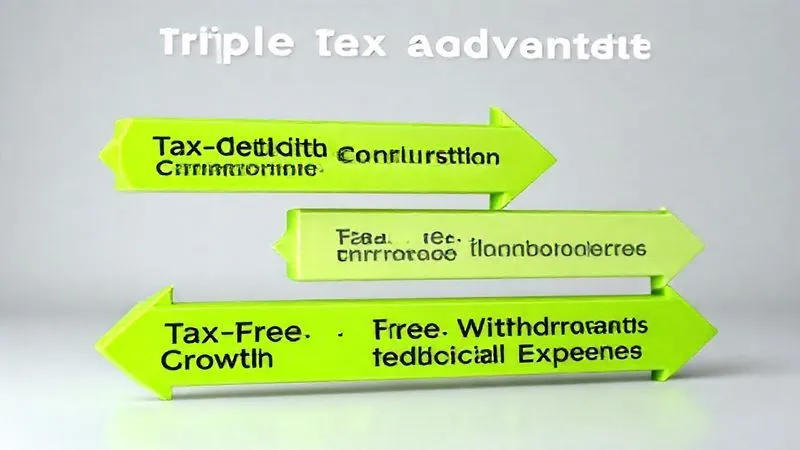
Health Savings Account (HSA): The Triple-Tax Advantage
If you're enrolled in a high-deductible health plan (HDHP), an HSA is arguably the most powerful retirement savings vehicle available. It offers a unique triple-tax advantage:
- Tax-Deductible Contributions: Contributions reduce your taxable income.
- Tax-Free Growth: Investments grow tax-free.
- Tax-Free Withdrawals: Withdrawals for qualified medical expenses are tax-free. After age 65, withdrawals for any purpose are taxed as ordinary income, similar to a traditional IRA, but still tax-free for medical expenses.
Many people use their HSA for current medical costs, but the true power lies in using it as an investment vehicle for future healthcare expenses in retirement. Use a portion of your bonus to max out your HSA contributions ($4,150 for individuals, $8,300 for families in 2024, plus catch-up contributions if 55+).
Individual Retirement Accounts (IRAs): Roth vs. Traditional
Beyond your employer plan, IRAs offer additional avenues for tax-advantaged savings. The choice between a Roth and Traditional IRA depends on your current income and expected future tax bracket.
- Traditional IRA: Contributions may be tax-deductible, reducing your current taxable income. Growth is tax-deferred, and withdrawals in retirement are taxed as ordinary income.
- Roth IRA: Contributions are made with after-tax dollars, but qualified withdrawals in retirement are entirely tax-free. This is ideal if you expect to be in a higher tax bracket in retirement.
Be mindful of income limitations for direct Roth IRA contributions. If your income exceeds these limits, you may need to consider a Backdoor Roth IRA strategy.
Step 2: Advanced Strategies for High-Income Earners
Once you've maximized the foundational accounts, high-income earners with a six-figure bonus have access to more sophisticated strategies to supercharge their tax-efficient retirement growth. These often involve leveraging specific plan features or navigating income phase-outs.
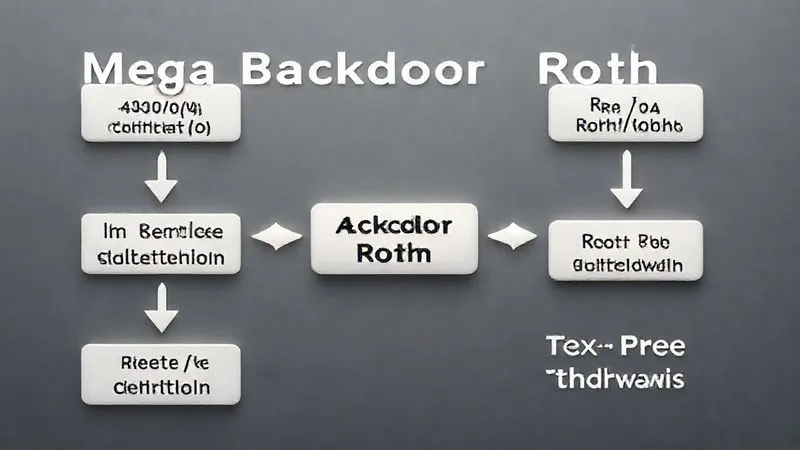
The Mega Backdoor Roth: Supercharging Your Roth Savings
This is a powerful, often underutilized strategy for those with high incomes and employer plans that allow after-tax 401(k) contributions and in-service distributions (or rollovers). It allows you to contribute significantly more to a Roth account than the standard Roth IRA limits.
- Confirm Plan Eligibility: Ensure your 401(k) plan allows after-tax contributions and in-service rollovers to a Roth IRA or Roth 401(k).
- Contribute After-Tax Dollars: Contribute after-tax money to your 401(k) up to the overall IRS defined contribution limit (e.g., $69,000 for 2024, including employee pre-tax, employer match, and after-tax contributions).
- Convert to Roth: Periodically (or annually), roll over these after-tax contributions into a Roth IRA or convert them to a Roth 401(k) within your plan. This conversion is tax-free because the original contributions were already taxed.
The result? A substantial amount of money growing tax-free and available tax-free in retirement, far beyond the typical Roth contribution limits. I've seen clients transform a significant portion of their bonus into future tax-free income using this method.
Backdoor Roth IRA: Navigating Income Limits
If your income exceeds the IRS limits for direct Roth IRA contributions, the Backdoor Roth IRA is your solution. It's a two-step process:
- Contribute to a Traditional IRA: Make a non-deductible contribution to a Traditional IRA.
- Convert to Roth: Immediately convert that Traditional IRA money to a Roth IRA.
Because the original contribution was non-deductible, there's no tax on the conversion (assuming you have no other pre-tax IRA money, which would trigger the pro-rata rule). This allows high-income earners to still benefit from the tax-free growth and withdrawals of a Roth IRA.
Utilizing a Non-Qualified Deferred Compensation (NQDC) Plan
Some executives and highly compensated employees have access to NQDC plans. These plans allow you to defer a portion of your salary or bonus until a later date, typically retirement. The key advantage is that you avoid paying income tax on the deferred amount until you receive it, potentially when you are in a lower tax bracket in retirement. However, NQDC plans are unsecured promises from your employer, meaning if the company goes bankrupt, your deferred compensation could be at risk. It requires careful evaluation of your employer's financial stability.
"Advanced tax strategies like the Mega Backdoor Roth and NQDC plans are not for the faint of heart, but for high-income earners, they represent some of the most powerful tools to build substantial, tax-efficient retirement wealth. Due diligence and professional guidance are paramount."
Step 3: Diversifying Beyond Traditional Retirement Accounts
While tax-advantaged accounts are foundational, a six-figure bonus often means you'll quickly max out these limits. The next step is to strategically invest in taxable accounts and explore other avenues, always with an eye on tax efficiency.
Taxable Brokerage Accounts: Strategic Asset Location
Once you've exhausted your tax-advantaged options, a standard taxable brokerage account becomes your primary investment vehicle. Here, the concept of asset location becomes crucial. This involves strategically placing different types of investments in different account types (taxable vs. tax-advantaged) to minimize your overall tax burden.
- Tax-Efficient Assets in Taxable Accounts: Place investments that are taxed favorably (e.g., broad market index funds, ETFs, municipal bonds) in your taxable brokerage account. These typically generate qualified dividends and long-term capital gains, which are taxed at lower rates than ordinary income.
- Tax-Inefficient Assets in Tax-Advantaged Accounts: Keep investments that generate significant ordinary income (e.g., actively managed funds with high turnover, REITs, bonds that generate ordinary income interest) within your 401(k) or IRA, where their growth is tax-deferred.
This strategy can significantly reduce the drag of taxes on your portfolio's growth over the long term, especially with a large investment sum from a bonus.
| Asset Type | Tax Efficiency in Taxable Account | Recommendation |
|---|---|---|
| Broad Market Index Funds/ETFs | High (Qualified Dividends, Long-Term Capital Gains) | Excellent for taxable accounts |
| Municipal Bonds | Very High (Federally Tax-Exempt, sometimes state/local) | Ideal for high-income earners in taxable accounts |
| Actively Managed Funds (High Turnover) | Low (Frequent Short-Term Capital Gains) | Better suited for tax-advantaged accounts |
| REITs | Low (Non-qualified dividends, ordinary income) | Better suited for tax-advantaged accounts |
| High-Yield Corporate Bonds | Low (Ordinary Income Interest) | Better suited for tax-advantaged accounts |
Real Estate Investments: Long-Term Growth and Income
For some, using a portion of a six-figure bonus to invest in real estate can be an excellent way to diversify and generate long-term wealth. This could involve purchasing a rental property, investing in a Real Estate Investment Trust (REIT) within a taxable account, or even participating in real estate crowdfunding platforms. Real estate offers potential for appreciation, rental income, and certain tax deductions (like depreciation), which can offset other income.
Private Equity and Alternative Investments (with caution)
For accredited investors, a large bonus opens the door to private equity, hedge funds, or other alternative investments. These can offer diversification and potentially higher returns, but they come with increased risk, illiquidity, and often higher fees. They are typically suitable only for a small portion of a highly diversified portfolio and require extensive due diligence. As Investopedia notes, understanding alternative investments is crucial due to their unique characteristics.
Step 4: Tax Optimization and Minimization Strategies
Beyond choosing the right accounts, specific strategies can further reduce your tax burden, both in the present and in retirement. These are often ongoing tactics that you can employ year after year.
Tax-Loss Harvesting: Turning Losses into Future Gains
In a taxable brokerage account, if some of your investments have declined in value, you can sell them to realize a capital loss. This loss can then be used to offset capital gains and up to $3,000 of ordinary income each year. Any remaining losses can be carried forward indefinitely. This strategy, known as tax-loss harvesting, can effectively reduce your current tax bill and free up capital to reinvest in other promising assets.
Qualified Charitable Distributions (QCDs): Giving Wisely
If you are 70½ or older and have a Traditional IRA, you can make a Qualified Charitable Distribution (QCD) directly from your IRA to a qualified charity. This distribution counts towards your Required Minimum Distribution (RMD) but is not included in your taxable income. For those with significant IRA balances, this can be a highly tax-efficient way to give to charity, especially if you don't itemize deductions.
Understanding Capital Gains Tax Brackets
The tax rate on long-term capital gains (assets held for more than a year) is often lower than ordinary income tax rates. For many middle-income earners, the long-term capital gains rate can even be 0%. This makes holding investments for the long term incredibly tax-efficient. When planning withdrawals in retirement, strategically managing your income to stay within lower capital gains tax brackets can save you a significant amount.

Case Study: Sarah's Six-Figure Bonus Journey
From Windfall to Wealth: A Practical Application
Let me share a fictional, yet highly realistic, scenario from my experience. Sarah, a 42-year-old marketing executive, received a $150,000 bonus. Her initial thought was to use it for a down payment on a new luxury car. After a consultation, we developed a more strategic plan:
- Emergency Fund Boost: First, we allocated $10,000 to fully fund her emergency savings, providing a crucial safety net.
- Maxed Out 401(k) & HSA: She directed $23,000 to her 401(k) (reaching the annual limit) and $4,150 to her HSA, significantly reducing her current taxable income.
- Mega Backdoor Roth: Her company's 401(k) allowed after-tax contributions. We contributed an additional $38,000 after-tax to her 401(k) and immediately converted it to her Roth IRA via a Mega Backdoor Roth. This created a substantial pool of tax-free retirement growth.
- Taxable Brokerage Account: The remaining $74,850 was invested in a diversified portfolio of low-cost index funds within a taxable brokerage account, strategically using asset location principles.
- Tax Planning: We also implemented a plan for potential tax-loss harvesting in future years if market conditions allowed.
By taking these steps, Sarah not only avoided a significant tax hit in the current year but also built a multi-faceted retirement portfolio designed for long-term, tax-efficient growth. Her bonus transformed from a temporary splurge opportunity into a powerful engine for her financial independence.
"Sarah's story isn't just about numbers; it's about the peace of mind that comes from knowing you've made intelligent choices with your hard-earned money, setting the stage for a truly secure retirement."
For more general retirement planning insights, resources like the Forbes Retirement Planning Guide can be incredibly helpful.
Common Pitfalls to Avoid When Investing a Large Bonus
Even with the best intentions, certain traps can derail your efforts to invest a six-figure bonus wisely. Being aware of these common mistakes is as important as knowing the right strategies.
Lifestyle Creep: The Silent Wealth Killer
The sudden influx of a large bonus can often lead to an unconscious increase in spending. This 'lifestyle creep' can erode the long-term impact of your bonus. A new car, a lavish vacation, or more expensive dining can quickly consume a significant portion of your windfall without contributing to your financial future. My advice is always to 'pay yourself first' by investing the bonus strategically before considering discretionary spending.
Emotional Investing: Staying Rational
Market fluctuations are inevitable. When investing a large sum, it's easy to panic during downturns or get overly exuberant during booms. Emotional decisions, such as selling low or chasing 'hot' stocks, almost always lead to suboptimal results. Stick to your predetermined investment plan, maintain diversification, and remember that long-term growth is achieved through discipline, not reaction.
Ignoring Professional Advice: The Cost of DIY
While this article provides a robust framework, the nuances of your personal financial situation, tax bracket, and long-term goals are unique. Attempting to navigate complex tax laws, investment strategies, and estate planning without professional guidance can be a costly mistake. As the Harvard Business Review points out, the value of a financial advisor often far outweighs their fees, especially with significant sums of money.
The Importance of a Personalized Financial Plan
Ultimately, while the strategies discussed here are broadly applicable, the most effective approach to investing your six-figure bonus for tax-efficient retirement growth will be one tailored specifically to you. Your age, risk tolerance, existing assets, family situation, and retirement timeline all play a critical role.
Why a Cookie-Cutter Approach Won't Work
No two financial lives are identical. A strategy perfect for a 30-year-old with no debt will differ significantly from one for a 55-year-old nearing retirement with college-bound children. Relying on generic advice can lead to missed opportunities or, worse, strategies that are ill-suited to your specific needs and goals.
Working with a Fiduciary Financial Advisor
This is where a qualified, fiduciary financial advisor becomes invaluable. A fiduciary is legally bound to act in your best interest, providing unbiased advice. They can help you:
- Analyze your current financial situation comprehensively.
- Develop a personalized investment plan that integrates your bonus into your broader retirement goals.
- Navigate complex tax implications and identify optimal strategies for your specific income level.
- Ensure your investments align with your risk tolerance and time horizon.
- Provide ongoing guidance and adjustments as your life circumstances or market conditions change.
| Criteria | Description |
|---|---|
| Fiduciary Duty | Advisor is legally obligated to act in your best interest. |
| Certifications (CFP®, CFA®) | Indicates a high level of expertise and ethical standards. |
| Fee Structure | Understand if they are fee-only (best), fee-based, or commission-based. |
| Experience with High-Net-Worth Clients | Ensures they understand complex financial situations. |
| Client Testimonials/References | Provides insight into their service quality and client satisfaction. |

Frequently Asked Questions (FAQ)
How much of my bonus should I invest vs. spend? While there's no single magic number, a common guideline I advocate is the 80/20 rule: aim to invest at least 80% for your long-term goals (retirement, debt reduction, etc.) and allow yourself to spend up to 20% on something enjoyable. This balances discipline with a well-deserved reward, preventing lifestyle creep while still making significant progress.
What's the biggest mistake people make with a large bonus? The biggest mistake is a lack of a clear plan, leading to impulsive decisions. This often manifests as either spending it all on depreciating assets (like cars or luxury items) or letting it sit in a low-interest savings account, losing out on valuable tax advantages and compounding growth. Planning before the bonus arrives is key.
Can I contribute my entire bonus to my 401(k)? You can direct your entire bonus to your 401(k) if your plan allows, but you are still limited by the annual IRS contribution limits for employee contributions (e.g., $23,000 for 2024, plus catch-up if applicable). If your plan allows after-tax contributions, you can contribute more towards the overall limit (e.g., $69,000 for 2024) and potentially use the Mega Backdoor Roth strategy.
Should I pay off debt before investing my bonus? Generally, yes, especially high-interest debt like credit card balances or personal loans. The guaranteed 'return' of eliminating high-interest debt often outweighs the potential, but uncertain, returns from investing. Once high-interest debt is gone, you have more financial flexibility and less risk. For low-interest debt like a mortgage, it becomes a more nuanced decision that depends on your interest rate and investment opportunities.
When should I start planning for my bonus investment? Ideally, you should start planning as soon as you know a bonus is coming, or even proactively as part of your annual financial review. This allows you to research options, consult with a financial advisor, and make informed decisions without the pressure of an impending deposit. Proactive planning ensures you're ready to deploy your bonus strategically the moment it arrives.
Key Takeaways and Final Thoughts
Receiving a six-figure bonus is a significant financial milestone, but its true power lies in how you choose to invest it. As an experienced industry specialist, I've seen firsthand that the difference between a fleeting windfall and a foundational pillar of retirement wealth comes down to intentional, tax-efficient planning. Don't let the excitement or complexity deter you from making the most of this opportunity.
- Prioritize Tax-Advantaged Accounts: Max out your 401(k)/403(b), HSA, and IRAs first to leverage immediate tax benefits and long-term tax-free growth.
- Explore Advanced Strategies: For high-income earners, the Mega Backdoor Roth and Backdoor Roth IRA are game-changers for supercharging Roth savings.
- Diversify Wisely: Beyond traditional accounts, use taxable brokerage accounts with strategic asset location, and consider real estate for further diversification.
- Optimize for Taxes: Employ strategies like tax-loss harvesting and understand capital gains brackets to minimize your tax burden over time.
- Seek Professional Guidance: A fiduciary financial advisor can provide personalized, unbiased advice to navigate your unique situation and maximize your bonus's impact.
Your six-figure bonus is more than just money; it's an accelerator for your retirement dreams. By approaching it with a clear strategy, a focus on tax efficiency, and the discipline to prioritize long-term growth, you can transform this one-time event into a powerful catalyst for enduring financial security. Take action today, and build the retirement you truly deserve.
Recommended Reading
- Unlock Lasting Wealth: Your 7-Step Strategy for Earned Income Conversion
- What Are the Implications of Missing W-9s for 1099 Reporting?
- 5 Steps: Navigate Unexpected Large Bills & Protect Your Budget
- 6 Steps: Re-evaluate Client Financial Plans After Major Income Loss
- 7 Smart Ways: Budgeting for Professional Growth on Student Income





Comments
Leave a comment below. Your email will not be published. Required fields marked with *