



How to Hedge Against Geopolitical Risk Impacting Cross-Border Investments?
For over two decades in international finance, I've witnessed firsthand how even the most meticulously planned cross-border investments can be derailed by unforeseen geopolitical tremors. From sudden trade disputes to unexpected regulatory shifts and outright conflicts, these events aren't just headlines; they're seismic shocks that can erode value and shatter investor confidence.
The landscape of global finance is inherently interconnected, yet increasingly fragmented by political agendas and national interests. This paradox creates a volatile environment where traditional risk management often falls short. Investors, both institutional and individual, frequently find themselves exposed to risks they hadn't adequately factored into their models, leading to significant financial setbacks and lost opportunities.
This article isn't just about identifying problems; it's about equipping you with actionable, expert-level strategies to navigate this complex terrain. I will share frameworks, real-world analogies, and practical steps I've seen successfully employed to build resilience, protect capital, and even identify opportunities amidst geopolitical uncertainty. Prepare to transform your approach to cross-border investment risk.
Understanding the Shifting Sands of Geopolitical Risk
Before we can hedge, we must understand what we're hedging against. Geopolitical risk is not a monolithic entity; it's a dynamic, multifaceted threat stemming from political decisions, international relations, and societal stability that can directly or indirectly impact economic activity and financial markets.
In my experience, these risks manifest in various forms: political instability (e.g., coups, civil unrest, regime changes), economic sanctions, trade wars and protectionism, regulatory shifts, nationalizations, and even cyber warfare. The interconnectedness of today's global economy means a localized event can quickly ripple across continents, affecting supply chains, consumer demand, and investor sentiment far beyond its origin.
Expert Insight: “Ignoring geopolitical risk is no longer an option; it's a strategic oversight that can dismantle even the most robust investment thesis. Proactive analysis is the only defense.”
The challenge lies in their unpredictability and the speed at which they can escalate. A stable nation today might face significant internal strife tomorrow, or a minor trade dispute could morph into a full-blown economic war. This demands a flexible, adaptive, and deeply informed approach to risk management.

The Imperative of Robust Risk Assessment Frameworks
Effective hedging begins with superior intelligence and a structured approach to risk assessment. You can't mitigate what you don't understand or anticipate. I've always advocated for moving beyond simple country ratings to a granular, qualitative, and quantitative analysis of potential geopolitical flashpoints.
Developing a Geopolitical Risk Matrix
A crucial first step is to develop a customized geopolitical risk matrix. This involves identifying potential risks, assessing their likelihood, and quantifying their potential impact on your specific investments. This isn't a one-time exercise; it's an ongoing process that requires constant monitoring of global events.
For instance, consider a company investing in a market with high political uncertainty. The matrix would help them assess the probability of capital controls being imposed versus the likelihood of expropriation, and then estimate the potential financial loss for each scenario. This allows for prioritization and targeted hedging.
| Geopolitical Risk Factor | Likelihood (1-5) | Impact (1-5) | Mitigation Strategy |
|---|---|---|---|
| Political Instability (e.g., elections, protests) | 4 | 3 | Local partnerships, PRI, currency hedging |
| Trade Policy Changes (e.g., tariffs, quotas) | 3 | 4 | Supply chain diversification, local production, trade finance |
| Regulatory Shifts (e.g., environmental, labor laws) | 3 | 3 | Legal counsel, lobbying, flexible operational models |
| Currency Controls/Devaluation | 2 | 5 | FX hedging, local debt financing, repatriating profits |
Key Indicators to Monitor:
- Political Stability Index: Track government effectiveness, rule of law, and corruption levels.
- Economic Indicators: Monitor inflation, unemployment, debt-to-GDP ratios, and foreign reserves.
- Social Cohesion: Look at income inequality, ethnic tensions, and public sentiment.
- International Relations: Observe diplomatic ties, alliances, and regional conflicts.
- Cybersecurity Posture: Assess a nation's vulnerability to state-sponsored cyberattacks.
Diversification: The Cornerstone of Geopolitical Risk Mitigation
The oldest trick in the book, yet often underestimated in its power against geopolitical risk, is robust diversification. I'm not just talking about asset class diversification, which is table stakes. I'm referring to a multi-layered approach that includes geographical, currency, and sector diversification.
Geographic Diversification Beyond the Obvious
Many investors diversify by region, but often within politically correlated blocs. True geopolitical diversification means spreading your investments across countries with genuinely independent political and economic cycles. This might mean looking beyond the traditional developed markets to carefully selected emerging or frontier markets that offer uncorrelated risk profiles.
As a seasoned investor once told me, "Don't put all your eggs in baskets that are carried by the same political wind." This means avoiding overconcentration in regions prone to similar geopolitical shocks, even if they appear diverse on a map. For instance, an investment across several European nations might still be vulnerable to a continent-wide energy crisis or a significant EU policy shift.
Read more on strategic diversification from Harvard Business Review.
Expert Insight: “Smart diversification isn't just about spreading assets; it's about spreading geopolitical exposure across truly independent risk vectors.”
Similarly, diversifying your supply chains across multiple countries can mitigate the impact of trade wars or localized disruptions. If one country imposes tariffs, you have alternative sources. If a natural disaster strikes one region, your production isn't entirely halted.
Currency Hedging Strategies in Volatile Environments
Cross-border investments inherently carry currency risk, which can be exacerbated by geopolitical events. Political instability, sanctions, or capital flight can lead to sharp currency devaluations, significantly eroding investment returns even if the underlying asset performs well in local terms. This is where strategic currency hedging becomes vital.
Implementing Dynamic Currency Overlays
Static hedging strategies often fall short in geopolitically charged environments. I advocate for dynamic currency overlays, which involve actively managing currency exposures based on a continuous assessment of macroeconomic fundamentals, political developments, and market sentiment. This might involve using a combination of instruments:
- Forward Contracts: Lock in an exchange rate for a future transaction, providing certainty but lacking flexibility.
- Currency Futures: Standardized contracts traded on exchanges, offering liquidity and transparency.
- Currency Options: Provide the right, but not the obligation, to buy or sell a currency at a specified rate, offering protection against adverse movements while retaining upside potential.
- Non-Deliverable Forwards (NDFs): Useful in markets with capital controls, where the underlying currency cannot be freely exchanged.

The choice of instrument and the degree of hedging (e.g., partial vs. full) depend on your risk tolerance, investment horizon, and the specific geopolitical risks identified. Remember, hedging incurs costs, so it must be a calculated decision, not a blanket approach.
Political Risk Insurance and Guarantees: A Safety Net
For investments in higher-risk jurisdictions, especially emerging markets, political risk insurance (PRI) and various guarantees offer a crucial layer of protection. I've seen these instruments literally save projects from complete collapse when geopolitical events turned sour.
Case Study: Mitigating Project Risk in Emerging Markets
Consider 'Global Energy Ventures,' a fictional company that invested $200 million in a renewable energy project in a developing nation. Despite initial stability, a sudden change in government led to a threat of contract repudiation and, eventually, expropriation without fair compensation. Fortunately, Global Energy Ventures had secured a comprehensive political risk insurance policy from the Multilateral Investment Guarantee Agency (MIGA), a member of the World Bank Group.
When the government attempted to seize their assets, MIGA stepped in. After extensive negotiations and arbitration, MIGA paid Global Energy Ventures a significant portion of their lost investment, covering their equity and some debt, thus preventing a total loss. This demonstrates the critical role PRI plays in safeguarding investments where legal recourse might be weak or protracted.
Common risks covered by PRI include:
- Expropriation: Government seizure of assets without adequate compensation.
- Currency Inconvertibility and Transfer Restriction: Inability to convert local currency into hard currency or transfer funds out of the country.
- Political Violence: Damage or loss due to war, revolution, insurrection, terrorism, or civil strife.
- Breach of Contract: Government's failure to honor contractual obligations.
- Non-Honoring of Sovereign Guarantees: A government entity failing to uphold its financial guarantees.
Beyond MIGA, private insurers like AIG, Chubb, and Lloyd's of London also offer bespoke political risk policies. Additionally, government agencies like the U.S. International Development Finance Corporation (DFC, formerly OPIC) provide political risk insurance and financing for American investors abroad.
Strategic Asset Allocation and Sector-Specific Plays
Beyond geographical diversification, a critical aspect of hedging against geopolitical risk involves thoughtful asset allocation and identifying sectors that tend to be more resilient or even benefit from geopolitical shifts. This requires a deep understanding of how different asset classes and industries react to various geopolitical scenarios.
Identifying Resilient Asset Classes
In times of heightened geopolitical tension, certain asset classes historically perform better as investors seek safety. These often include:
- Gold and Precious Metals: Long considered a safe-haven asset, gold tends to rise during periods of political and economic uncertainty.
- Real Assets: Infrastructure, real estate (in stable jurisdictions), and land can offer inflation protection and tangible value when traditional financial assets are volatile.
- Certain Commodities: Depending on the nature of the geopolitical risk, energy commodities (oil, natural gas) or agricultural commodities might see price spikes.
- Defensive Equities: Companies in non-cyclical sectors like utilities, consumer staples, healthcare, and certain technology segments (cybersecurity, cloud services) often demonstrate greater stability.
- Short-Duration Government Bonds: In major, stable economies, these can offer a flight to safety, though yields may be low.
Conversely, highly cyclical sectors, luxury goods, and companies heavily reliant on complex global supply chains or specific geopolitical regions can be particularly vulnerable. For example, a global trade war disproportionately harms companies with extensive international manufacturing and sales footprints.
| Geopolitical Event Type | Resilient Assets/Sectors | Vulnerable Assets/Sectors |
|---|---|---|
| Trade War/Tariffs | Domestic-focused industrials, automation tech, agriculture (for net exporters) | Global manufacturers, luxury goods, complex supply chains |
| Regional Conflict/Instability | Gold, defense contractors, cybersecurity, energy (if not directly impacted) | Tourism, local infrastructure, financial services in affected region |
| Sanctions/Capital Controls | Essential consumer goods, local services, certain commodities | Foreign-owned enterprises, financial institutions, export-oriented industries |
| Cyber Warfare | Cybersecurity firms, cloud infrastructure, AI for defense | Critical infrastructure, financial services, data-intensive industries |
For more insights on navigating market volatility, consider resources like Bloomberg Markets.
Derivatives and Structured Products for Tail Risk Protection
While diversification and insurance address a broad spectrum of risks, some extreme, low-probability, high-impact events – often referred to as 'tail risks' – require more specialized hedging. This is where derivatives and structured products can play a crucial role, provided they are understood and used judiciously.
Crafting Bespoke Hedging Solutions
I've seen sophisticated investors use bespoke derivatives to protect against very specific geopolitical outcomes. For example:
- Equity Index Options: Buying put options on market indices of countries highly susceptible to geopolitical shocks can provide downside protection.
- Credit Default Swaps (CDS): While more complex, CDS can be used to hedge against sovereign default risk or the credit risk of specific companies heavily exposed to a volatile region.
- Volatility Futures/Options: Products like VIX futures or options can be used to hedge against a general increase in market volatility that often accompanies geopolitical crises.
- Structured Notes: These can be designed with specific payoffs linked to geopolitical events, offering customized protection or enhanced returns based on certain outcomes.

Expert Insight: “Derivatives are powerful tools, but they are double-edged swords. Their effectiveness in hedging tail risk is directly proportional to the investor's understanding of their intricate mechanics and risks.”
These instruments require significant expertise and careful calibration. They are not for the faint of heart or the inexperienced. However, for large institutional investors and sophisticated family offices, they can be an indispensable part of a comprehensive geopolitical risk hedging strategy.
Scenario Planning and Stress Testing: Preparing for the Unthinkable
In my career, I've learned that hoping for the best is not a strategy; preparing for the worst often is. This philosophy underpins the importance of rigorous scenario planning and stress testing for cross-border investments exposed to geopolitical risks. This isn't just about financial modeling; it's about strategic foresight.
Developing Geopolitical War Games
I encourage clients to engage in 'geopolitical war games' – hypothetical exercises where teams simulate various geopolitical crises and their potential impact on their portfolio. This involves:
- Identify Key Geopolitical Drivers: What are the most significant political, economic, or social pressures that could disrupt your investments? (e.g., US-China tensions, regional conflicts, commodity price shocks).
- Define Plausible Scenarios: Create 3-5 distinct, yet plausible, scenarios for each key driver. These should range from 'mild disruption' to 'severe crisis.'
- Quantify Impact: For each scenario, model the financial impact on your specific investments – revenue loss, asset devaluation, supply chain disruption, increased costs.
- Develop Response Strategies: For each scenario, outline concrete actions to mitigate the impact. This could involve pre-identified hedging strategies, operational adjustments, or divestment plans.
- Regular Review and Update: Geopolitical landscapes change rapidly. These scenarios and responses must be reviewed and updated regularly.
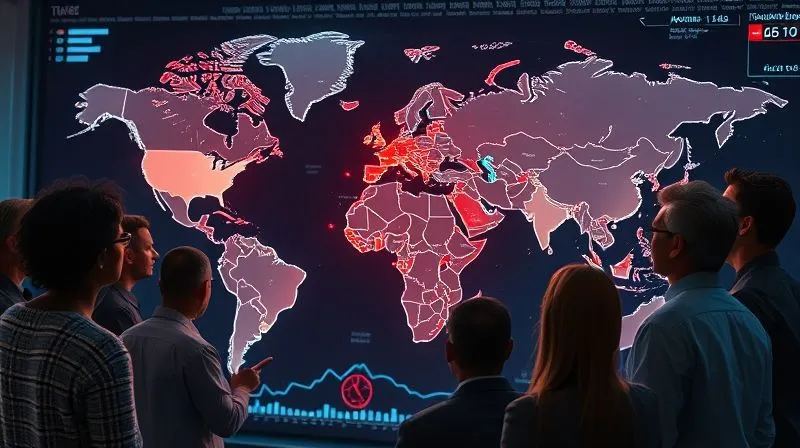
Stress testing takes this a step further by applying extreme, 'black swan' events to your portfolio to see how it would perform. What if a major global power imposed a complete trade embargo? What if a key emerging market nationalized all foreign assets? Understanding the breaking points of your portfolio is crucial for building true resilience.
For further reading on strategic foresight, consult publications from institutions like RAND Corporation or the World Economic Forum.
The Role of ESG in Geopolitical Resilience
In recent years, I've observed a growing, often underestimated, connection between Environmental, Social, and Governance (ESG) factors and a company's resilience to geopolitical risk. ESG is no longer just about ethical investing; it's a powerful lens through which to assess long-term stability and reduce exposure to geopolitical shocks.
ESG as a Proactive Risk Management Tool
Companies with strong ESG credentials tend to be more resilient because:
- Good Governance (G): Robust governance structures, transparency, and ethical leadership often translate into better risk management practices, including anticipating and responding to political and regulatory changes. They are less likely to be embroiled in corruption scandals or face punitive government actions.
- Social Responsibility (S): Companies that treat their employees well, engage positively with local communities, and respect human rights tend to foster goodwill and reduce the likelihood of social unrest or protests impacting their operations. They build a 'social license to operate' that can be invaluable during periods of instability.
- Environmental Stewardship (E): Companies with strong environmental practices are less likely to face regulatory fines, public backlash over pollution, or disruptions from climate-related events, all of which can be amplified in politically sensitive regions.
Expert Insight: “ESG isn't just a moral imperative; it's a strategic shield. Companies with strong ESG foundations often possess an inherent resilience that helps them weather geopolitical storms better than their less responsible peers.”
Investing in companies with high ESG scores, particularly those operating in geopolitically sensitive regions, can therefore be a proactive way to mitigate exposure to certain types of political and social risks. It signals a long-term, responsible approach that often aligns with stable governance and reduced operational friction.
Frequently Asked Questions (FAQ)
Question? Is it possible to completely eliminate geopolitical risk from cross-border investments?
Answer: No, it's impossible to completely eliminate geopolitical risk. By its very nature, it's external and often unpredictable. The goal is not elimination but rather robust mitigation and hedging. Through diversification, insurance, strategic asset allocation, and advanced financial instruments, investors can significantly reduce their exposure and manage the impact, but some residual risk will always remain. It's about building resilience, not invincibility.
Question? How do I differentiate between short-term geopolitical noise and long-term structural shifts that require significant portfolio adjustments?
Answer: Differentiating requires a deep understanding of history, political science, and economics. Short-term 'noise' often relates to immediate political rhetoric, minor diplomatic spats, or temporary trade disagreements. Long-term structural shifts, however, involve fundamental changes in power dynamics, economic systems, or societal values (e.g., the rise of new economic blocs, persistent deglobalization trends, or irreversible demographic changes). I look for sustained policy changes, shifts in international alliances, and broad consensus among geopolitical analysts to identify structural shifts. Stress testing with different time horizons can also help.
Question? What role does local intelligence play in hedging geopolitical risk, and how can I access it?
Answer: Local intelligence is paramount. Official reports often lag or present a sanitized view. You need 'boots on the ground' insights. This can be accessed through local partners, consultants specializing in political risk, reputable local news sources (with critical analysis), and even engaging with local academic institutions or think tanks. Building a network of trusted local contacts who understand the nuances of the domestic political and social landscape is invaluable for early warning signs and informed decision-making.
Question? Are there specific sectors that are inherently more resilient or vulnerable to geopolitical risks?
Answer: Yes. Generally, sectors providing essential goods and services (utilities, basic consumer staples, healthcare) tend to be more resilient as demand is less elastic. Defense, cybersecurity, and certain technology sectors might even benefit from increased geopolitical tensions. Conversely, sectors heavily reliant on global supply chains (e.g., complex manufacturing), international trade (e.g., shipping, luxury goods), or specific political stability (e.g., tourism, large infrastructure projects in volatile regions) are often more vulnerable. Financial services can also be highly exposed to capital controls or sanctions.
Question? How frequently should I review and adjust my geopolitical risk hedging strategies?
Answer: The frequency depends on the volatility of the global landscape and the specific regions your investments are exposed to. In today's dynamic environment, a quarterly review is a minimum, but active monitoring should be continuous. For investments in highly volatile regions, daily or weekly monitoring of key indicators and news is advisable. Any significant geopolitical event or policy shift should trigger an immediate re-evaluation of your hedging strategy. Flexibility and responsiveness are key.
Key Takeaways and Final Thoughts
- Proactive Assessment is Paramount: Move beyond basic country ratings. Develop granular risk matrices and continuously monitor key political, economic, and social indicators.
- Diversify Intelligently: Go beyond asset classes. Diversify geographically across truly uncorrelated political and economic cycles, and diversify your supply chains.
- Hedge Currencies Dynamically: Utilize forward contracts, futures, and options, adapting your strategy to evolving geopolitical realities and market sentiment.
- Leverage Political Risk Insurance: For higher-risk environments, consider PRI and sovereign guarantees as a critical safety net against extreme events like expropriation or political violence.
- Strategic Asset Allocation: Favor resilient asset classes like gold, real assets, and defensive equities during heightened tensions, and understand sector-specific vulnerabilities.
- Tail Risk Protection: Employ sophisticated derivatives and structured products for hedging against low-probability, high-impact 'black swan' geopolitical events, but only with deep expertise.
- Scenario Planning & Stress Testing: Regularly conduct 'geopolitical war games' to anticipate potential crises, quantify impacts, and pre-plan response strategies.
- Embrace ESG: Recognize that strong Environmental, Social, and Governance practices foster resilience and can mitigate various forms of geopolitical risk.
Navigating the complex waters of cross-border investments in a geopolitically volatile world is undoubtedly challenging. However, by adopting a proactive, multi-faceted, and continuously adaptive approach to hedging, you can not only protect your investments but also position your portfolio to withstand, and even capitalize on, the inevitable shifts in the global economic and political landscape. The future belongs to those who are prepared.
Recommended Reading
- Fund Growth Without Dilution: 7 Bootstrapped Equity Strategies
- 7 Pillars: Fortifying Your Open Banking API Integrations Against Threats
- Fast Credit Fix: How To Remove Late Payments Hurting Your Score
- 7 Smart Ways to Slash Hidden Business Checking Fees Today
- Refinance Mortgage with Bad Credit? The Surprising Truth Revealed!





Comments
Leave a comment below. Your email will not be published. Required fields marked with *