



How to Engage Next-Gen in Family Philanthropic Giving Decisions?
For over two decades in wealth management, I've observed a common, yet critical, challenge facing affluent families: the struggle to truly engage the next generation in their philanthropic endeavors. It's not just about transferring wealth; it's about igniting a passion for purpose, ensuring a family's values endure, and cultivating a lasting legacy that transcends mere financial contributions.
The pain point is palpable: families often find their younger members disengaged, viewing philanthropy as an obligation rather than an opportunity, or feeling their voices aren't genuinely heard. This disconnect can lead to fractured family unity, a dilution of philanthropic intent, and ultimately, a less impactful legacy than initially envisioned.
This article will provide you with a comprehensive, actionable framework and expert insights to bridge this generational gap. We'll explore proven strategies, real-world examples, and practical tools to foster meaningful engagement, empower the next generation, and cultivate a vibrant, intergenerational philanthropic legacy that truly makes a difference.
Understanding the Next-Gen Philanthropic Mindset
Before we can effectively engage the next generation, we must first understand their unique perspectives and motivations. The philanthropic landscape has shifted dramatically, shaped by digital natives who prioritize transparency, measurable impact, and social justice.
Gen Z and Millennials: Values and Motivations
Younger generations, particularly Gen Z and Millennials, approach giving with a distinct set of values. They are highly attuned to environmental, social, and governance (ESG) factors, often preferring impact investing over traditional grantmaking where possible. Transparency is paramount; they want to know exactly where their money goes and what tangible difference it makes. According to a Bank of America study on philanthropic trends, younger generations are more likely to volunteer, donate smaller amounts more frequently, and engage with causes through social media. They seek authenticity and are often driven by a desire to address systemic issues, not just symptoms.
The most successful intergenerational philanthropic strategies acknowledge that 'how' the next generation wants to give is just as important as 'what' they want to give to. Their desire for agency and measurable impact is not a challenge, but an opportunity to innovate.
They are also digital natives, comfortable with online research, crowdfunding platforms, and leveraging social media for advocacy. This means traditional family foundation structures might need adaptation to resonate with their tech-savvy, purpose-driven approach. Ignoring these fundamental differences risks alienating them rather than drawing them in.
Establishing a Shared Vision and Purpose
The cornerstone of successful intergenerational philanthropy is a clear, compelling, and *shared* vision. Without a common understanding of 'why' the family gives, engagement can feel arbitrary or forced. This requires intentional dialogue and collaborative effort.
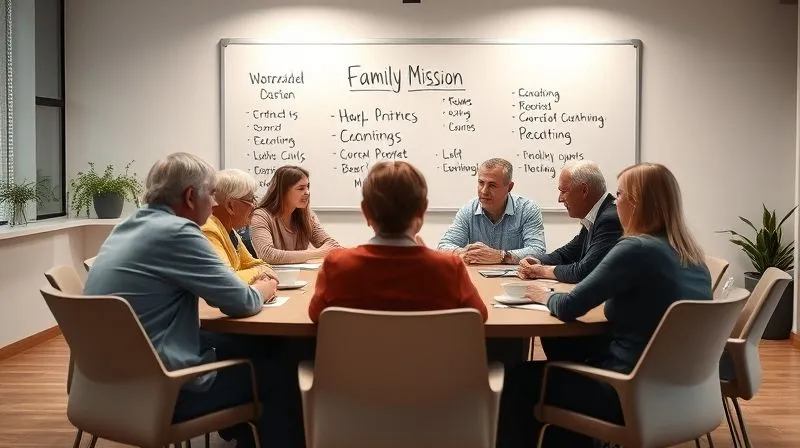
Family Philanthropy Mission Statement Workshop
I advocate for a dedicated family workshop to collaboratively develop or refine your philanthropic mission statement. This isn't just a document; it's a living guide that articulates your collective values, priorities, and long-term goals. Involve all generations, ensuring every voice is heard and valued.
- Pre-Workshop Survey: Distribute a survey asking family members about causes they care about, what social issues they feel are most pressing, and what they hope to achieve through philanthropy.
- Facilitated Discussion: Hire an independent facilitator or empower a family member to lead a structured discussion. Focus on identifying common themes, shared passions, and areas of potential impact.
- Drafting the Statement: Work together to draft a mission statement that reflects the collective aspirations. It should be concise, inspiring, and adaptable.
- Defining Core Values: Alongside the mission, identify 3-5 core values that will guide your giving decisions (e.g., social justice, environmental stewardship, education, innovation).
- Regular Review: Schedule annual or biennial reviews of the mission statement to ensure it remains relevant and reflective of evolving family interests and global needs.
Early Engagement: From Education to Participation
Engagement isn't a switch you flip when someone turns 18; it's a gradual process that begins in childhood. Laying the groundwork early fosters a natural affinity for giving and a deeper understanding of its impact.
Age-Appropriate Philanthropic Education
Start small. For younger children, this might involve discussing charitable giving in the context of allowances, allowing them to choose a small portion to donate to a cause they care about. As they grow, introduce them to the concept of needs within their community and globally. Take them to volunteer events or visit non-profit organizations to see impact firsthand. This experiential learning is far more powerful than abstract discussions.
Involving Them in Grant Review Processes
Once they reach their teenage years, consider involving them in the actual grant review process, even if initially as observers. Share grant proposals, discuss the due diligence process, and invite their perspectives on potential grantees. This demystifies philanthropy and empowers them by showing their input is valued. It also educates them on the rigorous process of effective giving. Harvard Business Review often highlights the importance of experiential learning in leadership, which applies equally to philanthropic leadership.
Case Study: The Chen Family's Youth Advisory Board
The Chen family, with significant wealth accumulated over generations, faced the common challenge of engaging their three teenage grandchildren. Instead of just informing them about the family foundation's decisions, they established a 'Youth Philanthropic Advisory Board.' Each grandchild was allocated a small, dedicated budget ($5,000 annually) and tasked with researching, presenting, and advocating for a non-profit organization they felt passionate about. The full family foundation board then reviewed their proposals, offering mentorship and guidance on due diligence. This initiative not only led to impactful small grants but also significantly boosted the grandchildren's understanding of effective philanthropy, their presentation skills, and their sense of ownership within the family's giving legacy. They felt heard, respected, and genuinely part of the process.
Empowering Decision-Making and Ownership
True engagement blossoms when the next generation feels a sense of ownership and has genuine decision-making power. This doesn't mean handing over the entire family foundation overnight, but rather creating structured avenues for their leadership.
Creating Next-Gen Giving Circles or Committees
A highly effective strategy is to establish a dedicated next-gen giving circle or committee. Allocate a specific portion of the family's annual philanthropic budget to this group. They are then responsible for setting their own giving priorities (within the broader family mission), researching potential grantees, conducting site visits, and making collective grant decisions. This fosters collaboration, leadership skills, and a deeper understanding of the complexities of effective giving.
Allocating Dedicated Funds for Next-Gen Projects
Beyond a giving circle, consider granting individual next-gen members a specific philanthropic allowance. This empowers them to explore their own passions and make independent giving decisions. This personal autonomy is crucial for fostering a genuine connection to philanthropy. It allows them to experiment, learn from successes and failures, and develop their unique philanthropic identity within the larger family framework.
| Aspect | Traditional Approach | Next-Gen Engagement Approach |
|---|---|---|
| Decision-Making Power | Centralized, senior generation-led | Distributed, with dedicated funds/committees |
| Focus Areas | Established family priorities | Broader, often impact-driven, aligned with personal values |
| Learning Style | Didactic, observational | Experiential, hands-on, research-based |
| Communication | Formal reports, meetings | Digital platforms, open dialogue, mentorship |
| Impact Measurement | Financial metrics, outputs | Social/environmental outcomes, qualitative stories |
Leveraging Technology for Engagement and Impact
The next generation lives in a digital world. Embracing technology in your philanthropic efforts is not just a convenience; it's a necessity for meaningful engagement.
Digital Tools for Research and Due Diligence
Empower your next-gen with access to sophisticated digital tools for researching non-profits. Platforms like Charity Navigator, GuideStar, and Candid provide invaluable data on financial health, transparency, and impact. Teach them how to critically evaluate these sources, understand financial statements, and assess programmatic effectiveness. This aligns with their desire for data-driven decisions and measurable impact.
Social Media for Advocacy and Awareness
The next generation understands the power of social media to raise awareness and mobilize support. Encourage them to use platforms like Instagram, LinkedIn, or even TikTok (with appropriate guidance) to share their philanthropic journey, highlight causes they support, and advocate for issues important to them. This not only amplifies the family's philanthropic message but also allows the next-gen to express their passions in a medium they are fluent in. It shifts philanthropy from a private family affair to a publicly celebrated endeavor, which can be highly motivating.

Mentorship and Role Modeling: Leading by Example
While empowerment is key, the wisdom and experience of previous generations remain invaluable. A structured approach to mentorship can foster strong bonds and facilitate knowledge transfer.
Formal and Informal Mentorship Structures
Consider establishing formal mentorship pairings within the family, where an older, experienced philanthropist guides a younger family member. These relationships can focus on specific aspects of philanthropy, such as grant-making strategy, due diligence, or understanding complex social issues. Equally important are informal mentorship opportunities – inviting younger members to meetings with non-profit leaders, government officials, or other philanthropists. These interactions provide real-world insights and expose them to the broader ecosystem of giving.
Sharing Personal Philanthropic Journeys
One of the most powerful forms of mentorship is storytelling. Share your own philanthropic journey: why you started giving, the challenges you faced, the successes you celebrated, and the lessons you learned. These personal narratives humanize philanthropy and make it relatable. They demonstrate the evolution of your values and commitment, inspiring the next generation to forge their own paths while honoring the family's legacy.
Authentic stories of purpose and impact resonate far more deeply than dry financial statements. Share the 'why' behind your giving, and you'll ignite a similar passion in the next generation.
Measuring Impact and Fostering Transparency
The next generation's desire for measurable impact is a strength, not a weakness. Embrace it by integrating robust impact measurement and transparent reporting into your family's philanthropic practice.
Defining and Tracking Key Performance Indicators (KPIs)
Work collaboratively to define clear Key Performance Indicators (KPIs) for your philanthropic initiatives. These shouldn't just be financial metrics (e.g., total grants made) but should focus on the actual outcomes and impact (e.g., number of lives improved, reduction in specific social problems, environmental restoration metrics). Regularly track and report on these KPIs, demonstrating the tangible difference your family's giving is making. This data-driven approach appeals directly to the analytical mindset of younger generations.
Regular Reporting and Feedback Loops
Implement a system of regular, transparent reporting on the family's philanthropic activities and their impact. This could be an annual report, a dedicated section on a family website, or regular presentations during family meetings. Crucially, establish feedback loops where the next generation can provide input on the effectiveness of strategies, suggest improvements, and even challenge existing approaches. This open dialogue reinforces their role as active partners, not just passive recipients of information. Transparency builds trust, which is foundational for engagement.
| Metric Category | Example KPI | Next-Gen Value Alignment |
|---|---|---|
| Reach & Access | # of beneficiaries served | Broad impact, equity |
| Effectiveness & Quality | % of program goals achieved | Accountability, results-orientation |
| Sustainability | Long-term viability of initiatives | Future-focused, systemic change |
| Innovation | # of novel approaches funded | Problem-solving, creativity |
| Community Engagement | # of volunteer hours contributed | Hands-on involvement, community building |
Navigating Generational Differences and Conflict Resolution
Intergenerational engagement, while rewarding, can also bring differences in opinion and approach. Learning to navigate these constructively is vital for long-term success.
Facilitated Family Discussions
When significant disagreements arise, particularly concerning philanthropic priorities or strategies, consider engaging an independent, professional facilitator. A neutral third party can help ensure all voices are heard, mediate conflicting viewpoints, and guide the family toward common ground or mutually agreeable compromises. This prevents discussions from becoming emotionally charged and unproductive, preserving family harmony while advancing philanthropic goals.
Emphasizing Shared Values Over Tactical Disagreements
Often, generational conflicts in philanthropy stem from differing tactics or preferred causes, rather than fundamental disagreements on core values. Remind everyone of the overarching family mission and the shared values that underpin your giving. Frame discussions around how different approaches can still serve the same ultimate purpose. For instance, while one generation might prefer traditional grants to established institutions, the next might favor funding innovative startups addressing similar issues. Both aim for positive change; the methods simply differ. Focus on the 'why' to bridge the 'how' gap.

Building a Lasting Legacy: Beyond Financial Contributions
A truly enduring philanthropic legacy is not solely defined by the size of the endowment or the number of grants made. It encompasses the values, the passion, and the active involvement passed down through generations.
Volunteering and Skills-Based Giving
Encourage the next generation to engage in philanthropy not just with their money, but with their time and skills. Volunteering for causes they care about provides direct experience with social issues and the operational realities of non-profits. Skills-based volunteering – leveraging professional expertise (e.g., marketing, legal, tech skills) to assist non-profits – can be incredibly impactful and deeply fulfilling. This hands-on engagement fosters a profound connection to the work and a deeper understanding of community needs.
Advocacy and Policy Engagement
Philanthropy can extend beyond direct funding to influencing systemic change through advocacy and policy engagement. Educate the next generation on how to effectively advocate for causes, engage with policymakers, and understand the legislative processes that can amplify philanthropic impact. This expands their understanding of what it means to be a change-maker and empowers them to contribute to societal good on a broader scale, securing a legacy that is both financial and deeply civic.
The most impactful family legacies are not just about wealth transfer, but about the transfer of values, purpose, and a proactive commitment to making the world a better place, one generation at a time.
Frequently Asked Questions (FAQ)
Q: What if my next-gen shows no interest at all in family philanthropic giving? A: Begin by understanding their passions outside of traditional philanthropy. Do they care about climate change, social justice, or technology? Find ways to connect these interests to philanthropic opportunities. Start with small, personal allocations of funds or time, allowing them to choose causes independently. Avoid pressure; focus on education and exposure to impact. Sometimes, a well-placed story or a visit to a non-profit can spark an interest that formal meetings can't.
Q: How do we balance traditional family values with next-gen priorities in our giving? A: This requires open and honest dialogue. Establish a clear, overarching family mission statement that is broad enough to encompass diverse interests while reflecting core family values. Within this framework, allocate specific funds or create committees where the next generation can pursue their own priorities. Emphasize that different approaches can still serve common goals. Professional facilitators can be invaluable in mediating these discussions.
Q: What's the ideal age to start engaging children in philanthropy? A: There's no single 'ideal' age, but engagement can begin very early. For young children, it might be as simple as choosing a toy to donate or allocating a portion of allowance to a charity. As they enter adolescence, involve them in simple grant reviews or volunteer activities. The key is age-appropriate exposure and gradually increasing responsibility, making it a natural part of their development.
Q: How can we ensure the next-gen's decisions align with the family's long-term philanthropic vision? A: A collaboratively developed family philanthropic mission statement is crucial. This document serves as the guiding star. While empowering the next generation with decision-making, ensure their initiatives fall within the broader mission. Regular check-ins, mentorship, and transparent reporting help maintain alignment. If significant deviations occur, use facilitated discussions to realign with the core vision.
Q: Are there specific digital tools or platforms that are best for next-gen philanthropic engagement? A: Yes, many. For research and due diligence, platforms like Charity Navigator, GuideStar, and Candid are excellent. For collaborative giving, consider tools that allow for shared research and voting on grants. Social media platforms (LinkedIn, Instagram) can be used for advocacy and sharing impact stories. For financial management of giving circles, various fintech solutions are emerging. The best tools will depend on your family's specific needs and the next generation's tech comfort level.
Key Takeaways and Final Thoughts
- Understand Their World: Recognize the next generation's unique values, their desire for impact, and their comfort with technology.
- Build a Shared Foundation: Collaborate on a family mission statement and core values that resonate across generations.
- Start Early, Grow Gradually: Introduce philanthropic concepts and involvement at age-appropriate stages, fostering a lifelong commitment.
- Empower and Enable: Grant real decision-making power through dedicated funds, giving circles, or committees.
- Leverage Technology: Utilize digital tools for research, advocacy, and transparent impact reporting.
- Mentor and Model: Share your journey, provide guidance, and lead by example through both formal and informal mentorship.
- Measure and Communicate Impact: Focus on outcomes, not just inputs, and report transparently to build trust and demonstrate effectiveness.
Engaging the next generation in family philanthropic giving is not merely about preserving wealth; it's about enriching your family's legacy, fostering unity, and ensuring your collective impact on the world continues to grow and evolve. By embracing these strategies, you can transform potential disengagement into a powerful, shared purpose, cultivating a vibrant tradition of giving that will thrive for generations to come. The future of philanthropy depends on how effectively we empower and inspire those who will carry the torch forward.
Recommended Reading
- 7 Urgent Steps: How to Repair Credit for Crucial Professional Loans
- 5 Steps: Contest Bank's Unilateral Business Loan Term Changes?
- 7 Proven Strategies to Minimize Capital Gains Tax on Complex Portfolios
- 7 Proven Ways to Fix Negative Cash Flow in Your Profitable Small Business
- Unlock Savings: How to Choose Affordable Family Health Insurance Now





Comments
Leave a comment below. Your email will not be published. Required fields marked with *