



How to Balance Community Impact with Financial Growth?
For over 15 years in the ethical investing space, I've seen countless mission-driven organizations and impact investors grapple with a fundamental dilemma: how do you genuinely uplift communities while simultaneously delivering robust financial returns? It’s a question that often feels like an impossible tightrope walk, with many fearing that prioritizing one inevitably means sacrificing the other.
This struggle often stems from a deeply ingrained, yet flawed, perception that profit and purpose are mutually exclusive. Many find themselves caught between the urgent needs of the communities they serve and the relentless pressure to demonstrate financial viability to stakeholders, leading to burnout, diluted impact, or unsustainable business models.
In this definitive guide, I will share the foundational frameworks, strategic insights, and practical methodologies I've developed and witnessed succeed in the field. You'll discover how to not only balance but truly integrate community impact with financial growth, transforming a perceived trade-off into a powerful, synergistic advantage. We'll explore actionable steps, real-world examples, and expert perspectives to empower you to achieve a genuine double bottom line.
1. Defining Your Integrated Mission: Purpose-Driven Profit Framework
The first critical step in balancing community impact with financial growth is to meticulously define your integrated mission. This isn't just about having a 'nice' social clause; it's about embedding your social purpose into the very DNA of your financial strategy. I've observed that organizations with a clear, dual-mandate mission are far more resilient and innovative.
The Dual-Mandate Mission Statement
Your mission statement should explicitly articulate both your community impact goals and your financial objectives. This clarity acts as a compass, guiding every strategic decision. Without this, decisions can become fragmented, leading to mission drift.
- Articulate Core Values: What fundamental beliefs drive your organization? Both financially and socially.
- Identify Target Community & Impact: Be specific about *who* you serve and *how* you intend to improve their lives.
- Define Financial Sustainability Goals: What level of financial return is necessary to sustain and grow your impact? This isn't just 'profit'; it's 'sustainable profit'.
- Integrate & Synthesize: Craft a concise statement that shows how these two elements are inextricably linked.
“True impact investing isn't about choosing between doing good and doing well; it's about recognizing that doing good is often the most sustainable path to doing well.”
According to a recent Harvard Business Review article, companies with a clearly articulated and genuinely integrated purpose outperform their peers in both growth and profitability. This isn't just theory; it's demonstrated financial reality.

2. Innovative Financial Models for Community Development
Traditional financial models often struggle to account for the intangible, long-term benefits of community development. To genuinely balance community impact with financial growth, we must embrace innovative financial structures designed for this dual objective.
Beyond Traditional Grants: Exploring Hybrid Capital Structures
Relying solely on grants can lead to dependency and limit scalability. I've found that blending various forms of capital creates more robust and sustainable pathways for community impact. This often involves combining philanthropic capital with market-rate investments.
- Program-Related Investments (PRIs): Low-interest loans or equity investments made by foundations to organizations advancing their charitable mission.
- Impact Bonds (Social/Development Impact Bonds): Results-based financing where private investors provide upfront capital for social programs, and governments or other payers repay investors if agreed-upon outcomes are achieved.
- Community Development Financial Institutions (CDFIs): Specialized financial institutions that provide financial services to underserved communities and populations.
- Revenue-Based Financing: Investments repaid as a percentage of future revenues, suitable for businesses with predictable cash flows but limited collateral.
Case Study: The Green Roots Co-op
How Green Roots Co-op Achieved Dual Growth
Green Roots Co-op, a local food initiative in an underserved urban area, aimed to increase access to fresh produce and create local jobs. Initially, they relied heavily on grants. I advised them to diversify. They secured a PRI from a local foundation for their initial infrastructure, followed by a small-scale community bond offering, allowing local residents to invest and earn a modest return. This blend of patient, mission-aligned capital and community-sourced investment enabled them to expand their urban farm network, create 25 new jobs, and increase fresh food access by 40% within three years, all while generating sufficient revenue to repay their investors.
3. Measuring What Matters: Social & Environmental Return on Investment (SROI)
You cannot manage what you do not measure. This adage is especially true when attempting to balance community impact with financial growth. It's not enough to simply *feel* like you're making a difference; you need tangible evidence of your social and environmental returns, alongside your financial metrics.
Developing a Robust Impact Measurement Framework
I always guide my clients to develop a clear, consistent, and credible impact measurement framework. This moves beyond anecdotal evidence to verifiable data, which is crucial for attracting impact-aligned investors and demonstrating accountability to the community.
- Identify Key Performance Indicators (KPIs): Select specific, measurable, achievable, relevant, and time-bound (SMART) indicators for both financial and social impact. For community development, these might include job creation, improved health outcomes, increased local spending, or reduced environmental footprint.
- Establish Baselines: Before intervention, understand the starting point. This allows you to quantify the change.
- Collect Data Systematically: Implement tools and processes for regular data collection. This could involve surveys, interviews, administrative data, or environmental monitoring.
- Analyze & Report: Regularly analyze your data and report on your progress. Transparency builds trust.
- Iterate & Improve: Use the insights gained to refine your strategies and maximize both impact and financial efficiency.
As marketing guru Seth Godin often says, "You don't need a bigger hammer, you need a sharper tool." SROI provides that sharper tool, enabling you to articulate the full value proposition of your work.
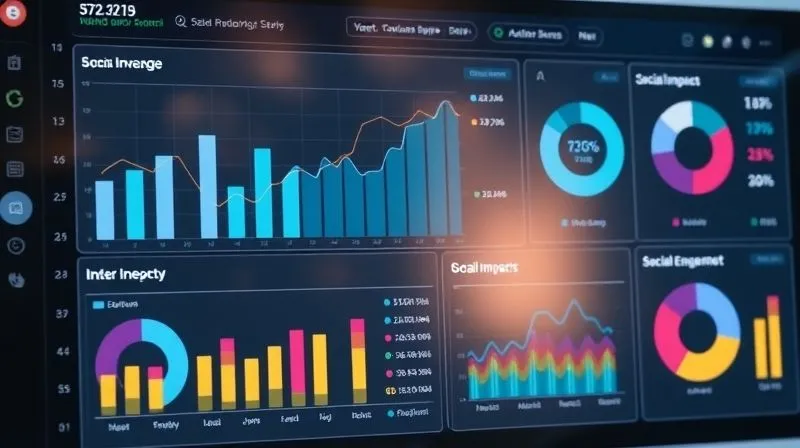
Integrating Financial and Impact Reporting
The goal is to move beyond separate reports for finance and impact. Integrated reporting presents a holistic view of your organization's performance, demonstrating how financial health supports and enables social good, and vice-versa.
| Metric Category | Key Indicator | Target 2024 | Actual Q2 2024 |
|---|---|---|---|
| Financial Health | Net Operating Income | +15% | +12% |
| Financial Health | Cash Flow from Operations | $500K | $480K |
| Community Impact | Jobs Created (Local) | 20 | 18 |
| Community Impact | Beneficiaries Reached | 1,500 | 1,450 |
| Environmental Impact | Carbon Footprint Reduction | 10% | 8% |
4. Stakeholder Engagement: Building a Coalition for Dual Success
Achieving a balance between community impact and financial growth is rarely a solitary endeavor. It requires a robust coalition of engaged stakeholders who understand and are invested in your dual mission. I've found that effective communication and genuine partnership are non-negotiable.
Engaging Your Community as Partners, Not Just Beneficiaries
True community development isn't done *to* a community, but *with* it. In my experience, organizations that genuinely involve community members in decision-making, from project design to implementation and evaluation, achieve far greater impact and build stronger, more sustainable relationships.
- Participatory Design: Involve community members in the initial planning phases. What are *their* priorities?
- Co-creation of Solutions: Work together to develop programs and services that truly meet identified needs.
- Transparent Communication: Regularly update the community on progress, challenges, and financial health.
- Feedback Loops: Establish clear channels for ongoing feedback and incorporate it into your operations.
Cultivating Investor Alignment
Attracting investors who understand and value your dual bottom line is paramount. This goes beyond simply showing good financial returns; it's about finding capital that is patient, mission-aligned, and willing to accept social impact as a core part of its return.
Look for impact investors, mission-driven foundations, and even individual angel investors who specialize in ethical investing. Clearly articulate your SROI alongside your financial projections. This demonstrates that you view impact not as a cost, but as an integral part of your value creation.
“When your community becomes a co-owner of your success, their engagement becomes your strongest asset, driving both impact and long-term financial stability.”
As highlighted by the Global Impact Investing Network (GIIN), the market for impact investing is growing precisely because more investors are seeking this dual value proposition. Understanding their motivations is key to successful fundraising.
5. Strategic Integration: Embedding Impact into Business Operations
The ultimate goal is to move beyond seeing community impact as a separate department or an add-on. It must be strategically integrated into every facet of your business operations. This is where the balance between community impact and financial growth truly becomes symbiotic.
Supply Chain & Sourcing with Purpose
Your supply chain offers significant opportunities for impact. I advise clients to review their procurement practices: can you source from local, minority-owned businesses? Can you ensure fair labor practices? These choices not only create community impact but can also build customer loyalty and differentiate your brand, potentially leading to financial gains.
- Local Sourcing: Prioritize suppliers within your community to boost local economies.
- Ethical Sourcing: Ensure fair wages, safe working conditions, and environmentally sound practices throughout your supply chain.
- Diversity & Inclusion: Actively seek out suppliers owned by underrepresented groups.
Employee Engagement & Development
Your employees are your most valuable asset and a powerful conduit for community impact. Investing in their well-being, providing opportunities for community involvement, and fostering an inclusive culture can lead to higher retention, productivity, and a stronger brand reputation.
Consider initiatives like paid volunteer days, skills-based volunteering, or matching employee donations. When employees feel connected to a purpose beyond profit, they are more engaged and innovative. This directly translates to financial benefits through reduced turnover and increased efficiency.

Customer Loyalty & Brand Value
Consumers, particularly younger generations, are increasingly prioritizing ethical and socially responsible brands. By authentically integrating community impact into your operations, you build a powerful brand narrative that resonates with customers, fostering loyalty and driving sales. This is a direct financial return on your impact investment.
| Operational Area | Impact Integration | Financial Benefit |
|---|---|---|
| Supply Chain | Local & Ethical Sourcing | Enhanced Brand Loyalty, Risk Mitigation, Local Economic Boost |
| Workforce | Employee Volunteering, Fair Wages | Higher Retention, Productivity, Talent Attraction |
| Product/Service Design | Accessibility, Community Needs Focus | Expanded Market Reach, Customer Satisfaction |
| Environmental Stewardship | Waste Reduction, Renewable Energy | Cost Savings, Regulatory Compliance, Green Marketing |
The rise of conscious consumerism is not a fad; it's a fundamental shift in market demand. Businesses that authentically embrace impact are better positioned for long-term financial success.
Frequently Asked Questions (FAQ)
Q: Is it truly possible to achieve market-rate financial returns while prioritizing deep community impact? Absolutely. While some impact investments might tolerate slightly lower financial returns for outsized social impact, many impact funds and businesses consistently demonstrate market-rate returns. The key lies in strategic integration, innovative financial models, and robust impact measurement, proving that impact can be a driver of financial success, not a detractor. It requires a long-term perspective and a commitment to efficiency, but it is demonstrably achievable.
Q: How do I convince traditional investors that community impact is a valuable asset, not a cost? You need to speak their language. Frame community impact not just as 'doing good' but as a strategic advantage. Highlight how it reduces risks (e.g., regulatory, reputational), enhances brand loyalty, attracts top talent, opens new markets, and ultimately contributes to long-term financial resilience and growth. Use data – both financial and SROI – to back up your claims, showing how your impact metrics correlate with positive financial outcomes.
Q: What are the biggest pitfalls to avoid when trying to balance these two objectives? The biggest pitfalls are 'impact washing' (superficial impact without genuine commitment), lack of clear metrics for both financial and social goals, and failing to integrate impact into core operations. Another common mistake is underestimating the importance of stakeholder engagement, particularly with the community itself. Avoid treating impact as an afterthought; it must be foundational.
Q: How can small organizations with limited resources effectively measure their social impact? Even small organizations can implement effective impact measurement. Start simple: identify 2-3 key, measurable indicators directly related to your core mission. Use accessible tools like free survey platforms, basic spreadsheets, and qualitative interviews. Focus on gathering credible data from beneficiaries. There are also many free resources and templates available from organizations like Impact Management Project (IMP) or local non-profit support centers to guide you. The goal is progress, not perfection.
Q: What role does technology play in balancing community impact and financial growth? Technology is a powerful enabler. It can streamline data collection for both financial and impact metrics, enhance transparency through digital reporting, facilitate communication with stakeholders, and even enable innovative financial products like crowdfunding for community projects. AI and blockchain are also emerging as tools for better impact verification and efficient resource allocation, making the 'balancing act' more data-driven and scalable.
Key Takeaways and Final Thoughts
Balancing community impact with financial growth is not an aspiration for the future; it is the imperative for sustainable business and investing today. It demands a shift in mindset from a trade-off to a synergy, where each element strengthens the other. My experience has shown me that this is not only possible but increasingly profitable.
- Integrated Mission: Define your dual purpose clearly from the outset.
- Innovative Financing: Explore hybrid models that blend capital for both impact and return.
- Measure What Matters: Implement robust SROI alongside financial reporting.
- Engage Stakeholders: Partner deeply with communities and align with impact investors.
- Strategic Integration: Embed impact into every operational decision, from supply chain to talent.
Embrace these pillars, and you will discover that genuine community development isn't just a noble pursuit; it's the bedrock of resilient, thriving, and financially successful enterprises. The future of finance is ethical, integrated, and deeply impactful. Your journey to balance community impact with financial growth is not just a challenge to overcome, but an opportunity to lead.
Recommended Reading
- Budgeting Internship Pay: 7 Steps to Prevent New Student Loan Debt
- 7 Legal Strategies: How to Recover Assets from Elder Financial Exploitation
- 7 Proven Strategies: How to Avoid Value Traps in Complex Companies
- 7 Essential Strategies: Stop Financially Illiterate Clients Signing Bad Contracts
- Verify Fair Trade Impact: A 7-Point Investor's Checklist for Genuine Portfolios





Comments
Leave a comment below. Your email will not be published. Required fields marked with *