



How to Advise Clients on Recovering Funds Lost to Sophisticated Crypto Scams?
For over 15 years in the financial advisory and consumer protection space, I've witnessed the evolution of financial fraud, but few areas have grown as rapidly and become as insidious as sophisticated crypto scams. The sheer complexity, global reach, and often irreversible nature of these digital heists leave clients feeling devastated and helpless, often unsure of where to even begin picking up the pieces.
The pain point for many advisors is navigating this uncharted territory. Traditional recovery methods often fall short, and the digital assets' pseudonymous nature presents unique challenges. Clients come to us not just for financial guidance, but for reassurance and a clear path forward when their digital dreams turn into a nightmare.
In this definitive guide, I will share the actionable frameworks, real-world insights, and strategic steps I've developed to effectively advise clients on recovering funds lost to sophisticated crypto scams. We'll explore everything from immediate tactical responses to long-term preventative measures, ensuring you're equipped to offer genuinely valuable support and guidance.
Understanding the Enemy: The Anatomy of Sophisticated Crypto Scams
Before we can advise clients on recovering funds lost to sophisticated crypto scams, we must first understand the intricate web they've fallen into. These aren't simple phishing attempts; modern crypto scams are highly organized, technologically advanced, and often involve international syndicates. They prey on trust, greed, and a lack of technical understanding.
Common types include:
- Pig Butchering Scams (Romance/Investment Scams): These combine emotional manipulation with fake investment platforms, often promising unrealistic returns. The scammer builds a relationship over weeks or months before convincing the victim to invest in a fraudulent crypto platform.
- Fake Exchange/Wallet Scams: These mimic legitimate cryptocurrency exchanges or digital wallets, luring users to deposit funds or connect their wallets, only to drain their assets.
- Liquidity Pool & Yield Farming Scams: Scammers create fake decentralized finance (DeFi) protocols, enticing users with high APYs (Annual Percentage Yields), only to pull the rug (rug pull) by draining the liquidity pool and disappearing with the invested funds.
- Impersonation Scams: Posing as celebrities, government officials, or reputable crypto project teams to solicit funds or private keys.
- Malware/Phishing Attacks: Sophisticated software designed to steal private keys, seed phrases, or directly transfer crypto from compromised devices.
Understanding these attack vectors is the first step in helping clients process what happened and recognizing that they are victims of professional criminals, not simply careless individuals.
Immediate Steps: The Critical First 24-48 Hours Post-Scam
Time is of the essence when a client reports lost funds. The speed of action can significantly impact the chances of recovery. I always emphasize a rapid, systematic response.
Actionable Steps for Immediate Response:
- Document Everything: Instruct the client to gather all relevant information: transaction IDs, wallet addresses (scammer's and client's), communication logs (emails, chat messages, social media), platform screenshots, and any links to fraudulent websites. Every detail is crucial for forensic analysis.
- Isolate Compromised Accounts/Devices: If the scam involved a compromised device or exchange account, advise the client to immediately change passwords, enable 2FA on all financial accounts (crypto and traditional), and consider wiping or quarantining the device.
- Notify the Exchange/Platform: If the funds were sent from or to a centralized exchange, instruct the client to contact their support immediately. Provide all documented evidence. Exchanges can sometimes freeze funds if they haven't been moved off the platform yet, though this is rare with sophisticated scams.
- Report to Authorities: File a police report in the client's local jurisdiction. Also, report to relevant national and international cybercrime units. In the U.S., this includes the FBI's Internet Crime Complaint Center (IC3), the FTC, and the SEC if it involves investment fraud. Internationally, Interpol and Europol have cybercrime divisions.
- Consult a Crypto-Savvy Lawyer: Early legal advice is paramount. A lawyer specializing in digital assets can guide the client through reporting, potential civil actions, and interaction with law enforcement.

The Role of Blockchain Forensics and Tracing
This is where the technical expertise comes into play. Blockchain is immutable, meaning transactions cannot be reversed. However, they are also transparent. Every transaction is recorded on a public ledger, which can be traced. This is the bedrock of how to advise clients on recovering funds lost to sophisticated crypto scams.
"Blockchain forensics isn't about reversing transactions; it's about following the digital breadcrumbs to identify where the funds went, who received them, and potentially linking them to real-world identities."
How Blockchain Forensics Works:
- Initial Trace: Forensic specialists use sophisticated software to trace the stolen cryptocurrency from the client's wallet to subsequent addresses. This can involve hundreds or thousands of transactions across various blockchains.
- Exchange Identification: The goal is often to trace funds to a centralized exchange, where KYC (Know Your Customer) regulations might link a wallet address to a real identity.
- Cluster Analysis: Forensic tools can group multiple addresses belonging to the same entity, identifying the scammer's operational wallets.
- Reporting and Cooperation: Once funds are traced to an exchange, law enforcement can issue subpoenas to compel the exchange to freeze the assets and disclose the identity of the account holder.
Choosing a Forensic Firm:
It's vital to recommend reputable blockchain forensic firms. Look for those with a proven track record, clear methodologies, and strong relationships with law enforcement agencies. According to a Deloitte report on crypto AML, the industry is maturing rapidly, with specialized firms becoming increasingly effective in tracing illicit funds.
Engaging Legal and Regulatory Pathways
Recovering funds often requires more than just technical tracing; it demands a robust legal strategy. As an advisor, guiding clients through this complex legal landscape is paramount.
Legal Avenues to Explore:
- Civil Litigation: If the scammer's identity can be established (even partially, like an IP address or linked exchange account), civil lawsuits can be pursued to obtain judgments for recovery. This can be challenging but not impossible, especially with international cooperation.
- Asset Freezing Orders: Courts can issue orders to freeze assets held by exchanges or other custodians once a strong case is presented. This is often done in conjunction with forensic tracing.
- Regulatory Complaints: In addition to law enforcement, filing complaints with financial regulators (e.g., SEC, CFTC in the U.S., FCA in the UK) can trigger investigations and sometimes lead to enforcement actions that benefit victims.
Case Study: Project Phoenix's Multi-Jurisdictional Recovery
Project Phoenix involved a client who lost a significant sum to a sophisticated 'pig butchering' scam. The scammer had moved funds rapidly across three different blockchains and through multiple decentralized exchanges before consolidating them on a tier-1 centralized exchange in a different country. By implementing the three-step approach: 1. Immediate Documentation & Reporting, 2. Expert Blockchain Forensics, and 3. Coordinated Legal Action, we were able to provide a clear path forward. The forensic firm traced the funds to the exchange, a legal team secured an urgent asset freezing order from a local court, which was then recognized in the jurisdiction of the exchange. While not all funds were recovered due to some prior withdrawals, a substantial portion was frozen and ultimately returned to the client after a 14-month legal battle. This demonstrated that even with sophisticated crypto scams, recovery is possible with persistence and expert coordination.
Navigating Interaction with Exchanges and Custodians
Centralized exchanges and custodians play a dual role: they are often the initial point of contact for lost funds and can also be the final destination for traced assets. Dealing with them requires a strategic approach.
Key Strategies for Engagement:
- Formal Requests & Subpoenas: While initial reports can be made by the client, formal requests for information or asset freezes typically require law enforcement or legal intervention. Exchanges are often bound by legal obligations to cooperate with official subpoenas.
- Evidence Submission: Ensure all evidence gathered (transaction IDs, police reports, forensic tracing reports) is submitted clearly and concisely. The more organized and credible the submission, the higher the chance of a positive response.
- Persistence: Exchange support can be overwhelmed. Advise clients that follow-ups are necessary, but always maintain a professional and factual tone.
It's important to set realistic expectations. Exchanges are not always able to recover funds, especially if they have already been withdrawn. However, their cooperation is invaluable for tracing and potential freezing. As Forbes Advisor highlights, the regulatory landscape for exchanges is constantly evolving, impacting their ability and willingness to intervene in scam cases.
Client Communication and Emotional Support: A Human-Centric Approach
Beyond the technical and legal complexities, one of the most crucial aspects of how to advise clients on recovering funds lost to sophisticated crypto scams is providing empathetic and transparent communication. Victims of financial fraud often experience significant emotional distress, shame, and anger.
Best Practices for Client Support:
- Active Listening: Allow clients to express their frustrations and fears without judgment. Validate their feelings.
- Set Realistic Expectations: Be honest about the low probability of full recovery, but emphasize that every effort will be made. Managing expectations prevents further disappointment.
- Regular Updates: Even if there's no new information, provide regular check-ins. This shows you are actively engaged and haven't forgotten their situation.
- Focus on Actionable Steps: Break down complex processes into digestible steps. This empowers clients and reduces feelings of helplessness.
- Recommend Mental Health Resources: For severe cases, suggesting professional counseling or support groups can be incredibly beneficial.

Prevention and Future Safeguards: Empowering Clients
While recovery is the immediate goal, preventing future incidents is equally vital. Equipping clients with knowledge and tools is a core part of my advisory philosophy.
Key Preventative Measures:
- Education on Red Flags: Teach clients to recognize common scam tactics: unsolicited messages, promises of guaranteed high returns, pressure to act quickly, requests for personal keys/seed phrases, and complex investment schemes they don't fully understand.
- Robust Security Practices:
- Use hardware wallets (Ledger, Trezor) for significant crypto holdings.
- Enable 2FA (Two-Factor Authentication) on all accounts, preferably using authenticator apps over SMS.
- Use strong, unique passwords for every service.
- Be wary of clicking suspicious links or downloading unknown software.
- Due Diligence: Advise clients to always research any investment opportunity thoroughly. Check legitimate reviews, regulatory warnings, and official websites. If it sounds too good to be true, it almost certainly is.
- Portfolio Diversification: While not directly a scam prevention, it's a risk management strategy. Never put all assets into a single, high-risk investment.
I often provide a simple checklist to clients to help them assess potential crypto investments:
| Security Check | Client Action | Risk Mitigation |
|---|---|---|
| Hardware Wallet Used? | Yes/No | High/Low |
| 2FA Enabled on Exchanges? | Yes/No | High/Low |
| Research Done on Project? | Yes/No | High/Low |
| Unsolicited Investment Offer? | Yes/No | High/Low |
| Pressure to Act Quickly? | Yes/No | High/Low |
Building a Robust Recovery Strategy: A Structured Approach
Bringing all these elements together, a structured approach is essential for any advisor tackling how to advise clients on recovering funds lost to sophisticated crypto scams.
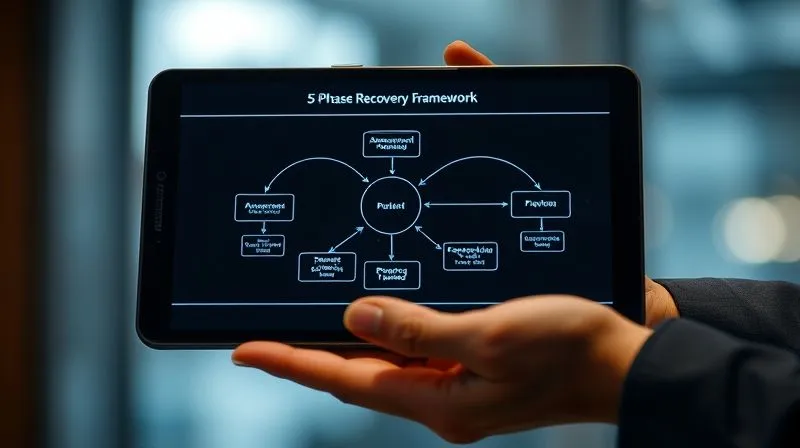
The 5-Phase Recovery Framework:
- Assessment & Documentation (Phase 1):
- Initial client interview to gather all details.
- Collection of transaction records, communications, and wallet addresses.
- Immediate security steps (password changes, device isolation).
- Reporting & Legal Consultation (Phase 2):
- File police report and IC3/FTC/other national cybercrime reports.
- Engage a crypto-savvy legal counsel for initial assessment and guidance.
- Blockchain Forensics & Tracing (Phase 3):
- Commission a reputable blockchain forensic firm to trace funds.
- Obtain a detailed forensic report outlining fund movements.
- Intervention & Freezing (Phase 4):
- If funds traced to an exchange, coordinate with legal counsel for subpoenas/freezing orders.
- Liaise with law enforcement for international cooperation if necessary.
- Ongoing Support & Prevention (Phase 5):
- Regular client updates and emotional support.
- Implement long-term security measures and provide ongoing education.
This phased approach provides clarity and a methodical way to manage a highly stressful and complex situation. It emphasizes that while recovery is difficult, a structured, expert-led effort offers the best possible chance.
Frequently Asked Questions (FAQ)
Is it truly possible to recover funds lost to sophisticated crypto scams? While challenging, recovery is possible in certain circumstances, especially with prompt action, detailed blockchain forensics, and coordinated legal and law enforcement efforts. It's not guaranteed, but a structured approach significantly increases the odds. Success hinges on factors like the type of scam, the speed of response, and the ability to trace funds to a centralized, regulated entity.
What are the typical costs involved in pursuing crypto scam recovery? The costs can vary significantly. Initial legal consultations might be a few hundred to a few thousand dollars. Blockchain forensic services can range from several thousand to tens of thousands, depending on the complexity of the trace. Civil litigation fees can be substantial, often involving hourly rates for attorneys. It's crucial to discuss these costs transparently with clients upfront, outlining potential expenses versus the value of the lost assets.
How long does the recovery process usually take? There's no fixed timeline. Immediate actions (reporting, initial tracing) can happen within days or weeks. However, full recovery, especially if it involves international legal processes, asset freezing orders, and court proceedings, can take many months, often extending to one to two years or even longer. Patience and persistence are key.
What if the scammer is anonymous or offshore? This is a significant hurdle. While blockchain provides pseudonymity, forensic firms often try to link addresses to real-world entities through their interactions with centralized exchanges or other services that require KYC. If the scammer is truly anonymous and operates entirely on decentralized platforms without ever touching a regulated entity, recovery becomes exceedingly difficult. However, many sophisticated scammers eventually need to cash out, which often involves centralized services.
Should I advise clients to pay a 'recovery agent' who promises to get their crypto back? Absolutely not. These are almost always secondary scams, preying on victims' desperation. Legitimate recovery involves forensic analysis and legal processes, not mysterious 'hackers' who can magically retrieve funds. Advise clients to be extremely skeptical of anyone promising guaranteed recovery for an upfront fee, especially if they demand payment in crypto. Always consult with a trusted legal professional or forensic expert.
Key Takeaways and Final Thoughts
Advising clients on recovering funds lost to sophisticated crypto scams is one of the most demanding, yet impactful, services we can offer in today's digital financial landscape. It requires a blend of technical understanding, legal acumen, and profound empathy.
- Act Fast: The initial 24-48 hours are critical for gathering evidence and initiating reports.
- Leverage Expertise: Engage specialized blockchain forensic firms and legal counsel.
- Document Rigorously: Every piece of information is a potential clue.
- Manage Expectations: Be realistic about the chances of full recovery, but committed to the process.
- Empower Through Prevention: Educate clients on robust security and due diligence to prevent future incidents.
In my experience, while the path to recovery is arduous and often fraught with uncertainty, the value of providing a clear, structured, and empathetic strategy for clients cannot be overstated. It reinforces their trust in you as their advisor and empowers them to navigate one of the most challenging financial situations they may ever face. By understanding how to advise clients on recovering funds lost to sophisticated crypto scams, we equip them not just with a potential path to recovery, but with resilience and knowledge for the future. The fight against these digital criminals is ongoing, and our role as trusted guides is more important than ever.
Recommended Reading
- Unlock the Secrets: How to Avoid Common Small Business Tax Filing Errors?
- Unlock Speedy Transfers: Your Ultimate Guide to Resolving Bank Delay Issues
- 7 Pillars: What Emergency Fund Strategy Maintains Stability During Layoffs?
- Unlock Smarter Lending: How Explainable AI Improves Banking Decisions
- Unlock Sustainable Wealth: How to Identify Truly Green Finance Investment Options





Comments
Leave a comment below. Your email will not be published. Required fields marked with *