



How Can Professionals Responsibly Borrow More with Existing Debt?
For over 15 years in the intricate world of finance and debt management, I've witnessed a common dilemma plague successful professionals: the need for additional capital while already navigating existing financial obligations. It's a tightrope walk that many approach with trepidation, fearing the slippery slope of over-indebtedness. Yet, with the right strategy, it's not only possible but can be a powerful lever for growth.
You're a professional, perhaps eyeing a significant investment, a career-advancing educational program, or even consolidating existing high-interest debts. The challenge isn't just securing the loan; it's doing so without jeopardizing your current financial stability or future aspirations. The conventional wisdom often shouts 'pay off debt first,' but life's opportunities don't always wait. This leaves many feeling stuck, unable to seize opportunities that could propel them forward.
In this comprehensive guide, I will share the exact frameworks, insights, and actionable strategies I've helped countless professionals implement to responsibly expand their borrowing capacity, even with existing debt. We'll delve into a 7-step plan, supported by real-world scenarios and expert advice, designed to empower you to make informed decisions and secure your financial future. My goal is to equip you with the knowledge to borrow more, not just smartly, but sustainably.
Understanding Your Current Financial Landscape: The Foundation of Responsible Borrowing
Before you even consider applying for additional credit, the absolute first step is a rigorous, honest assessment of your current financial standing. I often tell my clients that you cannot plot a new course without knowing your exact starting coordinates. This means going beyond a superficial glance at your bank balance and delving deep into your income, expenses, assets, and liabilities.
This comprehensive audit isn't about judgment; it's about clarity. It allows you to identify areas of strength, pinpoint potential vulnerabilities, and, crucially, understand your true capacity for taking on more debt. Without this foundational step, any further borrowing is akin to building a house on quicksand.
What to assess in your financial audit:
- Net Worth Calculation: Total assets minus total liabilities. This gives you a snapshot of your financial health.
- Income Streams: Document all sources of income, including bonuses, side gigs, and investment returns.
- Detailed Expense Tracking: Categorize every expense, distinguishing between fixed and variable costs. This reveals where your money truly goes.
- Existing Debt Profile: List every debt with its interest rate, outstanding balance, minimum payment, and remaining term.
- Credit Score & Report: Obtain your latest credit report from all three bureaus and understand your score.
- Savings & Emergency Fund: Assess the robustness of your financial safety net.
"Responsible borrowing isn't about avoiding debt; it's about understanding its full impact on your financial ecosystem before you commit. Knowledge is your most powerful tool."
A clear visualization of your current financial obligations is paramount. Here’s a template I often recommend for clients to get started:
| Category | Amount |
|---|---|
| Monthly Income (Net) | $X,XXX |
| Fixed Expenses (Rent/Mortgage, Loans) | $Y,YYY |
| Variable Expenses (Food, Entertainment, Transport) | $Z,ZZZ |
| Total Monthly Debt Payments | $A,AAA |
| Available for Savings/New Debt | $B,BBB |
Once you have this granular view, you can accurately calculate your Debt-to-Income (DTI) ratio, a critical metric lenders use. A lower DTI indicates less risk and generally opens doors to better borrowing terms. Aim for a DTI below 36%, though some lenders may accept up to 43% for highly qualified professionals.
The Art of Strategic Debt Consolidation: Freeing Up Capacity
One of the most effective strategies I've guided professionals through, when they need to borrow more with existing debt, is strategic debt consolidation. This isn't just about combining debts; it's about optimizing your financial structure to free up cash flow, reduce interest burdens, and improve your overall financial health, making you a more attractive borrower.
The goal is to replace multiple high-interest debts, like credit card balances or personal loans, with a single, lower-interest loan. This often results in a reduced monthly payment, which in turn improves your debt-to-income ratio, signaling to potential lenders that you have more disposable income to manage new obligations. It's about working smarter, not just harder, with your money.

Types of Debt Consolidation for Professionals:
- Balance Transfer Credit Cards: Often offer 0% APR for an introductory period (e.g., 12-18 months), ideal for smaller, high-interest credit card debts if you can pay them off within the promotional period.
- Personal Loans: Unsecured loans with fixed interest rates and terms, suitable for consolidating various debts into one predictable payment.
- Home Equity Loan or Line of Credit (HELOC): If you own property, these secured options typically offer lower interest rates due to the collateral, but carry the risk of losing your home if you default.
- 401(k) Loan: While an option, I generally advise extreme caution here. Borrowing from your retirement can incur penalties and lost growth potential, and if you leave your job, the loan may become immediately due.
Steps for Strategic Debt Consolidation:
- List All Debts: Detail every debt – lender, balance, interest rate, minimum payment.
- Prioritize High-Interest Debts: These are your primary targets for consolidation to maximize savings.
- Research Consolidation Options: Compare interest rates, fees, terms, and eligibility requirements across personal loans, balance transfers, and secured options.
- Apply for the Best Fit: Choose the option that offers the lowest overall cost and a manageable repayment plan.
- Execute and Stick to the Plan: Once consolidated, commit to the new repayment schedule and avoid accumulating new high-interest debt.
According to a study published by Experian, consolidating high-interest credit card debt into a lower-interest personal loan can save consumers an average of $2,500 in interest over the life of the loan, significantly freeing up cash flow for other financial goals or new, responsible borrowing opportunities. This is a testament to its power.
Leveraging Assets Wisely: Secured vs. Unsecured Borrowing
When you're a professional looking to responsibly borrow more, especially with existing debt, understanding the difference between secured and unsecured borrowing is paramount. This distinction can significantly impact the interest rates you're offered, the loan amount you can access, and the overall risk profile of your new debt.
Secured loans are backed by collateral – an asset you own, such as real estate, a vehicle, or even investment portfolios. Because the lender has a claim on this asset if you default, they perceive less risk. This often translates into lower interest rates, longer repayment terms, and higher borrowing limits. Examples include mortgages, auto loans, home equity loans (HELOCs), and sometimes even loans against investment accounts.
Unsecured loans, conversely, are not backed by collateral. Personal loans, credit cards, and student loans fall into this category. Lenders rely solely on your creditworthiness, income, and DTI ratio. Consequently, unsecured loans typically carry higher interest rates to compensate for the increased risk to the lender. While they offer flexibility, they can be more expensive and harder to obtain in larger amounts if your existing debt is substantial.
Case Study: Dr. Anya Sharma's Strategic Asset Leverage
Dr. Anya Sharma, a successful surgeon, had existing student loan debt and a mortgage. She wanted to open her own private practice, requiring significant capital for equipment and office space. Her DTI was already moderate, making a large unsecured personal loan challenging and expensive. I advised her to explore a HELOC (Home Equity Line of Credit). By leveraging the substantial equity in her home, she secured a line of credit at a much lower interest rate than any unsecured option. This allowed her to responsibly borrow the necessary funds for her practice, with flexible drawdowns, without over-extending her cash flow or impacting her existing student loan payments. Her practice flourished, demonstrating the power of strategic asset-backed borrowing when managed carefully.
My advice is always to consider if you have assets that can be prudently leveraged. However, a word of caution: while secured loans offer better terms, they also carry the risk of losing the collateral if you cannot meet your repayment obligations. It's a calculated risk that demands a robust repayment plan and a strong emergency fund.
For professionals, this often means looking at the equity in their homes or even leveraging investment portfolios, though the latter requires careful consideration of potential market fluctuations and margin call risks. Always weigh the benefits of lower rates against the increased risk to your assets.
Optimizing Your Credit Profile: A Prerequisite for Favorable Terms
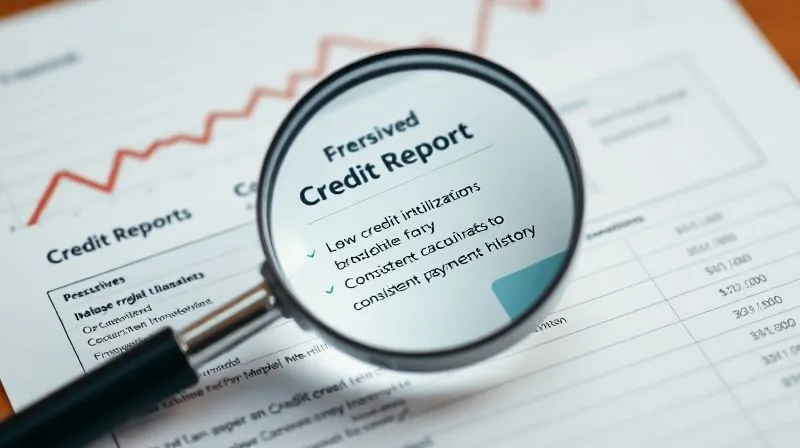
Your credit score and report are, in essence, your financial resume. For professionals aiming to responsibly borrow more with existing debt, a strong credit profile isn't just an advantage; it's a non-negotiable prerequisite for securing the best possible interest rates and terms. Lenders use your credit history to gauge your reliability as a borrower, and even a few points can translate into thousands of dollars saved over the life of a loan.
I've seen firsthand how professionals, despite high incomes, can be hampered by suboptimal credit scores due to late payments, high credit utilization, or errors on their credit reports. Taking proactive steps to optimize your credit profile before seeking new loans is a strategic move that pays dividends.
Actionable Steps to Improve Your Credit Score:
- Review Your Credit Report Regularly: Obtain free reports annually from Experian, Equifax, and TransUnion. Dispute any errors immediately.
- Pay Bills on Time, Every Time: Payment history is the most significant factor (35%) in your FICO score. Set up automatic payments to avoid missing due dates.
- Keep Credit Utilization Low: Aim to keep your credit card balances below 30% of your total available credit. Lower is always better. High utilization signals financial strain.
- Avoid Opening Too Many New Accounts: Each hard inquiry can temporarily ding your score, and opening multiple accounts in a short period can appear risky.
- Maintain a Mix of Credit: Lenders like to see a healthy mix of revolving credit (credit cards) and installment loans (mortgages, auto loans).
- Don't Close Old Accounts: Older accounts with good payment history contribute to a longer credit history, which positively impacts your score.
As Forbes advises, "A higher credit score translates directly into lower interest rates on loans, saving you significant money over time." This principle is even more critical when you're looking to responsibly borrow more with existing debt, as lenders will scrutinize your ability to manage multiple obligations.
Crafting a Robust Repayment Strategy: Beyond the Minimum Payment
Securing additional debt, even responsibly, is only half the battle. The true measure of responsible borrowing lies in your ability to repay it without undue stress or financial strain. In my experience, professionals often fall into the trap of only making minimum payments, which can prolong debt, increase total interest paid, and limit future financial flexibility. A robust, proactive repayment strategy is absolutely essential.
This isn't just about budgeting; it's about intentional financial engineering. You need a clear, actionable plan that integrates your new debt into your existing financial framework, ensuring sustainability and progress towards debt freedom. Think of it as a strategic roadmap, not just a monthly chore.
Effective Repayment Methods for Professionals:
- The Debt Avalanche Method: Prioritize paying off debts with the highest interest rates first, while making minimum payments on others. Once the highest-interest debt is paid off, roll that payment amount into the next highest-interest debt. This minimizes the total interest paid over time.
- The Debt Snowball Method: Focus on paying off the smallest debt first to gain psychological momentum, then rolling that payment into the next smallest. While it might cost more in interest, the quick wins can be motivating.
- Accelerated Payments: If your budget allows, make extra payments or make bi-weekly payments (which results in one extra full payment per year) to reduce the principal faster.
- Refinancing Existing Debt: If your credit score has improved or interest rates have dropped, consider refinancing existing loans for lower rates or shorter terms.
Key Components of a Robust Repayment Strategy:
- Dedicated Debt Repayment Budget: Allocate a specific portion of your income solely for debt payments, beyond the minimums.
- Automated Payments: Set up automatic transfers to avoid missed payments and ensure consistency.
- Regular Review: Periodically review your budget and debt repayment progress. Adjust as your income or expenses change.
- Contingency Planning: Build or maintain an emergency fund to cover at least 3-6 months of essential expenses, protecting your ability to pay debts even if unexpected events occur.
"A loan is a tool; its effectiveness depends entirely on the hand that wields it. A powerful repayment strategy turns potential burden into a stepping stone for financial advancement."
Remember, the goal isn't just to make payments, but to strategically eliminate debt efficiently. This frees up future income and significantly enhances your capacity to manage new financial ventures responsibly.
Income Diversification and Enhancement: Boosting Your Borrowing Power
While managing debt and optimizing your credit are crucial, one of the most direct ways for professionals to responsibly borrow more with existing debt is to simply boost their income. Lenders primarily assess your ability to repay based on your income-to-debt ratio. A higher income, even with existing debt, can significantly increase your borrowing capacity and improve the terms you're offered.
In today's dynamic economy, relying solely on a single income stream can be precarious. I've observed that the most financially resilient professionals often have diversified income portfolios. This not only strengthens their borrowing potential but also provides a buffer against unexpected financial shocks, making them more attractive to lenders.
Strategies for Income Enhancement and Diversification:
- Negotiate Salary Increases: Regularly assess your market value and confidently negotiate for higher compensation in your primary role.
- Develop a Side Hustle: Leverage your professional skills or hobbies to generate additional income. This could be consulting, freelance work, teaching, or content creation.
- Invest in Skill Development: Acquire new certifications or skills that command higher pay in your industry.
- Explore Passive Income Streams: Consider investments that generate regular income, such as dividend stocks, rental properties (if feasible), or high-yield savings accounts.
- Optimize Investment Returns: Review your investment portfolio to ensure it aligns with your risk tolerance and growth objectives.
For example, a professional might consider these additional income sources:
| Income Source | Estimated Monthly Income |
|---|---|
| Freelance Consulting (10 hrs/week) | $1,000 - $2,500 |
| Online Course Creation | $500 - $1,500 |
| Dividend Stocks/REITs | Variable ($100 - $500) |
| Part-time Teaching/Mentoring | $800 - $1,800 |
According to a report by the Federal Reserve, households with multiple income streams tend to have greater financial stability and a higher capacity for debt servicing. This isn't about working yourself to exhaustion, but about strategically utilizing your expertise and time to create additional financial leverage. The more robust your income, the more confidently you can approach additional borrowing.
The Role of Professional Financial Guidance: When to Seek an Expert
Navigating the complexities of borrowing more with existing debt can be overwhelming, even for seasoned professionals. While this guide provides a robust framework, there are times when the nuanced advice of a qualified financial advisor, debt counselor, or mortgage broker becomes invaluable. I often tell clients that a good financial professional isn't an expense; they're an investment in your financial clarity and success.
An expert can provide an objective assessment of your situation, identify opportunities you might overlook, and help you avoid costly mistakes. Their experience with various lending products, market conditions, and regulatory landscapes can be the difference between a responsible, beneficial loan and one that leads to further financial strain. This is especially true when dealing with significant sums or complex financial structures.

Benefits of Professional Financial Guidance:
- Personalized Strategies: Tailored advice based on your unique financial situation, goals, and risk tolerance.
- Access to Exclusive Products: Advisors may have knowledge of specialized loan products or lenders not widely advertised.
- Negotiation Expertise: They can help negotiate better terms, rates, or repayment schedules on your behalf.
- Risk Assessment: An objective view of the risks associated with new debt and strategies to mitigate them.
- Long-Term Planning: Integration of new borrowing into your broader financial plan, including retirement and investment goals.
- Emotional Detachment: Removing emotion from financial decisions, which can often cloud judgment.
According to the Financial Planning Association, individuals who work with financial advisors are more likely to achieve their financial goals. When considering how can professionals responsibly borrow more with existing debt, the guidance of an expert can provide the strategic clarity and confidence needed to make truly informed decisions.
Risk Mitigation and Contingency Planning: Safeguarding Your Financial Future
Even the most meticulously planned borrowing strategy carries inherent risks. Responsible borrowing isn't just about securing the loan; it's equally about preparing for the unexpected and building robust safeguards. As an industry specialist, I’ve seen countless well-intentioned plans derailed by unforeseen circumstances – job loss, health issues, or market downturns. This is why risk mitigation and contingency planning are non-negotiable.
Your financial future depends on your ability to weather storms. By proactively identifying potential pitfalls and establishing safety nets, you ensure that your decision to borrow more, even with existing debt, remains a growth opportunity rather than a source of vulnerability.
Essential Risk Mitigation and Contingency Strategies:
- Robust Emergency Fund: This is your first line of defense. Aim for 6-12 months of essential living expenses, especially if you're taking on significant new debt or have variable income.
- Adequate Insurance Coverage: Review your health, disability, and life insurance policies. Ensure they would cover your debt obligations and maintain your family's lifestyle if an unforeseen event impacts your income.
- Diversify Investments (if applicable): Don't put all your financial eggs in one basket. Diversified investments can provide stability during market volatility.
- Maintain a Low Debt-to-Income Ratio: Continually strive to keep your DTI manageable. This provides flexibility if your income temporarily dips or expenses unexpectedly rise.
- Understand Loan Terms Fully: Be acutely aware of prepayment penalties, variable interest rate triggers, and default clauses. Knowledge is power in managing risk.
- Build Multiple Income Streams: As discussed earlier, diversified income provides a safety net against job loss or reduced hours in your primary profession.
- Create a "What If" Scenario Plan: Mentally (or physically) plan for scenarios like job loss or a significant expense. How would you adjust your budget? What resources would you tap into?
As Vanguard economists often emphasize, "The only certainty in financial markets is uncertainty." This applies equally to personal finance. By embedding these risk mitigation strategies into your financial planning, you transform the question of 'how can professionals responsibly borrow more with existing debt?' from a daunting challenge into a calculated, secure step towards achieving your aspirations.
Frequently Asked Questions (FAQ)
Q: Is it ever a good idea to borrow more if I already have significant debt?
A: Yes, absolutely, but only under specific, strategic circumstances. It's not about borrowing for consumption, but for investment – whether in yourself (education, skill development), your business (expansion, equipment), or to consolidate existing high-interest debt into a lower-interest, more manageable loan. The key is that the new debt must have a clear, positive return on investment or significantly improve your financial structure, and you must have a robust repayment plan.
Q: How does my credit score impact my ability to borrow more with existing debt?
A: Your credit score is critically important. With existing debt, lenders will scrutinize your creditworthiness even more closely. A higher credit score (typically 740+) signals responsible debt management, allowing you to qualify for lower interest rates, more favorable terms, and potentially higher loan amounts. A lower score might still allow you to borrow, but at a significantly higher cost, which could undermine the 'responsible' aspect of your borrowing.
Q: What is the most important metric lenders look at when I have existing debt?
A: While many factors are considered, your Debt-to-Income (DTI) ratio is arguably the most crucial. It represents the percentage of your gross monthly income that goes towards debt payments. Lenders want to see a manageable DTI (ideally below 36%, though some go up to 43%). If your existing debt already pushes your DTI high, borrowing more becomes challenging. Strategies to increase income or reduce existing debt payments are essential to improve this ratio.
Q: Should I prioritize paying off existing debt or taking on new debt for investment?
A: This is a classic dilemma. My rule of thumb is to calculate the Return on Investment (ROI) of the new debt vs. the Cost of Existing Debt (i.e., its interest rate). If the new borrowing is for an investment with a high, reliable ROI that significantly exceeds the interest rate of your existing debt, and you can comfortably manage both payments, then it might be strategic. However, if your existing debt carries very high-interest rates (e.g., credit card debt at 20%+), prioritizing its reduction often yields a guaranteed "return" by saving on interest, which is hard to beat. Always consider the guaranteed savings vs. potential gains.
Q: Are there any specific types of loans that are better for professionals with existing debt?
A: Often, secured loans (like Home Equity Lines of Credit or loans against investment portfolios) offer more favorable terms due to the collateral, leading to lower interest rates and higher limits. For unsecured options, personal loans for debt consolidation can be beneficial if they significantly reduce your overall interest burden. The "best" type depends heavily on your assets, credit profile, and the purpose of the new borrowing. Always compare offers meticulously.
Key Takeaways and Final Thoughts
Navigating the path to responsibly borrow more with existing debt is a complex journey, but one that is entirely achievable with careful planning, strategic execution, and a commitment to financial discipline. As an experienced specialist, I've seen professionals transform their financial landscapes by embracing these principles, turning what seems like a limitation into an opportunity for growth and advancement.
Remember, the goal isn't just to secure more funds; it's to do so in a way that enhances your overall financial health, reduces risk, and propels you towards your long-term aspirations. It requires a mentor's mindset – one that is thoughtful, analytical, and proactive.
Here are your critical takeaways:
- Master Your Financial Snapshot: A deep understanding of your income, expenses, assets, and existing debts is your non-negotiable starting point.
- Strategize Debt Consolidation: Optimize your existing debt structure to free up cash flow and reduce interest burdens.
- Leverage Assets Prudently: Consider secured borrowing for better terms, but always with an eye on the associated risks.
- Cultivate an Impeccable Credit Profile: Your credit score is your financial passport to favorable borrowing conditions.
- Build a Bulletproof Repayment Plan: Go beyond minimum payments and commit to an aggressive, sustainable strategy.
- Boost and Diversify Your Income: A higher, more stable income directly enhances your borrowing capacity and financial resilience.
- Don't Hesitate to Seek Expert Advice: A financial professional can provide invaluable, tailored guidance.
- Prioritize Risk Mitigation: Build emergency funds and secure adequate insurance to protect against unforeseen events.
The question of 'how can professionals responsibly borrow more with existing debt?' isn't a plea for more debt; it's a strategic inquiry into leveraging financial tools for progress. By applying these expert insights, you're not just borrowing money; you're investing in a more secure, prosperous future. Take these steps, be diligent, and empower your financial journey.
Recommended Reading
- Slash Commercial Property Taxes: 7 Proven Strategies to Cut Overpayments
- Unlock the Future: Predicting Global Economic Cycles with Leading Indicators
- 7 Essential Strategies: Mitigating Landlord Liability Without Tenant Renters Insurance
- 5 Proven Ways: Avoid Estimated Business Tax Underpayment Penalties
- Global Trade: Fueling or Foiling Small Business Growth?





Comments
Leave a comment below. Your email will not be published. Required fields marked with *