


Build a robust emergency fund despite variable income?
For over two decades in the financial planning trenches, I've witnessed firsthand the incredible resilience of individuals navigating the unpredictable currents of variable income. From freelancers and consultants to small business owners and gig economy workers, the dream of financial security often feels just out of reach, especially when it comes to something as fundamental as an emergency fund.
The common refrain I hear is, 'How can I possibly save consistently when my income isn't?' This isn't just a question; it's a deep-seated frustration rooted in the very nature of unpredictable earnings. Traditional budgeting advice, often predicated on a stable monthly paycheck, falls flat for those whose financial landscape shifts with every project, client, or seasonal demand. This volatility makes planning for the unexpected—a car repair, a medical emergency, or a sudden dip in work—feel like an insurmountable challenge.
But here's the truth I've learned from countless success stories: building a robust emergency fund despite variable income isn't just possible; it's absolutely essential for your peace of mind and long-term financial health. In this definitive guide, I'll share the expert strategies, actionable frameworks, and real-world insights that empower you to transform financial uncertainty into rock-solid security. We'll move beyond generic advice and dive into practical, proven methods tailored specifically for your unique income flow.
Understanding Your Income Volatility: The First Step to Stability
Before you can effectively save, you must first understand what you're up against. My first piece of advice to anyone with variable income is to meticulously track your earnings over an extended period—at least 6 to 12 months, ideally longer. This isn't just about knowing how much money came in; it's about identifying patterns, understanding your true average, and recognizing your lowest income months.
Actionable Step: Income Tracking & Analysis
- Gather Data: Collect all income statements, bank deposits, and payment records for the past year.
- Categorize Income: If you have multiple income streams, categorize them to see which are more volatile than others.
- Calculate Averages: Determine your average monthly income. More importantly, identify your lowest earning month and your highest.
- Identify Trends: Look for seasonal fluctuations, project-based peaks, or recurring dry spells. Are there times of the year when work consistently slows down?
- Determine Your 'Baseline': Based on your lowest earning months, establish a realistic 'baseline' income. This is the absolute minimum you can expect, and it's crucial for budgeting.
This deep dive into your past income history provides invaluable data. It allows you to move from guessing to knowing, laying the groundwork for more realistic budgeting and savings goals. According to a study published by Investopedia, having a clear understanding of your financial inflows is the bedrock of effective emergency fund planning.
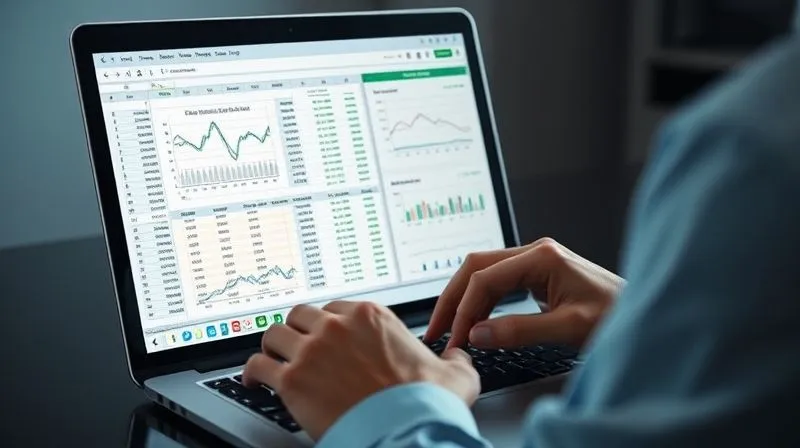
The "Income Smoothing" Strategy: Creating Predictability from Uncertainty
One of the most powerful strategies I've championed for variable income earners is 'income smoothing.' The core idea is to create a predictable monthly 'salary' for yourself, regardless of how much you actually earned that month. Any surplus from high-earning months is held aside to supplement lower-earning months.
How to Implement Income Smoothing:
- Determine Your Target Monthly Income: Based on your income analysis, set a realistic monthly 'salary' that covers your essential expenses and allows for some discretionary spending. This should ideally be slightly above your 'baseline' income.
- Set Up a Dedicated Buffer Account: This is a separate savings account, distinct from your emergency fund, specifically for income smoothing.
- Transfer Your 'Salary': Each month, transfer your predetermined 'salary' amount from your main business/income account into your personal checking account.
- Manage Surpluses: If you earn more than your 'salary' in a given month, the excess goes into your buffer account. This builds up a reserve.
- Manage Deficits: If you earn less than your 'salary,' draw the difference from your buffer account to ensure you still receive your consistent monthly payment.
This method drastically reduces financial stress. You know exactly how much you have to spend each month, making budgeting significantly easier and creating mental space to focus on your work without constant financial anxiety.
Case Study: How Maya, a Freelance Designer, Found Stability
Maya, a freelance graphic designer, faced months where she'd earn $8,000, followed by months with just $2,500. She was constantly stressed, either overspending or panicking. After our consultation, she implemented income smoothing. We determined a comfortable 'salary' of $4,000 per month. In her $8,000 month, $4,000 went to her, and the remaining $4,000 went into her buffer account. In her $2,500 month, she still received $4,000, with $1,500 drawn from her buffer. Within six months, her buffer account had enough to cover two full low-income months, and her stress levels plummeted. This resulted in her being more focused and productive, actually increasing her average income over the next year.
"Income smoothing isn't just about money; it's about reclaiming control over your financial narrative and fostering peace of mind."
Tiered Emergency Funds: A Layered Approach to Security
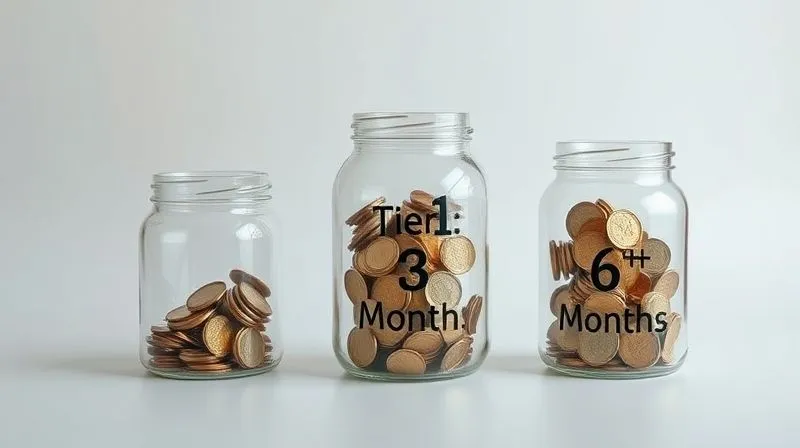
For those with variable income, the traditional '3-6 months of expenses' emergency fund can feel like an impossibly distant goal. I advocate for a 'tiered' approach, breaking down this large goal into more manageable, psychological wins. This strategy acknowledges that some emergencies are more immediate or smaller in scale than others.
Tier 1: Immediate Buffer (1 Month of Essential Expenses)
This is your first, most critical goal. Focus on saving enough to cover your absolute minimum essential expenses (rent/mortgage, utilities, basic groceries, transportation) for one month. This provides a crucial safety net against minor income dips or unexpected small costs. It's about preventing a small problem from spiraling into a major crisis.
Tier 2: Short-Term Security (3 Months of Essential Expenses)
Once Tier 1 is funded, aim for three months. This provides a stronger buffer against more significant income slowdowns or moderate emergencies. Many variable income professionals find this tier to be a significant psychological milestone, offering a substantial sense of security.
Tier 3: Full Financial Resilience (6-12+ Months of Essential Expenses)
This is the ultimate goal. For highly volatile incomes, I often recommend aiming for 9-12 months or even more. This tier allows you to weather extended periods without work, take time off for training, or even pivot careers without immense financial pressure. According to Forbes Advisor, a larger emergency fund is often prudent for those with unpredictable incomes.
This tiered system makes the journey less daunting. Each tier you achieve builds confidence and tangible security, proving that you can, in fact, build a robust emergency fund despite variable income.
Automating Your Savings on Your Terms: The "Pay Yourself First" Principle for Variable Earners
The 'pay yourself first' principle is foundational to wealth building, but it needs a variable-income twist. Instead of a fixed monthly transfer, we need a dynamic approach. This ensures that even in leaner months, you're still contributing, and in prosperous months, you're maximizing your savings.
Dynamic Automation Strategies:
- Percentage-Based Transfers: Set up an automatic transfer that moves a percentage (e.g., 10-20%) of every incoming payment directly to your emergency fund account. Many online banks and payment processors offer this functionality.
- Trigger-Based Transfers: If your bank allows, set up a rule that automatically transfers a set amount (e.g., $50 or $100) to your emergency fund every time your checking account balance exceeds a certain threshold (e.g., $5,000).
- "Windfall" Savings Rule: Any unexpected income—a bonus, a tax refund, an unusually large project payment—should have a predetermined percentage (e.g., 50-75%) immediately directed to your emergency fund.
- Manual Review & Top-Up: At the end of each month, after your expenses and 'salary' (if using income smoothing) are accounted for, manually review your finances. If there's any surplus cash flow, make an additional transfer to your emergency fund.
The key here is making savings automatic and flexible. You want to remove the decision-making friction, so money flows into your fund without you having to actively think about it. This is how you consistently build a robust emergency fund despite variable income.
"Consistency in saving isn't about the amount; it's about the habit. Automate what you can, and make a habit of reviewing what you can't."
The Power of the "Buffer Account": Bridging the Income Gaps
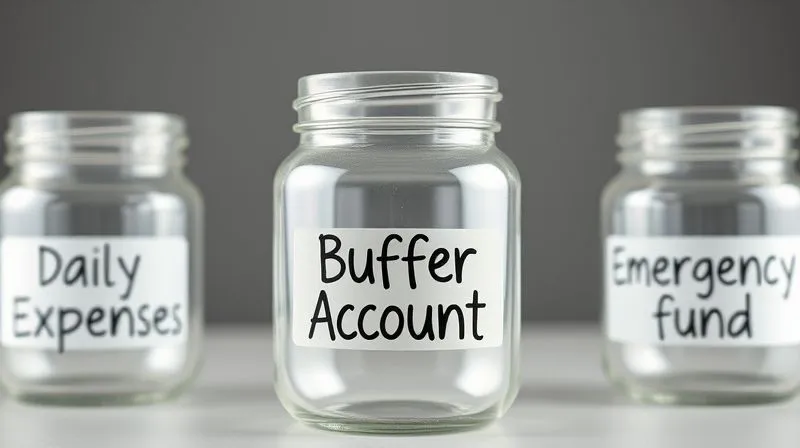
While the income smoothing account helps create a consistent 'salary,' a separate buffer account plays a slightly different, yet equally vital, role. This is your immediate liquidity safety net, designed to cover short-term unexpected expenses or bridge very brief income gaps without touching your main emergency fund.
Think of it as the first line of defense. If your car needs a $500 repair, or you have an unexpected medical bill, you dip into the buffer account, not your emergency fund. This preserves your larger emergency fund for major, life-altering events.
Setting Up Your Buffer Account:
- Dedicated Account: Keep this account separate from your checking and main emergency fund.
- Target Amount: Aim for $1,000 - $2,000 initially. This amount can grow as your income stabilizes and your needs become clearer.
- Replenishment Rule: If you use funds from your buffer, make it your absolute priority to replenish it as quickly as possible from your next available income.
The buffer account works in tandem with your emergency fund, providing layers of financial security. It prevents "emergency fund creep" where small expenses chip away at your critical savings. This strategy is particularly effective for those who frequently experience minor fluctuations or unexpected costs that aren't quite 'emergencies' but still require immediate cash.
Mindset Shifts and Discipline: The Unsung Heroes of Variable Income Savings
Financial success, especially with variable income, is as much about psychology as it is about strategy. I've observed that those who successfully build a robust emergency fund despite variable income often possess certain mindset shifts and a strong sense of discipline. This isn't about deprivation; it's about intentionality.
Key Mindset Shifts:
- Embrace the 'Feast and Famine' Mentality (Responsibly): Understand that high-income months are not an invitation to splurge indiscriminately. They are opportunities to prepare for leaner times.
- View Savings as an Expense: Reframe your emergency fund contributions not as 'extra' money, but as a mandatory monthly expense, just like rent or utilities.
- Practice Delayed Gratification: When a large payment comes in, resist the urge for immediate gratification. Prioritize your financial security first.
- Celebrate Small Wins: Acknowledge and celebrate every milestone in your emergency fund journey. This positive reinforcement fuels motivation.
Discipline in Action:
- Strict Budget Adherence: Even with variable income, a budget is non-negotiable. Focus on essential expenses and be ruthless about cutting non-essentials during low-income periods.
- Regular Financial Reviews: Set aside dedicated time each week or month to review your income, expenses, and savings progress. This keeps you accountable.
- Avoid Lifestyle Creep: As your income potentially grows, resist the urge to immediately upgrade your lifestyle. Maintain your current spending habits and direct the extra income to savings.
These shifts aren't easy, but they are transformative. As financial planning experts at NerdWallet often emphasize, personal finance is 80% behavior and 20% head knowledge. Cultivating the right mindset and discipline is paramount.
Leveraging Technology: Tools and Apps for Irregular Income Management
In today's digital age, you don't have to navigate variable income alone. There's a plethora of technology designed to help you track, budget, and save more effectively. I always encourage my clients to explore these tools, as they can significantly streamline the process of building a robust emergency fund despite variable income.
Recommended Tools & Their Benefits:
| Tool Category | Examples | Benefit for Variable Income |
|---|---|---|
| Budgeting Apps | You Need A Budget (YNAB), Mint, Personal Capital | Categorize every dollar, 'roll with the punches' feature for YNAB, net worth tracking, expense insights. |
| Invoicing/Payment Platforms | FreshBooks, PayPal, Stripe | Streamlined income tracking, automated payment reminders, easy reporting for tax purposes. |
| High-Yield Savings Accounts | Ally Bank, Marcus by Goldman Sachs, Discover Bank | Earn more on your emergency fund, often have robust online tools for transfers and sub-accounts. |
| Income Smoothing/Forecasting Tools | Catch (for freelancers), specialized spreadsheets | Helps predict cash flow, automates setting aside for taxes and savings. |
These tools take the guesswork and manual labor out of managing irregular income. They provide a clear, real-time picture of your financial situation, allowing you to make informed decisions and stay on track with your emergency fund goals. The right tech stack can be a game-changer, turning a daunting task into a manageable routine.
Beyond the Basics: Advanced Strategies and What to Avoid
Once you've mastered the foundational steps, you can explore more advanced strategies to solidify your financial position and accelerate your emergency fund growth. However, it's equally important to know what pitfalls to avoid.
Advanced Strategies:
- Diversify Income Streams: While not directly saving, having multiple income sources (even small ones) can significantly reduce overall income volatility, making emergency fund building easier.
- Pre-Paying Expenses: If you have a particularly high-earning month, consider pre-paying upcoming fixed expenses like insurance premiums (if a discount is offered) or even a portion of next month's rent. This frees up cash flow in leaner months.
- Tax-Advantaged Savings (After Emergency Fund): Once your emergency fund is robust, explore options like Roth IRAs or HSAs (Health Savings Accounts) for additional savings, as they offer tax benefits and can serve as a secondary, long-term emergency fund in extreme circumstances (though not ideal for primary emergencies).
- Review and Adjust Annually: Your income patterns, expenses, and goals will change. Make it a point to review your entire emergency fund strategy annually and adjust your targets and methods as needed.
What to Avoid:
- Relying on Credit Cards for Emergencies: This is a dangerous trap. High-interest debt can quickly spiral out of control, making it even harder to save. Your emergency fund is your debt-free safety net.
- Mixing Emergency Funds with Investments: While it's tempting to want your money to 'work harder,' your primary emergency fund needs to be liquid and safe. Keep it in a high-yield savings account, not volatile investments.
- Underestimating Your Needs: Don't skimp on your emergency fund goal. It's better to have too much than too little, especially with variable income.
- Ignoring Your Mental Health: The stress of variable income and saving can be immense. Don't let financial anxiety consume you. Seek support, celebrate progress, and remember that consistent effort, not perfection, is the key.
The Consumer Financial Protection Bureau (CFPB) provides excellent resources on understanding and managing financial risks, underscoring the importance of a robust emergency fund for overall financial well-being. See their guidance on emergency savings.
Frequently Asked Questions (FAQ)
How much should I really save for an emergency fund with variable income? While the standard advice is 3-6 months of expenses, for variable income, I strongly recommend aiming for 6-12 months, or even more if your income is highly unpredictable or your industry has long dry spells. The tiered approach helps break this down into achievable goals.
Should I prioritize paying off debt or building an emergency fund first with variable income? This is a common dilemma. My expert advice is to build a small 'starter' emergency fund (e.g., $1,000-$2,000 or Tier 1) first. This protects you from incurring *new* debt for unexpected expenses. Once that's in place, aggressively tackle high-interest debt. After high-interest debt is gone, then focus on fully funding your emergency fund.
What if I have a really bad month and have to dip into my emergency fund? That's exactly what it's for! Don't feel guilty. The key is to have a clear plan for replenishment. Make it your top financial priority to rebuild the fund immediately after the emergency has passed, using the same strategies we discussed like percentage-based transfers or windfall savings.
Where should I keep my emergency fund so it's safe but accessible? Your emergency fund should be in a high-yield savings account at a separate institution from your primary checking account. This makes it accessible but not too easy to dip into for non-emergencies. Avoid investment accounts for your primary emergency fund due to market volatility.
Can I use my emergency fund for large purchases like a down payment on a house? No, absolutely not. An emergency fund is strictly for unexpected, urgent financial crises. Using it for planned large purchases, no matter how important, leaves you vulnerable if a true emergency strikes. Save for planned goals in separate, dedicated accounts.
Recommended Reading
- Low Down Payment Loans: Your Key to First-Time Homeownership!
- 5 Proven Strategies: Shielding Profits from Volatile Currency Exchange
- 7 Proven Ways to Hedge Against Currency Volatility from Policy Shifts
- Unlock Extreme Budget Travel: 7 Ways to Maximize Credit Card Points
- Client Budgets in High Inflation: 7 Smart Strategies to Adapt Now
Main Points and Final Considerations
Building a robust emergency fund despite variable income is not a mythical feat; it's a strategic, achievable goal that demands discipline, planning, and the right tools. Let's recap the most critical takeaways:
- Know Your Numbers: Meticulous income tracking is the bedrock of any successful variable income saving strategy. Understand your averages, peaks, and troughs.
- Embrace Income Smoothing: Create a predictable 'salary' for yourself to stabilize your monthly cash flow and reduce financial stress.
- Adopt a Tiered Approach: Break down your large emergency fund goal into smaller, manageable tiers to build momentum and psychological wins.
- Automate Dynamically: Implement percentage-based or trigger-based transfers to ensure consistent savings, especially during high-income periods.
- Utilize a Buffer Account: Create a small, separate fund for minor unexpected expenses, protecting your main emergency fund.
- Cultivate the Right Mindset: View savings as a non-negotiable expense, practice delayed gratification, and celebrate your progress.
- Leverage Technology: Use budgeting apps, high-yield savings accounts, and other tools to streamline your financial management.
The journey to financial security with variable income is unique, but it's entirely within your control. I've seen countless individuals transform their financial lives by applying these principles. It won't always be easy, but with consistent effort, a clear strategy, and an expert mindset, you absolutely can build a robust emergency fund that provides the peace of mind you deserve. Start today, even with a small amount, and watch your financial resilience grow.




Comments
Leave a comment below. Your email will not be published. Required fields marked with *