



Avoiding the Pro-Rata Rule: Backdoor Roth IRA Conversion for High Earners?
For over two decades in the retirement planning space, I've witnessed countless high-income individuals grapple with a frustrating paradox: they understand the immense value of a Roth IRA's tax-free growth and withdrawals, yet their income levels preclude them from contributing directly. It's like seeing a golden ticket just out of reach, and the missed opportunity for truly tax-efficient wealth accumulation can be substantial over a lifetime.
This challenge often leads high earners to explore the "Backdoor Roth IRA" – a perfectly legal and powerful strategy. However, a lurking complexity, the "pro-rata rule," often turns what should be a straightforward maneuver into a costly tax trap. This rule, if not meticulously navigated, can inadvertently trigger significant taxable income, negating the very benefits you're trying to achieve.
In this comprehensive guide, I'll strip away the jargon and provide you with a clear, actionable framework to execute a Backdoor Roth IRA conversion while completely sidestepping the dreaded pro-rata rule. You'll gain expert insights, understand the critical steps, and learn how to position your retirement savings for maximum tax-free growth, ensuring you don't leave any money on the table.
Understanding the Roth IRA Appeal for High Earners
Before we dive into the mechanics of avoiding the pro-rata rule, let's quickly reiterate why the Roth IRA is such a coveted vehicle, especially for those in higher income brackets. The primary allure lies in its tax treatment: contributions are made with after-tax dollars, but qualified withdrawals in retirement are entirely tax-free. This means all the growth, all the dividends, all the capital gains – completely untouched by the IRS when you need them most.
For high earners, who are often in their peak earning years and anticipate being in a similar or even higher tax bracket in retirement, the ability to lock in tax-free income later is an incredibly powerful hedge against future tax rate increases. It offers unparalleled peace of mind, knowing a portion of your retirement nest egg is immune to the whims of future tax legislation. However, the IRS imposes income limitations for direct Roth IRA contributions. For 2024, if your Modified Adjusted Gross Income (MAGI) is above $161,000 (single) or $240,000 (married filing jointly), your ability to contribute directly is phased out or eliminated entirely.
The Roth IRA offers unparalleled tax advantages for retirement, transforming today's after-tax dollars into tomorrow's completely tax-free income stream. It's a cornerstone of robust retirement planning for those who can access it.
This is precisely why high earners must explore alternative routes to harness the Roth advantage, and the Backdoor Roth IRA is the leading strategy. But as we'll see, simply converting funds isn't enough; careful planning is required to avoid an unexpected tax bill.
The Backdoor Roth IRA: Your Gateway to Tax-Free Growth
The Backdoor Roth IRA isn't a specific type of account but rather a two-step process that allows high-income earners to bypass the IRS's direct contribution limits. It leverages existing tax code provisions to funnel money into a Roth IRA when direct contributions aren't permitted. I've guided countless clients through this process, and when executed correctly, it's a remarkably effective strategy.
Here's the basic premise: You contribute money to a Traditional IRA on a non-deductible basis. Since you're not taking a tax deduction for this contribution, it's considered "after-tax" money. Shortly after, you convert that Traditional IRA balance into a Roth IRA. Because the initial contribution was non-deductible, that portion of the conversion is not taxed again. Any earnings accumulated between the contribution and the conversion would be taxable, but this is usually a negligible amount if the conversion happens quickly.
The benefits of this two-step approach are profound:
- Bypass Income Limits: It allows individuals above the Roth IRA income thresholds to contribute indirectly.
- Tax-Free Growth: Once converted, the funds grow tax-free, and qualified withdrawals are tax-free in retirement.
- Flexibility: Roth IRAs offer more flexibility with withdrawals in retirement compared to Traditional IRAs.
- Estate Planning Benefits: Roth IRAs can be excellent estate planning tools, as they are not subject to Required Minimum Distributions (RMDs) for the original owner.

While the concept sounds simple, the critical piece of the puzzle – and where many high earners inadvertently stumble – is the presence of existing pre-tax funds in any Traditional, SEP, or SIMPLE IRA. This is where the infamous "pro-rata rule" comes into play, and understanding its implications is crucial for a successful, tax-efficient Backdoor Roth.
The Dreaded Pro-Rata Rule: A High Earner's Nemesis
The pro-rata rule is the single biggest stumbling block for high earners attempting a Backdoor Roth IRA conversion. It's designed to prevent individuals from selectively converting only their non-deductible (after-tax) IRA contributions to Roth while leaving their pre-tax IRA money untouched, thereby avoiding taxes on the pre-tax portion. The IRS wants its due.
Here's how it works: When you convert funds from a Traditional IRA to a Roth IRA, the IRS doesn't differentiate between your pre-tax and after-tax contributions within that specific IRA. Instead, it looks at the total balance across *all* of your Traditional, SEP, and SIMPLE IRAs (this is known as the "aggregation rule") on December 31st of the conversion year. The conversion is then treated as coming proportionally from both your pre-tax and after-tax dollars.
Let's say you have $94,000 in a pre-tax Traditional IRA from an old 401(k) rollover, and you just contributed $6,000 (non-deductible) to a new Traditional IRA for a Backdoor Roth. Your total IRA balance is $100,000, with $6,000 (6%) being after-tax and $94,000 (94%) being pre-tax. If you then convert the $6,000 from the new Traditional IRA to Roth, the pro-rata rule dictates that only 6% of that $6,000 conversion ($360) is considered after-tax and therefore non-taxable. The remaining 94% ($5,640) is treated as a taxable distribution from your pre-tax IRA, even though you only converted the "new" money.
The pro-rata rule can turn your tax-free dream into a tax-bill nightmare. It mandates that any Roth conversion is proportionally taxed based on your total pre-tax IRA balances, not just the specific funds you intend to convert.
This means you'd pay income taxes on $5,640, completely undermining the purpose of the Backdoor Roth strategy. The key to avoiding this trap, as I've continually emphasized to my clients, is to ensure that you have no pre-tax money in any of your Traditional, SEP, or SIMPLE IRAs at the end of the year in which you perform the conversion. Zeroing out these pre-tax balances is the cornerstone of a successful pro-rata-free Backdoor Roth.
The Critical Strategy: Zeroing Out Your Pre-Tax IRA Balances
The absolute, non-negotiable rule for avoiding the pro-rata trap is to have a $0 balance in all your pre-tax Traditional, SEP, and SIMPLE IRAs on December 31st of the year you perform the Roth conversion. If you have any pre-tax money in these accounts, the pro-rata rule will apply, and you'll likely face an unexpected tax bill. There are two primary, IRS-approved methods to achieve this "zero-out" goal.
Method 1: Rolling Pre-Tax IRAs into a 401(k) or Other Employer Plan
This is often the cleanest and most recommended strategy for those with substantial pre-tax IRA balances. Many employer-sponsored retirement plans, such as a 401(k), 403(b), or 457(b), allow you to roll pre-tax IRA funds into them. This is often referred to as a "reverse rollover." By moving your pre-tax IRA money into an employer plan, those funds are no longer considered part of your IRA aggregation for the pro-rata rule, effectively isolating them.
Here's how to execute this strategy effectively:
- Verify Employer Plan Eligibility: First, confirm with your current employer's plan administrator if their 401(k) (or similar plan) accepts incoming rollovers from Traditional IRAs. Not all plans do, so this is a critical first step.
- Initiate the Rollover: Once confirmed, you'll typically fill out paperwork provided by your employer's plan administrator or the IRA custodian. This usually involves a direct rollover, where funds move directly from your IRA custodian to your employer's plan administrator.
- Consolidate All Pre-Tax IRAs: If you have multiple Traditional, SEP, or SIMPLE IRAs with pre-tax money, you must roll *all* of them into the employer plan. The aggregation rule applies to all these accounts collectively.
- Confirm Zero Balance: After the rollover is complete, verify with your IRA custodian that your pre-tax IRA balances are indeed zero. This needs to be done before December 31st of the year you plan your Backdoor Roth conversion.
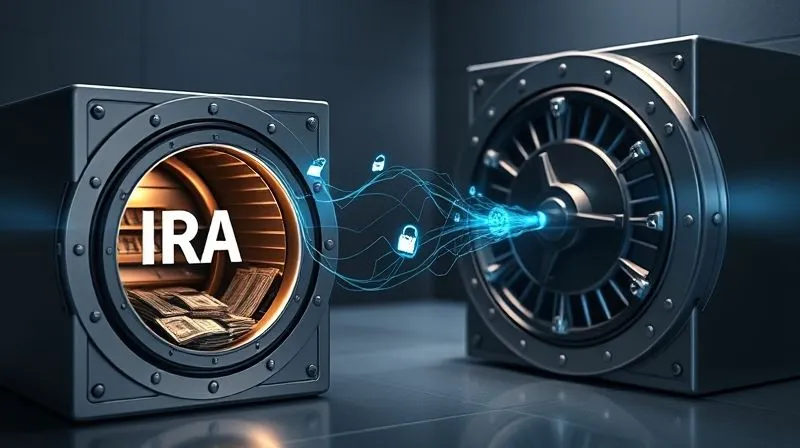
This method successfully removes the pre-tax money from the "IRA aggregation pot," allowing your subsequent non-deductible Traditional IRA contribution to be the *only* money in your IRAs, making the conversion 100% after-tax and therefore non-taxable.
Method 2: Converting All Pre-Tax IRA Funds to Roth (Taxable Event)
This method is generally advisable only if you have a relatively small amount of pre-tax money in your Traditional IRAs. If you convert all your pre-tax IRA funds to a Roth IRA, you will owe income tax on the entire converted amount in the year of conversion. While this does zero out your pre-tax IRA balance, it triggers a taxable event.
For example, if you have $10,000 in a pre-tax Traditional IRA and you convert it all to Roth, you'll add $10,000 to your taxable income for that year. If you're a high earner, this could push you into an even higher tax bracket. However, if the amount is small, and you believe your tax bracket will be significantly higher in retirement, paying the taxes now might be a strategic move. This method is less about avoiding the pro-rata rule and more about accepting its implications to achieve a clean slate for future Backdoor Roth conversions.
| Strategy | Impact on Pre-Tax IRA | Taxable Event | Best For |
|---|---|---|---|
| Reverse Rollover to 401(k) | Moves funds out of IRA aggregation | No immediate tax on rollover | Large pre-tax IRA balances, avoiding current taxes |
| Convert All Pre-Tax IRA to Roth | Zeros out pre-tax balance by converting | All pre-tax converted amount is taxable | Small pre-tax IRA balances, willing to pay taxes now |
In my experience, for most high earners, the reverse rollover into an employer plan is the preferred method to avoid the pro-rata rule, as it allows them to preserve their pre-tax savings on a tax-deferred basis without incurring immediate taxes. This careful initial step is what separates a successful Backdoor Roth from a costly mistake.
Step-by-Step Guide to a Flawless Backdoor Roth Conversion (Avoiding Pro-Rata)
Once you've successfully zeroed out any pre-existing pre-tax IRA balances (or confirmed you never had any), the actual Backdoor Roth conversion process is relatively straightforward. Adhering to these steps ensures a clean, tax-efficient conversion.
- Ensure All Pre-Tax IRA Balances are Zeroed Out: This is the absolute first step, as discussed in detail above. Confirm with your IRA custodian that the balance of any Traditional, SEP, or SIMPLE IRA containing pre-tax money is $0 by December 31st of the year you plan to convert. If you've done a reverse rollover, ensure the funds have settled into your employer plan.
- Make a Non-Deductible Contribution to a Traditional IRA: Contribute the maximum allowable amount for the year to a Traditional IRA. For 2024, this is $7,000, or $8,000 if you're age 50 or older. It is crucial that this contribution is designated as non-deductible. Since you're a high earner, you wouldn't be eligible for a deduction anyway, but explicitly noting it as non-deductible on your tax forms (Form 8606) is vital.
- Convert the Traditional IRA Balance to a Roth IRA: Shortly after making the non-deductible contribution, initiate a conversion of the entire Traditional IRA balance to a Roth IRA. "Shortly after" is key here to minimize any investment gains that might occur in the Traditional IRA during that brief period. Any gains, no matter how small, would be taxable upon conversion. Most custodians allow you to do this online or with a simple phone call.
- File Form 8606 Correctly: This is perhaps the most critical administrative step for a successful Backdoor Roth. Form 8606, "Nondeductible IRAs," is used to track your non-deductible contributions and report your conversions. If you fail to file this form, the IRS will assume your entire Traditional IRA balance is pre-tax, and your Roth conversion will be fully taxable.

Precision in timing and documentation is paramount for a successful Backdoor Roth IRA conversion. Every step, especially the "zero-out" and correct tax filing, must be executed meticulously to avoid unintended tax consequences.
I always advise clients to perform the non-deductible contribution and the subsequent conversion within a few days of each other, ideally in the same tax year. This minimizes any potential earnings in the Traditional IRA that would become taxable upon conversion. Remember, the goal is to convert only your after-tax contributions, avoiding any tax liability.
Case Study: Sarah's Successful Pro-Rata Avoidance
Case Study: Sarah's Seamless Backdoor Roth
Let me share a real-world (anonymized) example from my practice. Sarah, a 45-year-old marketing executive, earns well over the Roth IRA income limits. She had an old 401(k) from a previous employer that she had rolled into a Traditional IRA years ago, accumulating a balance of $120,000, all pre-tax. She was eager to leverage the Backdoor Roth strategy but was concerned about the pro-rata rule.
Following my guidance, Sarah first contacted her current employer's 401(k) plan administrator and confirmed that her plan accepted incoming rollovers from Traditional IRAs. She then initiated a reverse rollover, moving her entire $120,000 pre-tax Traditional IRA balance into her current 401(k). This process took about three weeks to complete and settle, ensuring her Traditional IRA balance was $0 by mid-November.
Once her Traditional IRA was empty, she contributed $7,000 (the maximum for her age at the time) as a non-deductible contribution to a new Traditional IRA. Two days later, she converted the full $7,000 from this Traditional IRA into her Roth IRA. At tax time, her CPA meticulously filled out IRS Form 8606, clearly showing the non-deductible contribution and the subsequent conversion. Because she had zero pre-tax IRA money on December 31st, the pro-rata rule did not apply, and her $7,000 conversion was entirely tax-free. Sarah now enjoys the benefits of tax-free growth in her Roth IRA, a strategy she continues to use annually.
Common Pitfalls and How to Avoid Them
While the Backdoor Roth IRA is a powerful tool, it's riddled with potential missteps that can lead to unexpected tax liabilities. Based on my years of experience, here are the most common pitfalls high earners encounter and how to steer clear of them:
- Forgetting the Aggregation Rule: This is the most frequent mistake. Many individuals only consider the specific Traditional IRA they're using for the backdoor conversion. However, the IRS looks at *all* non-Roth IRAs (Traditional, SEP, SIMPLE) collectively. If you have a SEP IRA from a side gig or an old Traditional IRA from a previous job, its pre-tax balance will trigger the pro-rata rule. Always consolidate or roll over *all* pre-tax IRA funds.
- Not Zeroing Out Pre-Tax IRAs by Year-End: The pro-rata rule applies based on your IRA balances on December 31st of the conversion year. If you convert in March but still have pre-tax IRA money in December, the rule will apply. Ensure your pre-tax IRAs are empty well before year-end, allowing time for transfers to settle.
- Incorrect Form 8606 Filing: Failing to file Form 8606, or filing it incorrectly, is a major audit flag. This form is essential for tracking your non-deductible IRA contributions and demonstrating that your Roth conversion was from after-tax money. Without it, the IRS has no record of your basis and will assume the entire conversion is taxable.
- Mixing Deductible and Non-Deductible Contributions: Some individuals might make a deductible Traditional IRA contribution in one year and then a non-deductible one in another, or even in the same year. This complicates basis tracking and can make the pro-rata calculation even more confusing. For a clean Backdoor Roth, ensure your Traditional IRA contributions are purely non-deductible.
As Investopedia highlights, these seemingly minor errors can have significant tax consequences. Always double-check your records and consult with a tax professional if you're unsure about any step.
Advanced Strategies: The Mega Backdoor Roth
Beyond the standard Backdoor Roth IRA, there's an even more powerful strategy for ultra-high earners with specific employer plans: the Mega Backdoor Roth. While the standard Backdoor Roth allows you to contribute up to the annual IRA limit ($7,000 in 2024), the Mega Backdoor Roth can enable contributions of tens of thousands of dollars annually into a Roth account.
This strategy is contingent on your employer's 401(k) or similar plan allowing two specific features:
- After-Tax 401(k) Contributions: Your plan must permit you to contribute additional money to your 401(k) on an after-tax basis, beyond the standard pre-tax or Roth 401(k) limits. These after-tax contributions are separate from your regular elective deferrals.
- In-Service Distributions/Rollovers: Your plan must allow "in-service distributions" (also known as "in-plan Roth conversions" or "rollovers to an IRA") of these after-tax 401(k) funds while you are still employed.
If your plan offers both, here's the simplified process: You contribute after-tax money to your 401(k) (up to the overall defined contribution limit, which is $69,000 for 2024, minus your elective deferrals and employer contributions). Then, you perform an in-service distribution or conversion of these after-tax funds directly into a Roth IRA. Because the initial contributions were after-tax, the conversion is non-taxable (any minimal earnings would be taxable, so prompt conversion is best).
For those with the right employer plan, the Mega Backdoor Roth turbocharges tax-free growth, allowing contributions far beyond standard IRA limits into a powerful Roth account.
This strategy is more complex and requires careful coordination with your plan administrator and tax advisor. However, the potential for significantly larger tax-free retirement savings makes it an invaluable tool for eligible high earners. It's a testament to the fact that with expert guidance, even the most constrained financial landscapes can yield immense opportunities.
| Feature | Backdoor Roth IRA | Mega Backdoor Roth |
|---|---|---|
| Annual Contribution Limit | $7,000 ($8,000 if 50+) | Up to $69,000 (2024, minus other 401k contributions) |
| Requirement for Strategy | No pre-tax IRA balances | Employer 401(k) allows after-tax contributions and in-service distributions |
| Complexity Level | Moderate (requires careful filing) | High (requires specific plan features & coordination) |
| Primary Benefit | Access Roth IRA for high earners | Massive tax-free growth potential |
When to Consult a Financial Advisor
While I've aimed to make this guide as clear and actionable as possible, the intricacies of tax law and individual financial situations can be complex. Implementing a Backdoor Roth IRA, especially when dealing with the pro-rata rule or exploring a Mega Backdoor Roth, is not a "set it and forget it" task. There are nuances, particularly around tax reporting and ensuring compliance with all IRS regulations.
I strongly recommend consulting with a qualified financial advisor and a tax professional (such as a CPA) if:
- You have significant pre-tax IRA balances and are unsure about the best way to "zero them out."
- You have multiple IRA accounts (Traditional, SEP, SIMPLE) that might complicate the aggregation rule.
- You're considering the Mega Backdoor Roth and need to navigate your employer's specific plan rules.
- You're unsure about correctly filing Form 8606 or other related tax documents.
- Your financial situation is particularly complex, involving other retirement accounts, trusts, or business interests.
A seasoned professional, like those certified by the National Association of Personal Financial Advisors (NAPFA), can provide personalized guidance, ensure compliance, and help integrate these strategies into your broader financial plan, offering peace of mind and optimizing your outcomes. My role is to empower you with knowledge; their role is to provide tailored execution and oversight.
Frequently Asked Questions (FAQ)
Q: What if I already have a large pre-tax IRA balance and my employer's 401(k) doesn't accept rollovers? This is a challenging but not insurmountable situation. If a reverse rollover to a 401(k) is not an option, your primary alternative is to convert the entire pre-tax IRA balance to a Roth IRA, accepting the immediate tax liability. While this might seem counterintuitive for a high earner, it cleans the slate for future tax-free Backdoor Roth conversions. You'd need to weigh the current tax cost against the long-term benefit of tax-free growth and withdrawals. In some cases, waiting until a year when your income is lower (e.g., sabbatical, early retirement) to perform the full conversion might be a strategic move, but this requires careful planning.
Q: Can I do a Backdoor Roth IRA every year? Yes, absolutely. The Backdoor Roth IRA is an annual strategy. As long as you continue to meet the income thresholds that prevent direct Roth contributions and ensure your pre-tax IRA balances are zeroed out by December 31st each year, you can execute the non-deductible contribution and subsequent conversion annually. This consistent application is key to building a substantial tax-free retirement nest egg over time.
Q: Does the pro-rata rule apply to my 401(k) or other employer-sponsored plans? No, the pro-rata rule specifically applies to Traditional, SEP, and SIMPLE IRAs. It does not apply to employer-sponsored plans like 401(k)s, 403(b)s, or 457(b)s. This is precisely why rolling pre-tax IRA funds into a 401(k) is such an effective strategy for avoiding the rule – it moves the funds out of the "IRA aggregation" that the pro-rata rule considers. This distinction is crucial for understanding the "zero-out" strategy.
Q: What's the penalty for getting the pro-rata rule wrong? The primary "penalty" isn't a specific IRS fine, but rather an unexpected and often significant tax bill. If the pro-rata rule applies, a portion of your Roth conversion will be considered a taxable distribution from your pre-tax IRA. This amount is added to your taxable income for the year, potentially pushing you into a higher tax bracket and increasing your overall tax liability. Furthermore, if you fail to report this correctly on Form 8606, you could face penalties for underpayment of taxes or even an audit.
Q: How does the "step transaction doctrine" affect Backdoor Roth? The step transaction doctrine is an IRS principle that states if a series of individually legitimate steps are taken to achieve a specific tax-avoidance outcome, the IRS can collapse those steps into a single transaction for tax purposes. While theoretically, the IRS could argue that the non-deductible IRA contribution and immediate conversion are a single step to bypass Roth limits, they have not challenged the Backdoor Roth IRA strategy on these grounds. In fact, official IRS guidance (Notice 2014-54) implicitly acknowledges the legitimacy of these conversions. The key is to follow the rules, particularly regarding the pro-rata rule, and correctly file Form 8606.
Key Takeaways and Final Thoughts
Navigating the complexities of retirement planning, especially for high earners, requires both knowledge and precision. The Backdoor Roth IRA is an invaluable tool, but its effectiveness hinges on a meticulous understanding and avoidance of the pro-rata rule. Here are the critical takeaways from my experience:
- The "Zero-Out" is Paramount: Your number one priority for avoiding the pro-rata rule is to ensure all pre-tax Traditional, SEP, and SIMPLE IRA balances are $0 by December 31st of the conversion year.
- Reverse Rollovers are Your Best Friend: For most high earners with existing pre-tax IRA money, rolling those funds into an employer-sponsored 401(k) (if permitted) is the cleanest way to clear the path for a tax-free Backdoor Roth.
- Timeliness Matters: Execute the non-deductible contribution and subsequent Roth conversion as close together as possible to minimize taxable earnings.
- Form 8606 is Non-Negotiable: Correctly filing IRS Form 8606 is crucial for tracking your non-deductible basis and proving the tax-free nature of your conversion.
- Consider the Mega Backdoor Roth: For those with eligible employer plans, the Mega Backdoor Roth offers an even larger opportunity for tax-free growth.
Embracing these strategies empowers you to take control of your financial future, ensuring your hard-earned money grows tax-free for a truly secure retirement. Don't let fear of complexity deter you from maximizing your wealth. With careful planning and expert guidance, you can successfully navigate the Backdoor Roth IRA and build a robust, tax-efficient retirement portfolio. Your future self will thank you for taking these proactive steps today.
Recommended Reading
- High-Income Debt: 7 Strategies to Optimize Repayment & Build Wealth
- The Ultimate Guide: How to Create a Financial Plan That Adapts to Inflation
- Pro Sabbatical: Budgeting Your Year-Long Backpacker Journey
- Shielding Your Digital Fortune: 7 Steps to Protect High-Value Assets from Cyber Threats
- 7 Urgent Strategies to Rapidly Boost Retirement Savings After 50?




Comments
Leave a comment below. Your email will not be published. Required fields marked with *